Domain management is shifting from centralized registrar models toward hybrid systems that integrate artificial intelligence, blockchain-based naming protocols, and decentralized governance structures. Organizations that manage digital identity across both traditional DNS and emerging Web3 namespaces face strategic decisions about infrastructure resilience, compliance obligations, and vendor dependencies. This evolution affects how enterprises protect brand integrity, mitigate security risks, and prepare for internet governance models that distribute authority beyond ICANN’s traditional framework. Understanding these technical and operational shifts enables IT leaders to make informed choices about domain portfolios that span legacy TLDs and blockchain-based alternatives.
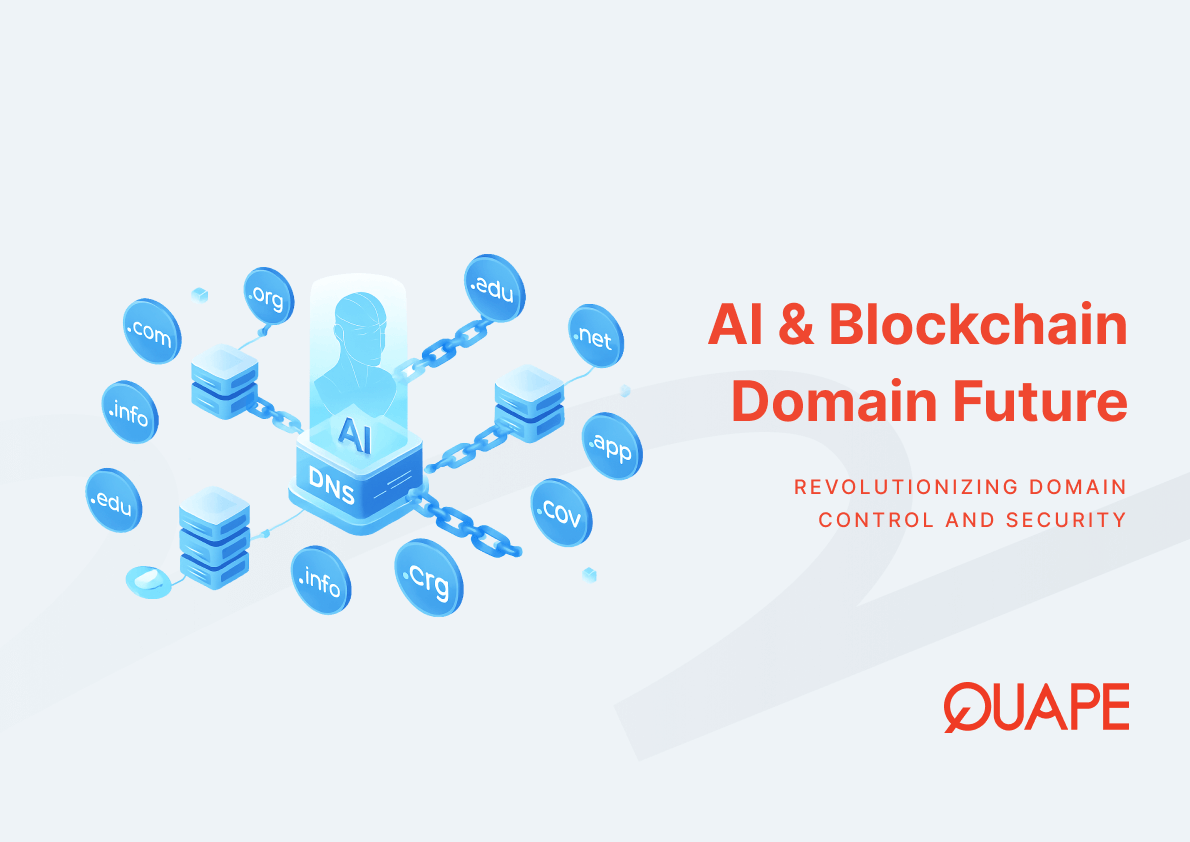
Future domain management refers to the operational and technical frameworks that will govern how organizations register, resolve, and control internet identities as centralized DNS infrastructure converges with decentralized naming systems. Unlike conventional domain administration, which relies on hierarchical registrars and root servers, future models distribute registry functions across blockchain networks, automate lifecycle management through AI-driven systems, and enable cryptographic verification of ownership without intermediary authorities. This transformation redefines how businesses secure digital assets, respond to security threats, and navigate interoperability challenges between Web2 and Web3 ecosystems.
Poin-poin Utama:
- Blockchain-based naming systems like ENS eliminate centralized control by storing domain records on distributed ledgers, providing tamper-resistant ownership verification
- AI-driven automation optimizes domain lifecycle management through predictive renewal systems and real-time DNS anomaly detection
- Decentralized registry entities governed by DAOs offer alternatives to ICANN’s hierarchical structure, reducing censorship risk but introducing interoperability complexity
- Traditional DNS security protocols like DNSSEC remain inconsistently deployed, while blockchain systems deliver stronger immutability at the cost of limited browser support
- Enterprises must balance brand protection across both legacy TLDs and decentralized namespaces as Web2 and Web3 domains increasingly coexist
- Singapore-based organizations benefit from regional infrastructure advantages when integrating hybrid domain strategies aligned with local compliance requirements
- Cross-ecosystem compatibility solutions are emerging to bridge traditional DNS resolution with blockchain-based identity systems
Introduction to Future Domain Management
The domain name system has operated for decades as a centralized hierarchy, where ICANN coordinates policy, regional registries allocate address blocks, and accredited registrars facilitate end-user transactions. This model delivers global consistency but concentrates control in organizations vulnerable to regulatory pressure, infrastructure attacks, and governance disputes. As decentralized technologies mature, alternative naming architectures challenge this paradigm by distributing registry functions across blockchain networks that verify records through cryptographic consensus rather than administrative authority.
These parallel systems create operational complexity for enterprises managing digital presence. A company securing a .com domain follows established procedures through ICANN-accredited channels, while registering a .eth name on Ethereum requires interacting with smart contracts that enforce ownership through private keys rather than account credentials. Both approaches serve the fundamental purpose of mapping human-readable identifiers to network resources, yet they differ fundamentally in governance models, security assumptions, and technical integration requirements. Organizations evaluating Hosting VPS infrastructure must now consider how their server architecture supports resolution across both traditional and blockchain-based naming protocols.
This convergence forces IT leaders to reassess assumptions about domain lifecycle management, security postures, and vendor relationships. The question is not whether decentralized systems will replace traditional DNS, but how enterprises navigate an internet where centralized and distributed naming architectures coexist, intersect, and require coordinated management strategies.
Key Components Shaping the Future of Domain Management
AI-Driven Domain Lifecycle Automation
Artificial intelligence transforms domain portfolio management by analyzing registration patterns, predicting renewal requirements, and detecting anomalies that indicate security threats or configuration errors. Machine learning models trained on historical DNS data identify domains approaching expiration, flag unusual query patterns that suggest cache poisoning attempts, and recommend optimization strategies based on traffic analysis. This automation reduces the manual overhead associated with managing large domain portfolios while improving response times to security incidents.
Registrar platforms integrate AI systems to streamline administrative workflows, automatically renewing domains based on usage patterns and alerting administrators to configuration drift that could impact availability. Predictive models assess which domains generate business value through traffic analysis and conversion metrics, enabling data-driven decisions about portfolio pruning or expansion. These systems also correlate DNS query logs with threat intelligence feeds to detect early indicators of DDoS attacks or hijacking attempts, triggering protective measures before disruptions occur.
However, AI-driven automation depends on centralized data access that may conflict with privacy requirements or regulatory constraints. Organizations deploying these tools must balance operational efficiency gains against data governance obligations, particularly when domain management spans jurisdictions with differing compliance frameworks.
Blockchain-Based Naming Systems
Blockchain technology enables domain registration through immutable ledgers that record ownership without requiring trusted intermediaries. According to DN.org, blockchain-based naming systems distribute authority across network participants, mitigating risks of censorship or domain hijacking compared to centralized DNS infrastructure. Smart contracts enforce transfer rules, automate renewal processes, and provide cryptographic proof of ownership that resists tampering by registrars, governments, or malicious actors.
These systems store domain records as blockchain transactions, creating an auditable history of ownership changes and configuration updates. Unlike traditional registrars that maintain proprietary databases vulnerable to internal manipulation or external breaches, blockchain-based registries replicate data across thousands of nodes, making unauthorized modifications computationally impractical. This architecture appeals to organizations concerned about domain seizure, regulatory overreach, or single points of failure in centralized infrastructure.
Trade-offs emerge in operational complexity and ecosystem maturity. Blockchain domains require users to manage private keys, introducing security responsibilities that differ from password-based authentication. Resolution mechanisms remain inconsistent across browsers and applications, limiting adoption until standardized integration emerges. Enterprises evaluating blockchain-based TLDs must assess whether the security benefits justify the technical overhead and user experience constraints inherent in nascent protocols.
Ethereum Name Service (ENS) and Web3 Identity
The Ethereum Name Service functions as a decentralized naming protocol that maps human-readable identifiers to blockchain addresses, content hashes, and metadata. According to the ENS documentation, ENS is built on the Ethereum blockchain and provides trustless governance without centralized operators. ENS names enable wallet-based resolution, allowing users to receive cryptocurrency payments or access decentralized applications through memorable identifiers rather than hexadecimal addresses.
By early 2025, over 6.4 million .eth names were registered, demonstrating substantial adoption within the Web3 ecosystem despite limited integration with traditional internet infrastructure. These registrations represent not just domain names but portable digital identities that users control through private keys, enabling consistent identification across decentralized services without relying on corporate authentication systems.
ENS integration with decentralized identifiers extends beyond simple name resolution to support verifiable credentials, encrypted messaging, and cross-chain interoperability. Organizations exploring Web3 business models must evaluate how ENS names function as infrastructure for customer identity, content addressing, and service discovery in blockchain-native environments. The challenge lies in bridging these capabilities with existing enterprise authentication systems and ensuring consistent user experiences across centralized and decentralized touchpoints.
Decentralized Registry Entities and Governance Models
Decentralized autonomous organizations represent an alternative governance structure for domain registries, distributing policy decisions across token holders rather than concentrating authority in corporate or governmental entities. DAOs enable stakeholders to propose rule changes, vote on fee structures, and arbitrate disputes through transparent mechanisms encoded in smart contracts. This model challenges ICANN’s hierarchical authority by demonstrating that coordination functions can operate without centralized administration.
Trustless registries eliminate intermediaries that traditionally validate ownership, process transfers, and enforce policies. Instead, protocol rules embedded in blockchain code determine which actions are permissible, automatically executing transactions when predetermined conditions are met. This reduces opportunities for administrative discretion that could enable censorship, preferential treatment, or arbitrary policy enforcement.
Practical limitations include slower decision-making processes due to community voting requirements, potential for governance capture by large token holders, and difficulty resolving disputes that require subjective judgment rather than rule-based arbitration. Organizations accustomed to escalating issues through registrar support channels may find DAO governance structures less responsive to urgent operational needs. The distributed nature that provides resilience against censorship also complicates rapid policy adaptations when emerging threats require coordinated responses.
Security and Resilience in Decentralized DNS
Decentralized DNS architectures offer distinct security properties compared to traditional hierarchical systems. By replicating domain records across distributed nodes, blockchain-based protocols eliminate single points of failure that enable large-scale attacks on centralized root servers. Cache poisoning attacks that exploit vulnerabilities in recursive resolvers become impractical when authoritative records are verified through cryptographic consensus rather than trust relationships between servers.
Censorship resistance emerges as a key attribute, since no single entity controls which domains remain accessible or can be seized through legal processes. This property appeals to organizations operating in jurisdictions with unpredictable regulatory environments, though it also raises concerns about enabling malicious actors to maintain presence despite legal prohibitions. The same decentralization that protects legitimate users from government overreach also complicates law enforcement efforts to combat cybercrime infrastructure.
DDoS mitigation benefits from distributed architecture, as attackers must target thousands of nodes rather than centralized registrar infrastructure. However, blockchain-based systems introduce new attack surfaces related to consensus mechanisms, smart contract vulnerabilities, and front-end interfaces that bridge decentralized backends with user-facing applications. Organizations evaluating security postures must consider both the threats mitigated by decentralization and the novel risks introduced by blockchain dependencies.
Enterprise Implications of Decentralized Domain Systems
Enterprises managing digital assets across multiple namespaces face strategic decisions about portfolio composition, security investments, and operational processes. Traditional domain management follows established workflows involving ICANN-accredited registrars, annual renewals, and DNS configuration through standardized control panels. Blockchain-based alternatives require new competencies in cryptographic key management, smart contract interaction, and decentralized application integration.
Procurement risk emerges as organizations evaluate vendors offering hybrid solutions that bridge traditional and decentralized systems. Vendor lock-in concerns shift from registrar dependencies to reliance on specific blockchain networks or bridge protocols. Enterprises must assess whether providers deliver genuine interoperability or proprietary layers that create new switching costs. Due diligence processes require technical evaluation of smart contract security, consensus mechanism stability, and governance token distribution that could affect long-term policy decisions.
Compliance frameworks designed for centralized service providers may not map cleanly to decentralized architectures where no single entity controls infrastructure. Organizations in regulated industries must determine how to meet audit requirements, implement access controls, and demonstrate accountability when domain management occurs through protocols rather than vendors. Legal agreements that traditionally allocate liability between registrants and registrars become ambiguous when smart contracts enforce transactions without human intermediaries.
Practical Application for Singapore-Based Organizations
Singapore’s digital infrastructure combines robust regulatory frameworks with advanced technical capabilities, positioning local organizations to adopt hybrid domain strategies effectively. The .sg namespace provides trusted regional identity, while growing Web3 adoption creates opportunities for blockchain-based presence that complements traditional domains. Organizations serving Southeast Asian markets benefit from choosing domain names that balance local trust signals with emerging decentralized identity systems.
Regional compliance requirements influence domain management decisions, particularly for organizations handling personal data or operating in regulated sectors. Singapore’s data protection frameworks emphasize accountability and cross-border transfer controls, requiring careful evaluation of where domain records are stored and processed. Blockchain-based systems that replicate data globally may require additional safeguards to meet localization requirements or ensure appropriate jurisdiction for dispute resolution.
Cross-border data access patterns affect performance and availability considerations. Singapore-based enterprises deploying hybrid domain strategies must ensure resolution mechanisms work efficiently across both traditional DNS hierarchies and blockchain networks, accounting for latency differences and fallback procedures when either system experiences disruptions. Technical architecture decisions about DNS hosting, recursive resolver configuration, and blockchain node access points directly impact user experience and operational resilience.
Integration Challenges Between Traditional DNS and Web3 Domains
DNS interoperability remains the primary technical barrier preventing seamless coexistence of traditional and blockchain-based naming systems. Standard browsers rely on recursive resolvers that query hierarchical DNS infrastructure, lacking native support for blockchain-based protocols. Users accessing .eth domains typically require browser extensions, specialized resolvers, or gateway services that translate blockchain records into formats compatible with legacy systems.
ICANN DNS operates through established protocols with decades of tooling, monitoring systems, and operational expertise. Decentralized alternatives lack equivalent ecosystem maturity, creating friction when organizations attempt to manage both namespace types through unified workflows. Configuration management tools, monitoring dashboards, and security controls designed for traditional DNS often cannot directly interact with smart contract-based registries without custom integration layers.
User adoption barriers extend beyond technical limitations to include education requirements, trust concerns, and inertia around established systems. End users accustomed to typing .com addresses may resist adopting .eth domains that require additional software or configuration steps. Organizations investing in Web3 presence must account for the effort required to educate customers, provide technical support for blockchain wallet integration, and maintain fallback mechanisms when decentralized systems encounter usability issues.
How Domain Registration Supports Future Domain Management
Strategic pendaftaran domain serves as the foundation for organizations preparing infrastructure that spans legacy and emerging naming systems. TLD selection determines not only branding and SEO properties but also governance frameworks, security assumptions, and technical integration requirements. Enterprises building future-proof portfolios evaluate traditional extensions for established web presence while experimenting with blockchain-based alternatives for Web3 initiatives or redundancy against centralized system vulnerabilities.
DNS management capabilities influence how effectively organizations adapt to evolving protocols and security requirements. Providers offering flexible configuration options, API access, and support for emerging standards enable smoother transitions as interoperability solutions mature. Hybrid Web2–Web3 strategies require DNS infrastructure that accommodates both hierarchical zone files and blockchain-based record verification, potentially through bridge services or dual-stack configurations.
Long-term domain strategy accounts for governance uncertainty, technological evolution, and changing user expectations. Organizations that lock into single ecosystems risk disruption when shifts occur in either centralized or decentralized spaces. Maintaining presence across multiple naming systems provides resilience against regulatory changes, protocol failures, or market consolidation that could disadvantage dependence on any single infrastructure model.
Kesimpulan & CTA
The future of domain management will be defined by organizations that successfully navigate the coexistence of centralized DNS hierarchy and blockchain-based alternatives, balancing operational efficiency with infrastructure resilience. Enterprises that develop competencies in both traditional registrar relationships and decentralized protocol interactions position themselves to capitalize on emerging opportunities while protecting against single-system dependencies. Strategic domain portfolios that span legacy TLDs and blockchain-based namespaces create flexibility as internet governance models evolve and user expectations shift toward greater control over digital identity.
Organizations evaluating infrastructure investments should assess how domain registration choices align with long-term technical architecture, compliance obligations, and customer engagement strategies across both Web2 and Web3 touchpoints. Hubungi tim penjualan kami to discuss how domain registration services support hybrid strategies that prepare your organization for the evolving landscape of internet identity and naming systems.
Pertanyaan yang Sering Diajukan (FAQ)
What is the main difference between traditional DNS and blockchain-based domain systems?
Traditional DNS relies on a hierarchical structure coordinated by ICANN, where registrars maintain centralized databases of domain ownership. Blockchain-based systems store domain records on distributed ledgers verified through cryptographic consensus, eliminating central authorities and providing tamper-resistant ownership proof. This architectural difference affects security properties, governance models, and technical integration requirements.
Can organizations use both traditional domains and blockchain-based names simultaneously?
Yes, enterprises commonly maintain presence across both namespace types to balance established web infrastructure with emerging Web3 capabilities. Traditional domains like .com provide universal browser compatibility and user familiarity, while blockchain-based names like .eth enable decentralized application integration and censorship-resistant identity. Hybrid strategies require coordinating management across different technical systems and governance frameworks.
How does ENS differ from traditional domain registration processes?
ENS registration occurs through smart contracts on the Ethereum blockchain rather than ICANN-accredited registrars. Users interact with decentralized applications to claim names, manage renewals through cryptocurrency transactions, and control ownership via private keys instead of account credentials. This eliminates intermediaries but introduces responsibilities for cryptographic key security and blockchain transaction management.
What security advantages do decentralized DNS systems provide?
Decentralized architectures eliminate single points of failure in centralized registrar infrastructure, making large-scale attacks on root servers or cache poisoning attempts impractical. Blockchain-based records provide cryptographic verification and tamper resistance, reducing risks of unauthorized ownership changes. Distributed replication across nodes enhances resilience against DDoS attacks and censorship attempts.
Why haven’t blockchain-based domains achieved mainstream adoption?
Limited browser support remains the primary barrier, as standard web browsers lack native blockchain protocol integration. Users typically require browser extensions or specialized resolvers to access decentralized domains. Additional friction includes private key management responsibilities, transaction costs for blockchain interactions, and ecosystem immaturity compared to decades of DNS tooling and operational expertise.
What compliance considerations affect blockchain domain adoption in Singapore?
Singapore’s data protection frameworks emphasize accountability and cross-border transfer controls, requiring careful evaluation of where domain records are stored when replicated across global blockchain networks. Organizations in regulated sectors must assess how to meet audit requirements and implement access controls when smart contracts rather than vendors manage infrastructure. Legal frameworks for dispute resolution remain ambiguous in decentralized systems.
How can enterprises prepare for future domain management challenges?
Organizations should develop competencies in both traditional DNS administration and blockchain protocol interaction while maintaining portfolios across multiple naming systems. Evaluating vendors for genuine interoperability rather than proprietary lock-in, establishing governance processes for cryptographic key management, and monitoring standardization efforts for DNS-blockchain bridges all contribute to infrastructure resilience as the domain landscape evolves.
What role does AI play in managing hybrid domain portfolios?
AI systems analyze registration patterns to predict renewal requirements, detect DNS anomalies indicating security threats, and optimize portfolio composition based on traffic and business value metrics. Machine learning models correlate query logs with threat intelligence to enable proactive security responses. However, effectiveness depends on centralized data access that may conflict with privacy requirements in blockchain-based systems.

- Business Email Hosting vs G-Suite / Microsoft 365 - Desember 29, 2025
- Shared Hosting vs Dedicated Hosting for Email - Desember 29, 2025
- SMTP vs POP3 vs IMAP: Which Protocol Fits Your Business Workflow - Desember 28, 2025