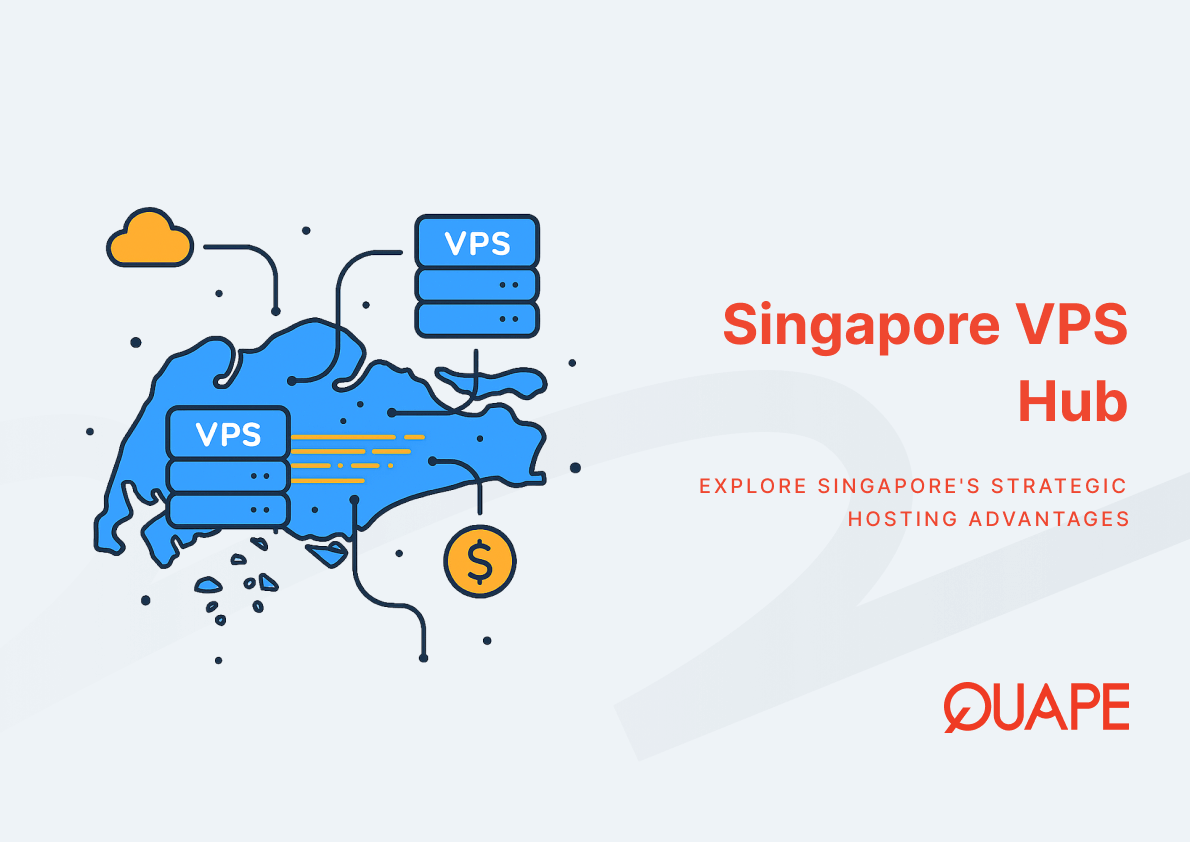
Singapore operates as a critical telecommunications intersection where submarine cables, internet exchange points, and carrier-neutral data centers converge to support regional workloads across Asia-Pacific markets. Organizations deploying Lưu trữ VPS in Singapore gain proximity to established peering infrastructure that reduces latency for users in Southeast Asia, Australia, India, and East Asia while maintaining reliable connectivity to Europe and North America. The city-state’s regulatory stability, combined with its position as a landing point for over 26 submarine cable systems, enables predictable performance for production environments, transactional platforms, and latency-sensitive applications that depend on consistent regional reach.
Singapore functions as a strategic VPS hosting hub because its physical location and digital infrastructure combine to create reliable, low-latency pathways for inter-regional traffic. The Singapore Internet Exchange handles peak traffic exceeding 4.60 Tbit/s, allowing local ISPs and content providers to exchange data without routing through distant transit points. This peering efficiency reduces operational costs and improves response times for applications serving users across ASEAN countries, making Singapore an anchor for businesses that require stable performance across dispersed geographic markets.
Những điểm chính
- Singapore connects to at least 26 active submarine cable systems with landing sites at Changi North, Tanah Merah, and Tuas, carrying over 99% of the country’s international telecommunications traffic.
- The Singapore Internet Exchange operates with peak traffic of 4.60 Tbit/s, enabling hundreds of peering members to exchange regional traffic locally rather than through international transit hops.
- VPS environments leverage Singapore’s carrier-neutral data centers to access multiple network providers, improving fault tolerance and reducing dependency on single-path routing.
- Regulatory frameworks established by Singapore’s Info-communications Media Development Authority provide clarity on data governance, supporting compliance planning for enterprise workloads.
- Singapore’s geographic position at the crossroads of East-West maritime routes makes it a natural physical anchor for cables connecting Asia with Europe, Africa, and the Middle East.
- Cost predictability in Singapore-based VPS hosting stems from stable pricing models and transparent infrastructure investment, contrasting with usage-based cloud billing that fluctuates with traffic patterns.
- Virtualization technologies such as KVM in Singapore VPS plans enable resource isolation and performance consistency for production applications requiring dedicated compute and memory allocation.
- Businesses deploying SaaS platforms, APIs, or e-commerce systems in Singapore benefit from reduced checkout latency and improved API responsiveness for regional user bases.
Introduction to Singapore as a Strategic VPS Hosting Hub
Singapore’s data center ecosystem supports regional internet exchange points that optimize traffic flow between Southeast Asian networks and global backbone providers. The concentration of carrier-neutral facilities allows VPS providers to establish redundant network paths, reducing single points of failure and improving overall resilience for hosted workloads. Organizations serving users across multiple ASEAN markets rely on Singapore’s infrastructure to maintain consistent application performance without requiring separate deployments in each target country.
Southeast Asia’s growing cloud demand drives investment in Singapore’s digital infrastructure, as enterprises migrate legacy systems to virtualized environments that support remote teams and distributed customer bases. The availability of diverse network providers within Singapore data centers enables VPS deployments to select optimal routing for specific traffic patterns, whether prioritizing latency to Jakarta, Manila, or Sydney. This flexibility supports workload distribution strategies that balance cost, performance, and compliance requirements across regional operations.
Core Infrastructure Factors That Make Singapore a VPS Hub
Singapore’s role as a telecommunications nexus depends on physical infrastructure that connects submarine cable systems to terrestrial networks through strategically located landing stations. These facilities interface with carrier-neutral data centers that house internet exchange points, creating a layered architecture where international bandwidth capacity integrates with local peering arrangements. VPS hosting benefits from this architecture by accessing multiple network providers within a single facility, enabling traffic to reach regional destinations through optimized paths that avoid unnecessary transit hops.
The interplay between submarine cables, internet exchanges, and data center facilities creates redundancy that improves fault tolerance for mission-critical workloads. When one cable system experiences disruption, alternative paths through other landing stations maintain connectivity, reducing the risk of prolonged outages that affect application availability. This resilience supports business continuity planning for organizations that cannot tolerate extended downtime in their production environments.
IX Singapore and Regional Internet Exchange Density
The Singapore Internet Exchange facilitates direct interconnection between ISPs, content delivery networks, and cloud providers, enabling them to exchange traffic without paying third-party transit fees. This peering efficiency reduces operational costs for network operators, which translates to more competitive pricing for VPS hosting customers who benefit from reduced bandwidth expenses. Network performance optimization in VPS environments depends on proximity to these exchange points, as local peering keeps regional traffic within Singapore rather than routing it through Hong Kong, Tokyo, or Los Angeles.
SGIX’s membership base includes hundreds of participants ranging from regional telecommunications carriers to global content providers, creating a dense interconnection fabric that improves routing diversity. When a VPS instance needs to reach users in Thailand, Malaysia, or Indonesia, the exchange point enables direct paths to local ISPs serving those markets, reducing latency by 20-40 milliseconds compared to transit-based routing. This latency reduction matters for interactive applications where user experience degrades noticeably when response times exceed 150-200 milliseconds.
Inter-ISP traffic optimization through SGIX also improves packet delivery consistency, as direct peering relationships establish predictable routing paths that avoid congestion points common in transit networks. VPS workloads handling real-time communications, live streaming, or financial transactions benefit from this consistency, which reduces jitter and packet loss that disrupt time-sensitive protocols.
APAC Peering Routes and Low-Latency Regional Reach
Asia-Pacific network routes converge in Singapore because the city-state’s geographic position minimizes cable distance to major population centers across Southeast Asia, Australia, and the Indian subcontinent. This physical proximity translates to lower propagation delay for data packets traveling between Singapore VPS instances and end users in Jakarta, Sydney, or Mumbai. Cross-border latency remains within acceptable thresholds for applications where milliseconds matter, such as API-driven mobile apps or collaborative software platforms.
ASEAN connectivity depends on Singapore’s role as a regional traffic aggregation point where telecommunications operators establish interconnection agreements that facilitate cross-border data exchange. VPS deployments in Singapore can reach users across multiple ASEAN countries through optimized routing that leverages these bilateral agreements, avoiding the need to route traffic through distant hubs in North America or Europe. Organizations hosting high-traffic websites benefit from this regional reach, as reduced latency improves page load times and conversion rates for e-commerce platforms serving Southeast Asian customers.
The density of peering arrangements in Singapore creates multiple viable paths for regional traffic, enabling VPS providers to implement intelligent routing that selects optimal paths based on real-time network conditions. This dynamic routing capability improves resilience during network congestion or localized outages, as traffic automatically shifts to alternative paths that maintain acceptable performance levels.
Submarine Cable Landing Stations and Global Connectivity
Submarine cable systems landing in Singapore provide international bandwidth capacity that connects Asia-Pacific markets to Europe, the Middle East, and Africa through diverse geographic routes. Singapore’s cable landing infrastructure supports fault tolerance by distributing landing points across three distinct locations (Changi North, Tanah Merah, and Tuas), reducing the risk that localized damage affects multiple cable systems simultaneously. This geographic distribution aligns with disaster recovery planning principles that emphasize avoiding single points of failure in critical infrastructure.
The abundance of cable systems landing in Singapore enables VPS workloads to maintain connectivity even when individual cables experience faults or require maintenance. Organizations operating global applications depend on this redundancy to ensure that European or North American users can access Singapore-hosted services without interruption, even during cable repairs that might take weeks to complete. The ability to route traffic through alternative cable systems without manual intervention improves operational resilience for production environments.
Singapore’s submarine cable network also supports future capacity expansion, as ongoing investments in new cable systems increase available international bandwidth to accommodate growing data volumes. VPS hosting customers benefit from this expanding capacity through more stable bandwidth pricing and reduced congestion during peak traffic periods, when multiple applications compete for shared network resources.
Regulatory, Political, and Operational Stability in Singapore
Singapore’s regulatory environment provides predictable data governance frameworks that support enterprise compliance planning without introducing uncertainty about future policy changes. The country’s geopolitical neutrality allows organizations to deploy infrastructure without concerns about cross-border data restrictions that might complicate operations in markets with evolving digital sovereignty requirements. This stability reduces compliance overhead for multinational operations that need to coordinate infrastructure decisions across multiple jurisdictions.
Data sovereignty considerations influence VPS placement decisions when organizations must balance performance requirements against regulatory obligations to maintain data within specific geographic boundaries. Singapore’s clear legal frameworks for data protection and cross-border data transfer enable organizations to develop compliant architecture designs that satisfy regional requirements while maintaining operational efficiency. The absence of sudden policy shifts reduces the risk of costly infrastructure migrations triggered by unexpected regulatory changes.
Predictable Data Governance and Compliance Environment
Singapore’s Personal Data Protection Act establishes clear requirements for data handling, storage, and transfer that align with international privacy standards while avoiding the prescriptive technical requirements found in some other jurisdictions. This regulatory clarity enables organizations to design VPS architectures that meet compliance standards without implementing jurisdiction-specific technical controls that might limit operational flexibility. Enterprise compliance requirements become more manageable when hosting jurisdiction provides stable legal frameworks that organizations can rely on for long-term planning.
The regulatory environment in Singapore supports cross-border data transfers to jurisdictions with adequate protection standards, enabling organizations to integrate Singapore-based VPS infrastructure with systems in other ASEAN countries, Australia, or Europe. This interoperability reduces friction in multi-region deployments where data must flow between processing centers to support integrated business operations. Organizations navigating Singapore data sovereignty compliance benefit from clear guidance on permissible data transfers that avoids the ambiguity present in less mature regulatory environments.
Singapore’s approach to data governance emphasizes risk-based compliance rather than prescriptive technical mandates, giving organizations flexibility to implement security controls appropriate to their specific threat models. This flexibility supports innovation in VPS deployment patterns, as organizations can adopt new technologies without waiting for regulators to approve specific technical implementations.
Business Continuity and Infrastructure Reliability
Tier III and Tier IV data centers in Singapore provide redundant power, cooling, and network infrastructure that supports uptime expectations for production workloads requiring 99.95% or higher availability. These facilities implement multiple layers of redundancy that eliminate single points of failure in critical systems, from uninterruptible power supplies to diverse network entry points. VPS hosting in certified facilities enables organizations to meet service level commitments to customers without investing in redundant infrastructure across multiple locations.
Operational resilience depends on maintaining concurrent maintainability, where infrastructure components can undergo scheduled maintenance without affecting running workloads. Singapore data centers designed to Tier III standards support this requirement through N+1 redundancy for power and cooling systems, allowing routine maintenance to proceed without triggering failover procedures. Organizations operating 24/7 services benefit from this capability, as maintenance windows no longer require service interruptions or complex failover orchestration.
Singapore’s political stability and favorable business climate reduce non-technical risks that might affect infrastructure availability, such as civil unrest, policy uncertainty, or sudden changes in foreign investment regulations. This stability matters for long-term infrastructure planning, as organizations committing to multi-year VPS deployments need confidence that the operating environment will remain conducive to business operations.
Why Singapore Matters for Different VPS Use Cases
Workload distribution strategies depend on matching application performance requirements with infrastructure capabilities that support those requirements cost-effectively. Singapore’s connectivity advantages make it suitable for specific use cases where regional latency matters more than raw compute cost, particularly for applications serving users across Southeast Asia, Australia, and India. Understanding how infrastructure location affects application performance enables organizations to make informed placement decisions that optimize user experience without over-provisioning resources.
Application performance in VPS environments depends on multiple factors beyond compute specifications, including network latency to end users, storage I/O characteristics, and memory bandwidth. Singapore-based VPS hosting addresses latency requirements for regional workloads while providing infrastructure scaling options that accommodate traffic growth without requiring architectural changes. Organizations evaluating infrastructure placement should consider how Singapore’s position affects their specific performance requirements rather than applying generic best practices that might not suit their use case.
SaaS Platforms and Regional Application Hosting
Multi-tenant SaaS platforms serving Southeast Asian customers require low-latency infrastructure that maintains consistent response times across diverse network conditions. Singapore VPS hosting provides proximity to regional users that reduces baseline latency by 40-80 milliseconds compared to hosting in North American or European data centers, improving perceived application responsiveness for interactive workflows. Latency-sensitive apps benefit most from Singapore placement, particularly those where user actions trigger server-side processing that must complete within tight time budgets.
User experience optimization for regional SaaS platforms depends on minimizing round-trip time for API calls, database queries, and asset loading. When a user in Jakarta interacts with a Singapore-hosted application, network latency remains under 30 milliseconds, enabling multiple request-response cycles within a single second without noticeable lag. This responsiveness supports real-time collaboration features, instant search results, and smooth UI transitions that define modern application expectations.
Các tổ chức triển khai hybrid VPS and cloud workloads can use Singapore as a regional processing tier that handles user-facing requests while connecting to global backend services for data analytics or batch processing. This hybrid approach balances latency optimization with cost efficiency, as interactive workloads run close to users while compute-intensive tasks execute in locations optimized for processing cost rather than network proximity.
E-Commerce, APIs, and Transactional Systems
Checkout latency directly affects conversion rates in e-commerce platforms, as delays between user actions and server responses increase cart abandonment rates. Singapore VPS hosting reduces this friction for Southeast Asian e-commerce by minimizing network delay during payment processing, inventory checks, and order confirmation. API responsiveness matters equally for mobile applications that depend on backend services for product catalogs, pricing, and transaction processing, where excess latency degrades user experience and drives customers to competitors with faster platforms.
Regional traffic spikes during promotional events or seasonal peaks require infrastructure that scales rapidly without introducing latency as load increases. VPS hosting for e-commerce platforms in Singapore provides the resource isolation needed to maintain consistent performance during traffic surges, as dedicated CPU and memory allocation prevents resource contention that might slow transaction processing. This predictability enables organizations to plan capacity based on expected traffic patterns rather than over-provisioning to handle worst-case scenarios.
Transactional systems handling financial data or payment processing benefit from Singapore’s regulatory environment, which provides clear frameworks for data protection and compliance that align with international payment card industry standards. The combination of low latency, regulatory clarity, and infrastructure reliability makes Singapore suitable for payment gateways, fraud detection systems, and order management platforms that require both performance and compliance.
Development, Staging, and Production Parity
DevOps workflows depend on environment isolation that enables development and staging systems to mirror production configurations without affecting live workloads. Singapore VPS hosting supports this requirement through virtualization that provides root-level control for developers who need to install specific software versions, modify system configurations, or test deployment procedures. Environment parity reduces deployment risks by ensuring that applications behave identically across development, staging, and production tiers.
The ability to create multiple isolated VPS instances within the same data center supports testing scenarios that require network proximity between components, such as validating latency-sensitive integrations or load testing distributed systems. Organizations can deploy development environments that replicate production network topology, enabling realistic testing of inter-service communication patterns and failover procedures. This testing capability improves deployment confidence by identifying issues in staging that might otherwise surface in production.
Các tổ chức đánh giá fully managed versus self-managed VPS options should consider how management overhead affects development velocity. Self-managed VPS instances provide maximum flexibility for custom configurations but require in-house expertise to maintain security patches and system updates. Fully managed options reduce operational burden but may limit customization options needed for complex development workflows.
How VPS Hosting Leverages Singapore’s Strategic Advantages
Virtualization technology enables resource isolation that guarantees predictable performance for VPS workloads regardless of activity on other virtual machines sharing the same physical hardware. Singapore-based VPS providers use this isolation to deliver consistent application performance that supports capacity planning and service level commitments. Dedicated resources allocated to each VPS instance prevent the resource contention common in shared hosting, where traffic spikes on neighboring sites degrade performance for all tenants.
Performance consistency in VPS environments depends on hypervisor design that enforces resource limits and prevents individual instances from monopolizing CPU, memory, or storage I/O. This enforcement maintains quality of service for all tenants while providing the flexibility needed to scale resources within an instance as workload demands change. Organizations can adjust CPU cores, memory allocation, and storage capacity independently, enabling right-sizing that optimizes cost without sacrificing performance.
Virtualization Technology and Resource Isolation
KVM hypervisors provide hardware-level virtualization that gives each VPS instance direct access to CPU instructions, reducing overhead compared to para-virtualization approaches that require guest operating systems to cooperate with the hypervisor. This direct hardware access improves performance for compute-intensive workloads, such as data processing pipelines, video transcoding, or scientific simulations. Modern VPS virtualization technology in Singapore data centers uses recent CPU generations that include virtualization extensions optimized for multi-tenant environments.
Performance consistency across VPS instances requires fair scheduling algorithms that prevent CPU-bound workloads from starving I/O-intensive applications of processor time. Hypervisors implement proportional share scheduling that allocates CPU cycles based on configured vCPU counts, ensuring that each instance receives its guaranteed allocation regardless of demand from other tenants. This guarantee enables organizations to plan capacity based on allocated resources rather than hoping for best-effort performance that varies with overall system load.
Memory isolation in KVM prevents one VPS instance from accessing memory allocated to other instances, providing security boundaries that protect sensitive data from cross-tenant attacks. This isolation extends to storage I/O, where per-instance I/O limits prevent a single workload from monopolizing disk bandwidth and degrading performance for other tenants sharing the same storage array.
Storage and Compute Optimization for APAC Workloads
NVMe storage arrays in Singapore VPS infrastructure provide low-latency random I/O performance that benefits database workloads, content management systems, and applications with frequent small-file access patterns. NVMe performance benefits become apparent in workloads where storage latency exceeds network latency, such as WordPress sites with complex plugin architectures or e-commerce platforms querying inventory databases. The reduction in storage wait time improves overall application responsiveness by eliminating I/O bottlenecks that might otherwise limit throughput.
CPU allocation strategies for APAC workloads should account for processing patterns typical in regional applications, such as image processing for e-commerce product photos, video transcoding for streaming platforms, or real-time analytics for mobile app telemetry. Organizations can choose RAM and CPU configurations that match their workload characteristics, balancing processing power against memory capacity to avoid over-provisioning expensive resources that remain underutilized.
Memory planning for VPS instances depends on understanding application memory usage patterns, including database caching requirements, application heap size, and operating system overhead. Undersized memory allocations force excessive disk swapping that degrades performance, while oversized allocations waste budget on unused capacity. Right-sizing memory requires profiling actual workload behavior rather than applying generic recommendations that might not suit specific application architectures.
Cost Predictability Compared to Regional Public Cloud
VPS pricing models typically use fixed monthly fees based on allocated resources, enabling accurate budget forecasting without uncertainty about usage-based charges that fluctuate with traffic patterns. This predictability supports long-term cost planning, as organizations can calculate infrastructure expenses for 12-month periods without building contingency budgets for unexpected traffic spikes. Transparent VPS pricing models contrast with public cloud billing where data transfer costs, API request fees, and premium support charges accumulate into bills that exceed initial estimates.
Long-term cost forecasting in VPS environments depends on understanding how resource requirements change as application usage grows. Organizations can predict VPS scaling costs by modeling traffic growth against available instance sizes, identifying upgrade paths that accommodate projected demand without requiring architectural migrations. This planning capability reduces the risk of costly emergency upgrades triggered by unexpected capacity exhaustion.
Singapore VPS hosting provides cost advantages for workloads with stable baseline resource requirements and predictable growth patterns, where fixed-price billing eliminates usage variance that complicates budget management. Organizations with highly variable traffic patterns might benefit from public cloud’s elasticity, but those with steady-state workloads often achieve better cost efficiency through VPS deployments that avoid premium charges for burst capacity.
Aligning Singapore-Based VPS Hosting with Business Growth
Scalability planning requires understanding current resource utilization and projected growth trajectories that inform infrastructure upgrade decisions. Singapore VPS hosting supports vertical scaling by enabling resource increases within existing instances, avoiding the complexity of horizontal scaling that requires load balancing and session management. Organizations can adjust CPU, memory, and storage allocations as workload demands increase, maintaining application architecture while accommodating growth.
Security posture in VPS environments depends on implementing defense-in-depth strategies that layer multiple controls to reduce overall attack surface. The resource isolation inherent in virtualization provides a foundation for security, but organizations must implement additional controls such as network segmentation, intrusion detection, and regular security patching. Operational efficiency improves when security controls integrate with deployment workflows rather than requiring separate manual processes that slow development velocity.
Security and Risk Management in VPS Environments
Attack surface reduction in VPS deployments starts with minimizing exposed services and closing unnecessary network ports that might provide entry points for attackers. Organizations deploying VPS instances should implement strict firewall rules that allow only required traffic, reducing exposure to scanning and exploitation attempts. VPS cybersecurity best practices include regular security audits that identify misconfigurations or unnecessary services that increase risk.
Monitoring capabilities in VPS environments should track both system metrics and security events, correlating resource utilization patterns with potential security incidents. Unusual CPU spikes might indicate cryptocurrency mining malware, while unexpected network traffic patterns could signal data exfiltration attempts. Real-time alerting enables rapid response to security events before they escalate into data breaches or service disruptions.
Isolation between VPS instances provides security boundaries that limit lateral movement if one instance becomes compromised. Attackers gaining access to a single VPS cannot easily pivot to other instances on the same physical host, as hypervisor-enforced isolation prevents cross-tenant access. This containment reduces blast radius for security incidents, limiting damage to the affected instance rather than exposing entire infrastructure deployments.
When VPS Makes More Sense Than Shared Hosting
Resource contention in shared hosting environments degrades performance when neighboring sites experience traffic spikes, as all tenants compete for the same pool of CPU, memory, and storage resources. VPS differs from shared hosting by guaranteeing dedicated resource allocation that eliminates this contention, providing predictable performance regardless of activity on other virtual machines. Performance thresholds that trigger VPS migration typically include consistent CPU throttling, memory pressure, or I/O wait times that exceed acceptable limits.
Organizations should consider VPS migration when application requirements exceed shared hosting capabilities, such as needing custom software installations, specific PHP versions, or root access for system configuration. The flexibility to install and configure arbitrary software enables use cases impossible in shared hosting, from running background processing daemons to implementing custom caching layers. This flexibility becomes essential as applications mature and require optimizations beyond basic web hosting capabilities.
Conclusion & Strategic Next Steps
Singapore’s infrastructure advantages create a foundation for VPS deployments serving Asia-Pacific markets, where submarine cable connectivity, mature peering relationships, and regulatory stability combine to support reliable application performance. Organizations evaluating infrastructure placement should consider Singapore for workloads where regional latency matters, regulatory clarity reduces compliance overhead, and cost predictability supports long-term budgeting. The city-state’s role as a telecommunications hub positions it as a strategic anchor for businesses expanding across Southeast Asian markets or serving global users from a centralized regional location.
Infrastructure decision-making requires balancing performance requirements against cost constraints while accounting for compliance obligations and operational complexity. Singapore VPS hosting addresses this balance for organizations that need dedicated resources, root-level control, and predictable pricing without the overhead of managing physical infrastructure. Businesses ready to deploy regional workloads can explore Các gói lưu trữ VPS built on Singapore’s connectivity and compliance strengths.
For guidance on aligning VPS infrastructure with specific business requirements, liên hệ với đội ngũ bán hàng của chúng tôi to discuss deployment strategies.
Câu Hỏi Thường Gặp
Why does Singapore’s location matter for VPS hosting performance?
Singapore’s geographic position minimizes cable distance to major Southeast Asian population centers, reducing propagation delay for data packets traveling between VPS instances and regional end users. This physical proximity translates to 40-80 milliseconds lower latency compared to hosting in North America or Europe, improving application responsiveness for interactive workloads. The concentration of submarine cable landing points in Singapore also provides diverse routing options that enhance fault tolerance.
How do internet exchange points in Singapore improve VPS network performance?
Internet exchange points like SGIX enable direct peering between ISPs and content providers, allowing regional traffic to exchange locally without routing through expensive international transit links. This peering reduces latency by 20-40 milliseconds for intra-regional traffic and lowers bandwidth costs for network operators, which translates to more competitive VPS pricing. Direct peering also improves routing consistency by establishing predictable paths that avoid congestion common in transit networks.
What makes Singapore’s regulatory environment favorable for VPS hosting?
Singapore’s data protection framework provides clear requirements for data handling without imposing prescriptive technical mandates that limit operational flexibility. The regulatory stability reduces compliance overhead for multinational operations and enables cross-border data transfers to jurisdictions with adequate protection standards. This clarity supports long-term infrastructure planning by reducing the risk of unexpected policy changes that might require costly migrations.
When should organizations choose Singapore VPS over shared hosting?
Organizations should migrate to VPS when resource contention in shared hosting causes performance degradation, or when applications require custom software installations, specific runtime versions, or root access for system configuration. VPS becomes essential when traffic patterns exceed shared hosting capacity thresholds or when security requirements demand resource isolation that shared hosting cannot provide. The dedicated resource allocation in VPS eliminates performance variability caused by neighboring sites.
How does NVMe storage in Singapore VPS benefit database workloads?
NVMe storage provides sub-millisecond random I/O latency that eliminates storage bottlenecks in database-heavy applications, improving query response times for inventory systems, content management platforms, and transactional databases. The low-latency performance becomes critical when storage wait time exceeds network latency, allowing applications to serve more requests per second with the same CPU allocation. This efficiency reduces infrastructure costs by maximizing throughput per provisioned resource unit.
What cost advantages does VPS offer compared to public cloud for regional workloads?
VPS pricing uses fixed monthly fees based on allocated resources, eliminating uncertainty from usage-based billing that accumulates charges for data transfer, API requests, and storage operations. This predictability enables accurate budget forecasting and long-term cost planning without contingency buffers for traffic variance. Organizations with stable resource requirements often achieve 30-50% cost savings through VPS compared to equivalent public cloud deployments with similar performance characteristics.
How does virtualization technology ensure performance consistency in VPS environments?
KVM hypervisors enforce resource limits that prevent individual VPS instances from monopolizing CPU, memory, or storage I/O, maintaining quality of service for all tenants on shared hardware. Proportional share scheduling allocates processor time based on configured vCPU counts, guaranteeing each instance receives its committed allocation regardless of demand from other workloads. This isolation enables capacity planning based on allocated resources rather than best-effort performance that varies with overall system load.
What security benefits does VPS isolation provide for production workloads?
Hypervisor-enforced isolation prevents VPS instances from accessing memory or storage allocated to other tenants, creating security boundaries that limit lateral movement if one instance becomes compromised. This containment reduces blast radius for security incidents by restricting attacker access to the affected instance rather than exposing entire infrastructure deployments. Organizations can implement defense-in-depth strategies that layer network segmentation, intrusion detection, and access controls on top of this foundational isolation.

- From Design to Live Website: Converting Figma/PSD to WordPress the Right Way - Tháng 4 29, 2026
- How Singapore Businesses Benefit from Figma to WordPress Conversion - Tháng 4 27, 2026
- Integrating Design Systems Between Figma, WordPress, and Other Platforms - Tháng 4 24, 2026