Business email hosting services in Singapore operate within one of Asia-Pacific’s most sophisticated digital infrastructure ecosystems, where regulatory frameworks, network architecture, and data center standards converge to shape enterprise communication reliability. For IT managers and procurement leads evaluating email hosting solutions, understanding how infrastructure design, authentication protocols, and compliance requirements interact determines whether an email platform supports business continuity or becomes a liability during operational stress. Singapore’s position as a regional internet hub, combined with stringent data protection regulations, creates both opportunities and constraints that distinguish local hosting from offshore alternatives.
Email hosting services in Singapore refer to managed platforms that store, route, and deliver business email through servers located within Singapore’s data center infrastructure. Unlike consumer email services, business email hosting integrates DNS configuration, authentication frameworks, storage policies, and administrative controls into a single operational environment. The core value proposition centers on predictable performance, regulatory compliance with Singapore’s Personal Data Protection Act (PDPA), and support models tailored to organizations that lack in-house email administration expertise.
Những điểm chính
- Email hosting architecture depends on mail servers, storage systems, and network routing that together determine message delivery reliability and access performance.
- DNS configuration and authentication standards such as SPF, DKIM, and DMARC secure sender reputation and improve inbox placement rates.
- Singapore’s Tier 3 data centers and multi-homed network routing reduce latency and support uptime SLAs exceeding 99.9% for regional business users.
- Shared hosting resource allocation models balance cost efficiency against performance predictability through user density caps and storage isolation.
- PDPA compliance requires email providers to implement data handling policies that protect personal information and grant users control over their data.
- Control panels such as DirectAdmin and cPanel enable non-technical users to manage mailboxes, forwarding rules, and authentication settings without command-line access.
- Migration procedures and disaster recovery planning reduce vendor lock-in risks and ensure business continuity during infrastructure transitions.
- Local hosting within Singapore delivers sub-10 ms latency compared to offshore hosting, a performance advantage that benefits real-time collaboration and mobile access patterns.
Email Hosting Infrastructure Architecture Fundamentals
Email hosting services in Singapore depend on infrastructure architecture that coordinates mail servers, storage systems, and network routing to enable reliable message delivery. Mail servers execute the protocols that accept, queue, and transfer messages between domains, while storage systems retain mailbox data and support search indexing. Network routing determines how packets traverse between sender and recipient, influencing both delivery speed and the probability of transmission failure. The architectural choices providers make at this layer establish baseline performance and resilience before any application-layer optimizations occur.
Core Components of Email Hosting Infrastructure
Email hosting infrastructure architecture integrates mail transfer agents, message stores, and network interfaces into a cohesive operational stack. Mail transfer agents handle SMTP transactions, applying relay rules and filtering policies before committing messages to storage. Message stores organize mailbox data using filesystems or databases optimized for concurrent read and write operations, a design decision that affects both retrieval latency and backup complexity. Network interfaces connect mail servers to upstream transit providers and email hosting services in Singapore rely on multi-homed bandwidth configurations to maintain availability during single-provider outages. Infrastructure components interact through well-defined protocols, but degradation in any single layer propagates as user-visible delays or delivery failures.
Mail Transfer Protocols and Message Flow
Protocols enable message delivery by defining how clients and servers exchange commands, authenticate sessions, and confirm transaction completion. SMTP governs outbound mail transfer and relay operations between mail servers, establishing sender identity and routing paths. POP3 and IMAP provide retrieval mechanisms with fundamentally different synchronization behaviors. POP3 downloads messages to local storage and optionally deletes server copies, which suits single-device workflows but complicates multi-device access. IMAP maintains messages on the server and synchronizes state changes across all connected clients, which supports modern usage patterns where users access email from desktop, mobile, and web interfaces interchangeably.
SMTP, POP3, and IMAP Roles in Business Email Systems
SMTP, POP3, and IMAP form the technical foundation for how email hosting services in Singapore interact with mail clients and external systems. SMTP handles message submission from clients and mail relay between servers, applying authentication checks and policy filters at each hop. Mail client synchronization depends on whether users configure POP3 or IMAP, a choice that determines where authoritative message state resides. IMAP enables folder management, read status tracking, and server-side search operations that POP3 cannot replicate without third-party extensions. Protocol selection affects not only user experience but also backup strategies, since IMAP-configured mailboxes require server-side retention policies while POP3 delegates long-term storage to endpoint devices.
DNS, Authentication, and Email Trust Frameworks
Authentication secures email hosting services in Singapore by verifying sender identity and preventing domain spoofing attacks that undermine recipient trust. Email trust frameworks operate at the DNS layer, where published records instruct receiving mail servers how to validate message origins and handle authentication failures. Without properly configured DNS and authentication standards, even legitimate business email faces elevated spam classification rates or outright rejection by recipient systems.
DNS Configuration for Email Hosting
DNS configuration for email hosting establishes the routing path that directs inbound messages to the correct mail server infrastructure. MX records specify the hostname and priority of servers authorized to receive mail for a domain, enabling load distribution and failover behavior when primary servers become unreachable. Email routing depends on recursive DNS queries that traverse authoritative nameservers to resolve MX records into IP addresses. Misconfigured DNS propagates delivery failures that appear to users as bounced messages or missing correspondence, while correct configuration remains invisible during normal operations.
Email Authentication Standards and Deliverability
SPF, DKIM, and DMARC improve sender trust by providing cryptographic and policy-based verification mechanisms that receiving servers evaluate before accepting messages. Email authentication standards operate through DNS-published records that declare which IP addresses may send on behalf of a domain, supply public keys for signature verification, and specify handling instructions for authentication failures.
SPF, DKIM, and DMARC Authentication
SPF defines authorized sending IPs through a DNS TXT record that receiving servers query during SMTP transactions, rejecting or flagging messages from unlisted sources. DKIM attaches digital signatures to message headers using private keys held by the sending mail server, while receiving servers verify signatures against public keys published in DNS. DMARC coordinates SPF and DKIM results through a policy framework that instructs recipients how to handle messages failing authentication checks, with options ranging from monitoring to outright rejection. Anti-spoofing protection depends on alignment between the message header From domain and the domains validated by SPF and DKIM. Organizations that publish strict DMARC policies signal to inbox providers that their domain identity deserves elevated trust, which translates into improved inbox placement and reduced risk of phishing attacks that impersonate corporate email addresses.
Reliability Engineering and Uptime Design
Reliability enhances business continuity by reducing the frequency and duration of email service interruptions that disrupt communication workflows. Email hosting providers engineer reliability through redundant infrastructure components, automated failover mechanisms, and network routing diversity that collectively minimize single points of failure.
Data Center Tier Standards in Singapore
Data center tiers classify facilities based on redundancy levels for power, cooling, and network connectivity that together determine expected uptime. Tier 3 Singapore data centers incorporate concurrent maintainability, which allows infrastructure servicing without taking systems offline, a design requirement that supports 99.982% annual uptime. TIA-942 Rated 3 certification validates architectural compliance with published standards for fault tolerance, security controls, and environmental management. Email hosting services deployed in Tier 3 facilities inherit infrastructure resilience that reduces the probability of power or cooling failures cascading into message delivery outages.
Uptime SLAs and Multi-Homed Network Routing
Uptime SLAs formalize the percentage of time email services remain operationally accessible, translating infrastructure design into contractual performance commitments. Multi-homed bandwidth configurations connect mail servers to multiple upstream internet service providers, which enables automatic route failover when one transit path experiences congestion or outage. Redundant ISP routing improves both availability and latency by selecting optimal paths based on real-time network conditions. Singapore’s dense peering ecosystem, including the Singapore Internet Exchange with peak traffic capacity exceeding 4.60 Tbit/s, enables local hosting providers to establish diverse connectivity that reduces dependence on single transit providers.
Security Architecture for Business Email Hosting
Security protects communication integrity by preventing unauthorized access, filtering malicious content, and maintaining confidentiality of message data throughout storage and transmission. Email systems face persistent threats including spam campaigns, brute force authentication attacks, and phishing attempts that exploit user trust.
Threat Protection Layers for Email Systems
WAF, DDoS protection, and network firewalls establish perimeter defenses that filter malicious traffic before it reaches mail server infrastructure. Web application firewalls inspect HTTP and SMTP traffic patterns to identify and block exploit attempts targeting known vulnerabilities. DDoS protection absorbs volumetric attacks that attempt to exhaust bandwidth or processing capacity, while network firewalls enforce access control policies that restrict connections to authorized IP ranges and ports. Layered security architecture operates on the principle that multiple defensive mechanisms reduce the probability that any single attack vector succeeds in compromising email hosting services in Singapore.
Spam Filtering and Brute Force Prevention
Spam filtering systems analyze message content, sender reputation, and transmission patterns to classify inbound mail as legitimate or unwanted before delivery to user mailboxes. Brute force prevention monitors authentication attempts and temporarily blocks IP addresses that exceed failure thresholds, which mitigates credential stuffing attacks. Account protection depends on both automated filtering and user-configured password complexity requirements. Organizations that implement strong password policies and multi-factor authentication reduce the attack surface that spam campaigns and credential theft operations exploit.
Storage, Retention, and Shared Resource Models
Resource allocation affects performance by determining how storage capacity, processing power, and network bandwidth are distributed among users sharing infrastructure. Email hosting providers balance cost efficiency against performance predictability through architectural choices that isolate or pool resources.
Storage Architecture and Data Retention Policies
SSD storage improves mailbox access performance compared to traditional spinning disks by reducing seek latency during message retrieval and search operations. Email data retention policies specify how long messages remain accessible before automatic deletion, a setting that balances compliance requirements against storage costs. Backup policies protect against data loss by creating point-in-time copies that enable recovery after accidental deletion or infrastructure failure. Retention and backup strategies interact with storage architecture since SSD capacity costs more than high-density archive storage, creating economic pressure to move older messages to lower-cost tiers.
Shared Hosting Resource Allocation Models
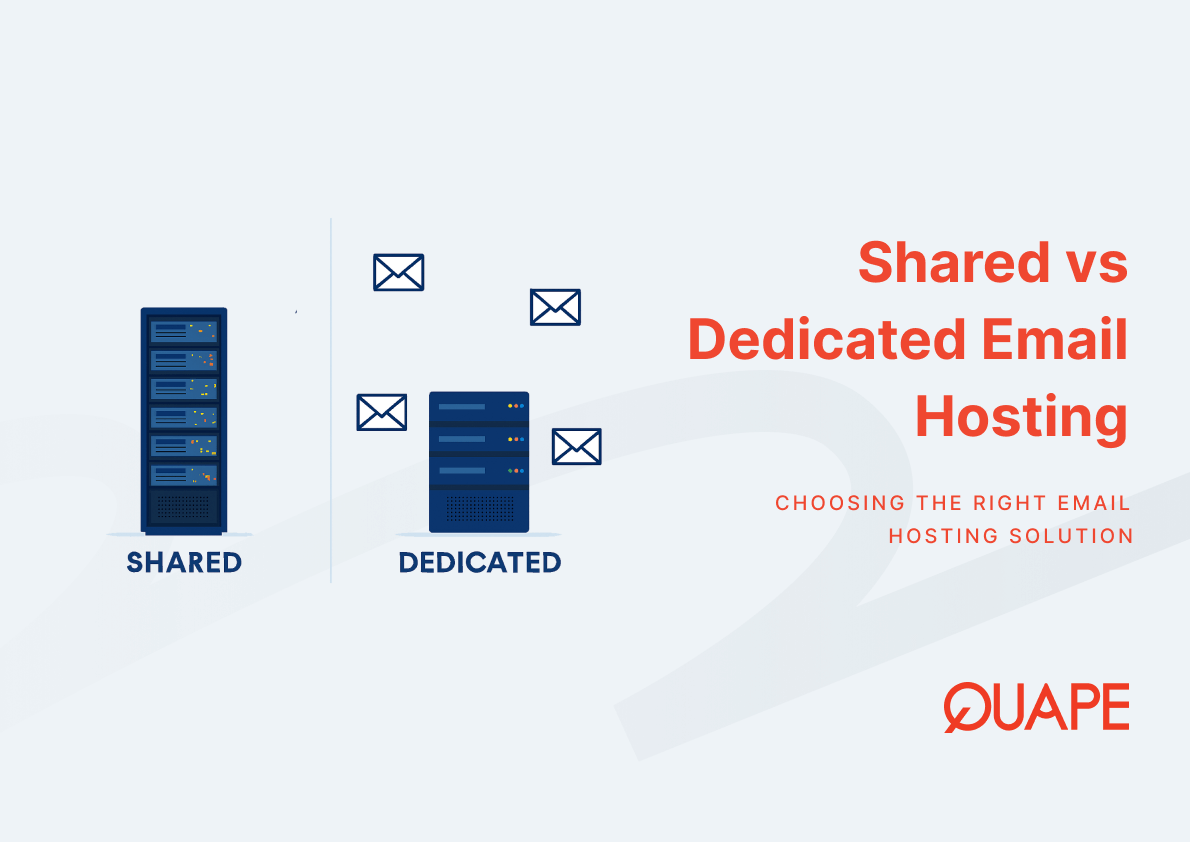
Shared hosting distributes infrastructure costs across multiple customers by running numerous accounts on common servers, which reduces per-user expenses compared to dedicated infrastructure. User density caps limit the number of accounts per server to prevent resource contention that degrades performance during peak usage periods. Performance isolation mechanisms such as CPU quotas and I/O throttling prevent individual accounts from monopolizing resources that other users require. The trade-off between cost efficiency and performance predictability becomes visible when high-activity accounts trigger resource limits or when insufficient capacity provisioning causes slowdowns across all co-located users.
Administrative Control and User Experience
Control panels enable operational efficiency by providing graphical interfaces that translate complex mail server configurations into accessible management workflows. Non-technical users rely on control panels to create mailboxes, configure forwarding rules, and manage authentication settings without requiring command-line expertise.
Control Panels for Email Hosting Administration
DirectAdmin and cPanel serve as the primary control panel platforms for business hosting environments, offering comparable feature sets through different interface designs. User management functions within control panels allow administrators to create email accounts, set storage quotas, and configure access permissions for department-specific mailboxes. DirectAdmin emphasizes resource efficiency and faster load times, which benefits environments with numerous concurrent administrative sessions, while cPanel provides extensive third-party integration options that extend functionality beyond core email management. Control panel selection influences administrator productivity and the learning curve required for staff who manage email infrastructure as part of broader IT responsibilities.
Business Continuity, Disaster Recovery, and Migration
Continuity planning reduces downtime risk by preparing procedures and infrastructure that maintain operations during unexpected failures or planned transitions. Email hosting resilience depends on both technological safeguards and documented processes that guide recovery actions.
Business Continuity and Disaster Recovery in Email Hosting
Backup systems create redundant copies of mailbox data and server configurations that enable restoration after hardware failures, data corruption, or security incidents. Disaster recovery planning documents the sequence of actions required to restore email services within acceptable timeframes, including backup retrieval, server provisioning, and DNS updates. Service resilience improves when backup systems operate independently from primary infrastructure, ensuring that common-mode failures do not simultaneously compromise both production and recovery capabilities.
Email Migration Procedures and Data Portability
Email migration transfers mailbox contents and configurations from one hosting platform to another, a process that organizations undertake when changing providers or consolidating infrastructure. Data portability depends on standardized protocols such as IMAP that enable universal mailbox access regardless of underlying server implementations. Vendor lock-in risks arise when proprietary features or non-standard configurations complicate migration efforts, increasing switching costs. Hosting providers that offer free migration assistance reduce the perceived risk of platform adoption, while organizations that maintain regular exports of mailbox data preserve optionality for future transitions.
Performance, Scalability, and Network Latency
Local infrastructure improves performance by reducing the physical distance that packets traverse between users and mail servers, which directly affects delivery speed and responsiveness. Network latency compounds with protocol overhead to determine the total time required to complete email operations.
Network Latency and Local Routing in Singapore
Network latency measures the round-trip time for packets traveling between client and server, a metric that Singapore data centers minimize through proximity to regional users and efficient routing. Local routing within Singapore reduces latency compared to offshore hosting by avoiding transcontinental links and multiple autonomous system hops. Singapore IX connectivity enables direct peering between hosting providers and regional ISPs, which shortens routing paths and improves throughput. Geographic proximity delivers measurable performance benefits when users access mailboxes from mobile devices over cellular connections, since higher latency magnifies delays during IMAP synchronization operations.
Scalability for Growing User Bases
User scaling challenges hosting providers to maintain consistent performance as mailbox counts increase, a requirement that tests both infrastructure capacity and resource allocation algorithms. Mailbox growth drives storage expansion and backup infrastructure investment, costs that providers pass through to customers via tiered pricing models. Resource elasticity allows hosting platforms to allocate additional processing power and bandwidth as organizational demands grow, preventing performance degradation that occurs when static capacity limits are exceeded. Organizations planning for growth evaluate whether hosting architectures support seamless scaling or require disruptive migrations to higher-tier infrastructure.
Cost Structures and Deployment Trade-offs
Cost depends on architecture and support models that determine both initial deployment expenses and ongoing operational overhead. Email hosting buyers evaluate trade-offs between capital investment, recurring fees, and the opportunity cost of internal IT resource allocation.
Cloud vs Data Center Hosted Email Trade-offs
Cloud email services provide operational simplicity through managed platforms that abstract infrastructure complexity, while data center hosted email offers greater operational control over configuration and data residency. Cloud platforms typically charge per-user licensing fees with bundled storage and support, which simplifies budgeting but may cost more at scale. Data center infrastructure requires higher upfront investment in hardware and facilities but delivers lower marginal costs as user counts increase. Organizations with regulatory requirements or specific integration needs often favor data center deployments that provide direct infrastructure access, while those prioritizing rapid deployment and minimal IT overhead lean toward cloud solutions.
Cost Structure Considerations for Businesses
Licensing costs for email hosting vary based on feature sets, storage allocations, and support service levels that providers bundle into pricing tiers. Support costs represent ongoing expenses for troubleshooting, configuration changes, and user assistance that organizations incur whether through internal staff or external managed services. Scaling economics determine how per-user costs change as organizations add mailboxes, with shared hosting models offering stable pricing and dedicated infrastructure exhibiting step-function cost increases at capacity thresholds. Buyers evaluate total cost of ownership by modeling licensing fees, support requirements, and scaling patterns over multi-year planning horizons.
Regulatory and Compliance Considerations in Singapore
Compliance requires local data governance practices that align email operations with legal obligations governing personal information protection. Singapore’s regulatory framework establishes specific requirements for how organizations collect, use, and secure personal data transmitted through email systems.
Singapore PDPA and Email Data Handling
PDPA governs the collection, use, disclosure, and protection of personal data by organizations operating in Singapore, with email addresses classified as personal information subject to regulatory oversight. Data residency requirements emerge from PDPA principles that grant individuals rights over their personal data, creating operational preferences for hosting within Singapore’s jurisdiction. Personal data protection obligations under PDPA include obtaining consent before collection, implementing security safeguards, and providing data access to individuals upon request. Organizations using email hosting services must ensure providers implement policies and technical controls that support PDPA compliance, particularly regarding data retention, access logging, and breach notification procedures.
Comparison with Public Cloud Email Services
Managed hosting provides operational simplicity by bundling infrastructure, software updates, and technical support into integrated service packages. Organizations compare managed email hosting against public cloud platforms based on cost, control, and support quality differences.
Business Email Hosting vs Google Workspace and Microsoft 365
Google Workspace and Microsoft 365 dominate enterprise email through feature-rich platforms that integrate calendaring, collaboration tools, and cloud storage within unified subscriptions. Managed email hosting focuses specifically on email delivery and administration without the extensive application ecosystem that characterizes public cloud offerings. Organizations with basic email requirements and cost sensitivity may find managed platforms deliver sufficient functionality at lower price points, while those requiring deep collaboration features or extensive third-party integrations favor public cloud services. Support models differ significantly, with public cloud providers offering tiered support plans that escalate costs for faster response times, while managed hosting often includes personalized technical assistance as a core service element.
How QUAPE Enhances Business Email Hosting Services in Singapore
QUAPE provides secure, reliable, local email hosting through infrastructure deployed in Tier 3 Singapore data centers with TIA 942 certification. Email hosting services through QUAPE integrate DirectAdmin control panels, multi-homed bandwidth connectivity, and managed support that addresses technical issues without requiring in-house expertise. Organizations benefit from Singapore-based infrastructure that delivers low-latency access to regional users while maintaining PDPA-aligned data residency. QUAPE’s business hosting plans bundle email services with web hosting, SSL certificates, and spam filtering, creating an integrated platform for organizations that prioritize operational simplicity and predictable costs. The shared hosting model caps server density to maintain performance consistency, while backup systems and security controls reduce operational risk.
Conclusion: Selecting the Right Business Email Hosting Partner
Selecting email hosting services in Singapore requires evaluating how infrastructure architecture, security controls, compliance frameworks, and support models align with organizational requirements and risk tolerance. Reliability depends on data center standards and network diversity that minimize downtime, while security protects against evolving threats through layered defenses and authentication frameworks. Compliance with PDPA mandates data handling practices that respect personal information rights, a requirement that favors local hosting providers familiar with Singapore’s regulatory environment. Scalability ensures platforms accommodate growth without disruptive migrations, and cost structures determine total ownership expenses over multi-year horizons. Organizations that prioritize operational simplicity and regional performance benefit from managed hosting platforms that integrate technical support with Singapore-based infrastructure.
For businesses seeking reliable email hosting with personalized support and transparent pricing, liên hệ với đội ngũ bán hàng của chúng tôi to discuss how QUAPE’s Singapore-based infrastructure supports your communication requirements.
Câu Hỏi Thường Gặp
What differentiates business email hosting from consumer email services?
Business email hosting provides custom domain addresses, administrative controls, guaranteed uptime SLAs, and technical support tailored to organizational needs. Consumer services such as Gmail prioritize individual users with limited customization and no contractual performance commitments.
How does Singapore’s data center infrastructure benefit email hosting performance?
Singapore’s Tier 3 data centers deliver redundant power, cooling, and network connectivity that support uptime exceeding 99.9%. Proximity to regional internet exchanges reduces latency for Asia-Pacific users, with local routing often achieving sub-10 ms response times.
Why are SPF, DKIM, and DMARC important for business email?
These authentication standards verify sender identity and prevent domain spoofing, which protects brand reputation and improves inbox placement rates. Receiving mail servers increasingly reject or quarantine messages lacking proper authentication.
What is the advantage of shared hosting for email compared to dedicated servers?
Shared hosting distributes infrastructure costs across multiple customers, reducing per-user expenses while maintaining acceptable performance through density caps and resource isolation. Dedicated servers provide guaranteed resources at higher costs, which suits high-volume or latency-sensitive workloads.
How does PDPA compliance affect email hosting decisions?
PDPA requires organizations to implement data protection measures and maintain control over personal information, which favors hosting within Singapore’s legal jurisdiction. Local providers familiar with PDPA obligations can support compliance through appropriate policies and technical controls.
What role does control panel selection play in email administration?
Control panels such as DirectAdmin and cPanel determine the ease with which non-technical users can manage mailboxes, configure forwarding rules, and adjust security settings. Interface design and feature availability directly affect administrator productivity and training requirements.
How important is migration assistance when changing email hosting providers?
Migration assistance reduces the technical complexity and risk of data loss during platform transitions. Providers offering free migration lower switching costs and demonstrate confidence in service quality, while organizations maintaining regular exports preserve migration optionality.
What should organizations consider when comparing email hosting costs?
Total cost of ownership includes licensing fees, storage allocations, support service levels, and scaling economics as user counts grow. Organizations should model multi-year expenses and evaluate whether cost structures align with expected growth patterns and budget constraints.

- Business Email Hosting vs G-Suite / Microsoft 365 - Tháng 12 29, 2025
- Shared Hosting vs Dedicated Hosting for Email - Tháng 12 29, 2025
- SMTP vs POP3 vs IMAP: Which Protocol Fits Your Business Workflow - Tháng 12 28, 2025