When a domain name you need is already registered, understanding the backorder and auction process becomes essential for protecting your brand or entering a competitive market. Domain backordering allows businesses to monitor and claim valuable names as they expire, while secondary market auctions provide structured access to premium domains that owners actively sell. For IT managers, CTOs, and procurement leads in Singapore, knowing how the domain lifecycle, redemption windows, and drop catching systems interact determines whether you secure a strategic digital asset or lose it to faster competitors. This guide explains how domain backorders work, what happens during the expiration cycle, and when these strategies make operational sense for your organization.
A domain backorder guide describes the process and tools used to claim an already-registered domain name after its current registration expires and passes through mandatory grace periods. Unlike standard registration, backordering depends on timing, registry policies, and automated systems that compete to capture domains the moment they become publicly available.
Những điểm chính
- Domain names that are not renewed pass through an auto-renew grace period, redemption phase, and pending delete status before returning to public availability, creating structured windows for backorder attempts.
- The Redemption Grace Period mandated by ICANN requires at least 30 days during which the original registrant can restore their domain, blocking backorder capture until this window closes.
- Drop catching systems use automated EPP connections to submit registration requests within milliseconds of a domain’s release, resulting in competitive races when multiple parties target the same name.
- The secondary market for domain names generated 144,700 sales totaling approximately US$185 million in 2024, with .com domains representing 74.4% of total transaction value, reflecting strong commercial demand for established names.
- Backorder success depends on factors including domain age, backlink profile, trademark status, and the breadth of registrar coverage used to monitor the drop.
- Singapore businesses targeting .sg or .com.sg domains must account for SGNIC eligibility requirements and local presence policies that influence backorder feasibility and transfer processes.
- Due diligence on trademark conflicts, historical abuse, and SEO penalties protects organizations from acquiring domains that carry legal or technical liabilities.
Understanding the Secondary Market for Domains
The secondary market for domain names functions as a structured ecosystem where previously registered domains change hands through auctions, brokered sales, and direct transactions. This market exists because domain names carry intrinsic value beyond their technical function as DNS pointers. Factors such as keyword relevance, brandability, traffic history, and backlink profiles influence pricing, creating an economic layer that treats domains as tradeable assets rather than simple registration records.
According to Wikipedia’s overview of the domain aftermarket, the secondary market demonstrates growing transaction volumes over time, with certain premium names selling for six or seven figures while most transactions occur in the mid-market range. Domain investors, branding agencies, and enterprises participate in this market, purchasing names speculatively or for immediate deployment. Auction platforms operated by major registrars facilitate transparent bidding, while private sales and brokered deals handle high-value or confidential transactions.
Understanding the secondary market entity helps organizations recognize that domain acquisition strategies extend beyond initial registration. When a desired name is taken, businesses face a choice: negotiate directly with the current owner, wait for expiration and attempt a backorder, or select an alternative. The secondary market supports all three approaches, providing price discovery, transaction infrastructure, and legal frameworks that govern ownership transfer.
The Domain Expiration Lifecycle Explained
When a registrant fails to renew a domain, the name passes through a series of mandatory phases defined by ICANN policies and registry rules. This expiration cycle determines when and how a domain becomes available for backorder or drop catching. Each phase serves a specific purpose, balancing registrant protection with public access to namespace resources.
Auto-Renew Grace Period
The auto-renew grace period begins immediately after the domain’s expiration date. During this window, which typically lasts between 0 and 45 days depending on the registrar, the domain may continue to resolve normally or display a parking page. The registrant retains full control and can renew without penalty during this phase. As explained by Namesilo’s backorder guide, registrars use this period to encourage renewal while protecting customers from accidental lapses. Some registrars automatically renew domains if billing information is on file, while others require manual action.
The auto-renew grace period represents the registrant’s primary opportunity to reclaim the domain without additional fees or administrative processes. For organizations monitoring expired domains, this phase signals potential availability but offers no actionable path to acquisition. The domain remains under the control of the original owner and registrar.
Redemption Grace Period (RGP)
If the registrant does not renew during the auto-renew grace period, the domain enters the Redemption Grace Period. ICANN’s Expired Registration Recovery Policy mandates that generic TLD registries provide at least 30 days during which the original registrant may restore their domain by paying a restoration fee, typically ranging from $100 to $200. During RGP, the domain does not resolve and displays an “RGPSTATUS” in WHOIS records, signaling that it is locked for recovery purposes.
The redemption grace period protects registrants from permanent loss due to billing errors, administrative oversights, or temporary financial issues. From a backorder perspective, RGP extends the waiting period before a domain becomes publicly available. Organizations cannot register or backorder a domain while it remains in redemption status. The policy reflects ICANN’s priority on registrant rights over immediate namespace recycling.
Pending Delete & Drop Phase
After the Redemption Grace Period expires without restoration, the domain enters pending delete status for approximately five days. During this phase, the domain cannot be recovered by the original registrant or registered by the public. Instead, it is queued for deletion from the registry database. On the final day of pending delete, the domain “drops” and becomes available for registration on a first-come, first-served basis. Domain lifecycle timelines typically span 75 to 80 days from initial expiration to final drop, though exact timing varies by registrar and TLD.
The pending delete phase creates a fixed release schedule that drop catching systems and backorder services monitor. Registries publish drop lists that indicate when specific domains will become available, allowing competitors to prepare automated registration attempts. The drop itself occurs at a precise moment determined by the registry, often measured in seconds, which explains why automated systems dominate successful captures.
How Domain Backordering Works in Practice
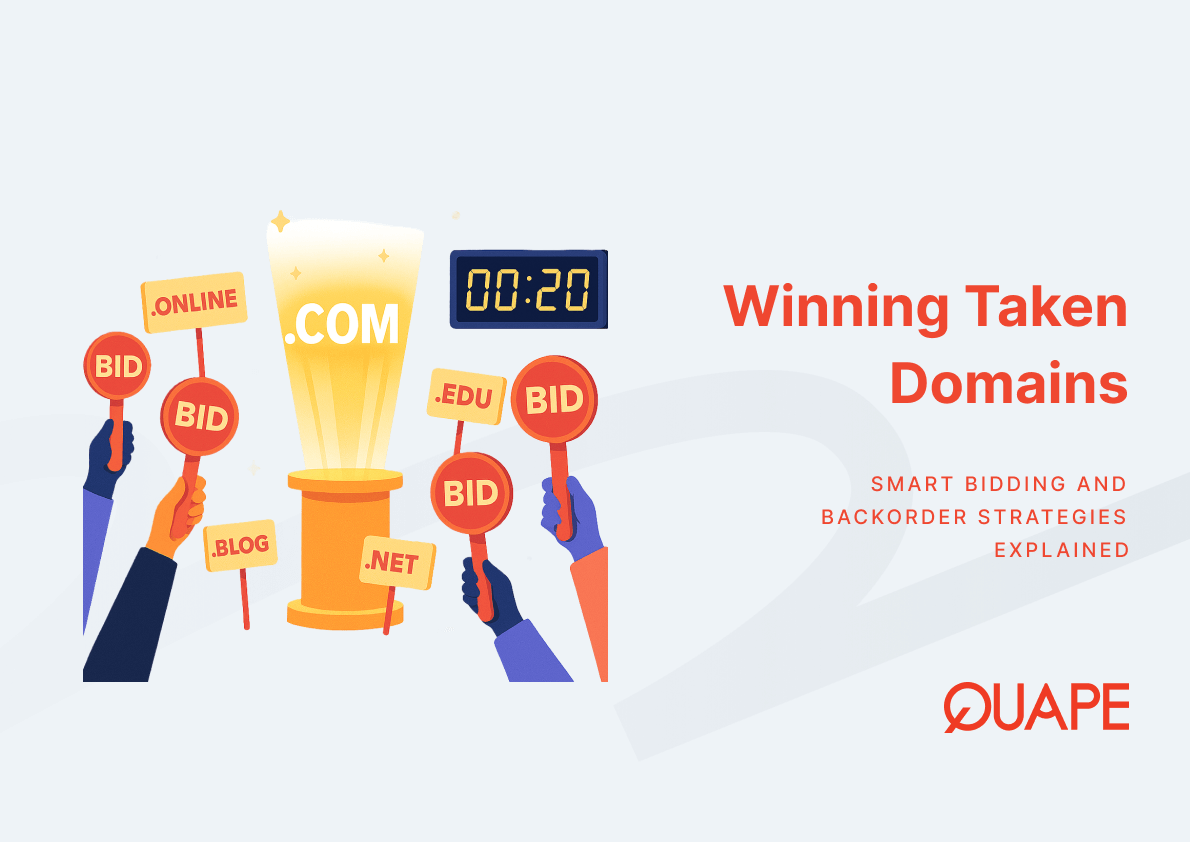
Domain backordering services allow individuals and businesses to place advance orders for expired domains before they drop. When a user submits a backorder request, the service monitors the target domain’s status and automatically attempts to register it the moment it becomes available. If multiple backorder requests exist for the same domain within a single service, the provider typically holds a private auction among its users to determine the final owner.
Backorder services integrate with registrar systems and registry APIs to execute registration commands as quickly as possible during the drop window. These systems compete against each other and against manual registration attempts by individuals monitoring drop lists. Success depends on network speed, API efficiency, and the number of parallel requests a provider can submit. High-value domains often attract dozens or hundreds of backorder requests across multiple platforms, creating intense competition during the drop event.
When considering strategic infrastructure choices for hosting, businesses should recognize that domain control and infrastructure management are complementary capabilities. Just as VPS hosting provides dedicated resources and administrative control, domain backordering requires proactive planning and technical awareness to secure valuable namespace assets before competitors act.
Single-Registrar Backorders vs Multi-Platform Coverage
Registrar-specific backorder services only attempt to capture domains through their own registry connections. If another registrar’s system submits a faster request, the domain goes to the competing service regardless of how many backorders were placed elsewhere. Multi-platform backorder strategies involve submitting requests through multiple providers simultaneously, increasing the probability that at least one system successfully captures the domain.
Registrar exclusivity affects capture probability because each provider operates independent technical infrastructure with varying latency and processing speed. Organizations targeting high-value domains often diversify their backorder placements across three to five major providers, accepting the cumulative cost to maximize success odds. This approach reflects the winner-take-all nature of drop catching, where milliseconds determine ownership and a single successful capture justifies multiple failed attempts.
Success Factors in Competitive Drops
Domain age, backlink profile, and keyword value influence both the level of competition during a drop and the likelihood that a backorder succeeds. Older domains with established link equity and traffic history attract more aggressive bidding and faster automated systems. Domains containing high-value commercial keywords or exact-match phrases for lucrative industries face similar competition.
Understanding these factors helps organizations assess whether a backorder strategy is viable or whether negotiating directly with the current owner offers better odds. Domains with dozens of competing backorders rarely go to a single party at registration cost; instead, they trigger private auctions or escalate to secondary market transactions at premium prices. Realistic evaluation of competition levels informs budget allocation and timeline expectations.
Drop Catching Systems and Auction Mechanics
Drop catching systems represent the technical infrastructure that enables automated domain capture during the brief window when expired names return to public availability. These systems maintain persistent connections to registry APIs, monitor drop schedules, and execute registration commands with minimal latency. Providers invest heavily in optimized network architecture, geographically distributed servers, and software that prioritizes speed over all other factors.
When a domain drops, multiple drop catching systems submit registration requests simultaneously. The registry processes these requests in the order they arrive at its authoritative servers, typically measured in milliseconds. Only the first valid request succeeds; all subsequent attempts receive rejection messages indicating the domain is no longer available. This race condition explains why providers with faster infrastructure and more direct registry access dominate successful captures.
Why Multiple Catchers Compete for the Same Domain
Parallel requests from different providers reflect both technical diversity and strategic hedging by users who submit backorders across multiple platforms. Each provider operates independent technical stacks with unique network paths to registry servers. Variations in routing efficiency, server processing speed, and API optimization create performance differences that determine which system wins a contested drop.
The competitive environment also reflects the decentralized nature of domain registration infrastructure. No single provider controls all registry connections or can guarantee capture success. Organizations seeking to maximize their odds of securing a valuable domain must understand that competition exists both among technical systems and among human actors placing backorders for the same name.
What Happens After a Successful Catch
When a drop catching service successfully registers a domain on behalf of a user, ownership transfer depends on whether multiple users within that service had placed competing backorders. If only one backorder exists, the domain transfers directly to the user’s account at the standard registration price. If multiple backorders exist, the service holds a private auction where participants bid against each other for final ownership.
Private auctions typically last three to seven days and use ascending-bid or proxy-bid mechanics similar to public auction platforms. The winning bidder receives the domain in their registrar account, while losing bidders have their initial backorder fees refunded or credited. This post-capture auction model allows drop catching services to monetize high-demand domains while maintaining fair allocation among users who identified the opportunity simultaneously.
Risks and Due Diligence Before Backordering
Backordering a domain without proper due diligence exposes organizations to legal, technical, and reputational risks that can outweigh any strategic benefit. Expired domains carry history that may include trademark conflicts, legal disputes, spam classification, or SEO penalties. Understanding these risks before committing resources to a backorder attempt protects businesses from acquiring problematic assets.
Checking Legal and Brand Risks
Trademark databases, brand protection services, and legal counsel provide essential verification before pursuing a domain that may infringe on established intellectual property rights. The Uniform Domain-Name Dispute-Resolution Policy (UDRP) allows trademark holders to reclaim domains registered in bad faith, meaning a successful backorder can result in forced transfer and financial loss if the name violates protected marks.
Organizations should search USPTO trademark records, regional trademark databases, and common law usage evidence to identify potential conflicts. Domains that closely resemble registered trademarks, especially in related industries, carry high risk regardless of the generic nature of component words. Consulting legal expertise before finalizing a backorder ensures that the acquisition supports business goals rather than creating liability.
Evaluating Past Usage and SEO Signals
Backlink history, spam classification, and previous content determine whether an expired domain carries positive or negative SEO value. Tools that analyze archived website snapshots, backlink profiles, and blacklist status help assess whether a domain’s history will help or harm future search visibility. Domains previously used for spam, malware distribution, or deceptive practices may retain penalties that suppress rankings even after ownership changes and content is replaced.
SEO penalties tied to domain history can persist for years, making clean evaluation critical before investment. Organizations should review Wayback Machine snapshots, check Google Search Console for manual actions if possible, and analyze referring domains for patterns of low-quality or manipulative links. A domain with strong metrics but problematic history may cost more to rehabilitate than acquiring a clean alternative.
Ứng dụng thực tế cho doanh nghiệp Singapore
Singapore’s digital economy and regulatory environment create specific considerations for domain backordering and secondary market participation. Local businesses targeting regional audiences benefit from .sg and .com.sg domains that signal geographic authenticity and comply with jurisdiction-specific policies. Understanding how SGNIC rules interact with global registry practices helps organizations develop effective acquisition strategies.
Backordering .SG and Restricted TLDs
SGNIC policies require Singapore domains to be held by eligible registrants, including Singapore citizens, permanent residents, or organizations with local presence. These eligibility criteria affect backorder feasibility because ownership transfer requires verification of qualifying status. When a .sg or .com.sg domain expires, it follows similar lifecycle phases as generic TLDs but with additional identity checks during transfer.
Organizations targeting Singapore domains should prepare required documentation in advance, including NRIC, FIN, or ACRA registration details that prove eligibility. Backorder services for restricted TLDs may require pre-verification before accepting orders, ensuring that successful captures can complete ownership transfer without administrative delays. Understanding these requirements prevents situations where a successful backorder cannot finalize due to missing compliance credentials.
When Backordering Makes Sense for SMEs and Enterprises
Backordering offers strategic value when a specific domain name provides clear brand protection, market positioning, or competitive advantage that justifies the cost and effort. Small and medium enterprises benefit from backordering when a name matches their brand exactly and competitors or domain investors pose acquisition threats. Enterprises use backorders to consolidate brand portfolios, prevent cybersquatting, or enter new markets where premium domains provide immediate credibility.
However, backordering involves uncertainty, time investment, and potential competition that may escalate costs through post-capture auctions. Organizations should evaluate whether direct negotiation with current owners, alternative domain selection, or brand differentiation through other channels offers more predictable outcomes. The decision to pursue a backorder should integrate with broader digital strategy rather than operating as an isolated tactic.
For businesses establishing data center infrastructure across Southeast Asia, domain acquisition aligns with geographic expansion and regional audience targeting. Singapore’s position as a connectivity hub makes .sg domains valuable for latency-sensitive applications and services where regional trust matters.
How Domain Registration Supports Domain Backordering Strategy
Effective domain registration practices provide the foundation for both proactive portfolio management and reactive backorder strategies. Organizations that maintain clear renewal processes, centralized domain inventories, and registrar relationships reduce the risk of accidentally losing valuable domains while positioning themselves to monitor and acquire strategic names as opportunities emerge.
Domain registration services that offer transparent pricing, automated renewal management, and straightforward transfer processes enable businesses to focus on strategic decisions rather than administrative overhead. When evaluating whether to backorder a domain or negotiate directly with a current owner, understanding your registrar’s transfer policies, fee structures, and support capabilities informs realistic timelines and cost projections.
Registrar control also affects backorder success rates. Using a registrar with strong drop catching infrastructure or partnerships provides technical advantages during competitive captures. Organizations serious about domain acquisition should evaluate their registrar’s backorder services, success rates, and auction mechanics as part of a comprehensive domain management strategy.
Kết luận
Domain backordering and secondary market participation allow organizations to acquire names that would otherwise remain inaccessible, but success requires understanding the expiration lifecycle, competitive dynamics, and legal considerations that govern the process. By combining technical awareness of drop catching systems with strategic evaluation of business value and risk factors, IT managers and procurement leads can make informed decisions about when backordering justifies the investment. Singapore businesses must also account for local eligibility requirements and regional market dynamics that influence both availability and long-term asset value.
If you need guidance on securing a taken domain or aligning it with your infrastructure strategy, reach out to us through our contact page.
Câu Hỏi Thường Gặp
What is the difference between backordering a domain and buying it on the secondary market?
Backordering targets domains that are expiring and will drop back into public availability, allowing you to attempt registration at standard pricing plus service fees. Secondary market purchases involve negotiating with current owners who are actively selling, typically at premium prices. Backordering success is uncertain and depends on competition, while secondary market transactions offer direct ownership transfer if you agree on price.
How long does the domain expiration process take before a name becomes available?
The typical lifecycle from initial expiration to public availability spans 75 to 80 days, including auto-renew grace periods, a 30-day Redemption Grace Period mandated by ICANN, and a five-day pending delete phase. Exact timing varies by registrar and TLD, so monitoring WHOIS status provides the most accurate drop date prediction.
Can I backorder a .sg or .com.sg domain if I’m not a Singapore citizen?
Foreign businesses can register .sg domains by appointing a local administrative contact or working through an accredited registrar that handles compliance. However, you must provide documentation proving Singapore entity registration or an authorized local representative. SGNIC’s eligibility requirements apply to all .sg and .com.sg registrations, including those acquired through backorder services.
What happens if multiple people backorder the same domain through one service?
If multiple users place backorders for the same domain with a single provider and that provider successfully captures it, the service typically holds a private auction among the competing users. The auction lasts several days, and the highest bidder receives the domain while others are refunded their initial backorder fees.
How do I check if a domain I want to backorder has trademark or legal issues?
Search the USPTO trademark database and relevant regional registries for exact or similar marks in related industries. Review archived website content using the Wayback Machine to identify past usage patterns, and consult legal counsel if the domain closely resembles established brands. UDRP policies allow trademark holders to reclaim infringing domains, so due diligence prevents costly disputes after acquisition.
Is backordering worth it for small businesses with limited budgets?
Backordering makes sense when a specific domain offers clear brand protection or market advantage that justifies the cost and uncertainty. Small businesses should compare backorder fees, potential auction costs, and time investment against alternatives like negotiating directly with owners or selecting available names. If the target domain has minimal competition and strong strategic value, backordering can be cost-effective.
What should I look for in a domain’s SEO history before backordering it?
Analyze backlink profiles for patterns of spam or manipulative links, check archived content for adult material or illegal activity, and verify whether the domain appears on spam blacklists or has Google Search Console penalties. Tools like Ahrefs, Moz, and archive.org help assess whether past usage will benefit or harm future search visibility. Domains with strong metrics but problematic history may require expensive rehabilitation efforts.
How does drop catching technology work and why do some services win more often?
Drop catching systems maintain persistent connections to registry APIs and submit registration commands with optimized latency when domains drop. Services with faster network infrastructure, geographically distributed servers near registry data centers, and efficient processing software win more competitive captures because registries process requests in millisecond order of arrival. No provider guarantees success, which is why serious buyers often use multiple services simultaneously.

- Business Email Hosting vs G-Suite / Microsoft 365 - Tháng 12 29, 2025
- Shared Hosting vs Dedicated Hosting for Email - Tháng 12 29, 2025
- SMTP vs POP3 vs IMAP: Which Protocol Fits Your Business Workflow - Tháng 12 28, 2025