A well-organized ecommerce category structure determines whether users can find what they need or abandon your site in frustration. Recent usability benchmarking reveals that 58% of desktop ecommerce sites deliver mediocre or poor category navigation performance, with mobile sites faring even worse at 67%. For Singapore’s competitive ecommerce landscape, where consumer expectations for seamless digital experiences continue rising, poor category architecture translates directly into lost revenue. Your site’s taxonomy, faceted navigation systems, and breadcrumb structures must work together to support both exploratory browsing and goal-oriented product searches. Understanding how category design influences user behavior enables you to build navigation systems that reduce friction, improve findability, and ultimately drive conversion.
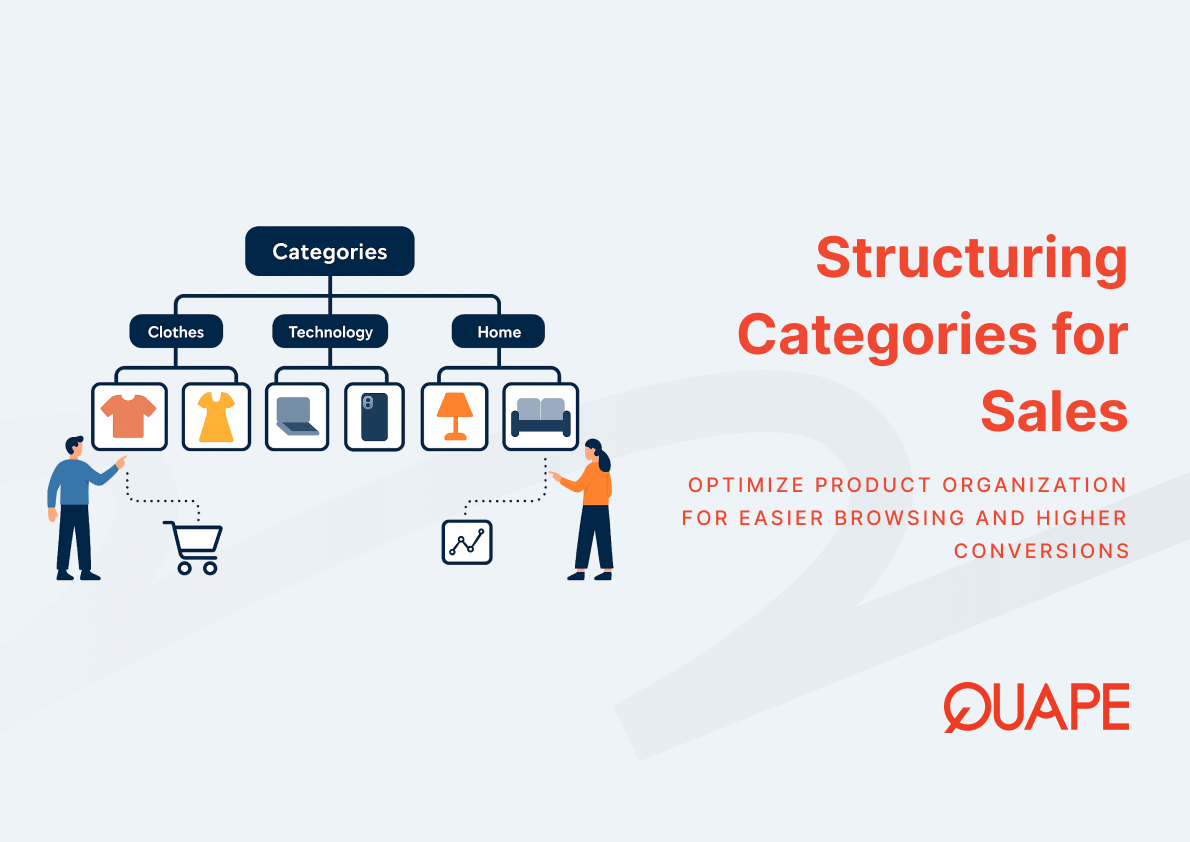
Ecommerce category structure refers to the systematic organization of products into logical groupings that reflect how users think about and search for items. Unlike basic site navigation, effective category architecture combines taxonomy design with attribute-based filtering and contextual wayfinding elements. This structure serves as the foundation for both user experience and search engine discoverability, influencing everything from crawl efficiency to purchase completion rates.
要点总结
- Taxonomy design establishes the hierarchical classification framework that shapes how users navigate product catalogs and how search engines index content
- Faceted navigation extends basic categories by enabling multi-dimensional filtering based on product attributes, reducing decision fatigue for goal-oriented shoppers
- Breadcrumb structures provide hierarchical orientation cues that support exploratory browsing and reduce cognitive load during product discovery
- Category depth versus breadth decisions directly impact navigation friction, with deeper hierarchies requiring more clicks but offering clearer product segmentation
- Mobile-first category navigation requires simplified interfaces that accommodate thumb navigation patterns and smaller screen constraints
- Browsing intent mapping aligns category structure with user behavior patterns, distinguishing between exploratory browsers and transactional searchers
- Platform constraints shape category flexibility, requiring careful evaluation when selecting ecommerce systems for scalable catalog management
Introduction to Ecommerce Category Structure
Site hierarchy determines how efficiently users discover products and how effectively search engines understand your catalog’s organization. Poor product discoverability stems not from limited inventory but from navigation systems that fail to match user mental models. Baymard Institute research demonstrates that users frequently abandon sites when category structures create confusion or require excessive exploration to locate specific items.
Ecommerce category structure interacts with multiple dimensions of user navigation models simultaneously. When users land on your homepage or enter through organic search, they immediately begin forming expectations about how products are organized. If your taxonomy contradicts their mental framework, you introduce friction that compounds with each additional navigation decision. For ecommerce web design in Singapore, this challenge intensifies because local buyers often compare multiple vendors simultaneously, making efficient navigation a competitive differentiator rather than a baseline expectation.
The relationship between site hierarchy and user behavior follows predictable patterns. Exploratory users rely on clear category labels and logical groupings to understand your full product range, while goal-oriented buyers need precise filters to eliminate irrelevant options quickly. Your category structure must serve both behaviors without forcing one approach over the other. This dual-purpose requirement explains why simple hierarchical menus often underperform compared to systems that combine taxonomy with dynamic filtering capabilities.
Key Components of an Effective Ecommerce Category Structure
Building category systems that support both user needs and business scalability requires understanding how taxonomy design, navigation depth, faceted filtering, and breadcrumb systems interact to create cohesive browsing experiences. Each component influences how users perceive product organization and how efficiently they locate purchase targets.
Taxonomy Design for Scalable Product Catalogs
Product classification establishes the logical foundation for all subsequent navigation decisions. Effective taxonomy organizes items based on how customers conceptualize product relationships rather than internal business categories or supplier classifications. When attribute grouping reflects user mental models, categories feel intuitive and reduce the cognitive effort required to explore unfamiliar product ranges.
Category logic must balance specificity with accessibility. Overly granular classifications fragment product visibility and force users to explore multiple narrow categories to view related items. Conversely, broad groupings that combine disparate products create noise that obscures relevant options. Singapore ecommerce sites serving diverse product lines face particular challenges here, as local consumers often expect category structures that reflect both global product standards and regional market conventions.
Scalable taxonomy design anticipates catalog growth without requiring structural overhauls. When you add new product lines or expand into adjacent categories, your classification system should accommodate additions through logical extensions rather than awkward exceptions. This forward-looking approach becomes critical for ecommerce SEO strategy, where consistent URL patterns and predictable hierarchy signals help search engines understand topical relationships and content authority.
Category Depth vs Breadth Trade-offs
Navigation friction increases proportionally with the number of clicks required to reach target products. Deeper category hierarchies offer more precise product segmentation but demand greater user effort to traverse multiple levels. Shallow structures reduce click depth but may overwhelm users with extensive product lists that require significant scrolling or filtering to parse effectively.
Crawl efficiency considerations complicate this balance. Search engines allocate limited crawl budget to each site, and excessive category depth can prevent important product pages from being discovered and indexed regularly. When critical product pages sit four or five levels deep in your hierarchy, they receive less crawl attention and accumulate less link equity from internal navigation.
Decision fatigue emerges when users face too many choices at any single navigation level. Presenting fifteen category options at the top level forces users to evaluate and eliminate numerous options before progressing. Research on cognitive load suggests that reducing choice sets to seven or fewer options at each level improves decision confidence and reduces abandonment, though this guideline must bend when product diversity genuinely requires broader categorization.
Faceted Navigation and Attribute-Based Filtering
Faceted navigation allows users to refine product sets with multiple filter dimensions simultaneously, transforming browsing from linear category traversal into dynamic search refinement. Unlike traditional category trees, facets enable shoppers to combine criteria like price range, brand, size, color, and features to eliminate non-matching products instantly. This mechanism reduces the time required to locate specific items within large catalogs and supports the non-compensatory decision processes where buyers immediately exclude products failing essential requirements.
Search refinement through facets becomes particularly valuable for goal-oriented shoppers who know their requirements but may not know which category contains matching products. When implemented effectively, faceted systems accelerate product discovery without requiring users to understand your full taxonomy structure. However, poorly designed facet interfaces create new problems by exposing too many filter options simultaneously or failing to indicate how many products remain after filter application.
Indexing control presents technical challenges for faceted navigation. Each unique combination of filters can generate a distinct URL, potentially creating thousands of near-duplicate pages that fragment ranking signals and waste crawl budget. Strategic use of canonical tags, noindex directives, and parameter handling ensures that search engines focus on primary category pages while users still benefit from dynamic filtering. Sites prioritizing fast ecommerce sites must also consider how faceted navigation impacts page load performance, as complex filter states may require additional server requests or client-side processing.
Breadcrumb Structures and Contextual Orientation
Breadcrumb structures display the hierarchical path users followed to reach their current page, providing immediate context about location within your site’s taxonomy. These navigation elements reduce uncertainty during exploration by showing parent categories and enabling quick jumps to higher hierarchy levels without browser back-button reliance. For users browsing deep category trees or comparing products across related subcategories, breadcrumbs serve as efficient wayfinding tools.
Internal context provided by breadcrumbs reinforces your site’s organizational logic with every page view. When users consistently see clear hierarchical relationships reflected in breadcrumb trails, they build better mental models of your catalog structure and navigate more confidently on subsequent visits. This repeated exposure to hierarchy signaling helps users learn your taxonomy passively rather than requiring explicit study of your category menu.
Technical implementation of breadcrumbs influences both user experience and search visibility. Structured data markup using BreadcrumbList schema enables search engines to display navigation paths in search results, potentially increasing click-through rates by showing category context before users arrive. Breadcrumb links also distribute internal link equity throughout your hierarchy, strengthening the ranking potential of parent category pages while maintaining clear topical relationships that support semantic search understanding.
Mapping Category Structure to Browsing Intent
Browsing intent mapping aligns navigation architecture with the different ways users approach product discovery. Exploratory behavior follows different patterns than goal-oriented navigation, requiring category systems flexible enough to support both modes without forcing users into predetermined paths. Understanding these intent differences enables you to design navigation that reduces friction regardless of how users enter or explore your catalog.
Informational vs Transactional Browsing Paths
Buyer journey stages determine which navigation elements users rely on most heavily. Early-stage browsers conducting research or comparison shopping exhibit informational intent, exploring broad categories to understand product ranges, price points, and feature variations. These users benefit from comprehensive category overviews, related product suggestions, and educational content that builds context around product decisions.
Transactional users arrive with clearer purchase intent, often searching for specific products, brands, or model numbers. These shoppers prioritize efficiency over exploration and respond better to direct search inputs, precise filters, and streamlined paths to product pages and checkout. Intent segmentation in your category design means providing multiple discovery paths: exploratory users can browse hierarchical categories while transactional users leverage search and faceted filters.
Navigation systems that force all users through identical browsing patterns create unnecessary friction for either group. Exploratory users presented with complex filter interfaces before seeing category overviews may feel overwhelmed, while transactional users forced to navigate deep category trees to find known products experience frustration. Effective category architecture offers both structured browsing and direct access mechanisms, letting user intent determine which path they follow.
Mobile-First Category Navigation Considerations
Mobile UX constraints fundamentally alter how users interact with category structures. Smaller screens limit the amount of navigation visible without scrolling, requiring more deliberate information hierarchy decisions. Multi-level dropdown menus that work acceptably on desktop become cumbersome on mobile, where each expansion action requires precise tapping and consumes valuable screen real estate.
Thumb navigation patterns influence optimal placement and sizing of category elements on mobile devices. Users typically hold phones in one hand, with the thumb serving as the primary interaction tool. Navigation elements positioned in the center or lower portions of the screen receive more engagement than top-corner placements that require hand repositioning. This ergonomic reality conflicts with desktop navigation conventions where primary menus sit at the top of the page.
Collapsible categories enable mobile interfaces to present deep hierarchies without overwhelming initial views. Progressive disclosure patterns show top-level categories first, expanding subcategories only when users actively request detail. This approach reduces initial cognitive load while maintaining access to the full taxonomy. For Singapore merchants tracking mobile commerce trends in Singapore, optimizing category navigation for mobile-first browsing directly impacts conversion rates as mobile traffic continues gaining share.
Category Structure and Product Page Discovery
Category-to-product flow determines how many steps users traverse between landing on category pages and viewing individual product details. Direct access from category listings enables quick comparison between options, while excessive intermediary pages or unclear product differentiation increases abandonment risk. Each additional click requirement filters out a percentage of users, making efficient category-to-product pathways essential for maintaining browse-to-purchase momentum.
Product listing pages serve as the critical interface between category navigation and product pages. These pages must balance comprehensive product information against load performance, especially when displaying dozens or hundreds of items simultaneously. Lazy loading techniques, infinite scroll patterns, and pagination strategies each influence how users perceive product availability and how much of your catalog they actually view before making selection decisions.
Clear visual hierarchy on product listing pages helps users scan and compare options efficiently. When product images, titles, prices, and key attributes maintain consistent positioning across listing grids, users develop scanning patterns that accelerate product evaluation. This consistency becomes particularly important for product page design in Singapore, where local buyers often compare multiple vendors’ offerings and appreciate standardized information presentation that simplifies cross-site comparisons.
Practical Category Structuring Considerations for Singapore Ecommerce
The Singapore ecommerce market presents specific category organization challenges shaped by consumer behavior patterns, multilingual expectations, and competitive intensity. Local expectations for site navigation reflect exposure to both regional platforms and global ecommerce giants, creating sophisticated baseline standards for category usability.
Localization and Buyer Psychology in Category Naming
Singapore buyer psychology incorporates multicultural influences that affect how users interpret category labels and product groupings. While English serves as the primary commercial language, local terminology often blends formal descriptors with colloquial terms familiar to Singapore consumers. Category names that feel too formal may seem disconnected from how users actually discuss products, while overly casual labels can undermine perceived professionalism.
Terminology alignment between your category structure and the language users employ in organic search queries improves both usability and SEO performance. When category names match natural search patterns, users landing on category pages from search engines immediately understand they’ve reached relevant sections. This linguistic consistency reduces bounce rates and improves engagement metrics that influence search rankings. Understanding Singapore buyer psychology enables you to select category labels that resonate with local mental models while maintaining clarity for international visitors.
Multilingual considerations add complexity for sites serving Singapore’s diverse population. While most ecommerce transactions occur in English, some product categories benefit from Chinese or Malay labels that reflect how specific demographic segments discuss those products. Implementing language-specific category structures requires careful planning to avoid duplicate content issues while maintaining semantic relationships across language versions.
Platform Constraints and Category Flexibility
Ecommerce platforms impose varying degrees of flexibility in category structure implementation. Some systems enforce rigid hierarchical models with limited depth or breadth options, while others support unlimited nesting and custom taxonomy fields. Understanding these CMS limitations before committing to platform selection prevents frustrating discoveries that your ideal category structure exceeds platform capabilities.
Platform evaluation should specifically assess faceted navigation support, custom attribute creation, breadcrumb implementation, and URL structure control. These capabilities directly determine how effectively you can implement sophisticated category architectures that serve both user experience and SEO objectives. For merchants comparing options, reviewing Shopify vs WooCommerce in Singapore highlights how platform choice constrains or enables category management approaches suited to local market conditions.
Migration complexity increases with category structure sophistication. When moving between platforms or significantly restructuring existing taxonomies, maintaining URL continuity and search equity requires careful redirect mapping and gradual implementation. Sites with established search traffic must weigh the long-term benefits of improved category architecture against short-term ranking disruptions that major structural changes may trigger.
How E-Commerce Web Design Supports Better Category Structures
电子商务网站设计 encompasses the technical implementation and UX engineering required to transform category planning into functional navigation systems. Scalable architecture decisions made during initial development determine how easily you can expand category depth, add faceted filters, or restructure taxonomies as your catalog evolves.
Designing Category Pages for Performance and SEO
Category page UX balances comprehensive product presentation against page speed requirements. Loading dozens of product thumbnails with associated metadata creates significant bandwidth demands, particularly on mobile connections. Implementing responsive image delivery, efficient caching strategies, and progressive enhancement techniques ensures category pages remain performant even with large product counts.
Crawlability optimization for category pages requires attention to internal linking structures, pagination handling, and content-to-code ratios. Search engines must efficiently discover and understand your category hierarchy to properly index products and distribute ranking signals. Excessive JavaScript dependence for navigation rendering can prevent search crawlers from fully mapping your category structure, undermining SEO efforts regardless of content quality.
Template consistency across category pages helps both users and search engines understand your site’s organizational patterns. When category pages share common structural elements, users develop reliable expectations about where to find filters, sorting options, and product information. Search engines similarly benefit from predictable patterns that simplify content extraction and entity relationship mapping.
Integrating Navigation, Search, and Filters Seamlessly
UI components for navigation, search functionality, and faceted filtering must work together cohesively rather than operating as isolated features. Users often combine these mechanisms fluidly, starting with category browsing, refining via filters, then switching to search when initial results don’t match expectations. Friction emerges when these transitions require context loss or interface mode changes that disrupt workflow.
Search experience integration with category structure enables powerful hybrid discovery patterns. When search results respect category context, users can search within specific categories rather than across your entire catalog, reducing irrelevant results while maintaining search convenience. This contextual search approach particularly benefits large catalogs where global search returns too many matches for practical evaluation.
Usability consistency across navigation mechanisms reduces learning curves and builds user confidence. When faceted filters use similar interaction patterns to category menus, and search interfaces maintain visual consistency with broader navigation design, users spend less cognitive effort understanding how to use each feature and more focus on actual product evaluation. This consistency compounds value as users make repeated visits and develop familiarity with your navigation patterns.
结论
Effective ecommerce category structures emerge from deliberate alignment between taxonomy design, navigation mechanisms, and user intent patterns. By understanding how faceted navigation reduces decision friction, how breadcrumb structures support exploratory browsing, and how category depth influences both user experience and crawl efficiency, Singapore ecommerce operators can build navigation systems that convert browsers into buyers. The technical and strategic decisions embedded in category architecture compound over time, either facilitating growth through scalable discovery patterns or constraining expansion through rigid hierarchies that resist catalog evolution.
Ready to build category structures that actually drive sales? 联系我们的团队 to discuss how strategic ecommerce architecture can transform your product discovery and conversion performance.
常见问题 (FAQ)
How deep should ecommerce category hierarchies go?
Most effective category structures limit depth to three or four levels maximum. Deeper hierarchies increase navigation friction and reduce crawl efficiency, while shallower structures may force overly broad category pages that overwhelm users with extensive product lists requiring significant filtering.
What’s the difference between facets and filters in navigation?
Facets represent product attributes that users can combine simultaneously to refine result sets, such as applying both price range and color filters together. Basic filters typically offer single-dimension refinement where selecting one option replaces previous selections rather than narrowing results progressively.
Should breadcrumbs reflect category hierarchy or user navigation path?
Location-based breadcrumbs showing category hierarchy generally outperform path-based versions tracking user click history. Hierarchical breadcrumbs reinforce site structure understanding and enable predictable navigation jumps, while path-based trails can show confusing sequences when users arrive via search or explore non-linearly.
How many top-level categories should an ecommerce site have?
Research on cognitive load suggests limiting top-level categories to seven options or fewer when possible, though this guideline flexes based on product diversity and user expectations. Sites with genuinely diverse product ranges may require more categories, but grouping related items under parent categories often provides better usability than extensive flat structures.
Do mobile users prefer hamburger menus or visible categories?
Testing consistently shows that visible category navigation outperforms hidden hamburger menus for ecommerce sites, particularly when categories directly relate to purchase intent. Mobile users are 20-30% more likely to engage with persistent category access compared to menu icons requiring an additional tap to reveal options.
How does category structure impact SEO performance?
Clear hierarchical category structures help search engines understand topical relationships and content authority distribution across your site. Logical taxonomy enables better internal linking, creates keyword-targeted category URLs, and generates breadcrumb structured data that can enhance search result displays with navigation paths.
What role do categories play in product discovery versus search?
Categories serve exploratory users who want to understand product ranges and compare options within defined groups, while search accommodates goal-oriented shoppers seeking specific items. Effective sites support both discovery patterns by offering robust category navigation alongside powerful search and filtering capabilities.
Should Singapore ecommerce sites use localized category names?
Category terminology should match how target users actually discuss and search for products in Singapore’s market context. While English dominates commercial transactions, incorporating locally relevant terms and avoiding overly Western-centric labels improves usability and search alignment for regional audiences without necessarily requiring full multilingual implementations.