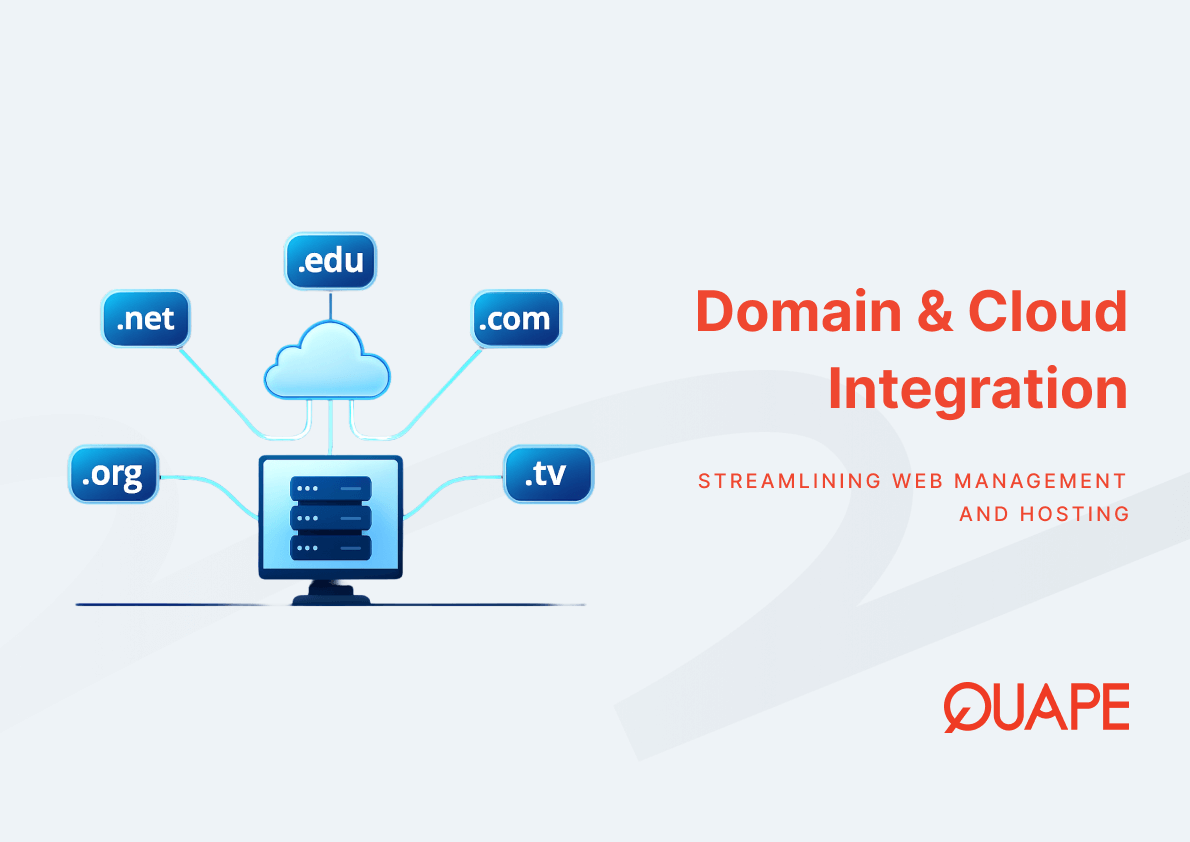
As enterprise infrastructure shifts toward hybrid and multi-cloud architectures, the relationship between domain management and cloud hosting becomes a critical operational layer. Organizations that treat domain registration as a separate administrative task often face delayed deployments, configuration drift, and fragmented access control. Integrating domain management with cloud hosting platforms enables automated provisioning, consistent DNS resolution across distributed environments, and centralized governance of internet-facing infrastructure. This integration supports faster application delivery, improved resilience through decoupled layers, and operational efficiency that scales with business growth. For teams operating in Singapore and across Southeast Asia, understanding how domain cloud integration fundamentals align with regional network topology and regulatory context directly impacts latency, trust signals, and market reach.
Domain cloud integration refers to the orchestration of domain registration, DNS management, and cloud hosting infrastructure within unified workflows and control planes. Rather than managing domain records through isolated registrar dashboards and cloud resources through separate consoles, integrated architectures use APIs, Infrastructure-as-Code templates, and DNS-as-a-Service platforms to synchronize changes across the stack. This approach reduces manual configuration steps, accelerates environment provisioning, and aligns security policies from the DNS layer through application delivery.
要点总结
- Domain cloud integration connects domain registration, DNS resolution, and cloud hosting through automated workflows and unified control planes, reducing configuration errors and accelerating deployment cycles.
- DNS-as-a-Service providers act as the connectivity bridge between domain ownership and cloud infrastructure, enabling dynamic resolution, geographic routing, and integration with DevOps pipelines.
- Registrar API automation supports Infrastructure-as-Code practices, allowing teams to provision, update, and audit domain configurations programmatically within CI/CD workflows.
- Cloud-native DNS providers like Cloudflare and AWS Route 53 deliver low-latency resolution through edge networks and integrate natively with cloud security, monitoring, and orchestration tools.
- VPS hosting environments provide system-level control over DNS services and application stacks, supporting custom configurations required for complex domain-linked workloads.
- Singapore’s position as a regional network hub enables latency optimization for domain resolution and content delivery across Asia-Pacific markets when paired with locally hosted infrastructure.
- Local TLDs such as .sg and .com.sg strengthen business legitimacy and trust signals in regulated markets while integrating seamlessly with cloud-hosted applications and hybrid architectures.
- Automated domain renewal processes and centralized lifecycle management reduce expiration risk and ensure business continuity for mission-critical digital properties.
Core Concepts Behind Domain Management & Cloud Hosting Integration
Domain cloud integration relies on three foundational layers that interact to deliver reliable, scalable internet-facing services. The domain registration layer establishes ownership and namespace control. The DNS resolution layer translates human-readable domain names into network addresses that route traffic to cloud-hosted resources. The cloud hosting layer provides compute, storage, and application infrastructure that responds to incoming requests. When these layers operate through shared APIs, automation frameworks, and governance policies, organizations achieve operational consistency across development, staging, and production environments.
Domain Registration as the Foundation Layer
域名注册 establishes authoritative ownership of a namespace within the global DNS hierarchy. Registries manage specific top-level domains (TLDs) and enforce eligibility rules, while registrars provide customer-facing services that enable individuals and organizations to claim second-level domain names. Ownership control grants the right to configure authoritative DNS records, transfer domain authority between providers, and renew registration before expiration. According to Market Growth Reports, total domain name registrations reached approximately 359.8 million by Q4 2023, reflecting broad adoption across both cloud-native startups and traditional enterprises migrating digital operations to hybrid infrastructures.
In integrated architectures, domain registration data flows through registrar APIs to DNS management platforms and cloud orchestration tools. This connectivity enables teams to automate DNS record updates when deploying new applications, rotate SSL certificates tied to domain validation, and enforce naming conventions that align with internal governance policies. Without this integration, manual updates through separate registrar portals introduce latency, increase the risk of misconfiguration, and create audit gaps that complicate compliance reporting.
DNS-as-a-Service as the Connectivity Bridge
DNS-as-a-Service platforms abstract the complexity of operating authoritative DNS infrastructure, allowing organizations to manage resolution through cloud-based control planes rather than maintaining physical or virtualized name servers. These services provide globally distributed resolution points, automated failover between origin servers, and support for advanced routing policies based on geography, latency, or weighted load distribution. Managed DNS services simplify propagation across the global DNS network, reducing the time required for record changes to reach recursive resolvers and end-user clients.
Data from Global Growth Insights indicates that managed DNS services represent approximately 60% of global DNS tool deployments, driven by cloud-forward resolution requirements and the need for integrated security controls. Cloud-based domain registration platforms accounted for about 36% of the managed DNS segment in 2023, according to the same market analysis, highlighting how registrar services increasingly embed DNS management capabilities that connect directly to cloud infrastructure APIs.
DNS-as-a-Service providers also support integration with monitoring systems, logging pipelines, and incident response workflows. When a cloud application experiences degraded performance, automated health checks can update DNS records to redirect traffic to standby infrastructure, reducing mean time to recovery and improving overall availability for users distributed across multiple regions.
Registrar API Automation & Infrastructure Orchestration
Registrar API automation enables programmatic management of domain portfolios through Infrastructure-as-Code tools, configuration management platforms, and CI/CD pipelines. Teams define desired DNS states in version-controlled templates, apply changes through automated workflows, and audit modifications through centralized logging systems. This approach reduces configuration drift, ensures consistency across environments, and integrates domain management into broader DevOps practices that govern cloud infrastructure provisioning.
Emerging standards such as the Domain Connect protocol, documented in an IETF Internet-Draft, aim to standardize DNS provisioning between service providers and DNS platforms. By defining templates for common configurations like email routing, CDN integration, and subdomain delegation, the protocol reduces fragmentation that currently requires bespoke API integrations for each registrar or DNS provider. Standardized automation improves interoperability, lowers integration costs, and accelerates adoption of cloud-native deployment patterns across diverse technology stacks.
Infrastructure orchestration tools consume registrar APIs to coordinate domain lifecycle events with cloud resource provisioning. When a new microservice deploys to a Kubernetes cluster, automation can register a corresponding subdomain, configure DNS records to route traffic through an ingress controller, and provision SSL certificates through ACME protocols that validate domain ownership. This end-to-end automation eliminates manual bottlenecks, reduces lead time for new service launches, and ensures that DNS configurations remain synchronized with application topology.
Cloud-Native DNS Providers in Integrated Architectures
Cloud-native DNS providers such as Cloudflare and AWS Route 53 deliver resolution services through globally distributed edge networks that reduce query latency and improve resilience against regional outages. These platforms integrate directly with cloud security services, enabling features like DDoS mitigation at the DNS layer, encrypted DNS queries through DNS-over-HTTPS or DNS-over-TLS protocols, and real-time traffic analytics that inform capacity planning and threat detection.
Cloudflare’s anycast network architecture routes DNS queries to the nearest point of presence, minimizing resolution time and reducing dependency on centralized name servers that could become performance bottlenecks or single points of failure. AWS Route 53 integrates natively with Amazon’s cloud services, supporting health checks that monitor endpoint availability, failover routing policies that redirect traffic during incidents, and geolocation-based responses that serve region-specific content to optimize user experience.
Cloud-native DNS providers also support advanced features like alias records that map domain names directly to cloud resources without exposing underlying IP addresses, traffic policies that distribute load across multiple origins based on custom rules, and integration with identity and access management systems that enforce granular permissions for DNS record modifications. These capabilities align DNS operations with broader cloud security postures, reducing the attack surface and improving compliance with data governance requirements.
Operational Benefits of Domain–Cloud Integration
Integrating domain management with cloud hosting infrastructure delivers measurable improvements in deployment velocity, system reliability, and operational efficiency. Organizations that automate DNS provisioning alongside cloud resource creation reduce time-to-market for new applications, while centralized governance of domain portfolios improves visibility into internet-facing assets and simplifies compliance reporting. Decoupling DNS resolution from hosting infrastructure enables architectural flexibility that supports multi-cloud strategies, hybrid deployments, and gradual migration between providers.
Faster Deployment & Reduced Configuration Errors
Automated provisioning of DNS records during application deployment eliminates manual configuration steps that introduce delays and increase the risk of human error. When infrastructure templates define both cloud resources and corresponding DNS entries, teams achieve consistent deployments across development, staging, and production environments without manual intervention. This consistency reduces troubleshooting time when issues arise, as engineers can compare deployed configurations against version-controlled templates to identify discrepancies.
Configuration drift occurs when manual changes to DNS records diverge from documented infrastructure states, creating undocumented dependencies and increasing the risk of service disruptions during updates or incident response. Automated DNS management through registrar APIs prevents drift by enforcing declarative configuration models where desired states are defined in code and continuously reconciled with actual system states. Drift detection tools alert teams to unauthorized changes, enabling rapid remediation and maintaining the integrity of production environments.
Reduced configuration errors translate directly to improved availability and customer experience. When DNS misconfigurations cause resolution failures, users cannot access applications regardless of underlying infrastructure health. By integrating DNS management into automated workflows, organizations minimize the likelihood of typos, incorrect record types, or propagation delays that could impact service delivery during critical business periods.
Improved Reliability Through Decoupled DNS & Hosting Layers
Decoupling DNS resolution from hosting infrastructure enables redundancy strategies that improve resilience against provider-specific outages or regional failures. Organizations can configure DNS records to point to multiple cloud providers or hybrid infrastructure components, using health checks and failover policies to automatically redirect traffic when primary origins become unavailable. This architectural pattern reduces dependency on single vendors and supports business continuity requirements that mandate recovery time objectives measured in minutes rather than hours.
Multi-cloud architectures benefit from DNS-as-a-Service platforms that remain independent of underlying hosting providers. When application infrastructure spans Amazon Web Services, Google Cloud Platform, and on-premises data centers, a neutral DNS layer provides consistent resolution policies and unified monitoring across all environments. This separation of concerns simplifies disaster recovery planning, as DNS failover can redirect traffic to standby infrastructure without requiring application-level changes or database replication across providers.
Redundancy at the DNS layer also protects against attacks that target name resolution infrastructure. Distributed denial-of-service attacks often attempt to overwhelm authoritative name servers, preventing legitimate users from resolving domain names and accessing services. Cloud-native DNS providers absorb these attacks through globally distributed anycast networks that distribute query load across hundreds of locations, maintaining resolution availability even when individual points of presence experience attack traffic.
Security & Access Control Alignment
Integrating domain management with cloud security frameworks enables consistent enforcement of access policies, change auditing, and compliance controls across the entire infrastructure stack. Identity and access management systems govern who can modify DNS records, provision new domains, or transfer ownership between accounts, reducing the risk of unauthorized changes that could redirect traffic to malicious infrastructure or expose sensitive data through subdomain enumeration.
DNS security extensions such as DNSSEC provide cryptographic validation of DNS responses, protecting against cache poisoning attacks that could redirect users to fraudulent websites or intercept sensitive communications. While adoption remains limited, with DNSSEC operational in only about 48% of country-code top-level domains according to available data, integrating DNSSEC validation into cloud hosting architectures strengthens the overall security posture by ensuring that DNS responses originate from authoritative sources and have not been tampered with during transit.
Change auditing for DNS modifications supports compliance requirements in regulated industries where documentation of infrastructure changes is mandatory. When DNS management integrates with cloud logging platforms, every record update generates an audit trail that captures the identity of the user or service account, the timestamp of the change, and the previous and new record values. These logs feed into security information and event management systems that correlate DNS changes with application deployments, incident timelines, and access patterns to detect anomalous behavior.
新加坡企业的实际应用
Singapore’s strategic position as a regional network hub and its robust digital infrastructure make it an ideal location for organizations seeking to optimize domain cloud integration across Asia-Pacific markets. Low-latency connectivity to major Southeast Asian cities, established internet exchange points, and regulatory frameworks that support data sovereignty requirements enable businesses to deploy cloud architectures that balance performance, compliance, and operational efficiency. Understanding how domain management interacts with local TLDs, hybrid hosting models, and regional network topology informs infrastructure decisions that support growth across diverse markets.
Local TLDs (.sg, .com.sg) in Cloud-Hosted Architectures
Local top-level domains such as .sg and .com.sg serve as trust signals that enhance business legitimacy in regulated markets where customers prefer to engage with locally registered entities. These TLDs integrate seamlessly with cloud-hosted applications and hybrid architectures, as DNS resolution for Singapore-specific domains often routes through regional authoritative name servers that reduce query latency for users in Southeast Asia. Organizations that operate 域名注册 for local TLDs alongside global domains create namespace strategies that reflect geographic market presence while maintaining unified DNS management through cloud-based control planes.
Eligibility requirements for Singapore TLDs ensure that registered entities maintain local administrative contacts or valid business registrations, creating a verified namespace that reduces domain squatting and phishing risks compared to unrestricted global TLDs. This verification layer aligns with compliance frameworks that mandate transparent business identity, supporting regulatory requirements in financial services, healthcare, and e-commerce sectors where consumer protection standards apply.
Cloud hosting platforms in Singapore support configurations where local TLDs resolve to infrastructure hosted within national borders, addressing data residency requirements and reducing latency for domestic users. When combined with content delivery networks that cache static assets at regional edge locations, these architectures deliver optimal performance for applications that serve primarily Southeast Asian audiences while maintaining the flexibility to scale globally through multi-region cloud deployments.
Hybrid Hosting Setups for Regional Expansion
Hybrid hosting architectures combine dedicated VPS infrastructure with elastic cloud services to balance cost predictability, performance isolation, and burst capacity requirements. Organizations expanding across Southeast Asia often deploy core application infrastructure on hybrid VPS and cloud workloads hosted in Singapore, using regional cloud availability zones to serve specific markets with lower latency and compliance with local data governance policies.
DNS management for hybrid architectures requires coordination across on-premises or VPS-hosted services and cloud-native resources. Unified DNS-as-a-Service platforms abstract these deployment differences, allowing teams to configure subdomain delegation, load balancing policies, and failover routing without maintaining separate DNS infrastructure for each hosting layer. This abstraction simplifies operational workflows and reduces the complexity of managing distributed applications that span multiple providers and geographic regions.
Regional expansion strategies benefit from incremental deployment models where new markets launch on existing infrastructure before dedicated resources are provisioned. DNS-based traffic routing enables geographic segmentation, directing users from specific countries or regions to localized application instances while maintaining a unified domain namespace. As market demand grows, teams provision additional infrastructure and update DNS records to shift traffic, supporting agile go-to-market strategies that minimize upfront capital expenditure.
Latency Optimization Using Singapore as a Network Hub
Singapore’s internet exchange infrastructure and connectivity to submarine cable systems position it as a strategic VPS hosting hub for applications serving Asia-Pacific users. DNS resolution latency directly impacts user experience, as each domain lookup adds milliseconds to page load times and API response latency. Hosting authoritative DNS servers or leveraging DNS-as-a-Service providers with regional presence in Singapore reduces resolution time for users across Southeast Asia, Australia, and East Asia compared to DNS infrastructure located exclusively in North America or Europe.
Latency-based routing policies evaluate the network distance between users and available application origins, directing traffic to the endpoint that offers the lowest round-trip time. Cloud-native DNS providers support these policies through health checks that monitor endpoint availability and response times, automatically adjusting routing decisions as network conditions change. When combined with Singapore-hosted infrastructure, latency-based routing optimizes performance for regional users while maintaining failover capacity through globally distributed backup origins.
Network peering relationships between Singapore-based hosting providers and regional internet service providers reduce the number of intermediate network hops required for DNS queries and application traffic to traverse. This reduced path length improves both latency and reliability, as fewer potential points of failure exist between end users and hosted services. Organizations that select hosting providers with established peering relationships benefit from improved network performance without additional configuration or cost.
Role of VPS Hosting in Domain–Cloud Integration
VPS hosting provides virtualized infrastructure with dedicated resource allocation and system-level access, supporting custom configurations required for complex domain-linked applications. Unlike shared hosting environments where DNS management is limited to provider-defined interfaces, VPS托管 enables administrators to install custom DNS server software, configure zone files directly, and integrate DNS resolution with application-specific requirements such as dynamic record updates or private DNS zones for internal service discovery.
Why VPS Control Matters for DNS & Domain-Level Configuration
Root access to VPS infrastructure enables engineers to configure DNS services that operate alongside application workloads, supporting use cases where DNS records must update dynamically based on application state or infrastructure health. Applications that require programmatic DNS updates, such as distributed systems that register service instances in DNS for client discovery or certificate management systems that perform domain validation through DNS challenges, benefit from root access capabilities that allow installation of custom DNS client libraries and automated record management tools.
System-level control also supports operation of secondary DNS servers that provide redundancy for authoritative zones hosted on cloud-native DNS platforms. Organizations with strict availability requirements configure VPS-hosted DNS servers as secondary name servers, receiving zone transfers from primary authoritative sources and responding to queries if primary infrastructure becomes unavailable. This hybrid DNS architecture combines the operational simplicity of managed DNS services with the control and redundancy benefits of self-hosted infrastructure.
Custom DNS configurations on VPS infrastructure support split-horizon DNS architectures where internal and external users receive different responses for the same domain names. This pattern is common in organizations that maintain private IP addressing for internal applications while exposing public-facing services through content delivery networks or reverse proxies. VPS-hosted DNS servers handle queries from internal networks, resolving domain names to private IP addresses, while cloud-native DNS providers serve external queries with public endpoints.
Scaling Domain-Linked Applications on VPS Infrastructure
Domain-linked applications that experience variable traffic patterns benefit from VPS infrastructure that supports vertical scaling through resource upgrades without requiring migration to new instances. VPS hosting for high-traffic websites enables organizations to increase CPU, memory, and network capacity as demand grows, maintaining consistent DNS resolution and application availability during traffic spikes. Performance isolation on VPS infrastructure ensures that DNS resolution latency remains predictable even when application workloads consume significant resources, as dedicated allocation prevents contention with other tenants’ workloads.
Resource allocation flexibility on VPS platforms supports deployment of DNS caching resolvers alongside application servers, reducing external DNS query volume and improving response times for frequently accessed domain names. Local caching improves resilience against upstream DNS provider outages and reduces dependency on external network connectivity for resolving internal service names. This architecture pattern is particularly valuable for applications with microservice architectures where service-to-service communication generates high volumes of DNS queries.
Scaling strategies for domain-linked VPS infrastructure often combine vertical scaling with horizontal expansion through load balancing and DNS round-robin or geographic routing. As application traffic grows beyond the capacity of a single VPS instance, teams provision additional servers and update DNS records to distribute load across multiple origins. Cloud-native DNS providers support weighted routing policies that control the proportion of traffic directed to each origin, enabling gradual migration of load to new infrastructure and A/B testing of performance improvements.
How Domain Registration Supports Integrated Cloud Workflows
Domain ownership and lifecycle management form the foundation of integrated cloud workflows, as registrar-level control determines the ability to delegate DNS authority, configure domain-level security settings, and maintain business continuity through renewal automation. Organizations that treat domain registration as a strategic infrastructure component rather than an administrative task gain operational flexibility that supports multi-environment deployments, automated certificate provisioning, and long-term namespace governance.
Centralized Domain Control for Multi-Environment Hosting
Multi-environment hosting architectures require DNS segmentation that isolates development, staging, and production workloads while maintaining unified namespace management. Centralized domain control through registrar APIs enables teams to provision environment-specific subdomains, configure separate authoritative DNS zones for each environment, and enforce naming conventions that reduce the risk of cross-environment configuration errors.
DNS segmentation supports security practices such as restricting production infrastructure to specific IP ranges or cloud regions while allowing broader access for development environments where rapid iteration requires fewer controls. Access policies at the DNS layer complement application-level security controls, creating defense-in-depth architectures where multiple independent layers must be compromised to impact production systems.
Centralized control also simplifies management of large domain portfolios where organizations operate hundreds or thousands of domain names across multiple brands, product lines, or geographic markets. Automated inventory systems track domain ownership, renewal dates, and DNS configurations through registrar APIs, generating alerts when domains approach expiration or when DNS records deviate from defined policies. This visibility reduces the risk of accidental domain loss and ensures that namespace governance standards apply consistently across the entire portfolio.
Automated Renewals & Risk Reduction
Domain expiration represents a critical business continuity risk, as failure to renew registration on time can result in loss of control over the namespace and potential acquisition by competitors or malicious actors. Automated renewal processes through registrar APIs reduce this risk by triggering renewals well before expiration dates, eliminating dependency on manual calendar tracking or email notifications that could be missed during vacation periods or organizational transitions.
Payment automation ensures that renewal fees are processed without requiring manual intervention, reducing administrative overhead and preventing expiration due to payment processing delays or billing system failures. Organizations with large domain portfolios benefit from batch processing capabilities that renew multiple domains simultaneously, applying consistent payment methods and renewal periods across the entire portfolio.
Expiration monitoring systems alert teams to domains that cannot auto-renew due to payment failures, expired credit cards, or policy restrictions, enabling proactive resolution before domains enter grace periods or become available for public registration. Integration with incident management platforms escalates renewal failures to appropriate teams, ensuring that critical domains receive immediate attention while lower-priority domains follow standard remediation workflows.
结论与行动指南
Integration between domain management and cloud hosting transforms namespace control from an administrative function into a strategic infrastructure capability that enables operational agility, improved resilience, and consistent security governance. Organizations that automate DNS provisioning alongside cloud resource creation, leverage DNS-as-a-Service platforms as connectivity bridges between ownership and hosting layers, and deploy hybrid architectures that balance control with operational simplicity gain competitive advantages in deployment velocity and system reliability. For businesses operating in Singapore and across Asia-Pacific markets, understanding how local TLDs strengthen trust signals, regional network topology optimizes latency, and VPS infrastructure supports custom configurations informs infrastructure decisions that scale with business growth. Teams seeking to implement integrated domain cloud strategies can learn more about domain registration as part of unified infrastructure planning. 联系销售 to discuss how integrated domain and hosting architectures support your operational requirements.
常见问题 (FAQ)
What is domain cloud integration and why does it matter for modern infrastructure?
Domain cloud integration connects domain registration, DNS management, and cloud hosting through automated workflows and unified control planes. This integration reduces deployment time, eliminates manual configuration errors, and enables consistent security policies across the entire internet-facing infrastructure stack. Organizations achieve faster time-to-market for new applications and improved operational visibility.
How do DNS-as-a-Service platforms differ from traditional DNS hosting?
DNS-as-a-Service platforms provide globally distributed resolution through cloud-based control planes, eliminating the need to operate physical or virtualized name servers. These services offer automated failover, geographic routing policies, integration with cloud security tools, and API-driven management that supports Infrastructure-as-Code workflows. Traditional DNS hosting typically requires manual configuration through web interfaces and offers limited automation capabilities.
What are the advantages of using local Singapore TLDs with cloud-hosted applications?
Singapore TLDs such as .sg and .com.sg serve as trust signals that enhance business legitimacy in regulated markets and often resolve through regional authoritative name servers that reduce query latency for Southeast Asian users. These TLDs integrate seamlessly with cloud architectures while addressing data residency requirements and supporting compliance frameworks that mandate transparent business identity.
How does VPS hosting support complex DNS configurations compared to shared hosting?
VPS hosting provides root access and system-level control that enables installation of custom DNS server software, direct configuration of zone files, and integration with application-specific DNS requirements. This control supports dynamic record updates, operation of secondary DNS servers for redundancy, and split-horizon DNS architectures where internal and external users receive different resolution results for the same domain names.
What role does registrar API automation play in DevOps workflows?
Registrar API automation enables programmatic management of domain portfolios through Infrastructure-as-Code tools and CI/CD pipelines. Teams define DNS states in version-controlled templates, apply changes through automated workflows, and audit modifications through centralized logging systems. This approach reduces configuration drift, ensures consistency across environments, and integrates domain management into broader cloud infrastructure provisioning practices.
How can businesses prevent domain expiration and related business continuity risks?
Automated renewal processes through registrar APIs trigger renewals before expiration dates, eliminating dependency on manual tracking. Payment automation ensures fees are processed without intervention, while monitoring systems alert teams to renewal failures due to payment issues or policy restrictions. Integration with incident management platforms escalates critical domain renewal failures to appropriate teams for immediate resolution.
What security benefits result from integrating DNS management with cloud infrastructure?
Integrated DNS management enables consistent enforcement of access policies, change auditing, and compliance controls across the infrastructure stack. Identity and access management systems govern DNS record modifications, while audit logs capture every change for compliance reporting. DNS security extensions and encrypted DNS protocols strengthen protection against cache poisoning and eavesdropping attacks.
How does Singapore’s network infrastructure benefit domain cloud integration for regional operations?
Singapore’s position as a regional network hub, established internet exchange points, and connectivity to submarine cable systems reduce DNS resolution latency for users across Asia-Pacific. Hosting authoritative DNS servers or using DNS-as-a-Service providers with Singapore presence optimizes performance for regional users, while network peering relationships reduce intermediate hops and improve reliability for application traffic.

- Business Email Hosting vs G-Suite / Microsoft 365 - 12 月 29, 2025
- Shared Hosting vs Dedicated Hosting for Email - 12 月 29, 2025
- SMTP vs POP3 vs IMAP: Which Protocol Fits Your Business Workflow - 12 月 28, 2025