VPS hosting delivers isolated server resources through virtualization, enabling businesses to run applications with predictable performance, enhanced security, and flexible scaling options. Unlike shared hosting environments where resource contention affects load times and availability, VPS architecture allocates dedicated CPU, RAM, and storage to each virtual instance. This isolation becomes critical as traffic grows, compliance requirements tighten, or applications demand consistent throughput. For IT managers and CTOs evaluating infrastructure options, VPS hosting bridges the gap between shared hosting limitations and dedicated server costs while maintaining control over the software stack and security posture.
What VPS Hosting Is and How It Works
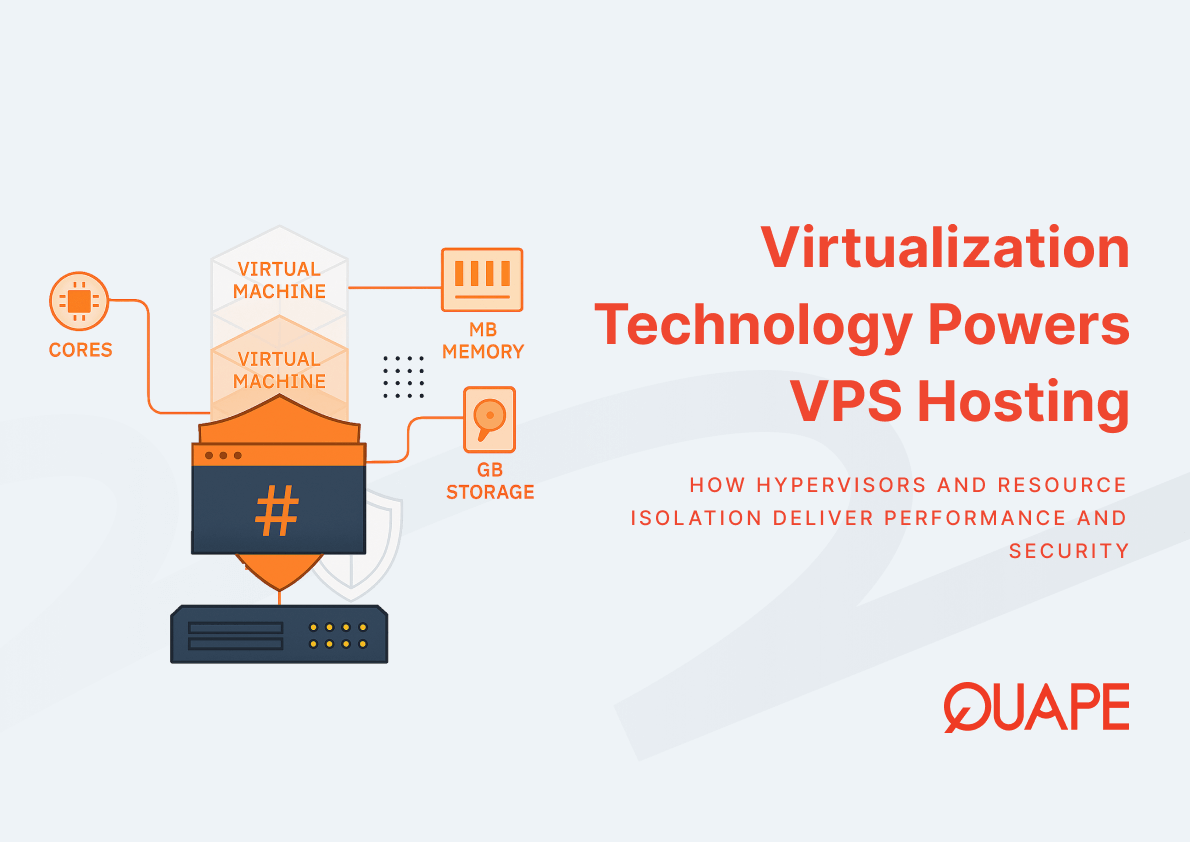
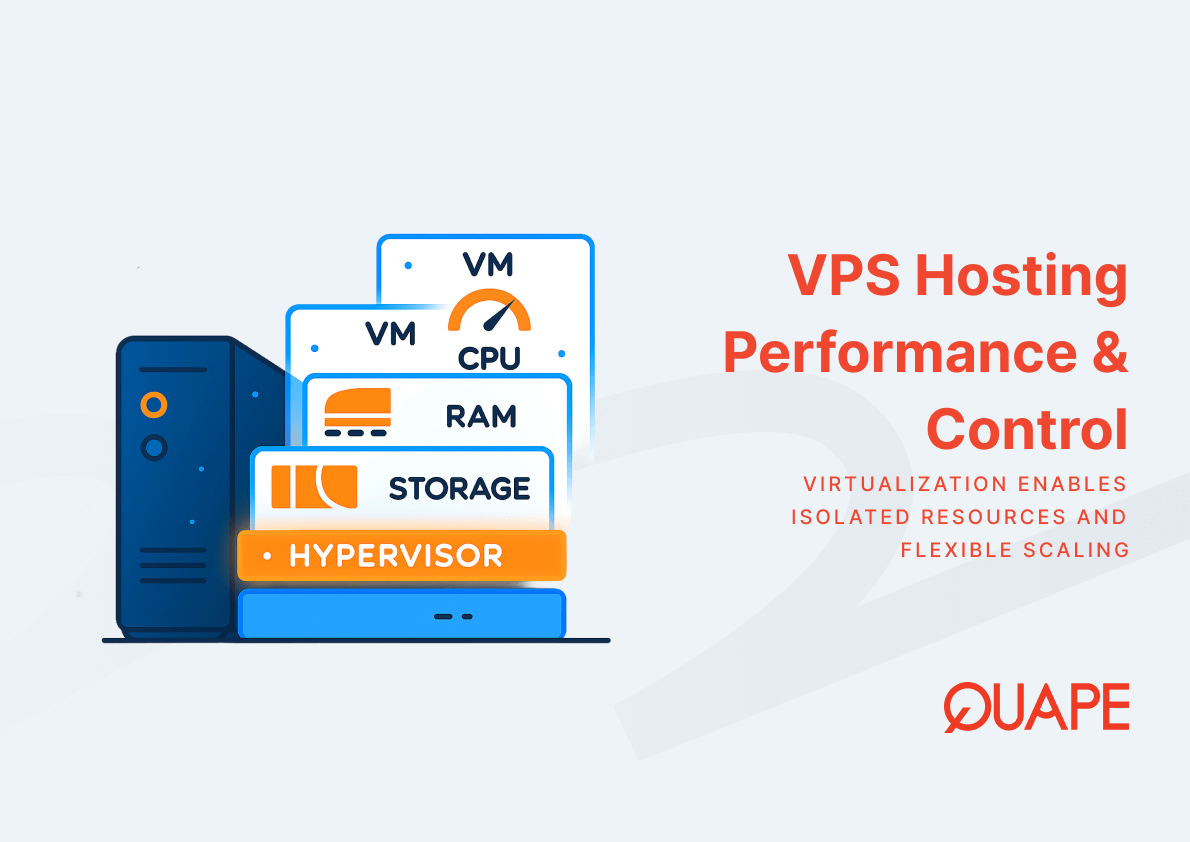
VPS hosting operates through server virtualization, a process where hypervisors partition physical hardware into multiple independent virtual machines. Each virtual machine functions as a standalone server with its own operating system, allocated resources, and network interface. This architecture enables multi-tenant isolation, preventing one tenant’s resource consumption or security breach from affecting others on the same physical host. The global VPS market reached USD 5.1 billion in 2024 and is projected to grow to USD 14.1 billion by 2033, according to IMARC Group, reflecting increased adoption among businesses requiring more control than shared hosting provides without committing to dedicated infrastructure.
Resource allocation in VPS environments assigns specific amounts of CPU cores, memory, and storage to each instance, ensuring that performance remains consistent regardless of neighboring tenants’ activity. This contrasts sharply with shared hosting arrangements, where hundreds of sites compete for the same pool of resources. Virtualization technology enables providers to overcommit physical resources to some degree, but properly configured VPS hosting maintains performance guarantees through resource reservation policies that prevent any single tenant from monopolizing hardware capacity.
要点总结
- Virtualization technology enables VPS hosting by partitioning physical servers into isolated virtual machines with dedicated CPU, RAM, and storage allocations
- Hypervisors enforce multi-tenant isolation, preventing resource conflicts and security breaches from affecting neighboring virtual instances
- Compute-intensive workloads require different resource configurations than I/O-intensive applications, with NVMe storage becoming essential for database and e-commerce platforms
- VPS hosting provides root access and OS-level control, allowing developers to customize software stacks and security configurations
- Singapore-based VPS infrastructure offers low-latency connectivity across Asia-Pacific markets while supporting local data sovereignty requirements
- Performance predictability in multi-tenant environments requires careful hypervisor configuration to minimize overhead and resource contention
- Daily backup capabilities and rapid restoration procedures reduce downtime risks compared to physical server recovery times
How Virtualization Powers VPS Hosting
Virtualization transforms a single physical server into multiple isolated environments by inserting a hypervisor layer between hardware and operating systems. This abstraction allows virtualization technology to manage resource distribution, enforce security boundaries, and enable rapid provisioning of new instances. The server virtualization market was valued at USD 9.15 billion in 2024 and is expected to reach USD 17.25 billion by 2033, according to Grand View Research, driven largely by cloud hosting and VPS adoption. Hypervisors like KVM and XCP-NG create these virtual boundaries while maintaining near-native performance for properly configured workloads.
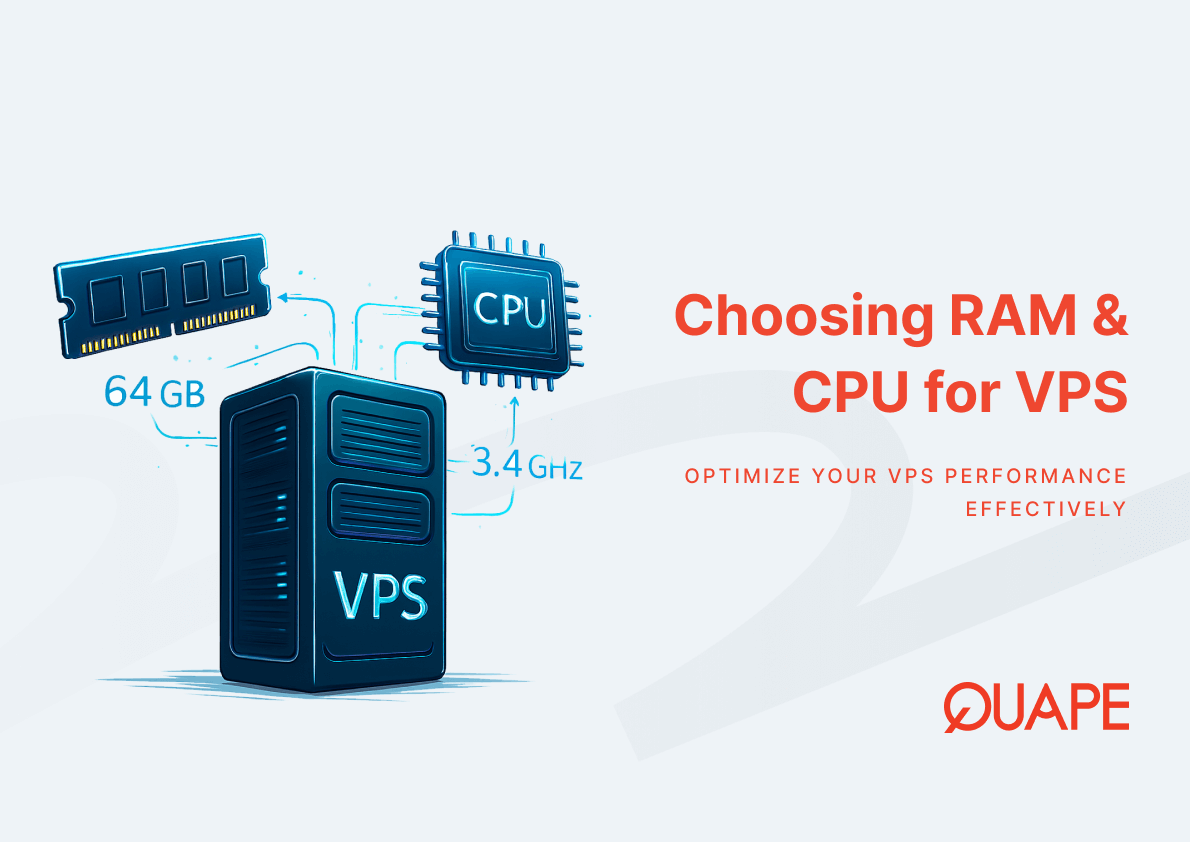
Resource scaling in virtualized environments splits into two primary categories: compute scaling and I/O scaling. Compute-intensive applications such as video encoding, data analysis, or machine learning models benefit from higher CPU core counts and RAM allocation. I/O-intensive workloads including databases, content management systems, and e-commerce platforms depend more heavily on storage throughput and network bandwidth. Understanding this distinction allows infrastructure teams to optimize VPS configurations for specific application requirements rather than purchasing oversized instances across all resource dimensions.
Role of Hypervisors in Resource Isolation
Hypervisors enforce multi-tenant isolation by controlling how virtual machines access physical hardware, preventing one tenant from reading another’s memory or intercepting network traffic. Research by Basta et al. demonstrates that despite logical isolation, hypervisor performance overhead can introduce unpredictability in multi-tenant environments, particularly when network or storage I/O patterns create contention. Modern hypervisor implementations incorporate hardware-assisted virtualization features from CPU manufacturers, which reduce this overhead while strengthening security boundaries through memory encryption and nested page tables.
Memory isolation mechanisms prove critical for maintaining both performance and security across virtual instances. Architectural approaches like ASMI (Architectural Support for Memory Isolation) partition physical memory between VMs while preserving performance characteristics, according to research by Jithin R and Priya Chandran. This hardware-level isolation prevents side-channel attacks where one tenant might infer information about another by observing timing variations in shared memory controllers. For businesses handling sensitive data, hypervisor-enforced memory boundaries complement application-level cybersecurity practices by eliminating certain classes of infrastructure-level vulnerabilities.
Network virtualization introduces additional isolation challenges in multi-tenant VPS environments. The MTS architecture described by Thimmaraju et al. compartmentalizes virtual switches and enforces least-privilege execution models, reducing the trusted computing base that spans multiple tenants. Without such mechanisms, a compromised virtual network interface in one VPS instance could potentially monitor or disrupt traffic from other tenants on the same physical host. Proper network isolation enables providers to deliver guaranteed bandwidth allocation and prevents denial-of-service conditions where one tenant’s traffic spike degrades performance for others.
Scaling VPS Resources: Compute vs I/O
Selecting appropriate CPU and RAM configurations depends on whether applications spend more time processing data or moving it between storage and memory. Web applications with complex business logic, API servers performing data transformations, and development environments compiling code all benefit from higher core counts. Conversely, WordPress installations, e-commerce platforms, and database servers see greater performance improvements from NVMe storage that reduces query latency and page load times through faster disk access.
Traffic patterns influence whether network bandwidth or compute resources become the limiting factor. Media streaming services, content delivery applications, and file transfer platforms require high bandwidth allocation more than CPU power. Business applications with many concurrent users performing database queries need balanced configurations that prevent I/O bottlenecks from undermining available CPU capacity. As workloads evolve, the ability to independently scale CPU, RAM, storage, and bandwidth allows businesses to optimize costs while maintaining performance, rather than purchasing fixed-ratio bundles that leave some resources underutilized.
VPS Hosting for High-Performance & High-Traffic Applications
Performance characteristics in VPS environments depend on how effectively hypervisors minimize latency between virtual machines and physical hardware. High-traffic websites require consistent response times even during traffic spikes, which demands not only adequate CPU and RAM but also optimized network paths that reduce packet processing delays. Research by Microsoft on SQLVM demonstrates that resource contention in multi-tenant database environments causes performance unpredictability unless isolation mechanisms actively prevent CPU, I/O, and memory conflicts between tenants. This predictability becomes essential for e-commerce platforms where checkout delays directly impact conversion rates.
Network throughput optimization involves both allocated bandwidth and the quality of routing between VPS instances and end users. Low-latency connectivity depends on geographic proximity between servers and target markets, network peering arrangements that minimize hop counts, and network performance tuning that prioritizes interactive traffic over bulk transfers. For applications serving Asia-Pacific users, Singapore-based VPS infrastructure typically delivers 30-50ms latency to major regional cities compared to 150-200ms from North American or European data centers. This latency difference significantly affects user experience in real-time applications like payment processing, live chat, or collaborative editing tools.
Security and Compliance in VPS Environments
Resource isolation in VPS hosting strengthens security compared to shared hosting by limiting the attack surface available to malicious actors. If one virtual machine becomes compromised, hypervisor boundaries prevent attackers from accessing files, processes, or network connections belonging to other tenants. However, misconfigured virtualization environments remain a significant security concern according to ITPro reporting, particularly when access controls allow excessive privileges or hypervisor management interfaces lack proper authentication. Implementing VPS cybersecurity practices requires hardening both the guest operating system and monitoring hypervisor-level security events.
SSL encryption becomes standard practice for VPS-hosted applications, as isolated resources eliminate scenarios where certificate key material might be exposed through shared file systems. Compliance frameworks including PCI-DSS for payment processing, ISO 27001 for information security management, and SOC 2 for service organizations all evaluate infrastructure isolation as part of security assessments. VPS hosting helps satisfy 合规要求 by providing documented resource boundaries and audit trails showing which virtual machines accessed specific data sets during a given time period, something shared hosting environments cannot reliably demonstrate.
Placement vulnerabilities in multi-tenant environments create risks where attackers deliberately attempt to co-locate their virtual machines on the same physical host as target organizations. Research by Varadarajan et al. shows that such attacks, while technically challenging, could allow one tenant to infer another’s presence or potentially launch side-channel attacks against cryptographic operations. Reputable VPS providers implement anti-affinity policies and randomized placement algorithms to prevent predictable co-location, particularly for tenants in sensitive industries or those handling regulated data.
Backup & Disaster Recovery
Daily backup procedures in VPS environments capture complete system state including disk contents, configuration files, and network settings, enabling rapid restoration when hardware failures or security incidents occur. Unlike physical servers where disk failures require hardware replacement before restoration can begin, VPS instances can be provisioned on different physical hosts within minutes. This disaster recovery capability dramatically reduces Return to Operation (RTO) times, typically achieving 5-10 minute recovery windows compared to several hours for dedicated servers requiring hardware replacement.
High availability configurations use replication across multiple physical hosts to eliminate single points of failure. When a hypervisor or physical server experiences problems, virtual machines automatically restart on healthy hardware with minimal downtime. Storage-level replication ensures data consistency across backup locations, preventing scenarios where restored systems contain hours or days of missing transactions. For business-critical applications, combining automated backups with high availability architecture creates resilience against both gradual degradation scenarios like failing storage devices and sudden failures like power distribution problems.
Customization & Control with VPS Hosting
Root access in VPS environments enables administrators to install custom software, modify system configurations, and implement security policies that shared hosting platforms do not permit. Developers gain the ability to compile specific library versions, configure web servers for optimal performance, and install monitoring tools that track resource usage patterns. This control level allows root access users to optimize the entire software stack for particular application requirements rather than accepting provider-defined configurations that may not align with their architecture.
Operating system choice affects compatibility with specific application frameworks, available security updates, and administrative tool preferences. Linux distributions like Ubuntu, Debian, AlmaLinux, and CentOS each maintain different package management systems, release schedules, and default security postures. Windows Server environments support applications built on .NET frameworks and integrate with Active Directory for enterprise identity management. The decision between fully managed and self-managed VPS options determines whether the provider handles OS updates, security patches, and monitoring, or whether the customer’s IT team assumes these responsibilities in exchange for greater flexibility.
Optimizing VPS for Applications and Workloads
RAM allocation directly affects how many concurrent processes can run without triggering swap usage, which severely degrades performance when systems begin using disk storage as virtual memory. Database servers typically require enough RAM to cache frequently accessed tables and indexes, often needing 8-16 GB for moderate workloads and 32 GB or more for large data sets. Web application servers running interpreted languages like PHP or Ruby benefit from memory-based caching layers that reduce database queries, while compiled applications like Java services need sufficient heap space to prevent garbage collection pauses from affecting response times. Choosing appropriate RAM and CPU ratios ensures that neither resource becomes a bottleneck limiting overall system performance.
Storage performance matters most for I/O-intensive workloads where disk access latency determines transaction throughput. Traditional SATA SSDs provide adequate performance for content delivery and static websites, but database operations, e-commerce transactions, and content management systems benefit substantially from NVMe storage that reduces query latency through parallel I/O channels and lower access times. SaaS applications serving multiple customers from a single VPS instance require balanced resources across all dimensions to prevent any single resource constraint from limiting user capacity.
VPS Hosting in Singapore: Strategic Benefits
Singapore functions as a strategic connectivity hub linking Southeast Asian, East Asian, and Oceanian markets through extensive submarine cable infrastructure and carrier-neutral data centers. Businesses targeting customers across this region achieve lower latency by hosting applications in Singapore’s hosting infrastructure compared to deploying from North American or European locations. Financial services, e-commerce platforms, and real-time communication applications particularly benefit from minimizing network latency, which directly affects user experience and conversion metrics.
Data sovereignty regulations in Singapore and surrounding countries increasingly require customer data to remain within specific geographic boundaries. The Personal Data Protection Act and industry-specific regulations mandate that certain data types cannot transit through or be stored in jurisdictions outside Singapore without explicit consent or contractual safeguards. VPS hosting within Singapore addresses these 合规要求 by ensuring that data remains subject to local legal frameworks and privacy protections. For multinational companies serving Asia-Pacific markets, Singapore-based infrastructure provides a compliant foundation that simplifies regulatory requirements compared to managing multiple data center locations across different regulatory regimes.
How Quape’s VPS Hosting Enhances Performance, Control & Scalability
Quape’s VPS hosting infrastructure utilizes KVM and XCP-NG hypervisors to deliver isolated resources with cloud-equivalent performance characteristics. Benchmark comparisons show systems achieving scores of 5,958 on GeekBench with 2 vCPU and 8 GB RAM configurations, compared to 1,813 for comparable public cloud instances at similar pricing points. This performance advantage stems from AMD EPYC processor deployment and NVMe storage that eliminates I/O bottlenecks common in traditional VPS environments.
Instant provisioning capabilities allow new VPS instances to become operational within minutes rather than the hours or days required for dedicated server deployment. Plans ranging from the entry-level SG-Lite with 2 vCPU and 4 GB RAM through the flagship SG-Ultra offering 16 vCPU and 32 GB RAM accommodate workloads from staging environments through production e-commerce platforms. Daily backup inclusion, high network throughput up to 1 Gbps on larger plans, and security monitoring provide enterprise-grade infrastructure features without requiring custom configuration.
Operating system flexibility supports Ubuntu, AlmaLinux, Debian, Windows Server, and specialized appliances, enabling teams to maintain consistency with existing infrastructure or adopt new platforms as requirements evolve. IPv4 addressing with optional IPv6 support ensures compatibility with current network architectures while preparing for future protocol transitions. The 100 Mbps to 1 Gbps bandwidth allocation across plan tiers scales with expected traffic volumes, preventing network congestion from undermining application performance during peak usage periods.
联系我们的销售团队 to discuss which VPS configuration aligns with your application requirements and growth projections.
Cost, Pricing Models & Future Scaling
VPS pricing structures balance resource allocation against expected usage patterns, with monthly and annual billing options providing cost optimization opportunities. Annual commitments typically reduce costs by 10-15% compared to month-to-month pricing, while multi-year contracts offer additional savings for businesses with stable infrastructure requirements. VPS pricing models vary between providers based on included features like backups, monitoring, and support levels, making direct price comparisons require careful evaluation of total cost of ownership rather than base subscription fees alone.
Resource scaling costs accumulate as applications grow, requiring IT managers to predict scaling trajectories based on user growth projections and feature roadmaps. Compute-intensive applications may require doubling CPU cores without proportional RAM increases, while data-heavy platforms might need storage expansion that outpaces processing requirements. Understanding the relationship between compute and I/O scaling helps businesses select initial configurations with headroom in critical dimensions, avoiding scenarios where applications quickly outgrow their VPS tier and require disruptive migrations to larger instances.
Long-term infrastructure planning weighs VPS cost predictability against the flexibility of cloud platforms with usage-based billing. VPS subscriptions provide fixed monthly costs that simplify budgeting for SMEs without dedicated financial planning teams, while cloud platforms offer better cost efficiency for highly variable workloads. The trade-off between these models depends on traffic consistency, seasonal demand patterns, and whether development and staging environments justify permanent infrastructure allocation versus on-demand provisioning.
Conclusion & Call-to-Action
VPS hosting delivers the resource isolation and performance consistency that growing businesses require without the complexity and cost of dedicated infrastructure. Virtualization technology enables rapid scaling, robust backup capabilities, and customization flexibility while maintaining security boundaries between tenants. For organizations evaluating infrastructure options, VPS platforms provide a practical middle path that combines shared hosting affordability with dedicated server control characteristics.
Singapore-based VPS infrastructure offers strategic advantages for businesses serving Asia-Pacific markets through low-latency connectivity and compliance with regional data sovereignty requirements. As application demands evolve from development staging through production deployment, VPS resources scale independently across compute, storage, and network dimensions to match specific workload characteristics.
联系我们的团队 to evaluate which VPS configuration supports your infrastructure requirements and business growth objectives.
常见问题 (FAQ)
How does VPS hosting differ from shared hosting in terms of performance guarantees?
VPS hosting allocates dedicated CPU, RAM, and storage to each instance through hypervisor-enforced resource boundaries, preventing other tenants from consuming your allocated resources. Shared hosting places multiple sites on common resource pools where high traffic on one site can degrade performance for all others. This isolation ensures consistent response times and prevents resource contention that affects load speeds during peak usage periods.
What level of technical expertise is required to manage a VPS instance?
Self-managed VPS hosting requires familiarity with Linux or Windows Server administration, including software installation, security patching, and troubleshooting system issues. Fully managed VPS services handle operating system updates, security monitoring, and basic optimization tasks, reducing technical requirements for businesses without dedicated IT staff. The choice between management levels depends on internal technical capabilities and whether customization needs justify the additional administrative overhead.
How quickly can VPS resources be scaled when traffic increases unexpectedly?
Modern VPS platforms enable vertical scaling by increasing CPU, RAM, or storage allocations within minutes, though most require brief downtime to apply resource changes. Horizontal scaling by adding additional VPS instances and distributing traffic through load balancers provides seamless capacity expansion without downtime. The speed of scaling depends on whether architectural design anticipates growth through stateless application design that supports multiple parallel instances.
What backup strategies work best for VPS-hosted business applications?
Daily automated backups capturing complete system state provide baseline protection against hardware failures and accidental deletions. Critical applications benefit from more frequent backup intervals, potentially every few hours, combined with off-site replication to separate geographic locations. Testing restoration procedures regularly ensures that backup systems function correctly and that recovery time objectives align with business continuity requirements.
Does VPS hosting in Singapore comply with PDPA requirements for customer data?
Singapore-based VPS infrastructure keeps data within jurisdictions subject to the Personal Data Protection Act, satisfying geographic data residency requirements. However, PDPA compliance extends beyond physical location to include data processing practices, access controls, and breach notification procedures. Organizations must implement appropriate technical and organizational measures within their VPS environments to achieve full compliance with privacy regulations.
How do hypervisor types affect VPS performance and security characteristics?
KVM (Kernel-based Virtual Machine) and XCP-NG hypervisors both provide strong isolation and near-native performance, with differences primarily in management interfaces and feature sets rather than fundamental security models. Hardware-assisted virtualization features from modern processors enable both platforms to enforce memory isolation and prevent cross-tenant attacks. Performance variations between hypervisors typically matter less than proper resource allocation and workload optimization for specific application requirements.
What network bandwidth allocation is adequate for an e-commerce site with moderate traffic?
E-commerce platforms typically require 300 Mbps to 1 Gbps bandwidth to handle concurrent users browsing product catalogs, processing transactions, and downloading digital content without degradation during peak hours. Image-heavy product pages consume more bandwidth than text-based content, while payment processing APIs require consistent low-latency connections more than high throughput. Monitoring actual bandwidth usage patterns over initial months helps refine allocation to prevent over-provisioning while maintaining performance during seasonal traffic increases.
Can VPS instances be moved between physical servers without service interruption?
Live migration capabilities in modern hypervisors allow VPS instances to transfer between physical hosts with minimal interruption, typically achieving sub-second downtime for properly configured workloads. This functionality enables hardware maintenance without affecting customer applications and supports automatic failover when physical server problems occur. Storage must be accessible from both source and destination hosts, usually through networked storage systems, for live migration to function seamlessly.

- VPS Network Performance & Latency Optimization - 12 月 12, 2025
- How to Choose RAM & CPU for Your VPS - 12 月 12, 2025
- NVMe VPS Hosting: Why Ultra-Fast Storage Makes a Massive Performance Difference - 12 月 11, 2025