Enterprise resource planning systems like SAP run business-critical operations across finance, supply chain, human resources, and procurement. The decision to host these systems using managed infrastructure rather than maintaining them internally reflects a broader transformation in how industries approach operational scale, regulatory compliance, and system resilience. Managed SAP hosting removes the burden of infrastructure maintenance, security patching, and performance tuning from internal IT teams while enabling enterprises to focus on extracting value from their ERP data. Industries with complex regulatory requirements, high transaction volumes, or distributed operations derive the greatest advantage from this model. Understanding which sectors benefit most from managed SAP environments helps enterprises evaluate whether this approach aligns with their operational priorities and compliance obligations.
Managed SAP industries refer to economic sectors where enterprises deploy SAP ERP systems on infrastructure managed by specialized hosting providers rather than operating these systems internally. This approach transfers responsibility for server hardware, operating system updates, database performance, backup procedures, and security monitoring to providers who maintain expertise in SAP-specific infrastructure requirements. The model proves most valuable in sectors where ERP systems integrate multiple business functions, support regulatory compliance, or process high volumes of transactions that demand consistent availability and performance.
Poin-Poin Utama
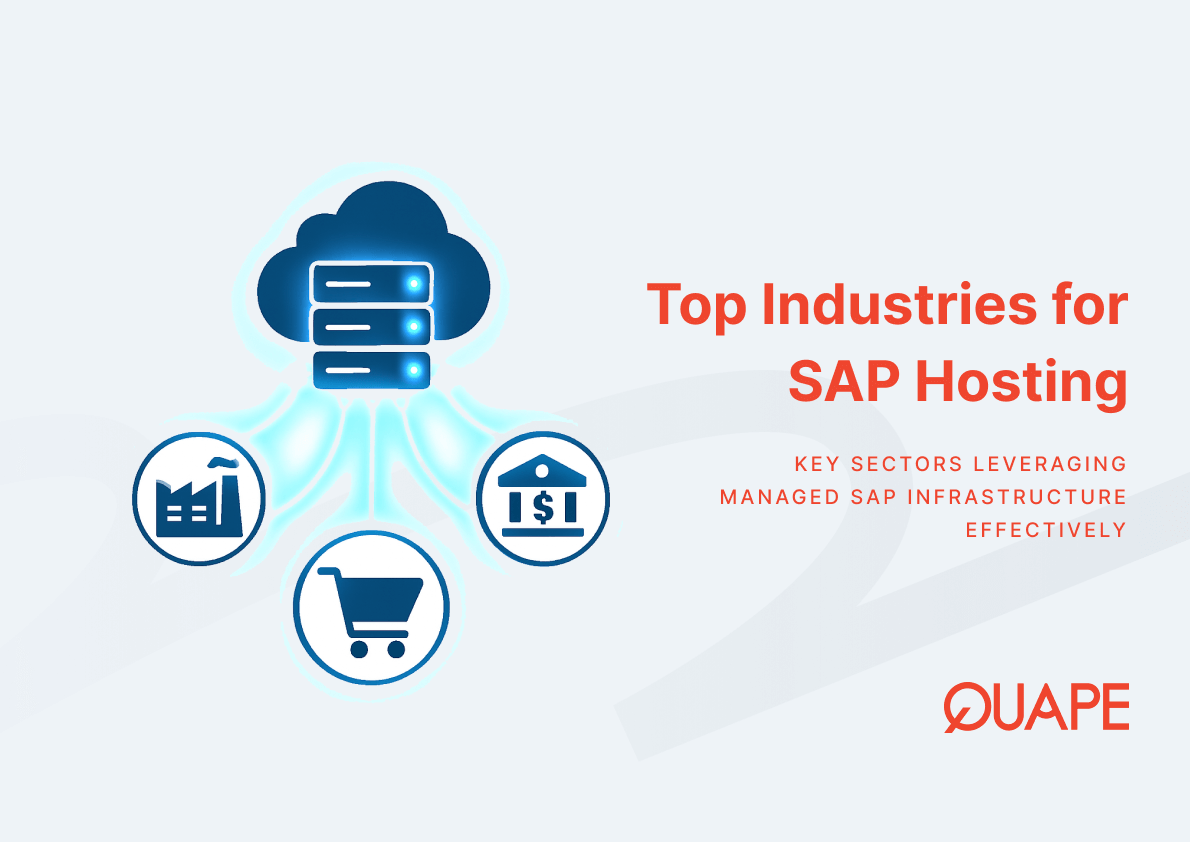
- Manufacturing, retail, financial services, healthcare, and logistics sectors derive the highest return on investment from managed SAP hosting due to complex operational requirements and compliance obligations.
- Regulated industries benefit from managed hosting’s ability to maintain audit trails, enforce data sovereignty, and support compliance frameworks without requiring internal infrastructure expertise.
- Transaction-heavy workloads running on SAP HANA gain performance advantages from managed hosting environments optimized for in-memory computing and high IOPS demands.
- Industry-specific SAP modules such as FI/CO, SCM, SRM, and HR require different infrastructure characteristics, making managed hosting’s abstraction layer valuable for enterprises running multiple modules.
- Research from IDC demonstrates that organizations using managed SAP cloud environments achieve an average of $8.9 million in annual benefits per company through improved security, reduced operational complexity, and enhanced availability.
- Itu managed hosting market is projected to grow from USD 167.99 billion in 2026 to USD 415.26 billion by 2031, reflecting increasing enterprise reliance on externalized infrastructure for mission-critical systems.
- Singapore-based enterprises gain additional advantages from managed SAP hosting through regional data residency options, low-latency connectivity to Asia-Pacific operations, and access to providers who understand local compliance requirements.
How Industry Characteristics Shape SAP Hosting Requirements
Industries differ fundamentally in how their SAP workloads interact with infrastructure. Some sectors process constant transaction streams that require sustained IOPS and memory bandwidth, while others run periodic batch processes that benefit from elastic resource allocation. These operational patterns determine whether an enterprise gains value from managed hosting or whether internal infrastructure better serves its needs. Understanding these distinctions helps enterprises evaluate hosting models based on actual workload characteristics rather than industry trends alone.
Compliance requirements, data sovereignty obligations, and audit trail maintenance create additional complexity that influences hosting decisions. Industries operating under financial regulations, healthcare privacy laws, or government oversight find that managed infrastructure designed for SAP compliance reduces the operational burden of maintaining evidence for auditors while ensuring that security controls align with regulatory frameworks. This alignment proves especially valuable when enterprises operate across multiple jurisdictions with conflicting data residency requirements.
Regulated Industries vs Non-Regulated Industries
Financial services, healthcare, pharmaceuticals, and utilities operate under regulatory frameworks that mandate specific data handling procedures, audit trail maintenance, and reporting capabilities. SAP systems in these sectors must demonstrate compliance with standards like SOX, HIPAA, GDPR, or industry-specific regulations that govern how financial data, patient information, or critical infrastructure controls are processed and stored. Managed hosting providers who specialize in regulated workloads implement controls at the infrastructure layer that support these compliance obligations without requiring enterprises to maintain expertise in both SAP administration and regulatory technology requirements.
Non-regulated industries such as retail, manufacturing, or professional services face fewer mandatory compliance obligations but still require operational discipline around system availability, data integrity, and disaster recovery. These sectors benefit from managed hosting’s operational consistency and predictable performance characteristics, though their hosting requirements center more on cost optimization and business continuity than on regulatory evidence collection. The absence of regulatory overhead allows these industries to prioritize infrastructure characteristics that directly support operational efficiency rather than compliance documentation.
Transaction-Heavy vs Analytics-Driven SAP Workloads
SAP HANA’s in-memory computing architecture enables real-time analytics by loading entire datasets into RAM, eliminating the latency associated with disk-based queries. Industries that rely on real-time decision-making, such as financial trading, inventory optimization, or demand forecasting, require infrastructure that maintains consistent memory bandwidth and minimizes I/O bottlenecks. Managed hosting environments optimized for HANA workloads provision servers with high memory capacity, fast interconnects, and storage systems capable of supporting checkpoint operations without degrading query performance.
Batch-processing workloads, such as month-end financial consolidation, payroll processing, or supply chain planning runs, create periodic spikes in resource consumption that differ from continuous transaction processing. These workloads benefit from managed hosting’s ability to provision infrastructure that handles peak loads without overprovisioning for average utilization. The distinction between analytics-driven and transaction-heavy workloads influences decisions about memory allocation, storage tier selection, and backup window planning in ways that managed providers address through infrastructure design rather than requiring enterprises to maintain this expertise internally.
Industries with the Highest ROI from Managed SAP Hosting
Enterprises measure return on investment from managed SAP hosting by comparing infrastructure costs, operational overhead, and risk exposure against the business value extracted from their ERP systems. Industries where SAP serves as the operational backbone for revenue-generating processes, compliance obligations, or supply chain coordination typically achieve the highest returns because system availability and performance directly affect business outcomes. Understanding which sectors derive the greatest value helps enterprises evaluate whether managed hosting aligns with their strategic priorities.
Sectors with complex operational requirements, distributed locations, or specialized compliance needs find that managed hosting enables capabilities that would require significant internal investment to replicate. The following industries consistently demonstrate strong returns from managed SAP environments based on their operational characteristics and the strategic role SAP plays in their business processes. This analysis of SAP hosting for business-critical systems provides broader context for understanding industry-specific hosting requirements.
Manufacturing and Supply Chain–Driven Enterprises
Manufacturing enterprises use SAP SCM (Supply Chain Management) to coordinate production planning, inventory optimization, procurement workflows, and quality control across multiple facilities and supplier relationships. These systems integrate real-time data from production lines, warehouse management systems, and logistics networks to support just-in-time manufacturing, demand-driven production, and supply chain visibility. Managed hosting enables manufacturers to maintain consistent system availability across distributed operations without deploying infrastructure specialists at every production location.
Production planning modules within SAP require rapid access to bill-of-materials data, inventory positions, and capacity constraints to generate feasible manufacturing schedules. The performance characteristics of these queries depend on database response times and network latency between SAP application servers and the underlying HANA database. Manufacturers operating in regions with developing connectivity infrastructure gain particular advantage from managed hosting providers who maintain low-latency connectivity optimized for SAP workloads, ensuring that production planning runs complete within acceptable time windows regardless of remote facility locations.
Retail and Wholesale Distribution
Retail and wholesale distribution enterprises use SAP Business One or SAP S/4HANA to manage inventory across multiple locations, coordinate omnichannel fulfillment, and analyze demand patterns that inform purchasing decisions. These systems process point-of-sale transactions, update inventory positions in real time, and generate replenishment orders based on algorithms that balance carrying costs against stockout risk. The transaction volume in retail environments scales with customer activity, creating workload patterns that vary by time of day, season, and promotional activity.
Demand forecasting capabilities within SAP analyze historical sales data, promotional calendars, and external factors to predict future inventory requirements. These analytics workloads benefit from HANA’s in-memory processing but require infrastructure that can support both transactional and analytical queries without resource contention. Managed hosting providers allocate compute and memory resources to balance these competing workload types, ensuring that analytical queries do not degrade transaction processing performance during peak sales periods.
Financial Services and Professional Services
Financial services firms and professional services organizations use SAP FI/CO (Financial Accounting and Controlling) to maintain general ledgers, process accounts payable and receivable, generate financial statements, and support management reporting. These modules enforce strict data integrity requirements because financial data serves as the foundation for regulatory reporting, investor communications, and internal decision-making. System availability directly affects whether firms can close accounting periods on schedule, meet regulatory filing deadlines, or provide clients with accurate billing.
Financial consolidation processes aggregate data from multiple subsidiaries or business units, applying currency conversions, intercompany eliminations, and accounting policy adjustments to produce consolidated financial statements. These operations require coordination between multiple SAP modules and depend on infrastructure that maintains high availability configurations to prevent processing delays that could affect financial close schedules. Managed hosting providers implement clustering, failover mechanisms, and backup procedures that support financial services’ requirements for data integrity and operational continuity.
Healthcare, Pharmaceuticals, and Life Sciences
Healthcare providers, pharmaceutical manufacturers, and life sciences companies operate under strict data protection regulations that govern patient information, clinical trial data, and manufacturing quality records. SAP systems in these sectors maintain electronic health records, coordinate drug development workflows, track lot genealogy for pharmaceutical products, and support regulatory submissions to agencies like FDA or EMA. Uptime requirements in healthcare environments reflect patient safety considerations, where system unavailability could affect medication administration, surgical scheduling, or emergency department operations.
Compliance-driven SAP environments require infrastructure controls that support audit trail integrity, access logging, and data encryption both at rest and in transit. Managed hosting providers who specialize in healthcare workloads implement these controls at the infrastructure layer while maintaining documentation that supports compliance audits. Healthcare organizations gain operational efficiency by outsourcing the maintenance of disaster recovery capabilities to providers who can demonstrate recovery time objectives that align with patient safety requirements and regulatory expectations.
Logistics, Transportation, and Cross-Border Trade
Logistics and transportation enterprises use SAP to coordinate shipment tracking, optimize routing, manage carrier relationships, and maintain visibility across global supply chains. These systems integrate real-time GPS data, customs documentation, and warehouse operations to support just-in-time delivery, reduce transit times, and improve asset utilization. Cross-border trade introduces additional complexity through varying customs requirements, multiple currency processing, and coordination across time zones that demand 24/7 system availability.
Real-time tracking capabilities depend on continuous data ingestion from vehicles, mobile devices, and sensor networks that monitor shipment conditions during transit. These data streams create variable workloads that differ from traditional transaction processing patterns. Logistics providers operating hybrid infrastructure that combines on-premises systems with managed cloud environments gain flexibility to process data at edge locations while maintaining central visibility through SAP. Managed hosting providers support this architecture by maintaining secure connectivity between distributed systems and centralized SAP instances.
SAP Modules Commonly Used Across Industries
Different industries prioritize specific SAP modules based on their core business processes and operational requirements. Financial services firms invest heavily in FI/CO modules, while manufacturers focus on production planning and supply chain capabilities. Understanding which modules drive value in different sectors helps enterprises evaluate hosting requirements because each module creates distinct infrastructure demands related to transaction volume, data retention, and integration complexity.
Module selection influences database sizing, backup strategies, and performance tuning priorities. Industries running multiple SAP modules simultaneously require hosting environments that can allocate resources appropriately across competing workload types without creating bottlenecks that affect user experience or batch processing windows.
SAP FI/CO and Financial Control Functions
Financial Accounting (FI) and Controlling (CO) modules form the foundation of most SAP deployments because they maintain the general ledger, process transactions that affect financial position, and generate reports that support both internal management and external regulatory compliance. These modules enforce accounting principles, maintain audit trails, and support financial consolidation across multiple legal entities or business units. Industries with complex organizational structures or strict regulatory reporting requirements depend on FI/CO functionality to demonstrate compliance and maintain financial control.
Financial consolidation workflows aggregate trial balances from subsidiary ledgers, apply currency translations at appropriate exchange rates, eliminate intercompany transactions, and produce consolidated statements that reflect group financial position. These processes require coordination between multiple SAP instances in enterprises operating across different countries or business segments. Statutory reporting functions generate financial statements that comply with local accounting standards, supporting regulatory filings and tax compliance obligations that vary by jurisdiction.
SAP SCM and SRM for Operational Scale
Supply Chain Management (SCM) modules coordinate demand planning, production scheduling, inventory optimization, and distribution logistics across an enterprise’s supplier network, manufacturing facilities, and distribution centers. These systems analyze demand signals, calculate material requirements, generate purchase requisitions, and coordinate shipment activities that move goods from suppliers through production to customers. Industries operating complex supply chains gain competitive advantage by reducing inventory carrying costs, improving delivery reliability, and responding rapidly to demand changes.
Supplier Relationship Management (SRM) modules streamline procurement workflows by automating request-for-quotation processes, managing supplier catalogs, enforcing purchasing policies, and tracking supplier performance. These capabilities reduce procurement cycle times, improve pricing visibility, and support strategic sourcing decisions that affect product costs and supply chain resilience. Enterprises operating global procurement organizations use SRM to standardize purchasing processes across regions while maintaining visibility into spending patterns that inform negotiation strategies with key suppliers.
SAP HR and Workforce Management
Human Resources modules support employee lifecycle management from recruiting through retirement, including onboarding processes, organizational management, time tracking, payroll processing, and benefits administration. These systems maintain employee master data, enforce compensation policies, calculate statutory deductions, and generate reports that support workforce planning and compliance with labor regulations. Industries with large employee populations or complex compensation structures depend on SAP HR to maintain consistency across payroll processing and benefits administration.
Payroll processing requires coordination between time tracking systems, employee master data, tax tables, and benefits configurations to calculate accurate compensation while meeting regulatory filing deadlines. Workforce management capabilities optimize labor scheduling, track attendance, and coordinate shift assignments in industries like healthcare, retail, or manufacturing where labor costs represent a significant portion of operating expenses. Human capital management functions provide visibility into workforce composition, skills inventory, and succession planning that supports strategic decisions about talent development and organizational design.
Practical Application of Managed SAP Hosting in Singapore
Singapore serves as a regional hub for enterprises operating across Asia-Pacific markets, offering political stability, advanced telecommunications infrastructure, and regulatory frameworks that support data sovereignty requirements. Enterprises hosting SAP systems in Singapore gain access to low-latency connectivity throughout Southeast Asia while maintaining data residency within a jurisdiction that aligns with international compliance standards. The concentration of financial services, logistics, and manufacturing operations in Singapore creates demand for managed SAP hosting that supports both local operations and regional coordination.
Singapore’s position as a financial center and logistics hub means that enterprises operating here often run mission-critical SAP workloads that support revenue-generating operations across multiple countries. These organizations benefit from managed hosting providers who understand the specific requirements of Singapore enterprises deploying SAP infrastructure and can coordinate with local network carriers, compliance frameworks, and business continuity requirements. Regional connectivity between Singapore data centers and other Asia-Pacific locations enables enterprises to maintain centralized SAP instances while serving distributed user populations across different time zones.
Data residency requirements in sectors like financial services or healthcare may mandate that certain data remain within specific jurisdictions even when supporting regional operations. Managed hosting providers operating Singapore data centers for SAP workloads can implement architectures that maintain sensitive data locally while replicating non-sensitive information to other regions for disaster recovery or performance optimization. This flexibility supports compliance obligations without requiring enterprises to maintain separate SAP instances in every country where they operate.
How Managed SAP Hosting Enables Industry-Specific Optimization
Managed SAP hosting abstracts infrastructure complexity, allowing enterprises to focus on configuring SAP modules to support their specific business processes rather than maintaining expertise in database administration, operating system tuning, or hardware lifecycle management. This abstraction proves valuable across industries but delivers the greatest impact in sectors where IT resources are scarce relative to business complexity or where operational priorities center on extracting value from ERP data rather than managing infrastructure.
Infrastructure abstraction does not eliminate the need for SAP functional expertise or business process knowledge. Instead, it shifts responsibility for infrastructure reliability, security patching, and performance optimization to providers who maintain specialized capabilities in these areas. Industries benefit when this division of responsibility allows their internal teams to concentrate on SAP configuration, custom development, and integration with other business systems while relying on managed infrastructure support for SAP operations.
Performance, Availability, and Cost Control Across Industries
Service level agreements define expected uptime, response times, and support procedures that managed hosting providers commit to delivering. Industries where system unavailability directly affects revenue generation or customer service require SLA terms that align with their business continuity requirements. Financial services firms processing real-time transactions, retailers supporting omnichannel operations, or manufacturers coordinating just-in-time production cannot tolerate extended outages without affecting business operations.
Uptime guarantees in managed hosting contracts establish accountability for system availability while defining maintenance windows, failover procedures, and escalation paths when issues occur. These agreements allow enterprises to quantify the operational risk associated with hosting decisions and compare managed hosting’s availability commitments against the capabilities they could maintain internally. Industries with limited IT resources or distributed operations often find that managed providers can deliver higher availability than they could achieve independently because providers amortize redundant infrastructure and specialized expertise across multiple customers.
Cost control in managed SAP environments comes from predictable monthly fees that replace capital expenditures on hardware, facility costs, and staffing requirements associated with internal data centers. This shift from capital to operational expenditure aligns infrastructure costs with business activity while enabling enterprises to scale resources as their SAP usage grows. Industries experiencing rapid growth or seasonal variation benefit from managed hosting’s cost optimization characteristics because they can adjust resource allocation without committing to infrastructure that may exceed their needs during slower periods.
Supporting Migration and Long-Term SAP Modernization
Enterprises migrating from on-premises SAP deployments to managed hosting environments require coordination between infrastructure provisioning, data transfer, application reconfiguration, and cutover procedures that minimize business disruption. Migration planning addresses database sizing, network connectivity requirements, application dependencies, and testing procedures that validate system functionality before transitioning production workloads. Managed hosting providers support these migrations by maintaining expertise in SAP migration to cloud environments and coordinating with enterprise teams to execute transitions that meet business continuity requirements.
S/4HANA readiness represents a strategic consideration for enterprises planning long-term SAP roadmaps because the transition from ECC to S/4HANA involves database migration, code remediation, and process redesign that affect how SAP systems interact with infrastructure. Industries evaluating managed hosting should consider whether their provider maintains infrastructure capabilities that support S/4HANA requirements, including memory capacity for HANA databases, network bandwidth for data-intensive operations, and support for SAP’s cloud-first deployment strategies.
Kesimpulan
Industries derive value from managed SAP hosting based on alignment between their operational requirements and the capabilities that specialized infrastructure providers deliver. Manufacturing, retail, financial services, healthcare, and logistics sectors demonstrate the highest returns because their SAP systems serve as operational backbones that support complex processes, regulatory compliance, or distributed operations. Enterprises evaluating managed hosting should assess whether infrastructure abstraction enables their teams to focus on extracting value from SAP rather than maintaining the underlying systems, while considering how provider expertise in availability, security, and compliance aligns with their industry-specific requirements.
For organizations looking to optimize their SAP infrastructure strategy, hubungi tim penjualan kami to discuss how managed hosting can support your industry-specific operational requirements and long-term SAP modernization plans.
Pertanyaan yang Sering Diajukan (FAQ)
Which industries most commonly use managed SAP hosting? Manufacturing, financial services, retail, healthcare, and logistics represent the largest adopters of managed SAP hosting due to their complex operational requirements and the strategic role SAP plays in their business processes. These industries benefit from managed infrastructure’s ability to support regulatory compliance, maintain high availability, and reduce the operational burden on internal IT teams.
How does managed SAP hosting support regulatory compliance in regulated industries? Managed hosting providers implement infrastructure controls that support audit trail maintenance, data encryption, access logging, and compliance documentation required by regulations like SOX, HIPAA, or GDPR. These controls operate at the infrastructure layer, reducing the burden on enterprises to maintain specialized compliance expertise while ensuring that security frameworks align with regulatory requirements.
What performance advantages does managed hosting provide for SAP HANA workloads? Managed hosting environments optimized for SAP HANA provision servers with high memory capacity, fast storage systems capable of supporting checkpoint operations, and network configurations that minimize latency between application and database layers. These infrastructure characteristics enable real-time analytics and transaction processing without requiring enterprises to maintain expertise in HANA-specific performance tuning.
Can enterprises in Singapore maintain data residency while using managed SAP hosting? Yes, managed hosting providers operating Singapore data centers can maintain SAP systems and their associated data within local jurisdictions to support data sovereignty requirements while providing connectivity to regional operations across Asia-Pacific. This architecture supports compliance obligations in regulated industries while enabling centralized SAP instances to serve distributed user populations.
How does managed SAP hosting reduce total cost of ownership compared to on-premises deployments? Managed hosting converts capital expenditures on hardware, facility costs, and staffing into predictable operational expenses while eliminating the need for enterprises to maintain expertise in infrastructure management, security patching, and hardware lifecycle planning. This cost structure proves especially valuable for small and mid-sized enterprises that cannot efficiently amortize infrastructure investments across their business operations.
What role does managed hosting play in SAP S/4HANA migration planning? Managed hosting providers support S/4HANA migrations by provisioning infrastructure that meets HANA’s memory and performance requirements, coordinating data transfer procedures, and maintaining expertise in migration methodologies that minimize business disruption. Enterprises benefit from provider experience across multiple migrations while avoiding the risk of provisioning infrastructure that may not align with S/4HANA’s technical requirements.
How do managed hosting SLAs align with industry-specific availability requirements? Service level agreements define uptime guarantees, response times, and support procedures that managed providers commit to delivering based on industry-specific business continuity requirements. Financial services, healthcare, and logistics enterprises typically require higher availability commitments than less time-sensitive industries, and managed hosting contracts can be structured to reflect these varying requirements through differentiated SLA tiers.
What distinguishes managed SAP hosting from generic cloud infrastructure for ERP workloads? Managed SAP hosting providers maintain specialized expertise in SAP-specific infrastructure requirements, including HANA database tuning, SAP application server configuration, and integration with SAP support processes. This specialization enables optimizations that generic cloud infrastructure may not address, such as memory allocation patterns for HANA workloads or network configurations that minimize latency between SAP system components.