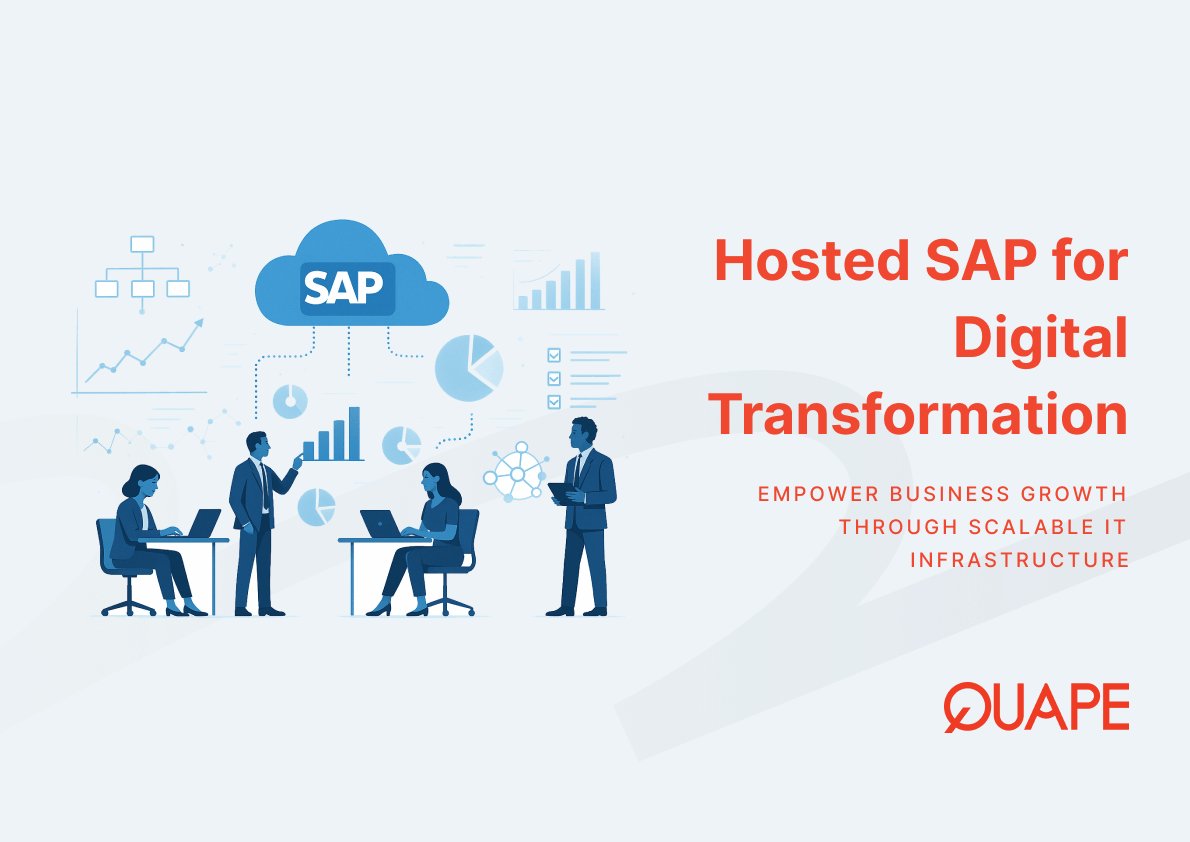
Digital transformation in enterprise environments rarely succeeds without a stable, connected infrastructure layer to support it. For organizations running SAP, the path toward modernization depends on how well their underlying systems handle integration, automation, and real-time data processing. IT managers, CTOs, and procurement leads across Southeast Asia are increasingly evaluating hosted infrastructure as a practical way to accelerate transformation outcomes without the complexity and capital cost of maintaining on-premise environments. This article examines how hosted SAP infrastructure contributes to transformation goals, which components drive the most value, and why Singapore-based organizations are adopting managed models to reduce operational friction and scale with confidence.
SAP digital transformation refers to the process by which organizations restructure their business operations, data flows, and application ecosystems using SAP platforms as the central coordination layer. It is not simply about upgrading software. It involves connecting previously siloed systems, automating manual workflows, and enabling data-driven decisions across finance, supply chain, HR, and operations. The transformation is realized when the infrastructure, integration architecture, and automation capabilities align well enough to reduce friction at every level of the enterprise.
This process accelerates when the infrastructure hosting SAP workloads is capable of supporting high-availability operations, low-latency data access, and flexible scaling. Hosted SAP environments, particularly those managed by specialized providers, remove the administrative burden from internal IT teams and allow them to redirect focus toward process improvement rather than infrastructure maintenance.
Poin-Poin Utama
- Integration is a prerequisite for transformation: connecting siloed applications and replacing legacy technical debt enables real-time workflows and reduces decision latency.
- SAP modernization from legacy systems to SAP S/4HANA requires infrastructure that supports memory-intensive workloads and high IOPS demands.
- Workflow automation, including AI-driven orchestration and low-code tooling, depends on a stable integration layer to function reliably across the enterprise.
- Menurut IDC research via Prolifics, organizations using integrated SAP platforms reported an average 516% ROI over three years with payback in eight months.
- Hosted SAP infrastructure enables organizations to deploy transformation-ready environments faster than building comparable on-premise capacity.
- Singapore’s regulatory environment and data residency requirements make locally hosted, compliance-aware infrastructure a practical advantage for regional enterprises.
- Managed SAP hosting reduces operational overhead across patching, monitoring, and performance tuning, allowing IT teams to focus on business outcomes.
Introduction to SAP Digital Transformation
SAP digital transformation is a business-critical strategy for enterprises that depend on ERP systems to manage their core operations. It integrates application landscapes, automates workflows, and enables organizations to shift from reactive processes to proactive, data-informed decision-making. For organizations across Singapore and the broader APAC region, understanding the infrastructure requirements behind this transformation is as important as selecting the right SAP modules.
The foundation of this transformation connects directly to SAP hosting in Singapore, where infrastructure decisions shape the performance, compliance posture, and scalability of the entire SAP landscape. Getting the infrastructure layer right is not a secondary concern; it is a precondition for every automation and integration initiative that follows.
Key Components of SAP Digital Transformation
SAP digital transformation operates through three interdependent components: application modernization, process optimization, and data-driven decision-making. Each one depends on the others, and each one places specific demands on the underlying infrastructure.
Application modernization refers to the transition from legacy SAP configurations toward current platforms such as SAP S/4HANA, which supports in-memory processing and real-time analytics. Process optimization is achieved through workflow automation and intelligent process management tools that reduce manual intervention across finance, procurement, and logistics. Data-driven decision-making becomes possible when integrated systems deliver consistent, real-time information to decision-makers without requiring manual data consolidation.
These components are not sequential steps. They reinforce each other. Automation tools are more effective when they operate on integrated data. Integration platforms deliver more value when the underlying applications are modernized. Data insights only reach their potential when processes are optimized enough to act on them quickly.
SAP Modernization as the Foundation of Transformation
Legacy SAP systems limit transformation potential because they were not designed for the real-time data demands or cloud-native integration patterns that modern enterprises require. The migration to SAP S/4HANA resolves many of these constraints by introducing in-memory database architecture, simplified data models, and native integration capabilities that legacy systems cannot replicate.
Infrastructure modernization must accompany software modernization for the transition to deliver results. Running SAP S/4HANA on inadequate hardware or misconfigured cloud environments introduces performance bottlenecks that undermine the value of the platform. Organizations evaluating infrastructure readiness for S/4HANA need to assess memory provisioning, storage IOPS, and network throughput before committing to a migration timeline.
Hosted environments are particularly suited to this modernization phase because providers with SAP-certified infrastructure can deliver preconfigured environments that meet technical requirements from day one. This shortens deployment cycles and reduces the risk associated with infrastructure misconfiguration during migration. For organizations comparing deployment models, reviewing SAP hosting versus on-premise considerations helps clarify where total cost of ownership and operational flexibility diverge.
Workflow Automation Across SAP Landscapes
Workflow automation in SAP environments enables organizations to replace manual, error-prone processes with structured, rule-based, and AI-assisted task flows that execute consistently across business functions. Finance teams, for example, benefit from automated invoice processing and approval routing. Supply chain teams gain faster purchase order cycles and exception management. HR operations reduce onboarding delays through automated provisioning workflows.
Modern workflow automation depends on reliable SAP infrastructure support to function effectively. Automation tools require consistent system availability, low-latency database access, and the capacity to handle concurrent workloads without degradation. When infrastructure is unstable, automated processes fail at unpredictable points, generating exceptions that require manual correction and defeating the purpose of automation.
The global workflow automation market reached approximately $23.77 billion in 2025 and is projected to exceed $37.45 billion by 2030, according to Arcade.dev workflow automation metrics. This growth reflects enterprise recognition that automation is not an optional efficiency measure but a strategic priority that directly affects competitiveness.
Integration Platforms Enabling Connected Enterprises
SAP PI/PO and API-based integration platforms connect disparate applications, data sources, and external services into a unified operational layer. These platforms translate data formats, manage message routing, and ensure that information flows reliably between SAP and non-SAP systems. Without this integration layer, automation tools operate in isolation and transformation initiatives stall at the boundary between systems.
SAP system interoperability depends on integration platforms that support both legacy middleware protocols and modern API standards. Many enterprises operate hybrid landscapes where older SAP components communicate with newer cloud services, and the integration platform must bridge that gap reliably. Organizations building toward SAP multicloud connectivity need integration architectures that can scale horizontally as the number of connected services grows.
Gartner has consistently recognized enterprise integration platforms as leaders in helping enterprises unify applications, APIs, and hybrid environments, citing this capability as a foundational element of digital transformation infrastructure, as reported by SAP News Center.
Hosted SAP Infrastructure as a Digital Transformation Enabler
Hosted SAP infrastructure removes the operational constraints that typically slow transformation initiatives. When organizations manage their own SAP hardware, a significant portion of IT capacity is consumed by maintenance activities, including hardware refresh cycles, firmware updates, capacity planning, and incident response. These activities are necessary but they do not advance transformation goals.
Cloud-based SAP infrastructure managed by a specialized provider offloads these activities and replaces reactive maintenance with proactive management. Enterprise IT scalability becomes achievable without capital investment because resources can be provisioned on demand, aligned with project timelines rather than hardware procurement cycles. Organizations exploring SAP hosting architecture benefits gain a clearer picture of how infrastructure flexibility translates into transformation velocity.
The proximity of hosted infrastructure to enterprise users and partner systems also affects transformation outcomes. Singapore datacenter facilities for SAP provide the low-latency connectivity that real-time data processing and integrated workflows require, particularly for organizations serving customers and partners across Southeast Asia.
Practical Impact for Organizations in Singapore
Singapore’s regulatory environment introduces specific requirements that hosted SAP infrastructure must address. The Personal Data Protection Act, sector-specific guidelines from the Monetary Authority of Singapore, and broader APAC compliance frameworks require that organizations maintain clear data residency, access control, and audit capabilities across their ERP environments.
Enterprise IT governance in Singapore increasingly requires that organizations document where their data resides, who can access it, and how access is logged and reviewed. Hosted SAP providers operating local data center infrastructure satisfy data residency requirements by design, eliminating the complexity of cross-border data flows and associated compliance documentation.
Regional latency directly affects how users in Singapore and neighboring markets experience SAP applications. High-latency connections between users and SAP systems increase page load times, slow transaction processing, and reduce adoption rates for self-service modules. Organizations focused on SAP hosting latency optimization understand that infrastructure geography is not a technical abstraction; it is a measurable factor in user productivity and satisfaction. For organizations with formal compliance programs, reviewing SAP hosting compliance requirements helps establish whether a provider’s environment satisfies audit and certification expectations.
How Managed SAP Hosting Accelerates SAP Digital Transformation
Managed SAP Hosting addresses the operational requirements of SAP digital transformation by combining SAP HANA infrastructure with comprehensive management services. Rather than deploying a hosted environment and leaving configuration and optimization to the customer, a managed model provides active oversight of performance, security, availability, and change management.
SAP HANA infrastructure requires specific hardware characteristics to perform reliably, including high-speed memory, fast storage with strong IOPS performance, and network configurations optimized for SAP’s communication patterns. QUAPE’s Managed SAP Hosting uses SAP-certified hardware and follows SAP-recommended best practices to ensure the platform operates within defined performance parameters.
Managed ERP operations extend beyond hardware provisioning. They include daily backups, patch management, system health monitoring, performance tuning, and expert support from SAP-certified professionals. These services reduce the risk of unplanned downtime during transformation projects, where system instability can delay go-live timelines and erode stakeholder confidence. Organizations evaluating infrastructure security posture can review considerations specific to SAP hosting security Dan SAP high availability as part of their assessment framework.
Operational Reliability, Cost Control, and Long-Term Scalability
SAP service availability directly affects the value delivered by automation and integration investments. When SAP systems experience unplanned downtime, automated workflows stall, integrated data pipelines break, and business processes revert to manual operation. SLA-driven operations establish measurable uptime commitments and response time guarantees that protect transformation initiatives from infrastructure-related disruption.
Infrastructure cost optimization is a strategic consideration alongside technical performance. On-premise SAP environments require capital expenditure for hardware, data center facilities, power, cooling, and IT staffing. Hosted models convert these costs to predictable operational expenditure, improving financial planning accuracy and reducing the budget exposure associated with hardware failure or capacity shortfalls. Organizations reviewing total cost of ownership can explore SAP hosting cost optimization frameworks to quantify the financial case for transition.
Long-term scalability requires that hosted infrastructure can accommodate growth without requiring architectural redesign. As SAP landscapes expand through new modules, integrations, and user populations, the hosting environment must support incremental capacity additions without service interruption. Organizations evaluating provider commitments can reference SAP hosting SLA evaluation criteria to assess whether contractual terms align with their operational requirements.
Conclusion: Building a Future-Ready SAP Environment
SAP digital transformation succeeds when infrastructure, integration, and automation capabilities align into a coherent operational model. Hosted SAP environments provide the stability, certified hardware, and managed services that enterprise transformation projects require, while removing the administrative burden that slows internal IT teams. For organizations in Singapore, locally hosted infrastructure adds compliance, latency, and governance advantages that directly support both regulatory obligations and business performance goals. Building a future-ready SAP environment is not about selecting the most advanced platform; it is about ensuring that every layer of infrastructure reliably supports the processes and integrations that transformation depends on.
If you are evaluating hosted SAP infrastructure for your organization’s digital transformation strategy, reach out to us to discuss your SAP transformation goals.
Pertanyaan yang Sering Diajukan (FAQ)
What is SAP digital transformation and how does it differ from a standard SAP upgrade?
SAP digital transformation involves restructuring how business processes, data flows, and application integrations operate across the enterprise, using SAP platforms as the central coordination layer. It goes beyond software upgrades by addressing workflow automation, system integration, and data-driven decision-making as interconnected goals rather than isolated technical tasks.
Why does hosted infrastructure matter for SAP transformation projects?
Hosted infrastructure provides the certified hardware, managed availability, and scalable capacity that transformation workloads require. Without a stable, high-performance infrastructure layer, automation tools and integration platforms cannot operate reliably, and the intended transformation outcomes are delayed or degraded.
What role does SAP HANA play in supporting digital transformation?
SAP HANA supports digital transformation through its in-memory database architecture, which enables real-time data processing and analytics at the speed modern business decisions require. This capability is foundational for automation and integration tools that depend on low-latency access to consistent, current data.
How does workflow automation connect to SAP infrastructure quality?
Workflow automation tools require consistent system availability and predictable response times to execute reliably. Infrastructure instability introduces failure points in automated processes that generate exceptions, require manual correction, and reduce the operational efficiency that automation is meant to deliver.
What compliance considerations apply to SAP hosting in Singapore?
Organizations in Singapore must address data residency requirements under the Personal Data Protection Act and sector-specific frameworks such as those issued by the Monetary Authority of Singapore. Locally hosted SAP environments satisfy these requirements by keeping data within Singapore’s jurisdiction and supporting audit and access control documentation.
What is the financial case for moving SAP to a managed hosting model?
Managed hosting converts capital expenditure on hardware and data center facilities into predictable operational costs, improving budget accuracy and reducing exposure to hardware failure. IDC research cited by Prolifics found that organizations using integrated SAP platforms achieved an average 516% ROI over three years with payback in eight months.
How does SAP PI/PO support digital transformation at the infrastructure level?
SAP PI/PO manages message routing, protocol translation, and data format conversion between SAP and non-SAP systems, enabling the connected enterprise architecture that digital transformation requires. It allows organizations to extend automation and integration across hybrid landscapes without replacing existing systems.
What should organizations evaluate when selecting a managed SAP hosting provider?
Organizations should assess the provider’s use of SAP-certified hardware, the scope of managed services including monitoring, patching, and backup, data center location relative to compliance requirements, and the SLA commitments that govern availability and incident response.