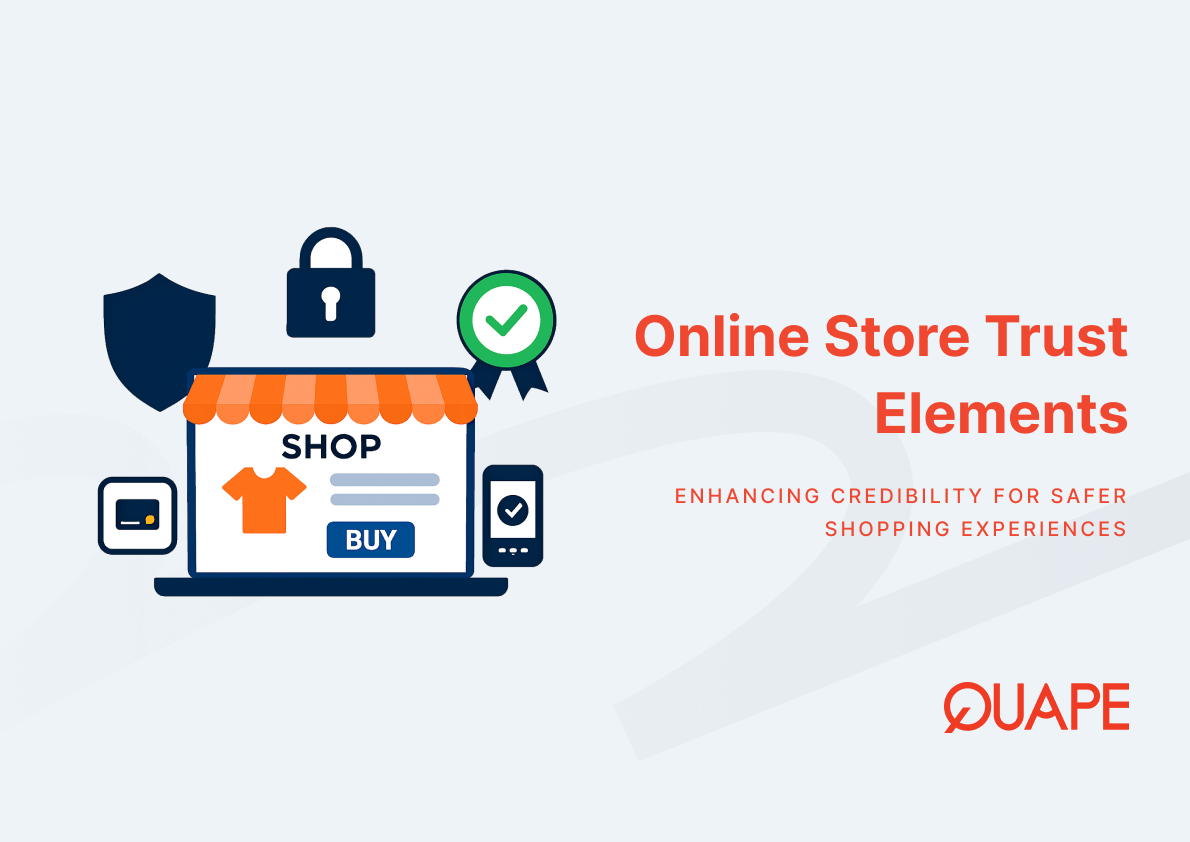
Every abandoned cart represents a failure to establish trust. When customers hesitate at checkout, security concerns often drive that hesitation more than price or product fit. For Singapore ecommerce operators, trust mechanisms function as both technical safeguards and psychological reassurance systems that directly influence conversion rates. The infrastructure supporting secure transactions must align with visible credibility signals that communicate safety before, during, and after the purchase decision. Building this trust architecture requires understanding how security measures interact with buyer psychology, particularly in a market where approximately 70.2% of shopping carts are abandoned before completion, often due to friction or perceived risk.
Ecommerce trust security encompasses the technical protocols, visual indicators, and structural design patterns that collectively reduce perceived transaction risk while maintaining usability. This concept extends beyond SSL implementation to include how security measures present themselves to buyers, how compliance signals reinforce credibility, and how transparency mechanisms throughout the purchase journey build confidence. Trust in digital commerce functions as a composite system where encryption protocols support checkout clarity, where third-party verification enables social proof credibility, and where local compliance signals align with regional buyer expectations.
Những điểm chính
- Trust signals function as visual and informational cues that help visitors assess transaction safety before committing to purchase
- SSL enforcement and HTTPS protocols establish baseline security while creating visible browser indicators that reduce abandonment risk
- Third-party trust seals and certification badges provide external validation that supports internal credibility claims
- Social proof positioning across product pages and checkout flows reinforces purchase confidence through aggregated buyer experiences
- Local reputation signals tailored to Singapore market expectations align security presentation with regional compliance awareness
- Transparent checkout experiences reduce cognitive friction by clarifying data handling, payment routing, and order fulfillment processes
- Performance reliability influences perceived security, as site speed and uptime communicate operational competence
- Mobile trust signals require specific design adaptations that account for screen constraints and touch-based interaction patterns
Introduction to Ecommerce Trust Security
Online transaction risk creates psychological barriers that technical security alone cannot overcome. Buyer confidence depends on how security infrastructure translates into recognizable credibility markers throughout the shopping experience. When ecommerce web design in Singapore integrates trust mechanisms, those mechanisms must function both as protective layers and as communication tools that signal safety to non-technical buyers.
Trust signals operate at the intersection of security implementation and user perception. A store might implement robust encryption protocols, but if those protocols remain invisible or poorly communicated, buyers perceive vulnerability regardless of actual security strength. This gap between technical reality and user perception creates conversion obstacles that well-designed trust systems resolve by making security visible, understandable, and contextually relevant to purchase decisions.
The relationship between security measures and buyer psychology reveals why trust building requires more than compliance checkbox completion. Consumers evaluate trustworthiness through multiple simultaneous signals: visual indicators like padlock icons, textual reassurances like return policies, behavioral cues like checkout simplicity, and social validation like review aggregates. These signals interact to create composite trust impressions that influence whether browsers become buyers.
Core Trust Signals That Influence Ecommerce Credibility
Trust signals create decision-making shortcuts that help buyers navigate purchase risk efficiently. Rather than analyzing security certificates or reading privacy policies in detail, consumers rely on recognized patterns that signal credibility. These patterns include visual badges, institutional endorsements, peer validations, and interface clarity that collectively communicate “this transaction is safe.”
Buyer psychology responds to trust signals through both conscious evaluation and subconscious pattern recognition. A checkout page displaying familiar payment logos triggers automatic safety associations, while the absence of expected security indicators creates cognitive dissonance that produces hesitation. Understanding these psychological mechanisms allows ecommerce operators to position trust elements where they exert maximum influence on conversion decisions.
Conversion trust factors operate throughout the buyer journey, not just at checkout. Product pages that display review counts establish initial credibility, category pages that load quickly signal technical competence, and cart pages that clarify shipping costs demonstrate transparency. Each interaction either reinforces or undermines the trust foundation that checkout completion requires.
SSL Enforcement and Secure Data Transmission
SSL certificates enable encrypted communication between browsers and servers, transforming plain HTTP connections into secure HTTPS sessions. This encryption prevents data interception during transmission, protecting sensitive information like credit card numbers and login credentials from unauthorized access. The technical security that SSL provides becomes visible through browser indicators: padlock icons, green address bars, and certificate details that browsers display to confirm connection safety.
HTTPS implementation affects both security reality and security perception. Modern browsers actively warn users when sites lack SSL certification, displaying “Not Secure” labels that immediately undermine credibility. These warnings create immediate trust deficits that most buyers will not overcome, regardless of product quality or pricing. Conversely, proper SSL implementation produces positive signals that browsers amplify through visual confirmation mechanisms.
Data encryption extends beyond checkout to encompass all authenticated sessions where personal information transmits between client and server. Account login pages, profile management interfaces, and order history views all require encrypted connections to protect user privacy. Payment security depends specifically on end-to-end encryption that covers not just credit card transmission but also the routing of that data through payment gateways in Singapore to final authorization systems.
The interaction between SSL enforcement and perceived safety creates a baseline trust requirement rather than a competitive advantage. Buyers expect HTTPS by default; its presence rarely increases conversion, but its absence almost always decreases it. This asymmetry means SSL functions as a necessary foundation that other trust signals build upon rather than as a differentiator that drives purchase decisions independently.
Trust Seals and Third-Party Verification Signals
Trust seals provide external validation that a business has met specific security, privacy, or operational standards verified by independent authorities. Certification authorities issue these seals after auditing security practices, data handling procedures, or compliance with industry frameworks. The resulting badges communicate that external experts have confirmed claims about security implementation, shifting credibility assessment from subjective buyer judgment to objective institutional verification.
Compliance badges demonstrate adherence to specific regulatory or industry standards like PCI DSS, which governs payment card data handling. PCI DSS certification requires merchants to implement specific technical controls, maintain secure networks, protect cardholder data, manage vulnerabilities, restrict access appropriately, monitor systems continuously, and maintain security policies. Displaying PCI compliance signals that payment processing meets established security benchmarks that reduce breach risk.
The effectiveness of trust seals depends on buyer recognition and seal reputation. Well-known seals from established security vendors carry more weight than unfamiliar badges from obscure sources. Some studies indicate that 75% of users report increased trust from website seals, though this effect varies based on seal prominence, placement context, and buyer familiarity with the issuing authority.
Third-party verification extends beyond security certificates to include business accreditation, privacy commitments, and quality assurances. BBB accreditation, privacy shield certifications, and industry-specific credentials all function as trust signals that reduce buyer uncertainty. However, seal proliferation can dilute effectiveness; displaying too many badges creates visual clutter that diminishes impact rather than reinforcing credibility.
Social Proof Positioning Across the Buyer Journey
Social proof leverages aggregated buyer experiences to reduce individual purchase uncertainty. Reviews, testimonials, and user-generated content demonstrate that others have completed transactions successfully, experienced satisfactory product quality, and received adequate service. This peer validation functions as distributed credibility verification that supplements institutional trust signals with real-world outcome evidence.
Reviews influence trust through both quantitative signals (rating scores, review counts) and qualitative content (detailed experiences, problem resolution stories). High review volumes with positive averages suggest consistent quality, while detailed negative reviews that receive thoughtful vendor responses demonstrate accountability. The interaction between review authenticity and trust reinforcement means that curated or obviously fake reviews undermine rather than build credibility.
Testimonials differ from reviews in their selection and presentation, typically highlighting exceptional experiences rather than representing average outcomes. Effective testimonial positioning includes specific details (customer names, photos, concrete results) that increase believability. Generic praise without attribution signals marketing content rather than genuine feedback, reducing persuasive impact.
User-generated content extends social proof beyond written reviews to include photos, videos, and social media posts that show products in real-world contexts. This content validates product representations, demonstrates actual usage patterns, and creates emotional connections that text reviews cannot replicate. Platforms that integrate UGC effectively often see increased engagement through ecommerce social integration strategies that make peer experiences visible throughout the shopping journey.
Trust reinforcement through social proof requires strategic positioning that matches validation type to buyer journey stage. Product pages benefit from summary ratings and recent reviews, category pages gain credibility from aggregate scores, and checkout pages reduce abandonment when they display security badges alongside positive service feedback. Understanding Singapore buyer psychology helps optimize social proof placement for regional preferences around peer validation versus institutional authority.
Local Reputation Signals for Singapore-Based Stores
Local trust signals leverage regional familiarity to establish credibility faster than generic international indicators. Singapore business credibility benefits from specific markers: local business registration visibility, Singapore-based contact information, regional payment method support, and references to local regulations that signal market commitment. These elements communicate that the business operates within Singapore’s regulatory framework and remains accountable to local standards.
Singapore business credibility depends partly on demonstrating physical presence or operational substance beyond domain registration. Displaying a Singapore office address, local phone number, or references to Singapore operations reduces perceptions of fly-by-night operations that might disappear after collecting payment. This geographic specificity becomes particularly important for higher-value transactions where buyers seek recourse options if problems arise.
Local compliance visibility strengthens trust through references to Singapore regulations, particularly around consumer protection and data privacy. While most buyers will not verify actual compliance, mentioning awareness of local requirements signals intention to operate legitimately within established frameworks. This awareness becomes more critical as privacy concerns increase and buyers become more sensitive to how businesses handle personal information.
Brand legitimacy in local markets often depends on familiarity built through multiple touchpoints: local media presence, regional partnerships, community involvement, or customer service accessibility. New entrants without established reputation can build legitimacy through trust proxies like partnerships with recognized local entities, acceptance by local payment systems, or endorsements from regional industry associations.
Structural and UX Elements That Reinforce Trust
UX trust design extends security signaling into interaction patterns that demonstrate transparency and reduce uncertainty. Transparency signals appear in clear communication about costs, policies, processes, and expectations that eliminate surprises during transactions. When buyers understand what will happen, when it will happen, and how much it will cost, they perceive lower risk and experience fewer trust obstacles.
Usability credibility emerges from smooth interactions that signal technical competence and operational care. Broken links, error messages, loading failures, or confusing navigation all undermine confidence by suggesting poor quality control. Conversely, polished interfaces, clear information architecture, and responsive interactions communicate professionalism that extends to trust assumptions about transaction handling.
The relationship between UX quality and perceived trustworthiness reveals why interface design affects conversion beyond pure aesthetic preference. Buyers subconsciously assess operational competence through interface polish, reasoning that businesses capable of good design likely maintain good security, fulfill orders reliably, and handle customer service professionally. This reasoning may not withstand logical scrutiny, but it influences purchase decisions nonetheless.
Transparent Checkout and Payment Experience
Checkout clarity reduces cognitive friction by presenting purchase details, costs, and processes in easily scannable formats that eliminate confusion. Transparent pricing shows subtotals, shipping costs, taxes, and total amounts before requiring payment information entry. This upfront disclosure prevents sticker shock at final confirmation and reduces abandonment from unexpected fees.
Payment reassurance appears through multiple signals: recognized payment logos, clear explanations of how payment information will be handled, visible security indicators during data entry, and confirmation that payment routing uses secure channels. These elements combine to address specific fears around payment security, from card number interception to unauthorized charges to payment information storage.
Friction reduction throughout checkout involves minimizing form fields, providing clear error messages, offering guest checkout options, and saving progress automatically. Each additional step or required field increases abandonment risk, particularly on mobile devices where form completion proves more difficult. Balancing information requirements against completion likelihood requires understanding which data points truly support transaction processing versus which serve secondary purposes that could be deferred.
The interaction between checkout transparency and cart abandonment becomes particularly critical when examining how checkout UX affects cart abandonment patterns. Studies consistently show that unexpected costs, forced account creation, complicated checkout flows, and security concerns drive abandonment. Addressing these friction points through clearer communication and simplified processes directly improves conversion rates.
Performance, Reliability, and Perceived Security
Site speed influences trust through both direct frustration reduction and indirect signals about operational quality. Fast-loading pages suggest adequate infrastructure investment, technical competence, and attention to user experience. Slow performance signals potential problems: inadequate hosting resources, poor code quality, or operational neglect that might extend to order fulfillment or customer service.
Uptime reliability communicates operational stability that buyers associate with business viability. Frequent downtime or error states suggest technical problems, financial instability, or minimal operational oversight. For ecommerce specifically, availability during peak shopping periods becomes critical; downtime during promotional events or holiday shopping windows creates immediate revenue loss and longer-term credibility damage.
Technical reliability extends beyond availability to include functional consistency: forms that submit correctly, search that returns relevant results, filters that work as expected, and checkout that processes reliably. Each technical failure introduces doubt about whether the business can handle transaction completion successfully, creating abandonment risk even when problems occur on non-critical pages.
Perceived safety correlates with performance partly through association and partly through reduced exposure to potential problems. Fast ecommerce sites complete transactions quickly, reducing the window during which buyers might reconsider or encounter technical issues. This speed creates momentum that carries buyers through checkout before hesitation develops, while also signaling professionalism that supports trust assumptions.
Practical Trust Optimization for the Singapore Market
Singapore ecommerce standards reflect regional expectations around data privacy, consumer protection, and business accountability. Local compliance trust develops when businesses demonstrate awareness of and adherence to Singapore regulations, particularly around personal data protection and consumer rights. This compliance signaling need not be heavy-handed; simple references to privacy commitments or consumer protection alignment often suffice to establish regulatory awareness.
PDPA awareness has become increasingly important as Singapore consumers grow more conscious of how businesses collect, use, and protect personal data. Stores that clearly communicate data handling practices, provide opt-in rather than opt-out consent mechanisms, and make privacy policies accessible build trust through transparency. While few buyers read full privacy policies, the presence of clear, accessible data protection information signals respect for privacy rights.
Local buyer expectations in Singapore include specific preferences around payment methods, delivery options, and customer service accessibility. Supporting local payment solutions like PayNow or regional credit cards demonstrates market commitment, while offering familiar delivery services reduces fulfillment concerns. These localizations extend trust building beyond security signals into operational credibility.
Aligning Security Signals With Singapore Consumer Expectations
PDPA compliance affects trust through visible data protection commitments that align with Singapore’s regulatory framework. Displaying privacy policies that reference PDPA requirements, implementing clear consent mechanisms for data collection, and providing straightforward opt-out procedures all demonstrate regulatory awareness. This visibility matters less for legal compliance verification than for signaling that the business operates within Singapore’s governance structures.
Local compliance trust extends to consumer protection awareness, refund policy transparency, and warranty commitments that align with Singapore consumer expectations. Buyers familiar with local consumer protection provisions expect certain baseline rights; stores that clearly acknowledge these rights build trust through demonstrated understanding of local standards.
Regional payment habits in Singapore include both international solutions and local preferences. Supporting PayNow, favoring regional card networks, and accommodating mobile wallet solutions popular in Singapore all signal market understanding. This payment flexibility extends beyond convenience to trust building, as familiar payment methods reduce concerns about cross-border transaction complications or currency conversion issues.
Trust-Building for Mobile-First Commerce
Mobile trust signals must account for screen constraints that limit visible security indicators and reduce space for trust badge display. On mobile interfaces, SSL indicators appear less prominently, trust seals consume valuable screen real estate, and checkout flows require more careful design to maintain transparency while minimizing scrolling. These constraints demand prioritization: which trust elements matter most for mobile conversion, and how can they integrate without compromising usability?
Mobile UX security concerns extend to touch interaction patterns, where smaller touch targets can lead to accidental actions, and where keyboard covering input fields can obscure transparency elements like cost summaries. Effective mobile checkout maintains visibility of critical information while users interact with forms, using sticky headers or summary bars that remain visible during data entry.
Responsive assurance means adapting trust mechanisms to device capabilities rather than simply scaling desktop designs. Mobile users may rely more heavily on recognizable payment logos since they cannot easily verify SSL certificates, may need simplified checkout flows because form completion proves harder, and may require clearer navigation because back-button usage increases when users want to verify information. Understanding mobile commerce trends in Singapore helps optimize trust elements for platforms where most shopping journeys now begin.
How E-Commerce Web Design Strengthens Ecommerce Trust Security
Ecommerce web design establishes the structural foundation on which trust signals operate effectively. Secure architecture built into design frameworks ensures that SSL implementation occurs correctly, that payment data routing follows secure pathways, and that user information storage meets security standards. These technical foundations become invisible when implemented well but catastrophic when implemented poorly.
Trust-first design systems prioritize security visibility and transparency communication throughout the interface rather than treating trust as an afterthought added through badge placement. This approach integrates security indicators into natural browsing flows, positions social proof where buyers seek validation, and structures checkout processes to reinforce rather than undermine confidence. Thiết kế web thương mại điện tử that embeds trust mechanisms from initial planning creates more cohesive, credible shopping experiences than designs that append trust elements after core development completes.
The relationship between design quality and trust perception reveals why investing in professional ecommerce development produces returns beyond aesthetic improvement. Polished design communicates operational competence, integrated security signals reduce cognitive friction, and thoughtful UX demonstrates customer-centric priorities that buyers associate with reliable service. These elements combine to create trust impressions that generic template implementations struggle to achieve.
Kết luận
Trust optimization functions as ongoing refinement rather than one-time implementation, requiring continuous attention to how security measures present themselves, how credibility signals align with buyer expectations, and how transparency mechanisms reduce purchase friction. Long-term credibility develops through consistent delivery on trust promises: secure transactions that complete successfully, privacy commitments that businesses honor, and service quality that reviews accurately represent. For Singapore ecommerce operators, building this credibility architecture requires understanding both technical security requirements and the psychological mechanisms through which buyers assess conversion confidence.
Ready to build an ecommerce platform where security infrastructure and trust signals work together to reduce abandonment and increase conversion? Liên hệ bán hàng to discuss how strategic trust optimization can strengthen your online store’s credibility.
Câu Hỏi Thường Gặp
What makes trust signals effective for ecommerce conversion?
Trust signals reduce perceived transaction risk by providing visual and informational cues that help buyers assess safety quickly. Effective signals combine recognizable elements (SSL indicators, known payment logos), external validation (third-party badges, reviews), and transparent communication (clear policies, visible costs) that collectively address multiple dimensions of purchase uncertainty.
How does SSL certification differ from trust seals in building credibility?
SSL certification provides technical encryption that secures data transmission while producing browser indicators (padlock icons, HTTPS) that signal connection security. Trust seals offer third-party verification of security practices, compliance, or quality standards that extend beyond encryption to encompass broader operational credibility. SSL functions as baseline requirement while trust seals provide additional validation layers.
Why do mobile commerce platforms require different trust approaches?
Mobile interfaces impose screen constraints that limit trust badge visibility, reduce space for detailed security information, and change how buyers interact with checkout flows. Mobile trust optimization prioritizes essential indicators, streamlines verification elements to fit smaller screens, and adapts transparency communication to maintain clarity despite limited display area and touch-based interaction patterns.
How should Singapore ecommerce stores balance international and local trust signals?
Singapore stores benefit from combining globally recognized trust elements (SSL, major payment logos, established security badges) with local credibility markers (Singapore business registration, local contact information, PDPA awareness, regional payment support). This combination establishes both operational legitimacy and market-specific commitment that together address buyer concerns more comprehensively than either approach alone.
What role does checkout transparency play in reducing cart abandonment?
Checkout transparency directly addresses major abandonment drivers by eliminating cost surprises (showing all fees upfront), clarifying data handling (explaining security measures), simplifying processes (minimizing required fields), and maintaining progress visibility (confirming completion steps). This clarity reduces cognitive friction and purchase uncertainty that cause buyers to abandon carts before completing transactions.
How do performance and reliability affect perceived security?
Site performance signals operational competence through fast loading, consistent uptime, and reliable functionality that buyers associate with professional operation. Poor performance suggests technical problems or inadequate investment that might extend to security infrastructure, creating doubt about transaction safety even when actual security measures remain robust. Speed and reliability function as proxy trust indicators.
When should ecommerce platforms display trust seals and verification badges?
Trust badges prove most effective when positioned at decision points where buyers seek reassurance: product pages where purchase consideration begins, cart pages where commitment strengthens, and checkout pages where final confirmation occurs. However, excessive badge display creates visual clutter that dilutes impact, requiring strategic selection of most credible seals placed where they address specific buyer concerns without overwhelming interface clarity.
How does social proof positioning vary across the buyer journey?
Social proof requirements change as buyers progress from awareness to purchase. Product pages benefit from review summaries and ratings that establish quality credibility. Category pages gain from aggregate scores that support comparison decisions. Checkout pages reduce abandonment when they display service feedback and security validations that address transaction concerns rather than product quality questions.

- Squarespace Alternative: Bespoke UI/UX Design that Converts High-Ticket Clients - Tháng 6 17, 2026
- Wix Alternative for Enterprises: Why You Need Custom Corporate Web Design - Tháng 6 16, 2026
- Dropbox Business Alternative: Avoid High User Licensing Fees with Private Nextcloud - Tháng 6 15, 2026