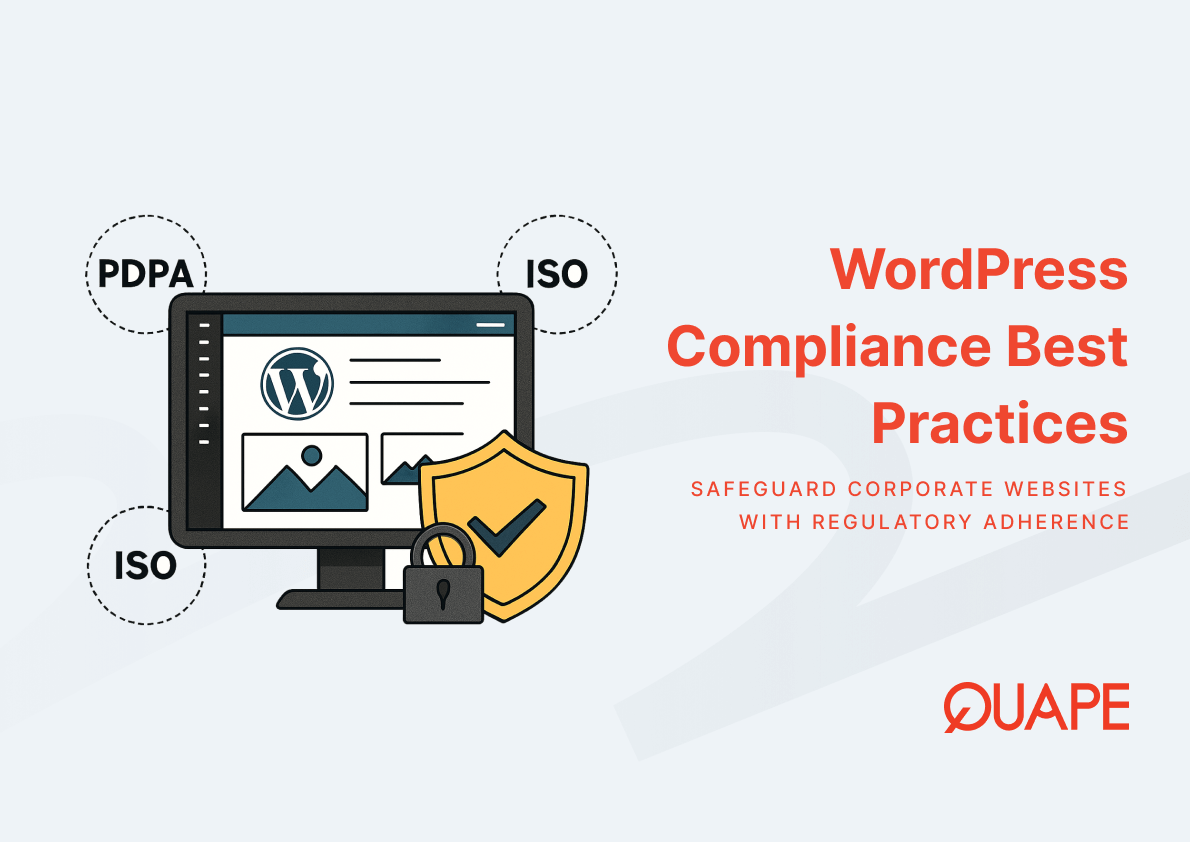
Corporate WordPress projects in Singapore now operate under intersecting legal and technical obligations that shape how personal data is collected, stored, and protected. IT managers, CTOs, and procurement leads face growing scrutiny from regulators, auditors, and customers who expect demonstrable compliance rather than verbal assurance. The Personal Data Protection Act (PDPA), GDPR, and ISO/IEC 27001 each impose requirements that translate directly into configuration choices, hosting decisions, and development practices. When compliance is treated as an afterthought, organizations risk financial penalties, reputational damage, and operational disruption. A structured approach that embeds compliance into the design and development lifecycle produces websites that are both functional and defensible.
Introduction to WordPress PDPA ISO Compliance
WordPress PDPA ISO compliance refers to the alignment of a WordPress website with the legal requirements of Singapore’s Personal Data Protection Act and the technical controls specified by ISO/IEC 27001. It covers how user data flows through the content management system, how hosting environments secure that data, and how audit mechanisms prove accountability during regulatory reviews.
This alignment depends on design-stage decisions as much as on post-launch policies. Teams that begin with a compliant structured conversion workflow from Figma or PSD to WordPress build security and data protection into the theme architecture, rather than layering controls on top of a finished site.
要点总结
- PDPA governs how Singapore organizations collect, use, and disclose personal data, and it requires reasonable security arrangements.
- GDPR can apply to Singapore businesses that process data belonging to EU residents, creating extraterritorial obligations.
- ISO/IEC 27001 provides a governance framework that connects risk management with technical controls inside the WordPress stack.
- Hosting choices directly influence compliance outcomes through data residency, server hardening, and network controls.
- Audit logging, data retention policies, and role-based access control form the operational backbone of compliance.
- Misconfiguration, not sophisticated attacks, accounts for a large share of data exposure incidents.
- Compliance must involve IT, legal, and procurement teams working under a shared governance model.
Regulatory Frameworks Affecting WordPress Compliance
Regulatory frameworks shape the boundaries within which WordPress environments must operate. Each framework defines a different scope, yet they overlap in expectations around consent, accountability, and technical safeguards. Corporate teams that understand these frameworks can design systems that satisfy multiple obligations simultaneously, avoiding duplicated effort and conflicting policies.
Understanding PDPA Requirements for Corporate Websites
The PDPA sets baseline obligations for how organizations in Singapore handle personal data collected through their websites. According to the Personal Data Protection Commission, the PDPA governs the collection, use, and disclosure of personal data by organizations in Singapore. A corporate WordPress site that captures contact form submissions, newsletter subscriptions, or account registrations falls squarely within this scope. Consent must be obtained before data is collected, the purpose of collection must be notified to the individual, and the data must not be used beyond that stated purpose. Purpose limitation influences how plugins are configured, since analytics and marketing tools often expand data use in ways that exceed the original notification.
GDPR Considerations for Singapore-Based Businesses
Singapore-based organizations that serve EU residents fall under GDPR’s extraterritorial reach, even without a physical presence in Europe. This means a WordPress site selling to EU customers, hosting EU job applicants, or serving EU visitors must address data subject rights such as access, rectification, and erasure. Cross-border data transfer rules require documented legal bases before personal data leaves the EU. The combination of PDPA and GDPR often produces stricter internal standards than either framework alone, since organizations tend to adopt the higher requirement across all users for operational simplicity.
ISO/IEC 27001 and Information Security Management Systems (ISMS)
ISO/IEC 27001 establishes the governance layer that connects policy with technical execution. The standard requires organizations to identify information assets, assess risks, and apply controls proportional to those risks. Within a WordPress context, this means mapping which plugins access personal data, which user roles can export data, and which logs track administrative actions. The ISMS integrates these controls into a cycle of planning, implementing, checking, and improving, ensuring that compliance evolves with the threat landscape rather than remaining static after initial certification.
Core Technical Components of WordPress Compliance
Technical components translate regulatory intent into operational reality. These components work together: retention policies reduce the data exposed to breaches, hosting controls protect data at rest and in transit, audit logs provide evidence of control effectiveness, and access management limits who can act on the data. Weakness in one component undermines the others, which is why compliance must be treated as a system rather than a checklist.
Data Retention Policies and WordPress Database Management
Data retention policies define how long personal data remains in the WordPress database before it is anonymized or deleted. Form submissions, comment metadata, user account records, and order histories accumulate in MySQL tables over time, expanding the attack surface. Shorter retention windows reduce the volume of data exposed in the event of a breach, which directly lowers legal and financial risk. Automated cleanup routines, scheduled deletion queries, and clear ownership of retention decisions turn policy into enforceable practice.
Hosting Compliance and Server-Level Security Requirements
Hosting infrastructure determines whether personal data is adequately protected at the server level. Data residency decisions affect which jurisdiction’s laws apply to the data, while server hardening reduces the likelihood of compromise through operating system vulnerabilities. Network controls such as firewalls, intrusion detection, and segmented environments prevent lateral movement during incidents. Organizations choosing compliant hosting for WordPress projects should verify that the provider supports encryption at rest, backup integrity checks, and documented incident response procedures.
Audit Logging and Monitoring for Accountability
Audit logging captures who did what and when, producing the traceability that regulators and auditors require. Every plugin installation, user role change, content modification, and login attempt should generate a log entry that is stored outside the WordPress database to prevent tampering. Security monitoring tools correlate these logs with network events to detect anomalies in real time. Teams that invest in layered security measures for WordPress environments integrate logging with alerting so that suspicious activity triggers investigation before it becomes a breach.
Access Control and User Permission Management
Access control enforces the principle of least privilege, ensuring that users only hold the permissions they need for their role. WordPress includes a native role system, but corporate projects often require custom roles that restrict access to specific post types, settings, or plugins. Strong authentication methods such as multi-factor authentication protect administrative accounts, which are the primary targets of credential-based attacks. Regular access reviews confirm that departing employees, rotated contractors, and changed responsibilities are reflected in current permissions.
Risk Management and Compliance Audits in WordPress Projects
Risk management converts uncertainty into a set of prioritized actions. Rather than addressing every possible threat, organizations focus on risks with the highest combined likelihood and impact. Compliance audits then verify that these controls operate as designed, providing independent assurance to leadership, regulators, and customers.
Common Compliance Risks in WordPress Implementations
Plugin vulnerabilities represent one of the most frequent sources of compromise, since many sites run dozens of plugins from different developers with varying security practices. Third-party integrations that push data to external services can create undocumented data flows that violate purpose limitation under PDPA. Misconfigurations in file permissions, database access, or content delivery networks often expose data without any attacker action required. The Verizon Data Breach Investigations Report found that 82% of data breaches involved human elements such as error, misuse, or social engineering, which confirms that operational discipline matters as much as technical tooling.
Preparing for PDPA and ISO Audits
Audit preparation begins long before the auditor arrives. Documentation of policies, risk assessments, control implementations, and incident responses must be complete, current, and accessible. Internal audits conducted quarterly or semi-annually identify gaps while there is time to remediate them. A compliance checklist aligned with both PDPA obligations and ISO 27001 Annex A controls helps teams track evidence collection systematically, turning the audit from a disruptive event into a routine verification.
Practical Application for Singapore-Based Organizations
Singapore-based organizations operate within a specific regulatory and commercial context that shapes how compliance is implemented. The PDPC provides guidance, the local data center ecosystem supports residency requirements, and procurement practices increasingly require vendors to demonstrate compliance maturity. SMEs and enterprises alike benefit from treating compliance as a competitive advantage rather than a cost.
Aligning WordPress Development with Local Regulatory Expectations
Alignment with local expectations starts with reading and applying PDPC advisory guidelines to specific WordPress scenarios. Consent notices, data breach notification procedures, and data protection officer appointments must be reflected in the site’s privacy notice, backend workflows, and internal playbooks. Data governance frameworks that assign clear ownership for each data category make these obligations actionable rather than abstract.
Collaboration Between IT, Legal, and Procurement Teams
Compliance in corporate WordPress projects is rarely achievable by IT alone. Legal teams interpret regulatory requirements and review vendor contracts, while procurement teams evaluate supplier risk and enforce standardized clauses. IT teams implement the technical controls and monitor ongoing compliance. Organizations comparing in-house versus outsourced WordPress delivery models should weigh how each model distributes responsibility across these functions, since gaps in coordination often produce compliance failures.
How Figma/PSD to WordPress Supports Compliance Implementation
A structured design-to-development workflow supports compliance by embedding security and data protection decisions into the earliest stages of a project. When themes are built from Figma or PSD files using secure coding practices, compliance considerations shape the code rather than being retrofitted after launch. This approach produces sites that are more predictable to audit and easier to maintain.
Structuring Secure and Compliant Themes from Design Stage
Secure Development Lifecycle practices integrate threat modeling, code review, and dependency scanning into the theme-building process. Design systems that enforce consistent component usage reduce the likelihood of ad hoc additions that bypass security controls. Teams that build from well-defined Figma design systems for WordPress benefit from predictable code patterns, which makes vulnerability identification and remediation faster across the site.
Ensuring Performance, Security, and SEO Readiness
Performance, security, and SEO readiness depend on architectural choices made during theme development. Compliant hosting, efficient code, and clean markup support Core Web Vitals while reducing the attack surface. Technical SEO and secure architecture reinforce each other when pages load quickly, render consistently, and expose only the data they are intended to expose. Guidance on balancing WordPress theme speed with SEO performance helps teams deliver sites that satisfy both compliance and business objectives.
结论
Maintaining compliance in corporate WordPress projects requires organizations to align regulatory obligations with technical implementation across every layer of the stack. PDPA, GDPR, and ISO/IEC 27001 set the expectations, while data retention policies, hosting choices, audit logging, and access controls turn those expectations into verifiable practice. Compliance is strongest when it is embedded during design and development rather than added after deployment, and when IT, legal, and procurement teams share responsibility for its ongoing health. If you need guidance on aligning your WordPress projects with PDPA and ISO requirements, you can reach out to discuss your specific needs.
常见问题 (FAQ)
Does the PDPA apply to every WordPress site in Singapore?
The PDPA applies to any organization in Singapore that collects, uses, or discloses personal data, regardless of the platform. A WordPress site with contact forms, user registrations, or analytics generally processes personal data and therefore falls within scope. The specific obligations depend on the volume and sensitivity of the data being handled.
Can a Singapore company be subject to GDPR through its WordPress site?
Yes, if the site offers goods or services to EU residents or monitors their behavior. The GDPR applies extraterritorially, so a Singapore-based business with EU customers must comply with its provisions. This often means implementing cookie consent, data subject request handling, and lawful transfer mechanisms.
Is ISO/IEC 27001 certification necessary for corporate WordPress projects?
Certification is not legally required, but it is increasingly expected by enterprise clients and government tenders. ISO/IEC 27001 provides a structured framework that strengthens compliance across multiple regulations at once. Many organizations align with the standard even if they do not pursue formal certification.
What role does hosting play in WordPress compliance?
Hosting directly affects data residency, encryption, network security, and backup integrity. A non-compliant hosting environment can undermine otherwise strong application-level controls. Selecting a provider that supports PDPA and ISO-aligned practices is a foundational compliance decision.
How often should compliance audits be conducted for WordPress projects?
Internal reviews should occur at least annually, with spot checks following major changes such as plugin updates, infrastructure migrations, or new data flows. External audits typically align with ISO certification cycles or regulatory triggers. Frequent smaller reviews detect issues earlier than infrequent large audits.
What are the most common causes of WordPress compliance failures?
Misconfigured plugins, excessive user permissions, weak retention practices, and incomplete audit logging appear repeatedly in compliance findings. Human error and operational oversight contribute more often than sophisticated attacks. Addressing these operational weaknesses produces the largest compliance improvements.
How does a structured Figma or PSD to WordPress workflow support compliance?
A structured workflow integrates security, accessibility, and performance standards into the theme from the design stage. This reduces the need for rework and creates a consistent foundation for auditing. Compliance becomes a product of the development process rather than a separate activity added later.