Singapore organizations are no longer evaluating web projects purely on visual fidelity or template flexibility. IT managers, CTOs, and procurement leads now weigh architectural decisions that influence scalability, omnichannel delivery, and long-term maintenance costs. The conversation around Figma to WordPress has shifted accordingly, moving from theme conversion into a broader discussion of headless implementations, API-driven design systems, and composable frontends. This shift matters because design decisions made today determine how quickly content reaches web, mobile, and emerging digital surfaces tomorrow. For enterprises modernizing their digital infrastructure, understanding this architectural spectrum is now a procurement-level concern, not merely a development detail.
Defining the Core Entity
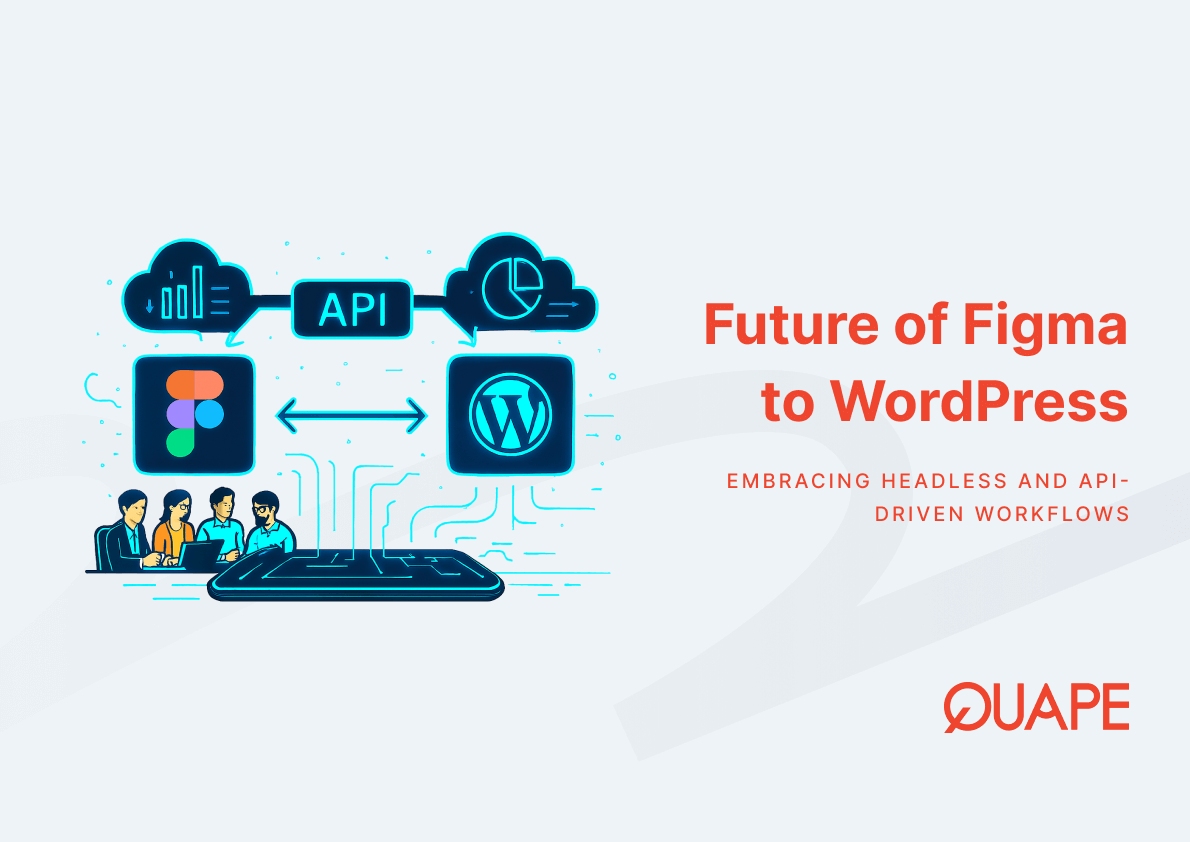
Future Figma to WordPress refers to the evolving architectural relationship between design systems created in Figma and the WordPress platform, where WordPress increasingly functions as a content repository accessed through APIs rather than as a tightly coupled theme-rendering engine. In this model, Figma outputs move beyond static design files and become structured inputs that inform component libraries, design tokens, and reusable UI systems consumed by decoupled frontends.
This concept spans a spectrum of maturity. On one end sits traditional theme conversion where Figma designs translate directly into WordPress themes. On the other end sit composable architectures where WordPress delivers structured content through REST or GraphQL endpoints to frontends built in Next.js or other Jamstack frameworks. Most Singapore businesses will find themselves somewhere along this continuum, guided by operational priorities rather than ideological preference.
要点总结
- Headless WordPress separates content management from presentation, enabling the same content model to power web, mobile, and API-driven surfaces.
- REST API and GraphQL serve different retrieval patterns and often coexist rather than replace each other in production WordPress environments.
- The global headless CMS market reached USD 1.14 billion in 2023 and is projected to hit USD 3.03 billion by 2030, reflecting sustained structural growth.
- Jamstack and Next.js frontends shift Figma to WordPress from visual conversion into composable frontend engineering.
- Decoupled architecture introduces governance complexity, particularly around API security, schema drift, and integration oversight.
- Traditional WordPress builds remain viable for many Singapore SMEs, especially where editorial simplicity outweighs omnichannel requirements.
- Procurement evaluation now extends beyond design fidelity into architectural flexibility, compliance readiness, and long-term scalability.
- Pixel-perfect conversion still anchors most real-world implementations, forming the foundation for later headless readiness.
Introduction to Future Figma to WordPress Architectures
Figma and WordPress historically occupied separate roles in the web delivery pipeline. Figma housed the visual design, WordPress rendered the final website, and a theme conversion process connected the two. That linear pipeline is giving way to architectures where Figma components inform design tokens, WordPress stores structured content, and a composable frontend renders experiences across multiple channels.
Decoupled architecture enables this shift by separating the content layer from the presentation layer. APIs orchestrate the flow of content between systems, which means a single WordPress installation can feed a marketing site, a mobile application, a partner portal, and an interactive product page without duplicating editorial effort. For practical implementation considerations, our guide on converting Figma and PSD files into production WordPress sites covers the foundational workflow that supports both traditional and headless delivery models.
Composable web architecture extends this thinking further. Instead of treating the website as a monolithic product, teams assemble capabilities from specialized services: WordPress for content, a commerce engine for transactions, a search service for discovery, and a frontend framework that unifies them. Figma sits upstream of this composition, defining the visual language that holds the experience together.
Key Components of Headless and API-Driven Figma to WordPress Systems
Headless WordPress as the Evolution of Traditional WordPress
Headless WordPress preserves the editorial strengths of the platform while removing the constraint that content must be rendered through PHP themes. The administrative interface, user roles, content modeling, and plugin ecosystem remain intact. What changes is the output layer. Content travels through APIs to any frontend capable of consuming structured data, which enables a single content model to support multiple delivery layers including web, apps, APIs, and connected devices, a core principle documented in foundational HTTP specifications that underpin modern web architecture.
This decoupling introduces content orchestration as a new discipline. Editorial teams continue working in familiar WordPress interfaces, while developers consume the resulting content through endpoints that fit their chosen frontend stack. The separation reduces the coupling between editorial workflows and frontend deployment cycles, which in turn allows design updates and content updates to proceed on independent schedules.
The operational implication matters for Singapore enterprises. Marketing teams can iterate on campaigns without waiting for frontend releases, and engineering teams can rebuild presentation layers without disrupting content production. Deeper coverage of this separation appears in our discussion of enterprise design system implementation for WordPress.
REST API and GraphQL in Figma-to-WordPress Delivery Workflows
REST API and GraphQL serve as the two dominant data retrieval patterns in modern headless WordPress implementations. REST provides predictable endpoints where each URL represents a resource, which supports scalability and loose coupling through well-defined stateless interactions. GraphQL allows the client to specify exactly which fields to retrieve in a single query, reducing over-fetching and round-trip overhead for complex interface requirements.
The practical choice rarely comes down to one replacing the other. Many production systems run both simultaneously, using REST for straightforward content retrieval and GraphQL for component-driven interfaces that assemble data from multiple sources. Research on GraphQL adoption notes that teams pursue finer-grained data retrieval than traditional REST endpoints can provide, though security and schema governance remain persistent concerns.
Schema-driven content delivery requires disciplined modeling upstream. When Figma components map cleanly to content types in WordPress, API endpoints return predictable structures that frontends can render without elaborate transformation logic. Teams working through this alignment often benefit from reviewing tooling choices that support design-to-code fidelity.
Jamstack and Next.js as Frontend Layers for Modern Design Systems
Jamstack frontends treat the website as a pre-rendered asset served from a content delivery network, with dynamic interactions handled through APIs and client-side JavaScript. Next.js has become a common choice for this pattern because it supports both static generation and hybrid rendering, allowing teams to pre-build pages where content changes infrequently and render dynamically where personalization or real-time data matters.
This frontend layer reshapes the Figma to WordPress relationship. Instead of converting designs into PHP templates, developers build React components that mirror Figma component structures. WordPress becomes the content source, Next.js assembles the experience, and the design system enforces visual consistency across both sides of the pipeline. The result is a composable frontend where design updates flow from Figma into component libraries, and content updates flow from WordPress into rendered pages.
Performance characteristics shift with this model. Static generation improves page load times and reduces server load, while hybrid rendering preserves dynamic capabilities where business logic demands them. Teams evaluating performance trade-offs may find useful context in our guide on theme-level speed and search visibility optimization.
Decoupled Architecture and the Future of Scalable Design Governance
Decoupled architecture supports design governance by turning visual decisions into reusable system components. Design tokens encode values for color, typography, spacing, and motion, which propagate consistently across products when implemented through a component system. This consistency scales design maintenance far more effectively than per-project styling.
Component systems transform how teams manage change. When a button component updates in the design system, every interface that consumes it inherits the update automatically, provided the integration is wired correctly. For enterprises operating multiple digital properties, this governance model reduces design drift and accelerates brand updates. Our coverage of maintaining visual consistency across WordPress properties explores the practical mechanics, and the broader design system architecture discussion addresses governance at scale.
Market evidence supports the durability of this direction. Grand View Research analysis of the headless content management system software market connects decoupled CMS models with omnichannel publishing and reusable component systems, reinforcing that design system logic and architectural decoupling reinforce each other rather than competing.
Practical Applications of API-Driven Figma to WordPress for Singapore Businesses
Singapore enterprises evaluating web architecture face specific operational pressures: multi-language audiences across Southeast Asia, compliance obligations under the Personal Data Protection Act, and procurement cycles that increasingly favor scalable platforms over bespoke builds. API-driven Figma to WordPress implementations address these pressures by separating content governance from frontend delivery, which allows the same content infrastructure to serve multiple markets and interfaces.
Digital transformation initiatives in Singapore often begin with a single website redesign and expand into multi-property strategies within two to three years. Starting with a headless-ready foundation reduces re-platforming costs later, though the complexity must be justified by genuine omnichannel requirements. For budget planning, our breakdown of cost considerations for Singapore implementations provides regional context, while the benefits-focused overview frames strategic value.
SME modernization follows a different calculus. Smaller organizations may find that traditional WordPress builds deliver better return on investment when editorial volume is modest and omnichannel delivery is not yet operationally relevant. The architectural decision should match actual business complexity rather than aspirational benchmarks.
Why IT Managers and CTOs Are Moving Toward Composable Architectures
Composable stacks reduce technical debt by allowing each capability to evolve independently. When a commerce engine reaches end-of-life, the organization replaces that component without rebuilding the content layer. When a frontend framework falls out of favor, teams migrate presentation logic without touching editorial workflows. This flexibility appeals to CTOs managing long infrastructure horizons.
Enterprise governance benefits from the same modularity. Security reviews, compliance audits, and performance monitoring can focus on individual services rather than a single monolithic application. Infrastructure flexibility becomes a procurement advantage when vendor consolidation risk or platform lock-in enters the evaluation criteria. Organizations weighing delivery models may review our analysis of in-house versus outsourced WordPress development to align team structure with architectural choice.
The trade-off remains real. Composable architectures demand stronger integration discipline, clearer service ownership, and more sophisticated deployment pipelines. Organizations without internal engineering capacity to operate these systems may struggle despite the architectural elegance.
Security, Compliance and API Governance Considerations
API security becomes a central concern the moment content flows through exposed endpoints. Authentication, rate limiting, and schema validation all require deliberate design. Headless WordPress implementations expose a different attack surface than traditional themed sites, which means security models must evolve alongside architectural choices. Details specific to Figma-based builds appear in our coverage of security practices for WordPress design workflows.
PDPA compliance in Singapore imposes obligations around personal data handling that extend to any API surface carrying user information. ISO controls for information security, where applicable, add further governance requirements. Implementations that connect WordPress content to mobile apps, partner systems, or marketing platforms must trace data flows across every integration point. Our treatment of WordPress deployments under PDPA and ISO frameworks addresses these requirements in operational terms.
Schema governance deserves equal attention. When multiple frontends consume the same API, schema changes can break downstream consumers silently. Versioning policies, deprecation timelines, and contract testing reduce these risks.
How Figma/PSD to WordPress Supports Future-Ready Design Systems
专业的 Figma and PSD to WordPress conversion services establish the structural foundation that later headless migrations depend on. Clean code, semantic markup, responsive behavior, and SEO-ready structures all survive architectural transitions, while poorly structured themes require near-total rebuilds when decoupling becomes necessary. Custom WordPress functionality built through well-scoped plugins travels more easily across architectural generations than functionality embedded in theme files.
The practical implication: organizations not yet ready for headless can still make design and development decisions today that preserve future flexibility. This forward compatibility depends on disciplined build practices rather than specific tooling choices.
Bridging Traditional WordPress Builds with Headless Readiness
WordPress theme engineering that anticipates future API consumption looks different from theme engineering optimized purely for immediate rendering. Content modeling in Advanced Custom Fields or native Gutenberg blocks, for example, produces structured data accessible through the REST API regardless of whether the theme itself renders it. Migration readiness compounds when these modeling decisions align with component structures defined in Figma.
API extensibility also benefits from plugin architecture choices made early. Functionality built as custom endpoints rather than theme-coupled features transitions to headless delivery without rewriting business logic. Modular build foundations reduce the effort required when the organization decides to introduce a Next.js frontend or expose content to a mobile application.
Building Pixel-Perfect Interfaces That Transition into Scalable Systems
Pixel-perfect development remains the practical starting point for most Singapore projects. Component fidelity matters because users notice visual discrepancies immediately, and brand consistency depends on faithful translation of design decisions. The goal is not pixel perfection as an end in itself, but as evidence of rigorous component-level discipline. Our detailed approach to pixel-accurate Figma to WordPress conversion covers the technical practices involved.
Frontend performance and scalable UI delivery follow from the same discipline. Components built with performance budgets, accessibility requirements, and responsive behavior in mind scale across traffic growth and interface expansion. When the time comes to extract these components into a design system consumed by a headless frontend, the migration path is far shorter than starting from loosely structured theme code.
Future Trends Shaping Figma to WordPress Beyond 2025
AI-assisted development is changing how Figma designs translate into production code. Visual-to-code automation tools can now generate component scaffolding from Figma files, though human review remains essential for accessibility, performance, and business logic alignment. The near-term impact is acceleration of routine conversion work rather than wholesale replacement of development judgment.
Composable CMS ecosystems will continue expanding as more specialized services integrate through standardized APIs. Headless commerce integrations extend this pattern into transactional experiences, allowing WordPress to orchestrate content while dedicated commerce platforms handle checkout, inventory, and fulfillment. Forward-looking market analysis places the headless CMS category on a sustained growth trajectory, with some forecasts extending market projections through 2036, suggesting long-term structural change rather than short-cycle experimentation.
What remains uncertain is the pace of mainstream adoption among Singapore SMEs. Traditional WordPress continues to serve many organizations effectively, and architectural sophistication should match operational complexity rather than industry narrative.
结论
The future of Figma to WordPress is moving from visual conversion toward entity-driven, API-connected digital infrastructure. Singapore organizations evaluating this shift benefit from treating the decision as a spectrum rather than a binary choice, matching architectural complexity to actual business requirements rather than industry hype. Whether the path forward involves a traditional theme build, a headless implementation, or a composable frontend, the foundation remains disciplined design translation, clean code, and scalable component thinking. Organizations exploring how this spectrum applies to their own digital infrastructure can review our Figma/PSD to WordPress service overview for a concrete starting point, and teams ready to scope an implementation path forward are welcome to 联系我们的销售团队 for a direct conversation.
常见问题 (FAQ)
What is the difference between traditional WordPress and headless WordPress?
Traditional WordPress renders content through PHP themes on the same server that manages the content. Headless WordPress separates content management from presentation, exposing content through APIs that any frontend can consume. The editorial experience remains similar, but the output layer becomes flexible enough to serve websites, mobile apps, and connected devices from the same content source.
Does headless WordPress automatically improve SEO?
No. Headless implementations can deliver strong SEO outcomes when the frontend is engineered correctly, but the architecture itself does not guarantee better rankings. Page speed, structured data, semantic markup, and content quality drive SEO performance regardless of whether the site is traditional or decoupled. Poorly implemented headless sites can perform worse than well-built traditional ones.
Should my Singapore SME choose headless WordPress?
The answer depends on operational complexity rather than company size. If your organization publishes to multiple channels, operates in several markets, or plans significant digital expansion within two to three years, headless architecture merits consideration. If your requirements are a well-designed marketing site with straightforward editorial workflows, traditional WordPress often delivers better return on investment.
How do REST API and GraphQL differ in WordPress contexts?
REST API provides predictable endpoints where each URL represents a resource, which works well for straightforward content retrieval. GraphQL allows clients to request exactly the fields they need in a single query, which reduces over-fetching for complex interfaces. Many production WordPress setups run both, choosing the pattern that fits each use case rather than standardizing on one.
Can existing WordPress sites migrate to a headless architecture?
Yes, though the effort depends on how the original site was built. Sites with clean content modeling, well-structured custom fields, and plugin-based functionality migrate more readily than sites with logic embedded in theme files. A migration assessment typically reviews content structure, plugin dependencies, and integration points before recommending a path.
What role does Figma play in a headless WordPress project?
Figma serves as the upstream source for the design system that informs component libraries consumed by the frontend. In headless projects, Figma components often map directly to React or Vue components rather than PHP templates, and design tokens from Figma encode values used across the entire frontend. This tighter coupling between design and code requires closer collaboration between designers and engineers.
Is pixel-perfect conversion still relevant for headless projects?
Yes, though the practice shifts from rendering designs in themes to building accurate components in frontend frameworks. Visual fidelity remains a requirement, but component fidelity becomes the new benchmark. The goal is ensuring that the design system reproduces Figma decisions consistently across every interface the frontend renders.
What compliance considerations apply to headless WordPress in Singapore?
PDPA obligations extend to any API that handles personal data, regardless of whether the site is traditional or headless. Headless architectures typically involve more integration points, which increases the surface area for data governance review. Authentication on API endpoints, data minimization in responses, and audit logging across services all become more important as the architecture becomes more distributed.