Singapore businesses operate in one of the most digitally competitive markets in Asia, where website performance, branding consistency, and regulatory compliance directly shape commercial outcomes. Converting design files from Figma or PSD into WordPress provides a structured pathway from visual concept to a functional, scalable web presence. This approach matters because it bridges design intent with technical execution, ensuring that brand identity translates accurately into a content management system that businesses can manage long-term. For IT managers, CTOs, and SMEs, the conversion process influences user experience, search visibility, and operational efficiency. Understanding how this workflow benefits Singapore businesses helps procurement leads and developers make informed decisions that align with both commercial goals and local regulatory standards.
Introduction to Figma WordPress Benefits Singapore
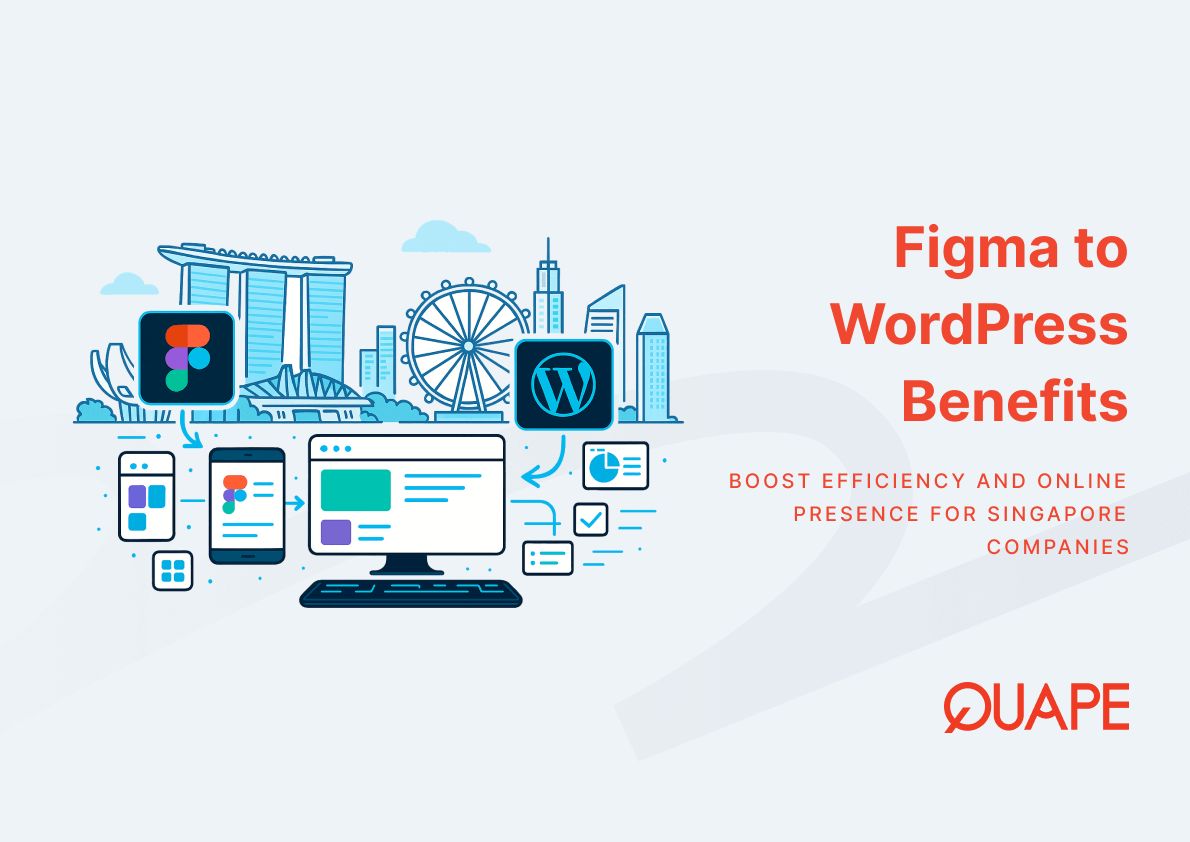
Figma is a collaborative cloud-based design platform widely adopted by product teams to create interface mockups, design systems, and interactive prototypes. WordPress is an open-source content management system that powers a significant share of the global web, offering flexibility in theming, plugins, and content workflows. The conversion from Figma to WordPress refers to translating visual design files into a fully functional WordPress theme that retains the original layout, typography, spacing, and interactive behavior. This process holds particular value in Singapore, where businesses pursuing structured design-to-development workflows can align their digital presence with both performance expectations and regulatory standards.
According to the Infocomm Media Development Authority, over 70% of SMEs in Singapore have adopted at least one form of digital solution to improve business operations, reflecting a market environment where website quality directly influences competitive positioning. The combination of Figma’s design precision with WordPress’s content flexibility creates a foundation that supports long-term digital growth.
要点总结
- Figma to WordPress conversion preserves design fidelity while enabling content management flexibility for Singapore businesses.
- Pixel-perfect implementation protects corporate branding standards across customer touchpoints.
- SEO-optimized WordPress structures improve local search visibility for Singapore-based audiences.
- Responsive development ensures consistent experiences across mobile, tablet, and desktop devices.
- Frameworks like Elementor and Divi streamline ongoing content updates without compromising design integrity.
- Compliance with the Personal Data Protection Act requires privacy-by-design principles during development.
- Local hosting providers and regional CDN integration reduce latency for Southeast Asian users.
- Choosing between in-house and outsourced development depends on scale, expertise, and cost efficiency.
Key Components and Concepts of Figma WordPress Benefits Singapore
Pixel-Perfect Design Implementation for Corporate Branding Standards
Corporate branding standards depend on consistent visual language across every customer interaction, and the conversion process directly determines how faithfully those standards survive the move from design tool to live website. When developers translate Figma layers into WordPress templates, they must preserve typography hierarchies, spacing systems, and component states exactly as the design system specifies. A disciplined approach to pixel-accurate implementation ensures that buttons, cards, navigation elements, and form fields render identically to the approved mockups across browsers and viewports. This precision matters because inconsistencies between design and development erode trust, particularly in sectors like finance and B2B services where visual credibility influences purchase decisions. Maintaining design-to-development consistency also reduces revision cycles, allowing teams to focus on iteration rather than corrective rework.
SEO-Optimized WordPress Structures for Local Search Visibility
Technical SEO begins at the structural level of a WordPress build, where heading hierarchies, semantic HTML, schema markup, and clean URL patterns determine how search engines interpret and index content. A well-converted theme integrates these elements from the foundation rather than retrofitting them later, which improves crawl efficiency and ranking potential. For Singapore businesses targeting local audiences, the integration of theme speed and on-page optimization directly affects visibility in localized search results. Site architecture, internal linking patterns, and metadata structures all contribute to how effectively a website surfaces for relevant queries. Aligning local SEO with user experience principles ensures that technical performance supports rather than undermines content discoverability.
Responsive and Device-Adaptive Development for Multi-Platform Users
Mobile-first indexing has redefined how websites must perform, and responsive design is no longer optional for businesses operating in Singapore’s mobile-heavy market. Statista reports that mobile devices account for more than 60% of global web traffic, making cross-device compatibility a baseline requirement rather than a differentiator. Converting Figma designs into responsive WordPress themes requires careful translation of breakpoints, fluid grids, and adaptive components so that layouts respond predictably across screen sizes. Touch targets, font scaling, and image optimization must all behave consistently, since inconsistencies in mobile rendering directly affect bounce rates and conversion paths.
Integration with Modern Development Tools and Frameworks
Frontend frameworks like Elementor and Divi extend WordPress’s flexibility by providing visual editing layers that empower marketing teams to manage content without developer intervention. When Figma designs are converted using these frameworks, the resulting themes balance custom development with operational accessibility. The choice between custom theme development and page builder approaches depends on the complexity of the design, the frequency of content updates, and the technical capacity of the internal team. Understanding the trade-offs between design and development tooling helps businesses select an approach that supports both immediate launch goals and long-term maintenance workflows.
Secure and Compliant Web Development under PDPA
The Personal Data Protection Act governs how Singapore businesses collect, use, and store personal information, and websites are often the first point where these obligations apply. Compliant development integrates privacy-by-design principles, including consent mechanisms, secure form handling, and transparent data processing notices, directly into the WordPress build. Implementing security frameworks during conversion reduces vulnerability exposure and supports ongoing compliance audits. Aligning WordPress with PDPA and ISO compliance standards also strengthens the business case for handling sensitive data, particularly in regulated sectors like healthcare, finance, and professional services.
新加坡企业的实际应用
Singapore’s position as a regional connectivity hub provides businesses with infrastructural advantages that directly influence web deployment strategies. Government-backed initiatives like SME Digitalisation programs encourage adoption of scalable platforms, and WordPress remains a preferred CMS due to its flexibility and ecosystem maturity. Practical decisions around hosting configurations 和 project cost structures shape both launch timelines and long-term operational expenses.
Supporting SME Digitalisation Initiatives through Scalable Websites
SMEs participating in digitalisation initiatives often require websites that can grow alongside expanding product lines, customer bases, and operational complexity. A properly converted WordPress site supports this scalability by separating content from presentation, enabling marketing teams to update pages, add product catalogs, or integrate new features without rebuilding the foundation. This architectural flexibility allows SMEs to begin with focused functionality and progressively add capabilities as business needs evolve, which aligns well with phased digital transformation strategies.
Leveraging Local Hosting Providers and Regional CDN for Performance
Website performance directly affects user behavior, with research indicating that even small delays in page load time can reduce conversions. Local hosting providers in Singapore reduce latency for domestic users by serving content from geographically proximate data centers, while regional CDNs extend this performance advantage to users across Southeast Asia. The combination of local hosting and CDN distribution creates a layered performance strategy that supports both regulatory alignment and user experience goals. Caching, image optimization, and database tuning further amplify these gains, particularly for content-heavy WordPress sites.
Aligning Web Infrastructure with Enterprise Singapore Guidelines
Enterprise Singapore actively promotes SME digital transformation through structured programs and funding support, creating both opportunities and expectations for businesses pursuing web development projects. Aligning infrastructure choices with these guidelines helps businesses qualify for relevant grants and ensures that development practices meet recognized standards. This alignment also signals operational maturity to partners, investors, and customers evaluating digital readiness.
Choosing Between In-House and Outsourced Development Models
The decision between building an in-house development team and engaging an outsourced partner depends on project scope, recurring development needs, and budget constraints. In-house teams offer continuity and deep product knowledge, while outsourced providers bring specialized expertise and scalable capacity. Evaluating the trade-offs between in-house and outsourced WordPress development helps procurement leads match the engagement model to the business’s actual technical requirements rather than defaulting to either extreme.
How Figma/PSD to WordPress Supports Figma WordPress Benefits Singapore
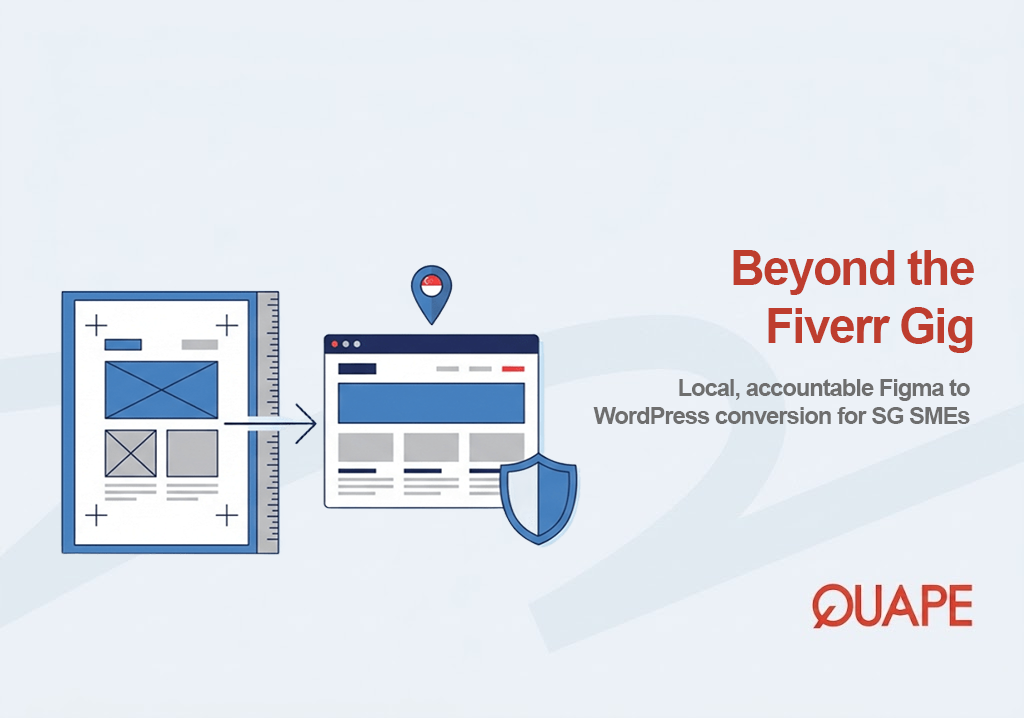
Quape’s Figma/PSD to WordPress conversion service translates design files into custom WordPress themes built around responsive frameworks and SEO-ready architecture. The service supports both Figma and PSD source files, accommodating teams working across different design tools while maintaining output consistency.
Translating Design Systems into Functional WordPress Themes
Design systems define the reusable components, tokens, and patterns that govern a brand’s visual language, and translating these into WordPress requires careful mapping between design abstractions and theme architecture. Components defined in Figma become reusable WordPress blocks, template parts, or custom modules that maintain consistency across pages. Implementing design systems within WordPress themes ensures that future content additions inherit the same visual standards, reducing design drift over time.
Enhancing Performance, SEO, and Maintainability for Long-Term Growth
Long-term growth depends on a website’s ability to perform reliably, rank well in search results, and remain maintainable as requirements evolve. Performance optimization, technical SEO, and clean code structures all contribute to this durability. Considering the evolving landscape of Figma to WordPress workflows helps businesses anticipate changes in tooling, standards, and user expectations, positioning their websites to adapt rather than require complete rebuilds.
结论
Figma to WordPress conversion offers Singapore businesses a structured pathway to translate design vision into a performant, compliant, and scalable web presence that supports both branding integrity and commercial growth. The combination of pixel-perfect implementation, SEO-ready architecture, responsive design, framework integration, and PDPA-aligned security creates a foundation that serves SMEs, enterprises, and regulated industries alike. Whether the goal is to launch a new corporate website, refresh an existing brand presence, or build a scalable platform for digital transformation initiatives, the conversion process plays a central role in shaping the outcome. To explore how a tailored conversion approach can support your specific business requirements, visit our Figma/PSD to WordPress service 或者 联系我们的销售团队 to discuss your project.
常见问题 (FAQ)
Why convert Figma designs to WordPress instead of using a template?
Templates offer speed and lower upfront cost, but they often compromise branding consistency and limit customization. Converting Figma designs preserves the unique visual identity developed during the design phase and produces a theme tailored to specific business workflows. This approach typically delivers better long-term flexibility for growing businesses.
How does the conversion process support PDPA compliance?
The conversion process integrates privacy-by-design principles directly into the WordPress build, including secure form handling, consent management, and transparent data processing structures. These elements help websites meet the requirements of Singapore’s Personal Data Protection Act. Compliance is strengthened further when paired with secure hosting and ongoing monitoring.
Can existing PSD files be converted, or only Figma designs?
Both Figma and PSD files can be converted into WordPress themes. The choice of source format does not significantly affect the final output quality, provided the design files are well-organized and follow consistent layering conventions. Teams working in older Adobe workflows can transition to WordPress without redesigning from scratch.
Will the converted WordPress site work well on mobile devices?
Yes, properly converted themes are built with responsive design principles that adapt layouts across desktop, tablet, and mobile viewports. This includes fluid grids, scalable typography, and optimized touch targets. Given that mobile traffic dominates global web usage, responsive behavior is treated as a core requirement rather than an optional feature.
How do Elementor and Divi fit into the conversion process?
Elementor and Divi are page builder frameworks that extend WordPress with visual editing capabilities, allowing non-technical users to manage content updates. When Figma designs are converted using these frameworks, marketing teams gain the ability to adjust pages independently while preserving the underlying design integrity. The choice between custom themes and builder-based themes depends on the complexity and update frequency of the site.
Does local hosting in Singapore really make a difference for performance?
Yes, local hosting reduces the physical distance between users and servers, which lowers latency and improves page load times for Singapore-based audiences. Combined with regional CDN distribution, local hosting also supports compliance with data residency considerations. The performance advantage is most noticeable for content-heavy websites and e-commerce platforms.
Should an SME build an in-house team or outsource WordPress development?
The right model depends on the volume of ongoing development work, internal technical capacity, and budget structure. SMEs with occasional or project-based needs often benefit from outsourced partners who bring specialized expertise without the overhead of permanent staff. Businesses with continuous development requirements may find in-house teams more cost-effective over time.
How long does a typical Figma to WordPress conversion take?
Project timelines vary based on the complexity of the design, the number of unique page templates, and the level of custom functionality required. Straightforward marketing websites may be completed within a few weeks, while larger corporate sites with custom integrations can take longer. A clear scope and well-prepared design files significantly reduce delivery time.