Singapore’s position as a regional digital infrastructure hub depends on submarine cable density, local peering infrastructure, and carrier-neutral facilities that enable low-latency routing across ASEAN markets. Organizations deploying dedicated servers in Singapore benefit from direct access to this ecosystem, which combines physical infrastructure resilience with network-layer optimizations that reduce latency and improve routing stability. For IT managers and procurement leads evaluating hosting decisions, understanding how these infrastructure components interact with regulatory requirements, IP reputation systems, and operational trade-offs determines whether Singapore’s ecosystem aligns with business-critical workloads. The technical choices made at the data center and network level directly influence application performance, compliance posture, and total cost of ownership across finance, e-commerce, and digital service sectors.
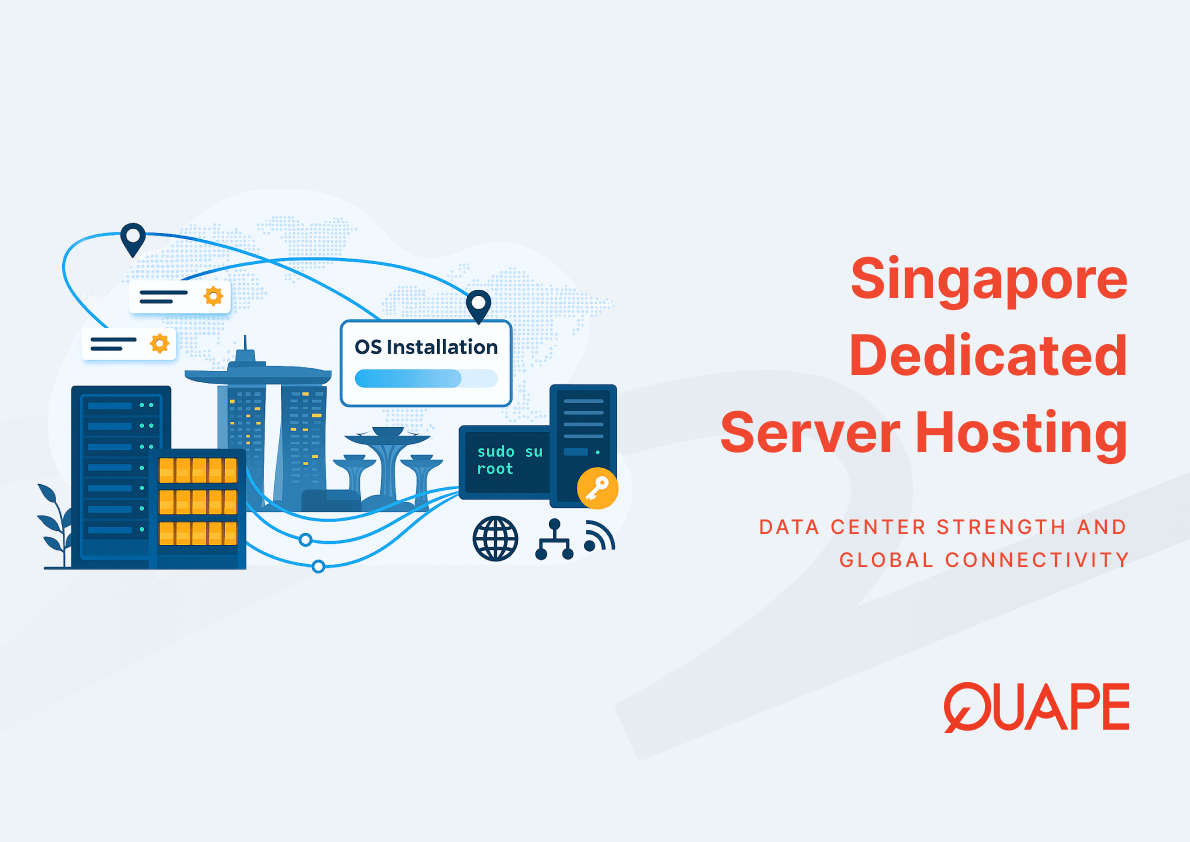
新加坡专用服务器托管 refers to the deployment of exclusive physical server resources within Singapore’s data center infrastructure, where businesses lease entire machines rather than sharing compute, memory, or storage with other tenants. This model grants full administrative control over the operating system, network configuration, and security policies, which makes it suitable for workloads requiring predictable performance, regulatory compliance, or custom software stacks. The value proposition extends beyond hardware isolation: hosting in Singapore connects deployments to a mature ecosystem of submarine cable landings, local internet exchange points, and carrier-neutral facilities that collectively optimize network paths across Southeast Asia and global destinations.
要点总结
- Singapore is positioning itself as a regional digital-infrastructure hub with plans to increase subsea cable landing capacity and is expected to be connected to over forty submarine cables by 2028, strengthening its role as an ASEAN connectivity anchor.
- The Singapore Internet Exchange (SGIX) enables local ISPs and networks to exchange traffic directly, reducing latency and avoiding the need to route traffic overseas, which lowers median path lengths for regional workloads.
- Tier III data centers provide concurrently maintainable infrastructure with redundant distribution paths, commonly achieving approximately 99.982% uptime, which translates to roughly 1.6 hours of downtime per year.
- Multi-homed networks increase resilience by providing redundancy across multiple transit providers, reducing single-vendor failure risk, but introduce routing complexity and operational overhead that requires skilled network operations teams.
- RPKI adoption in Singapore is reported at roughly 55% ROA coverage, materially above some global averages, which reduces the risk of prefix hijacks but incomplete coverage and invalid ROAs remain operational risks.
- IP reputation systems maintained by organizations such as Spamhaus determine email deliverability and can blacklist IP ranges used for malicious activity, making clean IP policies essential for marketing and transactional communication.
- The Monetary Authority of Singapore (MAS) Technology Risk Management (TRM) Guidelines require financial institutions to establish governance, resilience, and outsourcing controls for technology, making compliance a decisive procurement factor for vendors serving regulated finance customers.
- Singapore’s data center market is projected to grow from USD 4.16 billion in 2024 to approximately USD 5.60 billion by 2030, driven by continued investment and hyperscaler capex, though environmental and resource constraints may limit unconstrained capacity growth.
Introduction to Singapore Dedicated Server Hosting
Organizations selecting Singapore for dedicated server deployments prioritize low-latency access to ASEAN markets, regulatory alignment with regional financial and data protection frameworks, and physical proximity to submarine cable infrastructure that terminates at one of the world’s most connected landing points. TeleGeography’s Submarine Cable Map identifies Singapore as hosting dozens of active and planned submarine cables, which creates direct paths to neighboring economies without requiring intermediate hops through distant internet exchange points. This concentration of undersea infrastructure reduces round-trip time (RTT) for latency-sensitive applications such as financial trading platforms, real-time collaboration tools, and content delivery networks serving Southeast Asian audiences.
The decision to deploy dedicated servers rather than shared or virtual infrastructure reflects requirements for exclusive resource allocation, predictable performance under load, and full control over security configurations. Dedicated servers eliminate “noisy neighbor” effects common in multi-tenant environments, where resource contention from other users degrades application responsiveness. For businesses processing payment transactions, handling customer data subject to the Personal Data Protection Act (PDPA), or operating under MAS oversight, the ability to implement custom security controls, encrypt data at rest and in transit, and maintain audit logs without relying on shared platform policies justifies the higher cost structure of dedicated hosting.
Singapore’s role as a digital hub extends beyond cable landings to include carrier-neutral data center facilities, local internet exchange infrastructure, and routing security practices that collectively optimize network performance. Carrier neutrality allows tenants to select multiple transit providers and establish direct peering arrangements, which avoids vendor lock-in and enables cost-effective bandwidth scaling. Local peering through SGIX reduces dependency on international transit for regional traffic, keeping data flows within Southeast Asia and lowering latency while improving routing efficiency. These infrastructure advantages become operational benefits when combined with proactive monitoring, redundant power systems, and compliance-ready environments that align with regulatory expectations for technology risk management.
Key Components and Concepts of Singapore Dedicated Server Hosting
Singapore as a Digital Hub for ASEAN Connectivity
Singapore’s strategic value as a digital hub stems from its position as a regional interconnection point where submarine cables, internet exchange infrastructure, and carrier-neutral facilities converge to create optimized network paths across ASEAN and global destinations. Carnegie Endowment research highlights Singapore’s plans to increase subsea cable landing capacity, with expectations to be connected to over forty submarine cables by 2028, which reinforces its status as a critical node for regional data flows. This density of cable landings enables network operators to establish diverse routes that avoid single points of failure and provide multiple paths for traffic destined to markets across Southeast Asia, Australia, and transpacific destinations.
Low latency across ASEAN markets depends on minimizing the number of network hops between source and destination, which is achieved through direct cable connections and local peering arrangements that keep regional traffic within geographic proximity. When traffic routes through Singapore’s SGIX rather than transiting through international exchange points in Europe or North America, packets travel shorter physical distances and traverse fewer autonomous systems, which reduces RTT and improves application responsiveness. For businesses operating e-commerce platforms, financial services, or gaming infrastructure targeting users across Indonesia, Malaysia, Thailand, and the Philippines, this latency advantage translates to faster page loads, lower transaction processing times, and improved user experience metrics that directly influence conversion rates and customer satisfaction.
The concentration of submarine cable infrastructure also creates resilience benefits by providing alternate paths when individual cables experience cuts or degradation. Cable faults occur due to ship anchors, seismic activity, or equipment failures, and having multiple cable systems landing in Singapore allows operators to reroute traffic automatically through BGP (Border Gateway Protocol) convergence without service interruption. This diversity of physical infrastructure supports business continuity requirements for organizations that cannot tolerate extended outages, particularly in sectors such as finance and healthcare where service availability directly impacts operational continuity and regulatory compliance.
Role of SGIX and Carrier-Neutral Facilities in Network Optimization
The Singapore Internet Exchange operates as a local peering point where internet service providers, content delivery networks, and enterprise networks exchange traffic directly rather than routing through upstream transit providers. This direct peering reduces latency by eliminating intermediate hops, lowers transit costs by keeping local traffic off paid international circuits, and improves routing efficiency by allowing networks to select optimal paths based on real-time performance metrics. SGIX traffic statistics demonstrate the operational scale of local peering, with participating networks exchanging traffic that would otherwise consume international bandwidth and introduce additional latency through longer network paths.
Carrier-neutral data center facilities support multi-homed network architectures by allowing tenants to establish connectivity with multiple transit providers and peering partners from a single physical location. Unlike carrier-specific facilities that require tenants to use a designated network provider, carrier-neutral environments enable businesses to select upstream providers based on performance, cost, and routing characteristics, which creates competitive pressure that typically results in better pricing and service quality. Organizations deploying dedicated servers with DDoS protection benefit from multi-homed connectivity because distributed denial-of-service attacks can be mitigated through upstream scrubbing centers operated by different transit providers, which prevents a single provider’s capacity limits from becoming a bottleneck during attack traffic surges.
Multi-homed network configurations introduce operational complexity that requires skilled network engineering teams to manage BGP routing policies, monitor route propagation, and implement RPKI (Resource Public Key Infrastructure) validation to prevent route hijacks and leaks. IETF RFC 4116 documents multihoming practices and notes that while redundancy across transit providers reduces single-provider failure risk, it introduces routing complexity and operational overhead through the need to manage route announcements, AS-path policies, and traffic engineering configurations. For small and medium enterprises evaluating dedicated server options, this trade-off between resilience and operational complexity should inform decisions about whether to manage multi-homed networking in-house or rely on managed service providers that handle routing operations as part of the hosting package.
Importance of Tier 3 Facility for Uptime and Infrastructure Resilience
Tier III data centers meet the Uptime Institute’s classification for “concurrently maintainable” infrastructure, which requires redundant distribution paths for power and cooling that allow maintenance activities to occur without taking systems offline. This design standard supports an expected availability level of approximately 99.982% uptime, which translates to roughly 1.6 hours of downtime per year, making Tier III facilities suitable for production workloads that require high availability but can tolerate brief planned maintenance windows. The concurrently maintainable architecture ensures that a single failure of equipment, power distribution, or cooling components does not cause service interruption, because redundant systems automatically assume the load while failed components are replaced or repaired.
Power redundancy in Tier III facilities typically includes N+1 uninterruptible power supply (UPS) configurations and multiple generator sets that provide backup power during grid outages, with automatic transfer switches that activate generators within seconds of detecting utility power loss. This redundancy protects against both planned maintenance and unplanned failures, which supports business continuity requirements for applications that cannot tolerate extended downtime. Organizations operating under the Monetary Authority of Singapore’s Technology Risk Management Guidelines must ensure their technology service providers demonstrate adequate controls for operational resilience, disaster recovery, and outsourcing governance, which makes Tier III facility certification a common procurement requirement for compliance-focused dedicated server deployments.
Proactive monitoring systems in Tier III environments track temperature, humidity, power consumption, and equipment health metrics in real time, with automated alerts that notify operations teams when parameters approach thresholds that could indicate developing issues. This monitoring enables preventive maintenance that addresses potential failures before they cause service disruption, which improves overall availability beyond the Tier III baseline. For businesses evaluating total cost of ownership, the incremental cost of Tier III hosting should be weighed against the financial impact of downtime, including lost revenue, customer churn, and reputational damage that often exceeds the direct costs of infrastructure failures.
Undersea Cables and Their Impact on Latency and Routing
Submarine cable infrastructure directly determines the physical paths available for network traffic between continents and regions, with cable route diversity and landing point selection influencing latency, resilience, and routing options. Singapore’s position as one of the world’s most-connected cable landing points enables network operators to select paths with the shortest physical distance to destination markets, which reduces propagation delay that accumulates as signals travel through fiber optic cables. For latency-sensitive applications such as financial trading, where milliseconds of delay can affect transaction execution and arbitrage opportunities, proximity to cable landing stations translates to measurable performance advantages over hosting locations that require traffic to traverse longer cable routes or multiple intermediate hops.
Multi-homed network architectures leverage cable diversity by announcing routes through multiple upstream providers that utilize different cable systems, which protects against the risk of single cable failures disrupting service. When a cable experiences a cut due to ship anchor drag, seismic activity, or equipment failure, BGP routing protocols automatically converge to use alternate paths through remaining functional cables, typically completing failover within minutes. This automatic rerouting capability supports high-availability requirements for critical workloads, though organizations should verify that their hosting provider’s multi-homing configuration actually utilizes diverse cable systems rather than multiple providers that share common underlying infrastructure.
The interaction between submarine cable capacity, network latency characteristics, and routing optimization becomes particularly important for content delivery and streaming applications targeting ASEAN audiences. When content servers are located within Singapore’s cable landing ecosystem, requests from users across Southeast Asia can be served with lower latency than routing through distant content delivery network (CDN) nodes in other regions. This latency reduction improves metrics such as time-to-first-byte and video startup time, which directly influence user engagement and satisfaction scores that affect business outcomes for digital service providers.
IP Reputation and Clean Network Infrastructure
IP reputation systems maintained by anti-spam organizations such as Spamhaus track the behavior of IP address ranges and domain names, assigning reputation scores based on observed sending patterns, abuse complaints, and malicious activity detection. These reputation scores determine whether email servers accept or reject messages from a given IP address, making reputation hygiene critical for organizations that depend on email for marketing campaigns, transactional notifications, or customer communications. Spamhaus processes telemetry from millions of IPs and domains daily while protecting billions of mailboxes, which demonstrates the operational scale and industry influence of reputation-based filtering systems that can block entire IP ranges if abuse is detected.
Dedicated server deployments benefit from dedicated IP address assignments because they avoid the shared-IP reputation risks inherent in multi-tenant hosting environments where one user’s abusive behavior can blacklist IP addresses used by all tenants on the same shared infrastructure. When an IP address is listed on Spamhaus or similar blocklists, legitimate email from that IP may be rejected by recipient mail servers, which causes missed customer communications, failed transaction confirmations, and potential revenue loss. The cost of remediating a blacklisted IP includes not only the technical work of identifying and stopping abuse but also the business impact of degraded deliverability during the period required to request delisting and rebuild sender reputation.
Clean IP policies implemented by hosting providers prohibit activities such as bulk email spam, phishing attempts, malware distribution, and brute-force attacks that trigger abuse detection and reputation penalties. These policies typically include acceptable use agreements that define prohibited activities, monitoring systems that detect anomalous behavior patterns, and incident response procedures that isolate abusive customers before their actions affect other tenants sharing network infrastructure. For businesses evaluating dedicated server providers, verifying the hosting company’s approach to abuse prevention, IP reputation monitoring, and network hygiene should be part of the procurement assessment process, particularly for organizations whose business models depend on reliable email delivery or maintaining clean sender reputation for SEO and digital marketing effectiveness.
Practical Application for Businesses in Singapore and ASEAN
Small and medium enterprises operating across ASEAN markets face technical and regulatory requirements that influence infrastructure decisions, including data residency mandates, regulatory compliance frameworks, and performance expectations from regional user bases. Organizations serving customers in finance, e-commerce, healthcare, and professional services sectors must evaluate how data center location, network architecture, and compliance controls align with both operational requirements and regulatory obligations. The Monetary Authority of Singapore’s Technology Risk Management Guidelines establish governance and resilience expectations for financial institutions, which extend to outsourced technology service providers and require documented controls for incident management, business continuity, and vendor risk management.
Procurement teams evaluating dedicated server providers should assess how infrastructure characteristics map to business requirements across dimensions including latency to target markets, regulatory compliance alignment, availability commitments, and operational support capabilities. For instance, an e-commerce platform targeting customers across Indonesia, Malaysia, and Singapore benefits from hosting within Singapore’s SGIX-connected ecosystem because direct peering reduces latency for transaction processing and content delivery compared to routing through international transit providers. Similarly, financial services firms must verify that hosting providers meet MAS TRM expectations for operational resilience, incident reporting, and outsourcing governance, which often requires reviewing facility certifications, compliance attestations, and service-level agreements that document availability commitments and support response times.
The trade-off between cost optimization and risk mitigation becomes particularly important when evaluating total cost of ownership for dedicated infrastructure. While basic shared hosting offers lower monthly costs, it introduces performance variability, security risks from multi-tenant environments, and potential compliance gaps that may not satisfy regulatory requirements for PDPA-compliant dedicated server hosting. Enterprise workloads requiring predictable performance, custom security controls, or regulatory compliance alignment typically justify the incremental cost of dedicated resources through reduced operational risk, improved application performance, and compliance posture that supports regulatory oversight requirements.
How Dedicated Servers Support Singapore’s Connectivity and Data Center Ecosystem
Enterprise-grade dedicated server hardware combines processor architecture, memory capacity, storage performance, and network interface capabilities that collectively determine workload suitability and scalability characteristics. Organizations selecting between Intel and AMD processor platforms should evaluate how core count, clock speed, memory bandwidth, and instruction set features align with application requirements, including database operations, virtualization workloads, and compute-intensive processing tasks. Hardware decisions interact with network infrastructure characteristics to create the overall performance profile experienced by end users and applications.
Multi-homed network connectivity enables dedicated servers to leverage Singapore’s carrier-neutral ecosystem by establishing redundant paths through multiple transit providers and direct peering arrangements through SGIX. This redundancy supports both availability and performance objectives because traffic can be distributed across multiple links based on real-time congestion metrics, provider performance characteristics, and routing policies optimized for specific traffic types. Organizations deploying 10Gbps dedicated servers benefit from the increased bandwidth capacity for data-intensive workloads such as backup operations, content distribution, and high-volume transaction processing that would saturate lower-speed network interfaces.
Network performance optimization extends beyond raw bandwidth to include routing security practices such as RPKI validation that reduce the risk of route hijacks and path manipulation. APNIC research indicates that Singapore’s ROA (Route Origin Authorization) coverage is approximately 55%, materially above some global averages, which demonstrates regional adoption of routing security best practices that protect against accidental or malicious route announcements that could redirect traffic through unintended paths. However, the same research notes invalid ROA rates that introduce operational risks, which highlights the need for network operators to maintain accurate RPKI records and validate routing announcements to ensure stable connectivity.
Organizations ready to explore dedicated server solutions should evaluate how provider capabilities across hardware selection, network architecture, facility resilience, and operational support align with specific workload requirements and business objectives. The alignment between infrastructure characteristics and application needs determines whether hosting decisions deliver expected performance outcomes, support regulatory compliance requirements, and provide cost-effective scalability as business demands evolve.
结论
Singapore’s dedicated server ecosystem delivers value through the interaction of submarine cable infrastructure, local peering arrangements, carrier-neutral facilities, and regulatory frameworks that collectively support low-latency regional connectivity and compliance-ready operations. Organizations deploying business-critical workloads benefit from infrastructure characteristics including SGIX peering that optimizes ASEAN routing, Tier III facility resilience that supports high-availability requirements, and multi-homed network architectures that provide routing diversity and performance optimization. The technical decisions made during server selection and provider evaluation directly influence application performance, operational risk, and total cost of ownership across finance, e-commerce, and digital service sectors serving Southeast Asian markets.
Ready to deploy dedicated infrastructure within Singapore’s connectivity ecosystem? 联系我们的团队 to discuss how enterprise-grade hardware, multi-homed networking, and Tier III facility resilience align with your business requirements.
常见问题 (FAQ)
What distinguishes Singapore dedicated servers from hosting in other ASEAN markets?
Singapore offers concentrated submarine cable infrastructure, mature internet exchange peering through SGIX, and established regulatory frameworks including MAS TRM Guidelines that create compliance alignment for financial services. The density of cable landings enables lower latency to ASEAN destinations compared to routing through more distant data center locations, while carrier-neutral facilities support multi-homed network architectures that optimize routing and resilience.
How does multi-homed networking affect dedicated server performance and reliability?
Multi-homing provides redundancy across multiple transit providers, which reduces single-vendor failure risk and enables automatic failover when individual paths experience degradation or outages. However, this architecture introduces routing complexity requiring BGP management and RPKI validation to maintain stable routing, which means organizations must balance resilience benefits against operational overhead and network engineering skillset requirements.
Why does IP reputation matter for dedicated server deployments?
IP reputation systems determine whether email servers accept messages from your IP addresses, directly affecting deliverability for marketing campaigns and transactional notifications. Shared hosting environments risk reputation contamination when other tenants engage in abusive behavior, while dedicated IPs with clean reputation policies reduce the risk of blocklisting that causes missed customer communications and potential revenue loss.
What makes Tier III data centers important for business-critical workloads?
Tier III facilities provide concurrently maintainable infrastructure with redundant power and cooling distribution paths, enabling approximately 99.982% uptime while allowing maintenance without service interruption. This resilience level satisfies availability requirements for production workloads and aligns with regulatory expectations under frameworks such as MAS TRM that require documented controls for operational continuity.
How do submarine cables influence latency for applications serving ASEAN users?
Physical cable routes determine the distance signals travel between source and destination, with shorter paths reducing propagation delay that accumulates as light travels through fiber optic cables. Singapore’s position as a cable landing hub provides direct routes to Southeast Asian markets that minimize intermediate hops and reduce round-trip time for latency-sensitive applications including financial trading platforms and real-time collaboration tools.
What compliance considerations apply to dedicated servers hosting financial services data?
The Monetary Authority of Singapore’s Technology Risk Management Guidelines require financial institutions to establish governance, resilience, and outsourcing controls for technology services. Hosting providers serving regulated finance customers must demonstrate adequate incident management capabilities, business continuity planning, and operational resilience that aligns with MAS expectations, which often requires facility certifications and compliance attestations.
How does SGIX peering reduce costs and improve performance for regional traffic?
Direct peering through SGIX allows networks to exchange traffic locally rather than routing through international transit providers, which eliminates transit costs for regional traffic while reducing latency by keeping packets within geographic proximity. This local exchange benefits applications serving ASEAN users by improving responsiveness and reducing bandwidth costs compared to routing all traffic through upstream providers.
What operational trade-offs should organizations consider when evaluating dedicated versus shared hosting?
Dedicated servers provide exclusive resource allocation that eliminates performance variability from multi-tenant contention, enable custom security controls that satisfy compliance requirements, and support predictable performance under load. These benefits come at higher cost compared to shared hosting, which means procurement decisions should weigh performance requirements, regulatory compliance needs, and total cost of ownership including risk mitigation value against budget constraints.