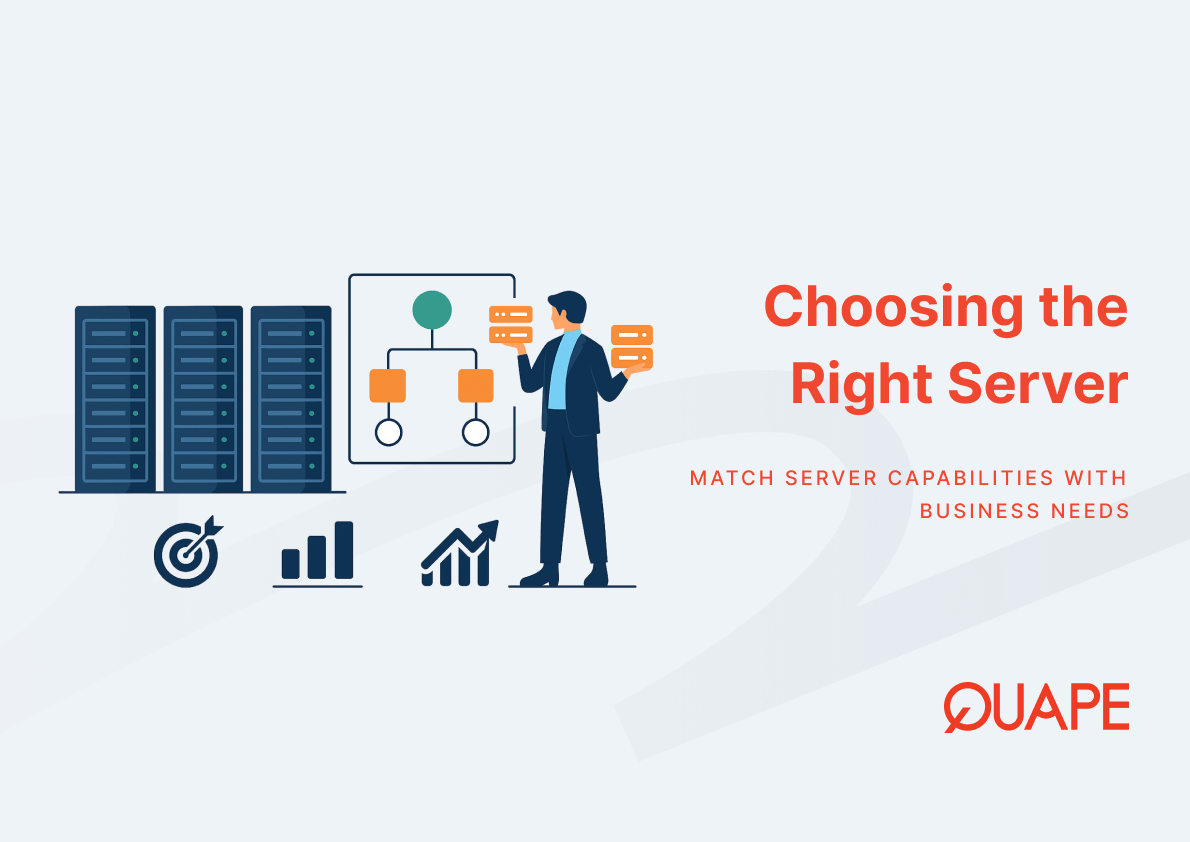
Choosing a dedicated server plan requires matching hardware specifications to measured workload characteristics, not guessing based on vendor tiers or marketing labels. Organizations now evaluate dedicated infrastructure as part of hybrid strategies, with some moving workloads back from public cloud environments where dedicated hardware offers better cost-performance alignment or meets regulatory requirements that hyperscale platforms cannot address. In Singapore, where data sovereignty under the Personal Data Protection Act influences infrastructure decisions and local data center capacity exceeds 1,000 MW, selecting the right dedicated server configuration directly affects compliance posture, application latency, and long-term operational costs. This guide explains how CPU sizing, memory configuration, storage IOPS, network parameters, and service models interact with specific business workloads to produce measurable performance and reliability outcomes.
A dedicated server plan allocates an entire physical machine to a single tenant, providing exclusive access to CPU cores, memory, storage devices, and network interfaces without resource contention from other users. Unlike shared hosting or multi-tenant virtual environments, dedicated servers enable full control over operating system selection, kernel tuning, installed software, and hardware-level configurations such as RAID arrays and network bonding. This isolation supports workloads that require consistent I/O performance, predictable CPU scheduling, or compliance frameworks that mandate physical separation of infrastructure.
要点总结
- CPU core count and generation must align with peak concurrency and computational intensity, not average utilization, to prevent request queueing during traffic spikes.
- ECC memory reduces silent data corruption risk in mission-critical databases and financial applications where undetected bit flips create operational exposure.
- NVMe storage delivers dramatically higher random IOPS and lower latency than SATA or SAS devices, critical for transaction-heavy OLTP systems that are I/O bound.
- Managed plans transfer operational responsibility for patching, monitoring, and incident response to the provider, trading higher monthly costs for SLA guarantees and reduced internal ops burden.
- Singapore’s PDPA creates legal obligations around personal data handling that influence whether workloads remain in-country on dedicated infrastructure rather than hyperscale platforms outside local jurisdiction.
- Bandwidth allocation and network port speed determine throughput ceiling for content delivery, API gateways, and real-time services where latency sensitivity matters.
- Build-your-own-server options provide hardware customization and lower entry pricing but shift configuration complexity and compatibility validation to the customer.
Introduction to Dedicated Server Plans
Dedicated server plans represent infrastructure choices shaped by workload profiles, regulatory obligations, and operational capability. The global public IaaS market grew 22.5% year-over-year to reach $171.8 billion in 2024, yet enterprises increasingly adopt hybrid approaches that place specific workloads on dedicated hardware rather than treating cloud as a universal solution. This “right-fit” strategy evaluates where dedicated servers provide better cost structure, lower latency, or stronger compliance alignment compared to multi-tenant virtual instances.
在 新加坡的数据中心生态系统, national infrastructure planning treats fiber connectivity and facility capacity as strategic priorities, creating an environment where local dedicated servers support low-latency access to regional markets across ASEAN. For businesses handling personal data under Singapore’s Personal Data Protection Act, which governs collection, storage, and cross-border transfer since its 2012 enactment, dedicated servers hosted within local Tier 3 facilities offer control over data residency that multi-region cloud services cannot guarantee without complex configuration.
Workload assessment drives plan selection. Compute-intensive applications such as video encoding, large-scale virtualization platforms, or database analytics with heavy join operations require high core counts and strong single-thread performance. Web applications serving primarily static content may prioritize network bandwidth and storage capacity over CPU specifications. Real-time transaction systems demand low-latency storage with high random IOPS to minimize query response times. Understanding how each hardware component affects application behavior enables precise matching between business requirements and server configurations.
Key Components of Dedicated Server Plans
Evaluating CPU Sizing Based on Workload Type
CPU selection determines how many concurrent requests a server processes without queueing delays. Compute-bound workloads such as scientific simulations, machine learning model training, or rendering tasks scale with core count and clock frequency. Database systems performing complex aggregations or joins benefit from higher core counts that parallelize query execution across multiple threads. Virtualization platforms hosting multiple guest operating systems require sufficient cores to allocate dedicated vCPUs to each virtual machine without oversubscription that degrades performance during peak activity.
Under-sizing CPU capacity forces the scheduler to queue incoming requests, increasing tail latency even when average utilization appears moderate. A web application handling API requests may show 40% average CPU usage but experience response time spikes when burst traffic saturates available cores. Measuring peak CPU utilization under realistic load conditions, rather than relying on steady-state averages, reveals actual core requirements. Modern Xeon and EPYC processors provide different performance characteristics, with Intel architectures traditionally emphasizing single-thread performance while AMD EPYC lines offer higher core density at competitive price points for parallel workloads.
Thread count matters when applications use concurrent programming models. A 16-core processor with hyperthreading presents 32 logical processors to the operating system, allowing the scheduler to utilize execution units more efficiently when threads experience memory access latency or I/O wait states. Applications designed for multi-threaded execution, such as web servers handling thousands of simultaneous connections or batch processing systems, leverage higher thread counts to maintain throughput during mixed CPU and I/O operations.
RAM Requirements for Different Business Applications
Memory capacity directly affects how much working data an application keeps in RAM rather than fetching from slower storage devices. Database systems improve query performance by caching frequently accessed indexes and table pages in memory, reducing disk I/O operations that introduce millisecond-scale latency. Virtualization platforms allocate RAM to each guest VM, meaning total host memory must accommodate all running virtual machines plus hypervisor overhead. Web application servers cache session data, compiled templates, and ORM query results in memory to avoid repeated database queries on each request.
ECC (error-correcting code) memory detects and corrects single-bit errors caused by cosmic ray strikes, electrical interference, or manufacturing variations that produce soft errors in standard DRAM. Research on memory reliability shows that soft errors occur at measurable rates in terrestrial environments, with published analyses indicating unprotected DRAM can experience bit flips that silently corrupt data. ECC RAM configurations add parity bits and correction logic that identify corrupted data and restore correct values, preventing silent data corruption in financial transactions, medical records, or inventory systems where undetected errors create operational risk.
The cost difference between ECC and non-ECC memory narrows at server-class hardware tiers, making ECC standard in enterprise systems. For mission-critical databases supporting financial services or regulatory reporting, the marginal cost of ECC protection is justified by reduced exposure to data integrity failures that could require manual reconciliation or produce incorrect business decisions based on corrupted query results. Development and test environments with less stringent reliability requirements may accept non-ECC configurations to reduce hardware costs.
Storage Types and IOPS Performance Considerations
Storage technology determines I/O latency and throughput for read and write operations. NVMe (Non-Volatile Memory Express) SSDs connect directly to PCIe lanes rather than using legacy SATA or SAS interfaces, enabling multi-queue command processing that dramatically increases random IOPS. Enterprise NVMe devices deliver hundreds of thousands of random read/write IOPS in benchmark conditions, compared to tens of thousands for SATA SSDs. This performance gap matters critically for latency-sensitive OLTP (online transaction processing) databases where each user transaction triggers multiple random reads and writes to retrieve records, update indexes, and commit changes.
Academic research on database storage performance confirms that I/O characteristics including IOPS, queue depth, and block size directly determine transaction latency and system throughput. A payment processing system that executes thousands of transactions per second becomes I/O bound when storage cannot deliver sufficient random IOPS to keep up with database write operations. NVMe storage reduces per-operation latency from millisecond to sub-millisecond ranges, improving user-facing response times and increasing the transaction rate a single server supports before requiring horizontal scaling.
RAID configurations balance performance, capacity, and redundancy. RAID 1 mirrors data across two drives, providing redundancy without parity calculation overhead but reducing usable capacity by half. RAID 10 combines striping and mirroring for better read performance and fault tolerance at the cost of 50% capacity utilization. RAID 5 and RAID 6 use parity calculations to recover from drive failures while preserving more usable space, but write operations incur performance penalties from parity computation. RAID strategy selection depends on whether workloads prioritize read performance, write throughput, or capacity efficiency, with mission-critical systems typically accepting capacity trade-offs to gain redundancy and performance.
Bandwidth, Network Latency, and IP Considerations
Bandwidth allocation sets the maximum data transfer rate between the server and internet endpoints. Content delivery applications serving video streams, software downloads, or media assets require high bandwidth to support concurrent user sessions without throttling. API gateways handling mobile application traffic or webhook notifications need sufficient bandwidth headroom to accommodate traffic spikes during peak usage periods. Backup operations transferring large datasets to off-site storage consume significant bandwidth during replication windows.
Network port speed determines the physical throughput ceiling. A 1 Gbps network interface card limits total throughput to approximately 125 MB/s in optimal conditions, while 10 Gbps NICs support ten times that capacity. Shared bandwidth allocations pool multiple servers on the same network uplink, creating contention during simultaneous heavy transfers. Dedicated bandwidth guarantees a committed rate regardless of other tenants’ activity. Organizations running latency-sensitive services or real-time APIs benefit from understanding how network latency interacts with application architecture, particularly when servers communicate with databases, caching layers, or external services across network hops.
IP address allocation affects services requiring multiple public endpoints or specific IP reputation management. Dedicated static IP addresses provide consistent addressing for DNS records, SSL certificate validation, and whitelist-based access controls. Clean IP addresses without prior spam or abuse history matter for email delivery systems, where sending reputation affects inbox placement rates. IPv6 support becomes relevant as regional IP address exhaustion increases costs for IPv4 allocations, though application compatibility varies.
Operating System Choice: Linux vs Windows Servers
Operating system selection determines available software ecosystems, licensing costs, and administrative toolchains. Linux distributions such as Ubuntu, CentOS, or Debian provide open-source foundations for web servers, containerized applications, and open-source database systems without per-core licensing fees. Windows Server editions support Active Directory integration, .NET application frameworks, and Microsoft SQL Server databases, but require licensing costs that scale with core count or user access.
Application compatibility drives OS choice. Legacy enterprise applications built on .NET Framework require Windows environments, while modern microservices architectures deployed via Docker containers typically target Linux kernels for better resource efficiency and ecosystem tooling. Development teams with strong Windows expertise may prefer familiar administrative interfaces and PowerShell automation, while Linux-focused teams benefit from mature configuration management tools such as Ansible or Terraform that treat infrastructure as code.
Licensing costs compound at higher core counts. Windows Server Datacenter edition licensing is sold in core packs, making high-core-count servers more expensive to license even when workloads do not fully utilize all cores. Linux eliminates OS licensing costs entirely, allowing hardware budget to focus on CPU, memory, and storage specifications. For compute-intensive workloads running open-source software stacks, Linux typically provides better cost-performance alignment.
Managed vs Unmanaged Plans and Service Agreements
Managed hosting plans transfer operational responsibilities including OS patching, security updates, monitoring, and incident response to the hosting provider. Organizations without dedicated operations teams or those prioritizing predictable OPEX benefit from managed services that include defined SLAs for response time, uptime guarantees, and resolution processes. The managed services market reached approximately $335 billion globally in 2024, reflecting enterprise preference for outsourcing operational complexity as infrastructure scales.
Managed dedicated servers typically include proactive monitoring that detects hardware failures, resource saturation, or security anomalies before they cause service disruption. Providers handle routine maintenance windows for firmware updates, kernel patches, and security hardening according to established change management procedures. For regulated industries where audit compliance requires documented change control and incident logging, managed services provide vendor-maintained audit trails that simplify compliance reporting.
Unmanaged plans reduce monthly costs by shifting all operational responsibility to the customer. Organizations with strong internal operations teams gain full control over patching schedules, software installation, and configuration changes without coordinating with external providers. This model suits development teams that require root access for experimental configurations, frequent kernel modifications, or custom networking setups that managed providers cannot support within standardized service offerings. The cost savings from unmanaged plans enable budget reallocation to higher-specification hardware or redundant infrastructure that improves application-level availability.