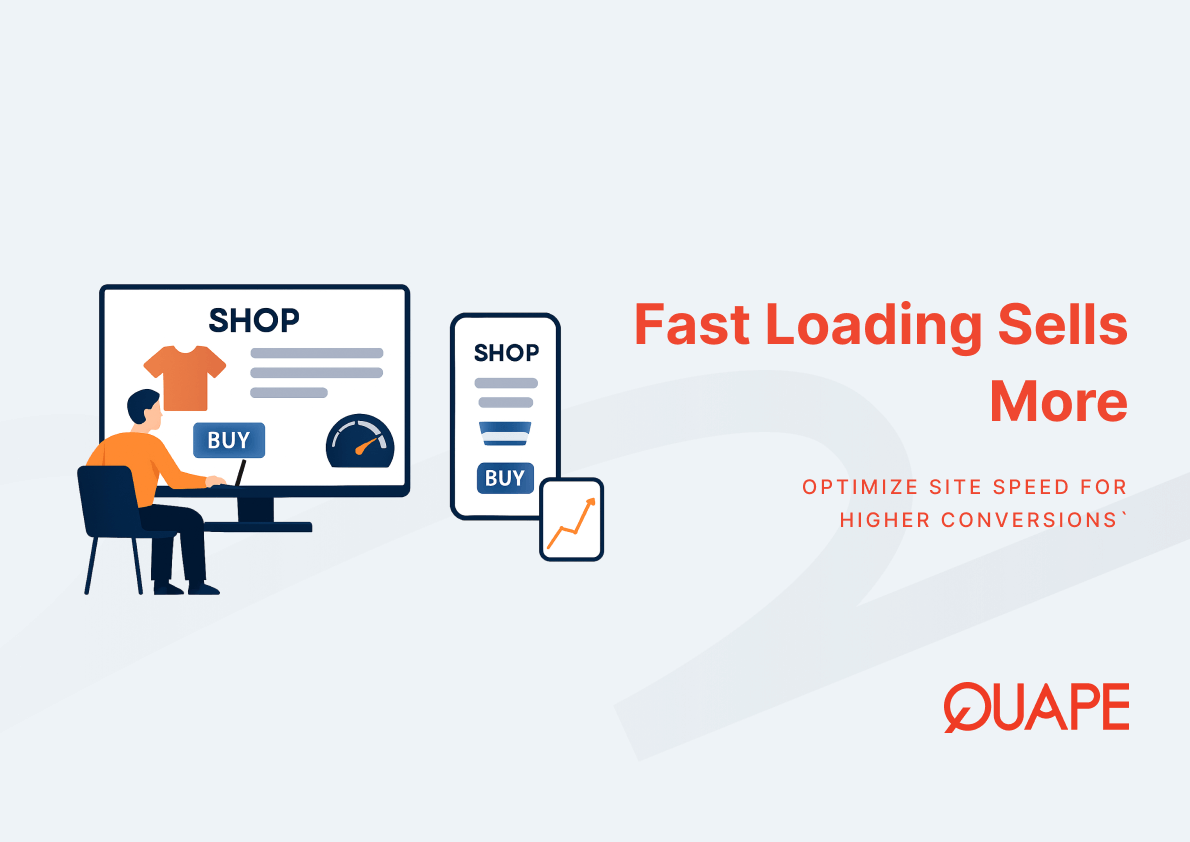
Speed determines whether your e-commerce site converts browsers into buyers or loses them to competitors. When a potential customer waits more than three seconds for your product page to load, over half of mobile users abandon the site entirely. This isn’t just a user experience problem; it’s a revenue issue that affects your bottom line directly. For Singapore-based businesses competing in the APAC e-commerce market, page speed influences both customer retention and search visibility. Understanding how performance metrics interact with buyer behavior helps you build infrastructure that supports commercial outcomes rather than undermines them.
Fast e-commerce sites are online retail platforms engineered to deliver content, imagery, and transactional functionality with minimal latency between user request and visual response. Unlike informational websites where speed enhances convenience, e-commerce platforms depend on performance to maintain buyer trust throughout the purchase journey. A fast site reduces friction at every touchpoint, from initial product discovery through checkout completion, ensuring that technical delays don’t interrupt commercial intent.
Những điểm chính
- Websites loading under one second convert three times better than those taking five seconds, directly linking speed to revenue outcomes
- Core Web Vitals measure user-centric performance through Largest Contentful Paint, Interaction to Next Paint, and Cumulative Layout Shift metrics
- CDN routing distributes content geographically to reduce the physical distance between users and hosted assets, minimizing network latency
- Media compression reduces payload size without visual degradation, improving load times especially on mobile and constrained networks
- Local server latency in Singapore affects regional buyers differently than global hosting solutions, making geographic proximity relevant
- Checkout performance and payment gateway response time influence cart abandonment rates and transactional completion
- Performance optimization across the buyer journey supports both user retention and search engine visibility signals
Why Speed Directly Impacts Online Sales Performance
User intent in e-commerce contexts operates within narrow time windows. When someone searches for a product and clicks through to your category page, their willingness to wait for content delivery diminishes rapidly as perceived delay increases. Bounce rate correlates directly with load time because each additional second introduces psychological friction that competes with purchase motivation. If your homepage takes four seconds to become interactive while a competitor’s loads in one second, you’re effectively giving buyers a reason to leave before they’ve seen your product catalog.
Purchase friction accumulates across every slow-loading touchpoint in the conversion funnel. A product page that renders slowly creates doubt about site reliability. A checkout form that lags during input makes customers question whether their payment will process correctly. These micro-delays compound into macro-level abandonment because buyer trust depends partly on technical responsiveness. When performance signals professionalism and stability, users feel more confident completing transactions. When sluggish interactions suggest technical neglect, even interested buyers hesitate to enter payment details.
This relationship between speed and conversion isn’t theoretical. For businesses operating in competitive markets where Singapore buyer psychology demands seamless digital experiences, performance gaps translate directly into lost revenue opportunities that favor faster competitors.
Core Performance Metrics Behind Fast E-Commerce Sites
Performance measurement in e-commerce relies on real user metrics rather than synthetic lab tests alone. While controlled testing environments provide baseline benchmarks, actual customer experiences vary based on device capabilities, network conditions, and geographic location. Monitoring how real visitors experience your site across these variables reveals where performance bottlenecks occur in production environments, allowing you to prioritize optimization efforts that improve commercial outcomes rather than just test scores.
Core Web Vitals as a Commercial Ranking Signal
Core Web Vitals formalize user-centric experience into measurable thresholds that both browsers and search systems evaluate. Largest Contentful Paint measures how quickly the largest visible element renders, typically a hero image or product grid. Interaction to Next Paint captures the delay between user actions and visual feedback, critical during add-to-cart interactions or checkout form submissions. Cumulative Layout Shift quantifies visual stability by tracking unexpected element movements that cause misclicks or user frustration.
These metrics function as commercial ranking signals because they correlate with user satisfaction patterns that search engines prioritize. Sites meeting good LCP thresholds under 2.5 seconds and maintaining stable layouts demonstrate technical investment in user experience. When your e-commerce SEO strategy aligns performance optimization with content quality, search visibility improves as a byproduct of serving user needs effectively rather than gaming algorithmic preferences.
Local Server Latency and Regional Hosting Constraints
Geographic proximity between hosting infrastructure and end users determines baseline latency before any content delivery optimization occurs. When your server resides in Singapore and serves local buyers, request-response cycles complete faster than architectures routing traffic through European or American data centers. This matters particularly for database queries during product searches or inventory checks, where each additional millisecond of server processing compounds into perceptible delays.
Singapore data centers offer strategic advantages for businesses targeting APAC markets because they reduce the physical distance data travels while maintaining infrastructure reliability standards. Local server latency affects not just initial page loads but also dynamic content updates, AJAX requests during filtering operations, and real-time inventory validation. These interactions happen repeatedly throughout the buyer journey, meaning even marginal latency improvements multiply into substantial experience gains across thousands of user sessions.
Infrastructure and Delivery Factors That Reduce Load Time
Infrastructure optimization addresses systemic performance constraints rather than surface-level symptoms. While code minification and lazy loading provide incremental benefits, fundamental architecture decisions about content delivery and asset management determine whether your platform can scale performance as traffic increases. Network delivery strategies that distribute computational load and minimize data transfer requirements create structural advantages that persist regardless of individual page optimizations.
CDN Routing and Edge Caching for Faster Asset Delivery
CDN routing enables geographic distribution of static assets like product images, stylesheets, and JavaScript libraries across multiple edge servers positioned near user populations. When a Singapore customer requests your product catalog, the CDN serves cached images from an APAC edge location rather than retrieving them from origin servers potentially thousands of kilometers away. This architecture reduces round-trip time by eliminating long-distance data travel for resources that don’t change frequently.
Edge servers maintain cache hit ratios by storing frequently accessed content locally and only forwarding requests to origin servers when cached versions expire or new content gets published. High cache hit ratios mean most user requests receive responses from nearby infrastructure, maintaining consistent load times even during traffic spikes. This approach proves particularly valuable during promotional campaigns when product page views surge but infrastructure costs remain predictable because edge caching absorbs demand without overwhelming origin servers.
Media Compression Without Visual Quality Loss
Media compression reduces the file size of product images and promotional graphics while preserving visual fidelity sufficient for commercial presentation. Modern file formats like WebP and AVIF achieve compression ratios that traditional JPEG and PNG formats cannot match, cutting payload size by 15 to 21 percent without introducing perceptible artifacts. Since images account for roughly 41 percent of transmitted web data, optimizing this category delivers disproportionate performance improvements relative to implementation effort.
Image optimization workflows should balance compression efficiency with brand presentation standards. Overly aggressive compression saves bandwidth but risks degrading product photography quality enough to reduce perceived value. Proper implementations use adaptive compression based on image content type, applying stronger compression to decorative elements while preserving detail in product closeups. When combined with responsive image delivery that serves appropriately sized assets based on viewport dimensions, compression strategies improve product page design performance without compromising visual merchandising effectiveness.
Speed Optimization Across the Buyer Journey
The buyer journey encompasses multiple interaction stages where performance either facilitates progression or creates abandonment opportunities. Each stage presents distinct technical challenges because user behavior patterns and content requirements shift from browsing to evaluation to transaction completion. Optimizing for speed across these transitions requires understanding which interactions carry the highest friction potential and how infrastructure choices support or hinder natural buyer progression.
Category and Navigation Load Speed
E-commerce category structure determines how efficiently users navigate from broad product groups to specific items that match their purchase intent. When category pages load slowly, particularly those with faceted navigation allowing users to filter by attributes like price, size, or brand, the iterative refinement process becomes tedious rather than helpful. Each filter adjustment that triggers a three-second reload breaks the browsing flow and increases the likelihood that users abandon their search before finding target products.
Crawl efficiency for category pages also affects how search engines discover and rank your product inventory. If category navigation requires multiple slow-loading clicks to reach individual products, search crawlers allocate less time to indexing deeper catalog pages. Optimized category architecture balances user navigation needs with technical performance constraints by implementing client-side filtering where appropriate and ensuring server-side filtering operations complete rapidly when database queries become necessary.
Checkout Performance and Cart Stability
Checkout UX represents the highest-stakes performance context in e-commerce because users at this stage have committed purchase intent but haven’t completed the transaction. Cart abandonment increases dramatically when checkout forms lag during input, payment method selection takes too long to load, or order review pages fail to respond promptly to editing requests. Transactional latency at this stage doesn’t just lose a single sale; it damages brand perception because users interpret technical problems during payment as security concerns.
Cart stability depends on maintaining session state reliably while minimizing server requests that could introduce delays or errors. When cart contents persist correctly across page transitions and browser sessions, users can confidently pause and resume their purchase process. If performance issues cause cart corruption or unexpected item removals, the resulting frustration often prevents purchase completion even after technical problems get resolved. Addressing checkout optimization and cart abandonment requires both frontend responsiveness and backend reliability to support seamless transactional experiences.
Payment Gateway Response Time in Singapore
Payment gateways in Singapore connect your e-commerce platform to financial institutions that process customer transactions. API latency between your checkout page and gateway services affects how quickly payment confirmations return after customers submit their information. While users tolerate brief processing delays when they understand payment verification occurs, extended waits without clear feedback create anxiety about whether transactions succeeded or failed, leading some customers to refresh pages or submit duplicate payments.
Transaction reliability depends partly on gateway infrastructure quality but also on how your platform handles API communication. Implementing proper timeout handling, providing real-time status updates during processing, and offering clear error messaging when problems occur maintains user confidence even when technical issues arise. For Singapore businesses, selecting payment gateways with strong local infrastructure presence ensures lower baseline latency and better support for region-specific payment methods that customers expect.
Practical Considerations for Singapore-Based Businesses
The Singapore e-commerce market operates within specific infrastructure contexts that affect performance optimization priorities. Regional compliance requirements, typical internet connectivity patterns, and competitive benchmarks all influence which technical investments deliver the strongest commercial returns. Understanding these local factors helps you avoid generic optimization advice that may not apply to your specific operational environment and customer base.
Infrastructure cost structures in Singapore differ from other markets due to data center pricing, bandwidth charges, and the availability of managed hosting services optimized for regional performance. While global cloud platforms offer flexibility, purpose-built regional hosting often provides better price-performance ratios for businesses primarily serving APAC customers. Evaluating platform costs requires balancing initial implementation expenses against ongoing operational efficiency and the commercial impact of performance differences users actually notice.
How E-Commerce Web Design Improves Fast E-Commerce Site Performance
Thiết kế web thương mại điện tử services integrate performance-first architecture from project inception rather than treating speed as an optimization task to address after launch. When development teams build with Core Web Vitals targets and real-world device constraints in mind, the resulting platforms avoid fundamental architectural problems that cause persistent performance issues. This approach considers how template structure, database query patterns, and third-party integrations collectively affect load times across the buyer journey.
Performance-first architecture involves technical decisions about framework selection, caching strategies, and asset delivery methods that establish baseline efficiency before visual design or feature development begins. Scalable UX design ensures that adding products, categories, or promotional content doesn’t degrade site speed as your catalog grows. By treating performance as a foundational requirement rather than a post-launch concern, properly implemented e-commerce platforms maintain competitive load times while supporting the complex functionality that modern online retail requires.
Kết luận
Speed in e-commerce isn’t a technical preference; it’s a commercial necessity that directly influences conversion rates, customer retention, and competitive positioning. When your infrastructure reduces latency through CDN routing, optimizes payload through media compression, and maintains responsiveness across the buyer journey, you remove friction that would otherwise drive customers to faster competitors. For Singapore-based businesses, combining local hosting advantages with performance-optimized design creates platforms that serve regional buyers effectively while supporting the transactional reliability that successful online retail demands.
Ready to build an e-commerce platform that converts browsers into buyers through superior performance? Liên hệ với đội ngũ bán hàng của chúng tôi to discuss how performance-first e-commerce design can strengthen your competitive position.
Câu Hỏi Thường Gặp
What is the acceptable load time for an e-commerce site? E-commerce sites should aim for initial page loads under two seconds, with interactive elements responding within 200 milliseconds of user input. These thresholds align with Core Web Vitals standards and user expectation research showing that conversion rates drop significantly when load times exceed three seconds.
How does page speed affect search engine rankings for e-commerce? Search engines incorporate Core Web Vitals into ranking algorithms as user experience signals, meaning faster sites gain visibility advantages over slower competitors with similar content quality. This effect compounds with the behavioral signals search systems track, as faster sites generate lower bounce rates and higher engagement metrics that further improve rankings.
Can CDN usage improve checkout completion rates? CDN implementation reduces latency throughout the buyer journey including checkout pages, which decreases the technical friction that contributes to cart abandonment. While payment gateway response time and checkout UX design also influence completion rates, faster asset delivery from edge servers creates smoother transactional experiences that support conversion.
What image formats work best for e-commerce product photography? WebP and AVIF formats provide superior compression efficiency compared to JPEG while maintaining photographic quality suitable for product presentation. Implementation should include fallback support for browsers that don’t support modern formats, using responsive image techniques to serve appropriately sized assets based on device and viewport dimensions.
Does server location really matter if I use a CDN? Server location affects database query latency and dynamic content generation even when static assets are CDN-distributed. For e-commerce sites performing real-time inventory checks, personalized recommendations, or complex filtering operations, local server proximity reduces the cumulative delay from backend processing that CDNs cannot cache.
How often should I test my e-commerce site speed? Continuous monitoring using real user metrics provides the most accurate performance data because it captures actual customer experiences across varying devices and network conditions. Supplement ongoing monitoring with weekly synthetic tests after deployments or configuration changes to catch performance regressions before they impact significant user populations.
What is the relationship between mobile performance and e-commerce conversions? Mobile devices often operate on constrained networks with limited processing power, making performance optimization even more critical for mobile traffic than desktop. Since mobile commerce represents the majority of e-commerce traffic in many markets, poor mobile performance disproportionately impacts overall conversion rates and revenue outcomes.
Can third-party integrations slow down my e-commerce site? Third-party scripts for analytics, chat support, or marketing tools often introduce performance overhead through additional network requests and JavaScript execution. Implementing proper script loading strategies, using asynchronous or deferred loading, and regularly auditing which integrations provide sufficient value to justify their performance cost helps maintain site speed while supporting necessary business functions.

- Squarespace Alternative: Bespoke UI/UX Design that Converts High-Ticket Clients - Tháng 6 17, 2026
- Wix Alternative for Enterprises: Why You Need Custom Corporate Web Design - Tháng 6 16, 2026
- Dropbox Business Alternative: Avoid High User Licensing Fees with Private Nextcloud - Tháng 6 15, 2026