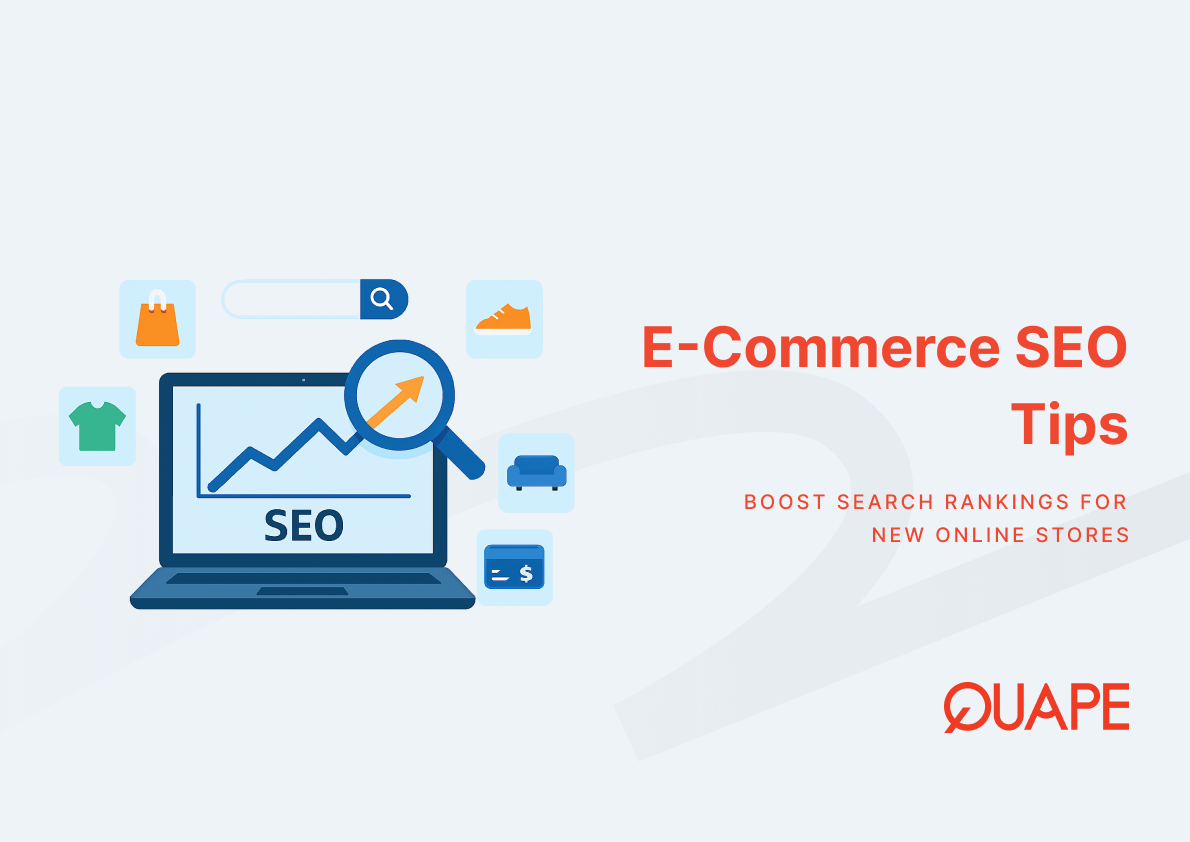
A new e-commerce store can be fully functional, visually appealing, and ready to accept orders, yet remain invisible to search engines if it lacks proper entity signaling. Unlike traditional keyword-based optimization, modern search engines rely on structured entity relationships to understand what products you sell, how they relate to one another, and whether your store can satisfy specific search intents. For IT managers, CTOs, and procurement leads launching online retail operations in Singapore, this reality demands a strategic shift: SEO success depends less on content volume and more on how clearly your site defines and connects product entities, category hierarchies, and transactional signals. This article outlines an entity-based SEO strategy that builds search visibility from the ground up, enabling new stores to compete effectively without the authority legacy sites possess.
E-commerce SEO strategy refers to the systematic process of structuring product data, site architecture, and technical signals so that search engines can accurately retrieve, index, and rank your online store for relevant commercial queries. It focuses on entity definition, semantic relationships, and information retrieval frameworks rather than keyword density or content length.
Những điểm chính
- Modern search engines use knowledge graphs to connect products, brands, and attributes, prioritizing entity-based understanding over keyword matching alone.
- Clear product entity definitions improve machine understanding, leading to more accurate indexing and retrieval for new stores without established authority.
- Schema markup enables search engines to disambiguate entities like products, prices, availability, and reviews, improving eligibility for rich results.
- Over 70% of global e-commerce traffic originates from organic search and direct discovery combined, making search visibility critical for new online stores.
- Poor site structure and slow load times correlate with higher bounce rates in online retail, undermining conversion potential regardless of traffic volume.
- Early adoption of entity-based SEO provides new stores with a structural advantage over legacy sites constrained by rigid, keyword-focused architectures.
- Information retrieval frameworks depend on structured signals to reduce ambiguity, especially for new domains with limited historical data.
Introduction to E-Commerce SEO Strategy
Search engines no longer rely on keyword matching to surface relevant products. Instead, they construct entity graphs that map relationships between brands, product types, attributes, prices, and user intents. For a new online store, this creates both a challenge and an opportunity. The challenge lies in the absence of historical signals like backlinks, brand mentions, or user behavior data that established competitors have accumulated. The opportunity emerges from the fact that entity-based product data optimization enables new sites to communicate their catalog structure clearly, even without domain authority.
An effective ecommerce SEO strategy recognizes that search engines evaluate your site through information retrieval frameworks designed to match queries with the most semantically relevant results. When a user searches for “wireless noise-cancelling headphones under $200,” the search engine must identify which products on your site meet those criteria. If your product pages lack structured attributes like price, category, brand, and feature tags, the retrieval system cannot confidently match your inventory to the query. This ambiguity results in lower visibility, not because your products are inferior, but because your site fails to signal what it offers in machine-readable terms.
The foundation of online store discovery depends on how well you define entities and their relationships within your catalog. A product is not just a page with text; it is an entity with attributes (color, size, material), a relationship to a parent category (electronics, fashion, home goods), and connections to related entities (compatible accessories, alternative models). When these relationships are explicitly structured through internal taxonomy, schema markup, and attribute completeness, search engines can retrieve your products for a wider range of relevant queries, accelerating the path from launch to visibility.
How Search Engines Understand New E-Commerce Websites
When a search engine encounters a new e-commerce site, it initiates crawling to discover pages, indexing to store and analyze content, and ranking signal evaluation to determine relevance and trustworthiness. Unlike informational websites where content quality dominates, e-commerce sites are assessed primarily on how well they represent transactional entities and facilitate user intent. The information retrieval framework that powers search engines depends on structured data to distinguish between a product page, a category page, a blog post, and a checkout flow.
Crawling efficiency improves when your site architecture clearly delineates category hierarchies and product relationships. A flat structure where all products live at the same directory level forces search engines to infer relationships, slowing indexing and weakening topical authority. Conversely, a well-organized taxonomy where products nest within categories, and categories nest within broader themes, enables crawlers to understand context faster. This structure also supports faster load times and efficient server response, which are critical ranking signals for new stores competing in saturated markets.
Indexing quality depends on how well your pages communicate entity attributes. A product page titled “Premium Headphones” with no structured price, brand, or availability data leaves the search engine guessing. The same page with Product schema indicating brand, model, price currency, stock status, and review ratings becomes a fully defined entity that the indexing system can confidently match to specific queries. This clarity reduces the need for external validation, allowing new stores to achieve faster indexing and more accurate placement in search results.
Ranking signals for new e-commerce websites extend beyond backlinks and domain age. Search engines prioritize mobile-first indexing, Core Web Vitals, structured data compliance, and transactional signal clarity. A new store that loads quickly, displays products correctly on mobile devices, and uses schema markup to define entities will often outrank an older store with poor technical foundations, especially for long-tail transactional queries where intent specificity matters more than brand recognition.
Core Components of an Entity-Based E-Commerce SEO Strategy
Entity-based SEO shifts focus from keyword repetition to semantic clarity. Instead of optimizing for “buy running shoes online,” you structure your site so that search engines understand each product as a distinct entity with attributes like brand, model, size range, and use case. This approach improves retrieval accuracy because the search engine can match user queries to specific product entities rather than relying on keyword proximity or frequency.
Product entities, brand entities, and category entities form the core of your catalog structure. A product entity represents a single SKU or variant with unique attributes. A brand entity connects all products from the same manufacturer, creating a topical cluster that enhances authority for brand-specific queries. A category entity groups related products under a shared theme, enabling the search engine to surface your category pages for broader discovery queries. When these entities are interconnected through internal links, breadcrumbs, and schema relationships, the search engine builds a semantic map of your inventory, improving both indexing efficiency and ranking precision.
Attributes and properties define what makes each entity unique. For a laptop, attributes might include processor type, RAM capacity, screen size, operating system, and price range. For a skincare product, attributes could include ingredient list, skin type compatibility, volume, and certifications. Complete and consistent attribute data enables search engines to match your products to highly specific queries, reducing competition from irrelevant listings and increasing the likelihood of conversion when users find your site.
Product Entity Definition and Attribute Completeness
Every product on your site must function as a fully defined entity with clear, structured attributes. This means moving beyond descriptive text and implementing entity-based product data optimization that search engines can parse and index systematically. A product page that lists “wireless, Bluetooth, 30-hour battery” in a paragraph is less retrievable than one that encodes these features in schema markup or structured HTML tags.
Product attributes should include SKU identifiers, pricing data with currency codes, availability signals like in-stock or pre-order status, and variant options such as color or size. These elements enable search engines to display accurate rich results in search listings, reducing friction for users who can see price and availability before clicking. When attribute data is incomplete or inconsistent across products, the search engine may suppress rich results or rank your pages lower due to ambiguity.
Pricing data requires special attention because it directly influences transactional intent. A product with clearly structured pricing, including sale prices and currency, signals that the page is ready to facilitate a purchase. Products missing price data or using inconsistent formats create friction in the retrieval process, leading to lower visibility for high-intent queries. Similarly, availability signals prevent users from clicking on out-of-stock items, reducing bounce rates and improving the overall quality score search engines assign to your product pages designed for conversion.
Category-Level Entity Relationships
Category pages serve as topical hubs that connect related product entities under a shared semantic theme. A well-structured ecommerce category structure enables search engines to understand parent-child relationships, where broader categories like “Electronics” contain subcategories like “Laptops,” which in turn contain individual products. This hierarchy supports topical authority by demonstrating that your site comprehensively covers a subject area, not just individual products.
Internal taxonomy determines how entities relate to one another within your catalog. A product that belongs to multiple categories, such as “Wireless Headphones” appearing under both “Audio Equipment” and “Travel Accessories,” creates cross-topical relevance that broadens retrieval opportunities. However, excessive duplication or unclear category assignments can fragment entity signals, confusing the search engine about the primary context of a product. The solution lies in establishing a primary category hierarchy while using tags or filters for secondary classifications.
Parent-child entities extend beyond categories to include brand pages, collection pages, and attribute-based landing pages. For example, a “Winter Jackets” collection page acts as a parent entity that groups products by seasonal relevance, while individual jacket products serve as child entities with specific attributes. When these relationships are reinforced through internal links, breadcrumb navigation, and schema markup, search engines can surface the most relevant page type based on query intent, whether that’s a category overview or a specific product.
Structured Data and Schema Markup for E-Commerce
Schema markup provides the most explicit method for defining entities and their relationships. By implementing Product schema, you tell search engines exactly what each page represents, including product name, image, description, brand, SKU, price, currency, availability, and aggregated review ratings. This structured data does not directly boost rankings, but it enables rich results that increase click-through rates and improve the accuracy of indexing.
Offer schema connects pricing and availability data to product entities, allowing search engines to display dynamic information in search results. When your Offer schema includes priceCurrency, price, priceValidUntil, and availability properties, the search engine can confidently show this information without needing to re-crawl the page frequently. This improves the user experience by surfacing accurate, timely data and reduces the risk of users landing on pages with outdated pricing.
Review schema aggregates customer feedback into a single rating signal that appears in search results as star ratings. This structured data relies on aggregateRating properties that summarize reviewCount and ratingValue, giving users a quick trust signal before they click. Search engines prioritize sites that implement Review schema correctly because it reduces the likelihood of users bouncing back to search results after discovering a product lacks credibility. Together, Product, Offer, and Review schema form a comprehensive entity definition that supports rich results, improves retrieval accuracy, and enhances user trust.
Technical SEO Foundations for New Online Stores
Technical SEO ensures that search engines can crawl, index, and retrieve your product entities efficiently. For new online stores, site performance directly impacts both crawl efficiency and user experience. Slow server response times delay indexing, preventing new products from appearing in search results promptly. Poor Core Web Vitals, such as high Largest Contentful Paint or Cumulative Layout Shift, signal to search engines that your site provides a suboptimal user experience, reducing the likelihood of ranking for competitive queries.
Mobile-first indexing means that search engines evaluate your site primarily based on its mobile version. If your product pages load slowly on mobile devices, display broken layouts, or hide critical content, the search engine will index and rank the site accordingly. Given that mobile devices account for more than 60% of global e-commerce traffic, optimizing for mobile is not an enhancement but a baseline requirement. This includes responsive design, touch-friendly navigation, and mobile commerce considerations specific to regional user behavior.
Server response time influences both crawl budget and user retention. A server that responds slowly under load, particularly during traffic spikes or product launches, signals instability to search engines. This can lead to reduced crawl frequency, delaying the indexing of new products or updated inventory. For e-commerce sites, where stock levels and pricing change frequently, slow server response creates a gap between your actual catalog state and what search engines display, leading to user frustration and lost conversions. Implementing performance-optimized hosting and caching strategies addresses this foundational issue, ensuring that both crawlers and users receive fast, reliable access to your catalog.
Conversion-Critical SEO Signals Beyond Traffic
Attracting traffic to product pages is only the first step in an effective SEO strategy. Conversion-critical signals determine whether visitors complete purchases or abandon your site. Checkout UX plays a central role in this process, as friction in the payment flow directly increases cart abandonment rates. Search engines increasingly incorporate user behavior signals into ranking algorithms, meaning that high bounce rates and short session durations can suppress your site’s visibility over time.
Cart abandonment occurs when users add products but fail to complete transactions. While pricing, shipping costs, and payment options influence this behavior, technical factors like slow checkout page loads, confusing form fields, and lack of trust signals also contribute. A new e-commerce store that optimizes for seamless checkout experiences and reduces abandonment friction sends positive user behavior signals to search engines, indirectly supporting ranking improvements.
Trust signals include secure payment gateways, SSL certificates, clear return policies, and customer reviews. Transactional intent queries require users to trust your site with financial information, so search engines evaluate whether your site displays credibility indicators. A new store that implements HTTPS, displays security badges, and integrates verified trust and security features reduces perceived risk, improving both conversion rates and the likelihood of users engaging deeply with your content. Over time, these engagement metrics reinforce your site’s authority, creating a feedback loop that supports sustained organic growth.
Measurement, Feedback Loops, and SEO Iteration
E-commerce analytics enables you to track which SEO strategies drive measurable outcomes. Monitoring metrics like organic sessions, product page views, add-to-cart rates, and completed transactions reveals how well your entity-based SEO strategy translates traffic into revenue. A/B testing allows you to isolate variables, such as structured data implementation or category page layout changes, to determine their impact on both rankings and conversions.
User behavior signals provide real-time feedback on whether your site meets searcher intent. High bounce rates on product pages may indicate that the landing page does not match the query, suggesting a need for better entity alignment or more accurate schema markup. Long session durations and multiple page views per visit suggest that users find your catalog relevant and engaging, which search engines interpret as a quality signal. By analyzing these patterns through ecommerce analytics and iterative testing, you can refine entity definitions, improve internal linking, and adjust category structures to enhance both visibility and conversion performance.
Performance monitoring extends to technical metrics like page load speed, mobile usability, and crawl error rates. Regular audits ensure that new products are indexed promptly, schema markup remains valid, and site performance does not degrade as your catalog grows. For new online stores, establishing a cadence of measurement, iteration, and adjustment creates a sustainable SEO feedback loop that adapts to algorithm changes, competitive shifts, and evolving user expectations.
Practical Application of E-Commerce SEO Strategy in Singapore
Singapore’s e-commerce landscape presents unique opportunities and constraints that influence SEO strategy. Understanding local buyer psychology, such as preferences for trusted payment methods and expectations around delivery speed, shapes how you structure transactional signals on your site. Search engines prioritize sites that align with regional user behavior, meaning that a store optimized for Singaporean shoppers may rank higher in local search results than a generic international store.
Local payment preferences, including options like PayNow, GrabPay, and regional credit card processors, serve as trust signals that improve conversion rates. When your site integrates payment gateways commonly used in Singapore, it reduces friction for local buyers and signals to search engines that your store caters to the regional market. This alignment improves relevance for geo-targeted queries and enhances the overall user experience for your primary audience.
Regional competition in Singapore’s e-commerce sector is intense, with established players dominating many product categories. New stores must differentiate through niche specialization, superior technical SEO, and entity-based optimization that enables retrieval for long-tail queries. Compliance with local regulations, including the Personal Data Protection Act and transparent pricing practices, also functions as a trust signal that search engines can detect through user behavior patterns. Sites that demonstrate cultural and behavioral alignment with Singapore buyers achieve stronger engagement metrics, which indirectly support ranking improvements.
Platform and Cost Considerations for SEO Scalability
Choosing an e-commerce platform determines your long-term SEO scalability and flexibility. Some platforms impose structural limitations that restrict schema markup, URL customization, or category hierarchy design. These constraints can fragment entity signals and slow SEO maturity, particularly as your catalog grows. Understanding platform capabilities before launch prevents costly migrations later, when accumulated content and backlinks make switching platforms disruptive.
Platform limitations often manifest in how products and categories are organized. Platforms that auto-generate URLs with product IDs instead of descriptive slugs, or that force all products into a single flat directory, create barriers to effective entity-based SEO. Similarly, platforms with rigid schema implementations may not support custom attributes or prevent you from adding granular structured data for specialized products. Evaluating platform trade-offs between Shopify, WooCommerce, and custom solutions helps you select a foundation that supports your SEO goals without requiring workarounds.
Long-term SEO cost and ownership of data are critical considerations for new stores. Some platforms charge monthly fees that scale with revenue, which can erode margins as your business grows. Others lock your product data, customer information, and content into proprietary systems, limiting portability if you need to migrate. Assessing total cost of ownership across different platforms ensures that your initial investment supports sustainable growth rather than creating dependencies that constrain future strategy adjustments.
How E-Commerce Web Design Supports Entity-Based SEO Strategy
E-commerce web design directly influences how effectively your site communicates entity relationships to search engines. SEO-friendly architecture ensures that category hierarchies, product relationships, and internal taxonomy are reflected in URL structure, navigation menus, and breadcrumb trails. When design decisions prioritize semantic clarity over visual novelty, the resulting site becomes easier for both users and search engines to navigate.
Structured product pages encode entity attributes in ways that support both human readability and machine parsing. This includes placing key product details, such as SKU, brand, and price, in consistent locations across all product pages, and using HTML tags or schema markup to label these elements explicitly. System integrations, such as connections between your inventory management system and your website, ensure that availability signals remain accurate, preventing search engines from indexing out-of-stock products as available or vice versa.
A design that balances user experience with technical SEO requirements creates a foundation for long-term growth. Features like faceted navigation, which allows users to filter products by attributes, must be implemented carefully to avoid duplicate content issues that confuse search engines. Similarly, image optimization, lazy loading, and efficient CSS reduce page load times without sacrificing visual appeal. By aligning design choices with entity-based SEO principles, you create a site that supports both discovery and conversion from the moment it launches.
Conclusion & Strategic Next Steps
Building search visibility for a new e-commerce store requires a strategic shift from keyword-focused content to entity-based architecture. By defining product entities clearly, structuring category relationships logically, and implementing schema markup comprehensively, you enable search engines to retrieve and rank your products accurately, even without the domain authority that established competitors possess. Technical foundations like mobile-first design, fast server response, and conversion-optimized checkout flows reinforce these entity signals, creating a feedback loop where improved user experience supports stronger rankings.
For IT managers and CTOs launching online stores in Singapore, the path to sustainable organic growth begins with aligning platform capabilities, design decisions, and technical infrastructure to support entity-based SEO from day one. To explore how a strategically designed e-commerce platform can accelerate your store’s search visibility and conversion performance, liên hệ với đội ngũ bán hàng của chúng tôi để thảo luận về các yêu cầu cụ thể của bạn.
Câu Hỏi Thường Gặp
What is the difference between keyword-based and entity-based SEO for e-commerce?
Keyword-based SEO focuses on repeating target phrases throughout content to match search queries. Entity-based SEO structures product data and relationships so that search engines understand what you sell, how products relate to categories, and which attributes define each item, enabling more accurate retrieval for diverse queries.
How long does it take for a new e-commerce store to rank in search engines?
Indexing can begin within days, but achieving competitive rankings typically requires three to six months, depending on technical SEO quality, entity signal clarity, and content comprehensiveness. New stores with strong structured data and mobile optimization often see faster results for long-tail transactional queries.
Is schema markup required for e-commerce SEO?
Schema markup is not technically required, but its absence limits your eligibility for rich results like product ratings, pricing, and availability displayed directly in search listings. Without schema, search engines must infer entity attributes from unstructured content, reducing retrieval accuracy and visibility.
Can a new e-commerce store compete with established brands in search rankings?
Yes, particularly for long-tail queries where intent specificity matters more than brand authority. New stores that define product entities clearly, optimize for mobile, and provide superior user experiences can outrank older sites with poor technical foundations or outdated catalog structures.
What technical SEO factors have the biggest impact on e-commerce rankings?
Mobile-first indexing, Core Web Vitals (page speed, layout stability), structured data implementation, and server response time are the most critical technical factors. These elements influence both crawl efficiency and user behavior signals that search engines incorporate into ranking algorithms.
How does category structure affect SEO for new online stores?
A clear category hierarchy enables search engines to understand topical authority and product relationships, improving indexing speed and retrieval accuracy. Well-structured categories also support internal linking strategies that distribute ranking power across product and category pages systematically.
Should a new e-commerce store prioritize SEO or paid advertising initially?
Both channels serve different timelines. Paid advertising generates immediate traffic and revenue, while SEO builds sustainable organic visibility over three to six months. New stores benefit from balancing both, using paid channels for short-term cash flow while investing in SEO for long-term cost efficiency.
How often should product pages be updated to maintain SEO performance?
Update product pages whenever attributes change, such as price adjustments, stock status, or new reviews. Regular updates signal to search engines that your catalog is active and accurate, improving crawl frequency and ranking stability. Automated inventory sync reduces manual workload while maintaining data accuracy.

- Squarespace Alternative: Bespoke UI/UX Design that Converts High-Ticket Clients - Tháng 6 17, 2026
- Wix Alternative for Enterprises: Why You Need Custom Corporate Web Design - Tháng 6 16, 2026
- Dropbox Business Alternative: Avoid High User Licensing Fees with Private Nextcloud - Tháng 6 15, 2026