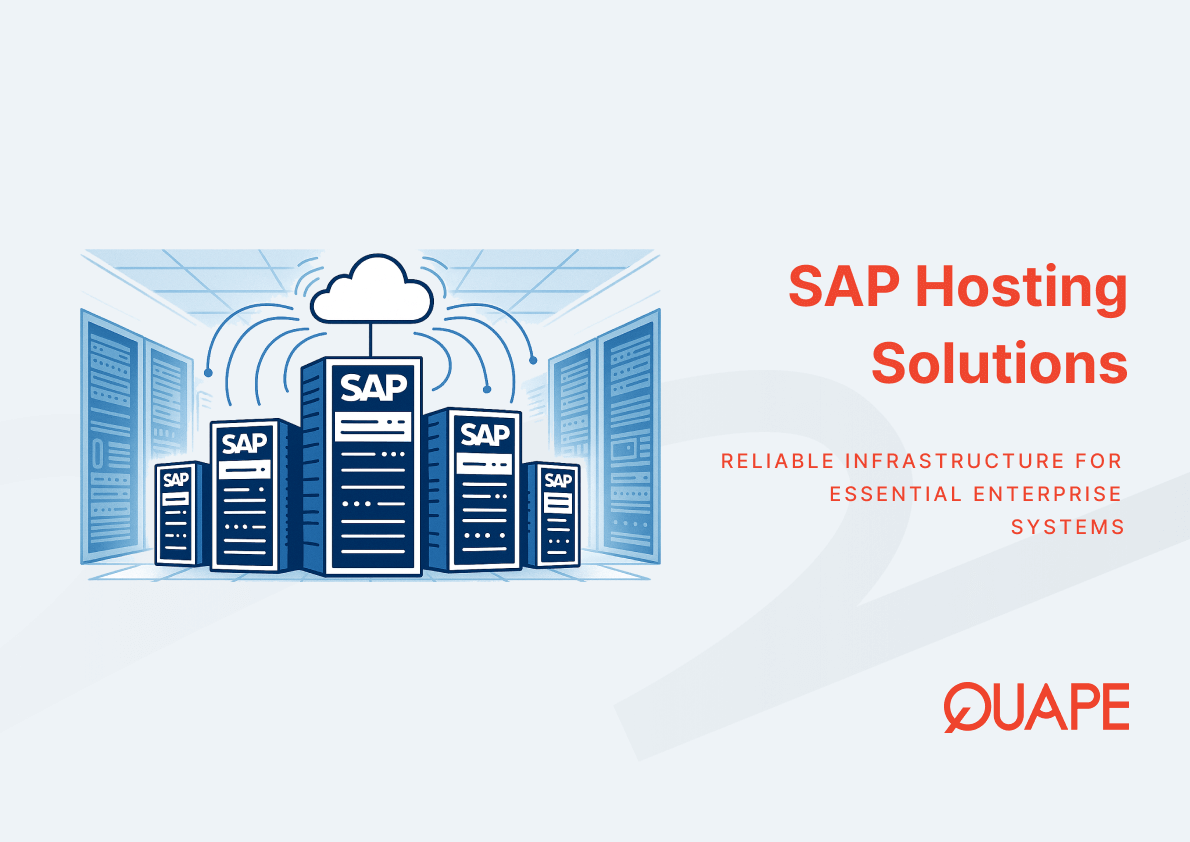
SAP environments carry the operational weight of finance, procurement, supply chain, and payroll in one integrated platform, which means infrastructure failures translate directly into business disruptions. For organizations in Southeast Asia, the decision of where and how to host SAP workloads is no longer purely technical. It involves latency, data residency, regulatory compliance, and the depth of managed support available within the region. Singapore has emerged as the preferred anchor for this infrastructure, combining submarine cable density, stable governance, and a mature ecosystem of managed service providers. This article explains how SAP hosting in Singapore works, what components define it, and what decision-makers need to evaluate before committing to a hosting model.
要点总结
- SAP hosting in Singapore refers to running SAP workloads on managed infrastructure within Singapore-based data centers, combining technical operations with local compliance alignment.
- The application layer and infrastructure layer carry distinct responsibilities, and misunderstanding that boundary is a common source of SLA disputes.
- SAP Basis functions enable system stability and require skilled, ongoing management regardless of whether the environment is on-premise or hosted.
- High availability and disaster recovery configurations must be designed before migration, not retrofitted after an incident.
- Singapore’s submarine cable connectivity supports low-latency access for regional users, directly improving SAP transaction performance.
- Managed hosting models improve cost predictability by converting capital expenditure into structured operational expenditure.
- Compliance with Singapore’s data residency requirements and ISO 27001 certification standards influences which hosting providers qualify for enterprise procurement.
What SAP Hosting Means in a Singapore Context
SAP hosting in Singapore describes a managed infrastructure model in which SAP workloads, including ERP systems, SAP HANA databases, and associated application components, run on dedicated or private cloud infrastructure physically located within Singapore. The provider manages the hardware, network, virtualization layer, and system operations, while the customer retains ownership of SAP application configuration, data, and business processes.
Singapore’s role as a regional IT hub strengthens the case for hosting SAP workloads locally. According to IMDA, Singapore’s digital infrastructure strategy has prioritized connectivity and regulatory clarity, making it a stable anchor for enterprise workloads across Southeast Asia. Organizations that require data residency within Singapore’s jurisdiction, particularly those operating in finance, healthcare, and government-adjacent sectors, benefit from SAP hosting arranged locally rather than through offshore cloud regions.
The distinction between hosting SAP and simply running SAP on a cloud server is significant. Managed SAP hosting involves provider-side responsibility for uptime, patching, backup execution, and performance monitoring. That scope of operational coverage separates it from self-managed virtual machines and defines the service relationship that underpins every SLA negotiation.
Core Architectural Components of SAP Hosting
SAP Application Layer vs Infrastructure Layer
Every managed hosting engagement involves a responsibility split between the provider and the customer. The infrastructure layer covers physical servers, storage, networking, hypervisors, and operating systems. The application layer covers SAP software installation, configuration, transport management, user administration, and business process customization. The hosting provider owns the infrastructure layer entirely. The customer typically owns the application layer, though co-managed arrangements allow the provider to extend support into SAP Basis operations.
这 hosting model and its responsibility boundaries affect operational risk directly. When an incident occurs, the first question is whether it originates at the infrastructure layer or the application layer. Organizations that do not clearly document this split in their contracts often face delays in incident resolution and disputes over SLA accountability. ISACA’s shared responsibility model guidance identifies this boundary ambiguity as a recurring source of governance failures in managed enterprise environments.
SAP Basis as the Operational Backbone
SAP Basis is the technical foundation that enables SAP applications to function reliably. It encompasses system administration, transport management, user authorization, performance monitoring, and patch lifecycle management. SAP Basis requires skilled management because gaps in its execution, such as uncontrolled transports, missed kernel updates, or misconfigured memory allocation, directly degrade system availability and performance.
In a managed hosting environment, SAP Basis support is either included in the service scope or offered as an add-on. Organizations without internal SAP Basis expertise depend heavily on SAP infrastructure support from their hosting provider to maintain system health. This dependency makes the provider’s Basis capability a critical procurement criterion, not a secondary consideration.
Managed Hosting Models for SAP Workloads
Managed SAP hosting covers several distinct delivery models. Fully managed hosting delegates all infrastructure and Basis operations to the provider, leaving the customer responsible only for application-level configuration and business processes. Co-managed hosting divides operational responsibilities according to a defined matrix, allowing customers with internal SAP teams to retain control over specific functions while outsourcing infrastructure and monitoring.
Dedicated infrastructure provides physical server isolation for customers with strict performance or security requirements. Private cloud SAP environments offer virtualization benefits while maintaining logical separation from other tenants. Hybrid SAP hosting extends these models by connecting on-premise SAP systems with cloud-hosted components, supporting staged migrations and workload distribution across environments. The right model depends on business scale, internal capability, and compliance requirements rather than a universal standard.
Performance, Availability, and Resilience Requirements
High Availability and Fault Tolerance for SAP
SAP systems classified as mission-critical by Gartner require infrastructure configurations that minimize unplanned downtime because even brief outages affect invoicing, payroll, and supply chain execution simultaneously. High availability for SAP depends on failover architecture, where redundant components at the server, storage, and network level activate automatically when a primary component fails.
Redundancy secures uptime by eliminating single points of failure across the infrastructure stack. This includes RAID storage configurations, dual power supplies, redundant network paths, and database replication at the SAP HANA layer. SAP high availability configurations must be tested regularly through controlled failover exercises, not assumed to function correctly because they were configured at deployment. The Uptime Institute has documented that unplanned IT downtime costs large enterprises hundreds of thousands of USD per hour, a figure that positions high availability investment as financially justified, not optional.
Disaster Recovery and Data Protection Strategy
Disaster recovery for SAP requires geographic separation between the primary hosting site and the recovery site. A secondary site in a different physical location protects against facility-level failures, including power grid events and physical damage, that would otherwise render both the primary infrastructure and its local backups inaccessible.
Backup strategy and disaster recovery are related but distinct. Backups protect against data loss from accidental deletion, corruption, or ransomware. Disaster recovery protects against facility or system unavailability. SAP disaster recovery planning requires defining RPO (recovery point objective) and RTO (recovery time objective) values that align with business continuity requirements. These values must be verified through periodic recovery tests, as documentation alone does not confirm that recovery will succeed within the agreed timeframe.
Network, Latency, and Connectivity Considerations in Singapore
Latency Impact on SAP User Experience
SAP transaction performance is sensitive to network latency because each user interaction between the SAP GUI or Fiori interface and the application server involves multiple round-trip exchanges. High latency extends the time required to complete individual transactions, accumulating into noticeable delays that reduce user productivity and increase operational friction.
Singapore consistently ranks among the top global hubs for submarine cable connectivity according to TeleGeography’s cable mapping data, which means SAP users across Southeast Asia experience lower round-trip times when connecting to Singapore-hosted infrastructure compared to servers in Europe or North America. Location affects response time at a physical level that software optimization cannot fully compensate for. SAP hosting latency calculations should account for user distribution, particularly for organizations with staff in Indonesia, Malaysia, Thailand, and the Philippines connecting to a centralized SAP environment.
Multicloud and Hybrid Connectivity for SAP
As organizations distribute workloads across private infrastructure and public cloud environments, SAP connectivity requirements grow more complex. Multicloud connectivity enables SAP to integrate with services hosted on different platforms without routing all traffic through a single gateway. This architecture depends on network design that accounts for segmentation, routing policies, and bandwidth capacity between environments.
Multicloud SAP connectivity often involves dedicated interconnects between private data centers and public cloud regions to maintain predictable performance and avoid internet-routing variability. Hybrid architectures require additional attention to network segmentation, ensuring that SAP production traffic remains isolated from development and test environments regardless of where those environments are hosted.
Security, Compliance, and Access Control
Security Architecture for SAP Hosting
SAP systems store and process data that is highly sensitive across every function they support, making security architecture a foundational requirement rather than an enhancement. Firewall configurations control traffic flows between SAP application servers, database layers, and external networks. Encryption protects data at rest within the SAP HANA database and in transit across network boundaries.
Identity and access management prevents unauthorized access by enforcing role-based permissions at both the infrastructure and application levels. SAP hosting security controls should cover intrusion detection systems that monitor for anomalous behavior within the hosting environment, complementing the network-level controls that govern access to the perimeter. IBM’s breach cost research indicates that organizations with managed infrastructure services recover from security incidents faster, reflecting the advantage of dedicated monitoring and incident response capability.
Compliance Requirements for SAP in Singapore
Regulatory frameworks in Singapore require organizations in specific sectors to maintain data residency within the country’s jurisdiction, which directly affects SAP hosting decisions. Hosting SAP workloads offshore in a jurisdiction without equivalent data protection standards can create compliance exposure, particularly for organizations subject to the Personal Data Protection Act (PDPA) or sector-specific regulations from MAS or MOH.
ISO 27001 certification indicates that a hosting provider has implemented and maintains an information security management system meeting internationally recognized standards. SAP hosting compliance evaluation should confirm that the provider’s certification covers the specific data center facilities where SAP workloads will reside, not just the corporate entity. Data residency and certification status together define the regulatory defensibility of a hosting arrangement.
Secure Remote Access for SAP Users
Remote access to SAP introduces authentication and session security requirements that on-premise configurations often address through network perimeter controls alone. In a managed hosting environment, VPN access encrypts traffic between end-user devices and the SAP hosting environment, preventing interception over public internet paths.
Zero Trust architecture extends this protection by treating every access request as potentially unverified regardless of network origin. Multi-factor authentication (MFA) requires users to confirm identity through a second factor, protecting against credential-based attacks that bypass VPN controls. SAP remote access security configurations should apply these controls consistently across all user populations, including third-party support staff and external consultants who access the environment for specific projects.
Cost Structure and SLA Evaluation for SAP Hosting
SAP Hosting Cost Optimization Models
Managed SAP hosting converts infrastructure capital expenditure into structured operational expenditure, which improves cost predictability for organizations managing multi-year technology budgets. Server hardware, storage systems, and data center facilities no longer appear as large upfront purchases but as recurring service costs that scale with usage and contract terms.
Resource right-sizing reduces waste by aligning infrastructure capacity with actual SAP workload requirements rather than peak theoretical demand. SAP hosting cost optimization requires periodic review of CPU, memory, and storage utilization against provisioned capacity, adjusting resources as the SAP landscape evolves through upgrades, module additions, or user growth. Rising IT talent costs in Singapore have increased the appeal of managed hosting for organizations that would otherwise need to hire and retain specialized SAP infrastructure expertise internally.
Evaluating Service-Level Agreements for SAP
An SLA defines the service accountability structure between the hosting provider and the customer. Uptime guarantees specify the minimum availability percentage the provider commits to maintain, typically expressed as monthly or annual figures. Support response times define how quickly the provider must acknowledge and begin resolving incidents at different severity levels.
SAP hosting SLA evaluation should go beyond headline uptime figures. Measurement methodology matters as much as the percentage stated. Organizations should confirm how downtime is defined and measured, what exclusions apply, and what financial remedies exist when SLA thresholds are breached. The quality of an SLA reflects the provider’s confidence in their operational capability and their willingness to accept accountability for service delivery.
Migration, Readiness, and SAP Transformation
SAP Migration to Cloud and Managed Hosting
Migrating SAP workloads to managed hosting requires planning that addresses system dependencies, data integrity, downtime windows, and validation procedures. Migration projects that proceed without a structured approach risk extended downtime, data inconsistencies, and post-migration performance problems that require significant remediation effort.
SAP migration to cloud typically involves a technical assessment phase that documents the current system landscape, identifies customizations, and defines the target infrastructure configuration. System validation after migration confirms that all functions operate correctly before the new environment is released to production users. Managed hosting providers with migration experience can significantly reduce project risk by applying established runbooks and validation frameworks to each migration engagement.
S/4HANA Infrastructure Readiness
SAP S/4HANA places substantially higher infrastructure demands on the hosting environment than legacy SAP ECC systems. S/4HANA requires in-memory processing, which means the HANA database must reside entirely in RAM to deliver the real-time performance the platform is designed to provide. This requirement drives infrastructure specifications in terms of memory capacity, storage IOPS, and CPU architecture that differ materially from traditional SAP infrastructure.
S/4HANA infrastructure readiness assessment should confirm that the hosting provider uses SAP-certified hardware designed for memory-intensive workloads. Infrastructure that was adequate for SAP ECC may not meet S/4HANA performance requirements, and organizations planning S/4HANA migrations should verify hardware certification status before finalizing a hosting engagement. Readiness affects performance outcomes from the first day of production operation, not as a problem to be addressed post-deployment.
Industry Use Cases for Managed SAP Hosting
The infrastructure requirements for SAP vary meaningfully across industries, and managed hosting models support that variation through configurable architecture and service scope. Manufacturing organizations running SAP for production planning and materials management require high throughput and low latency between SAP and connected shop-floor systems. Retail businesses depend on SAP availability during peak trading periods, making high availability architecture and rapid failover a core requirement.
Logistics companies operating across multiple countries in Southeast Asia use SAP to coordinate customs, freight, and warehouse operations, which creates both connectivity requirements for distributed users and compliance requirements for data processed in different jurisdictions. Finance organizations subject to MAS oversight require hosting environments with ISO 27001 certification and audit trails that support regulatory examination. Managed SAP across industries serves these needs by adapting infrastructure design and service scope to the specific operational and regulatory context of each sector.
How Managed SAP Hosting by Quape Supports SAP in Singapore
Quape的 托管 SAP 主机 operates from 新加坡数据中心基础设施, positioning SAP HANA workloads within the region’s primary connectivity hub. The service covers infrastructure management, daily backups, 24/7 monitoring, and SAP-certified hardware optimized for in-memory workloads. VPN access, two-factor authentication, and role-based access controls address the security requirements that enterprise SAP environments require.
The managed service model allows organizations to access enterprise-grade SAP infrastructure without the capital investment associated with on-premise hardware acquisition and data center operations. A dedicated account manager provides continuity across setup, operations, and ongoing optimization, which reduces the coordination overhead that organizations typically experience when managing multiple vendors across an SAP landscape.
Conclusion: Choosing the Right SAP Hosting Strategy in Singapore
SAP hosting in Singapore involves more than selecting a server location. It requires evaluating how infrastructure architecture supports SAP performance, how managed service scope aligns with internal capability, how SLA terms define accountability, and how security and compliance controls satisfy regulatory requirements. Each of these dimensions affects operational risk and long-term cost.
Organizations that approach SAP hosting as a strategic infrastructure decision, rather than a procurement exercise, achieve better outcomes across performance, compliance, and cost predictability. SAP Basis management, high availability configuration, disaster recovery planning, and network design all require deliberate attention at the time of engagement, not as afterthoughts following deployment.
If you are evaluating managed SAP hosting for your organization in Singapore, contact the Quape sales team to discuss infrastructure requirements and service scope.
常见问题 (FAQ)
What is SAP hosting in Singapore and who needs it?
SAP hosting in Singapore refers to running SAP ERP workloads on managed infrastructure physically located within Singapore. Organizations that require low-latency access for Southeast Asian users, data residency within Singapore’s jurisdiction, or managed operations support benefit from this model rather than self-managing on-premise systems or relying on offshore cloud regions.
What is the difference between fully managed and co-managed SAP hosting?
Fully managed SAP hosting delegates all infrastructure and SAP Basis operations to the provider, leaving the customer responsible for application configuration and business processes. Co-managed hosting divides responsibilities between the provider and the customer’s internal team according to a documented matrix, allowing organizations with internal SAP expertise to retain control over specific operational functions.
Why does SAP Basis matter in a managed hosting context?
SAP Basis provides the operational foundation for SAP system stability, covering transport management, performance tuning, user authorization, and patch management. In managed hosting environments, SAP Basis responsibility must be clearly assigned to either the provider or the customer. Gaps in Basis management create system instability, security exposure, and performance degradation regardless of how well the underlying infrastructure performs.
What should an SLA for SAP hosting include beyond uptime percentage?
SLA evaluation for SAP hosting should examine how downtime is defined and measured, what events are excluded from uptime calculations, support response time commitments at different incident severity levels, and what financial remedies apply when thresholds are breached. The measurement methodology and exclusion clauses often determine whether a published uptime figure reflects actual operational accountability.
How does Singapore’s location benefit SAP hosting for Southeast Asian businesses?
Singapore’s submarine cable infrastructure supports low network latency for users across Southeast Asia connecting to SAP systems hosted in Singapore. Lower latency improves SAP transaction response times, reducing the accumulated delay that affects user productivity during high-volume operational periods. Singapore also offers regulatory clarity and data residency options that matter for organizations subject to sector-specific compliance requirements in the region.
What infrastructure requirements does SAP S/4HANA introduce compared to SAP ECC?
SAP S/4HANA requires in-memory database processing, meaning the HANA database must fit within server RAM to deliver real-time performance. This creates substantially higher memory capacity requirements compared to SAP ECC, along with higher storage IOPS demands and SAP-certified hardware specifications. Organizations migrating from ECC to S/4HANA should verify that their hosting provider’s infrastructure meets current SAP hardware certification requirements before beginning the migration project.
How does managed SAP hosting affect total cost of ownership?
Managed hosting converts server hardware, storage, and data center capital expenditure into structured operational costs, improving budget predictability. It also removes the staffing burden for SAP infrastructure management, which reduces costs for organizations that would otherwise need to hire and retain specialized SAP Basis and infrastructure engineers. The net cost advantage depends on the scope of services included in the managed hosting agreement and the organization’s current internal capability.