The digital economy in Southeast Asia is expanding rapidly, creating a highly competitive landscape for businesses in Singapore. As market entry barriers lower, companies face increasing pressure to differentiate themselves online. For IT managers, CTOs, and procurement leads, deploying a robust online presence goes beyond aesthetic appeal. A systematized digital presence reduces operational friction, aligns with corporate governance, and directly influences how stakeholders perceive enterprise credibility. Rapid aesthetic judgments mean that users form opinions about a business in milliseconds, making visual consistency a critical economic asset rather than a mere design choice.
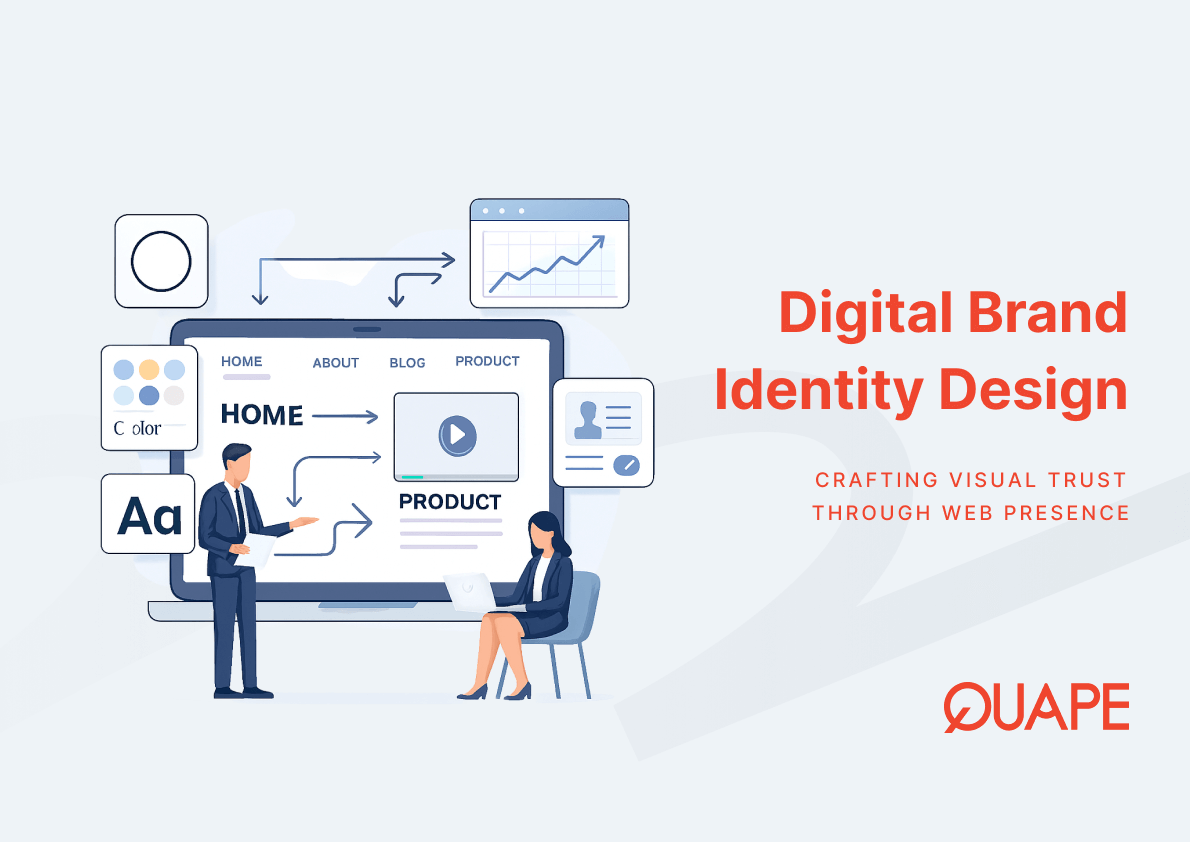
Digital brand identity is the strategic alignment of corporate branding entities, visual guidelines, typography, and digital tone to communicate organizational values across online channels. It functions as a cohesive system where every interface element supports recognition and fosters trust. When IT leaders architect a brand-led website, they engineer an environment where technical performance and visual consistency work together to reduce cognitive load and guide user behavior effectively.
Những điểm chính
Consistent visual guidelines establish immediate enterprise credibility and reduce user hesitation.
Systematized logo and typography hierarchies improve information retention and readability.
A unified digital tone substitutes for physical credibility cues in digital environments.
Technical layers like website speed and security act as vital trust signals that reinforce brand positioning.
Scalable content management systems protect brand equity during regional expansion and AI integration.
Introduction to Digital Brand Identity
Digital brand identity serves as the foundation for modern corporate websites. It dictates how brand perception is shaped through continuous user experience. In the dynamic Singapore business landscape, organizations must bridge the gap between technical infrastructure and visual presentation. Trust forms the infrastructure of digital commerce, and weak digital brand identity exposes companies to higher user churn and lower conversion rates. By treating digital identity as a measurable asset, companies secure long-term recognition and stakeholder confidence.
Core Components of a Digital Brand Identity in Corporate Web Design
Corporate Branding Entities and Brand Architecture
Corporate branding entities form the structural backbone of how a company presents its hierarchy and product relationships online. A clear brand architecture ensures that parent companies and their respective subsidiaries maintain distinct but aligned market positioning. This structure directly influences stakeholder perception by demonstrating organizational stability and logic. When businesses fail to define these relationships, they often face significant challenges in corporate web design as fragmented messaging confuses site visitors.
Visual Guidelines and Consistent Interface Systems
Visual guidelines govern the application of colors, spacing, and interaction states across a digital platform. These design systems enforce UI consistency, which prevents design debt from accumulating as a website scales. Corporate governance requires that digital interfaces adhere strictly to these established rules. According to research from Stanford University, 75% of consumers judge a company’s credibility based on its website design. Implementing standardized visual design systems for corporate sites ensures that rapid aesthetic judgments work in the company’s favor.
Logo Systems and Scalable Digital Assets
Logo systems must adapt seamlessly to varying screen sizes and contexts. Responsive logos and favicon systems maintain recognition whether a user accesses a platform via a desktop monitor or a mobile browser. Effective digital asset management supports this scalability by ensuring developers and content creators utilize the correct vector files and resolutions. This consistency prevents pixelation and layout shifts that undermine professional authority.
Typography and Hierarchical Information Design
Typography systems dictate the font hierarchy and directly impact cognitive load. Structured typographic choices enhance readability standards and guide the user’s eye logically through complex technical specifications or service offerings. When companies prioritize clear information design, they simultaneously support corporate web accessibility compliance by ensuring content remains legible for all users, including those using assistive technologies.
Digital Tone, Messaging, and Brand Voice
Digital tone and brand voice act as substitutes for physical interactions in online channels. Messaging frameworks standardize how a company communicates its value proposition, ensuring content consistency across landing pages and resource centers. A disciplined corporate website content strategy integrates this unified voice to build authority and comfort users navigating high-stakes procurement decisions.
Technical and Experiential Layers That Reinforce Brand Identity
UX Design as a Brand Experience Driver
UX design and interaction design translate visual identity into functional behavioral signals. User journey mapping identifies where prospects experience friction and aligns interface interactions with their expectations. Effective UX design for enterprise platforms integrates brand values into every hover state, form submission, and feedback loop, transforming passive visitors into engaged stakeholders.
Navigation Structure and Information Clarity
Website navigation must reflect the logical organization of the business. A well-planned information architecture provides strong usability signals that help users locate critical data quickly. Intuitive navigation best practices prevent frustration and reinforce the perception that the organization is transparent, structured, and easy to work with.
Website Speed and Performance as Trust Signals
Website performance and Core Web Vitals operate as subconscious trust signals. Slow loading times signal technical incompetence and erode brand credibility instantly. Investing in reliable hosting infrastructure and comprehensive website speed optimization protects the brand’s reputation by delivering information without latency.
Security, Compliance, and Data Protection in Singapore
Enterprise hosting and website security are non-negotiable components of brand trust. In Singapore, strict data protection policies require stringent governance. Demonstrating robust website security measures and maintaining PDPA compliant infrastructure reassures procurement leads that their sensitive information is handled with institutional-grade care.
Practical Application for Singapore IT Leaders and SMEs
Aligning Brand Identity with Procurement and Governance Standards
IT Managers and CTOs must evaluate digital solutions through strict procurement frameworks. Vendor evaluation criteria often prioritize long-term maintainability over short-term visual trends. SMEs engaging in digital transformation in Singapore need platforms that allow non-technical teams to update content while technical teams maintain strict access controls and code integrity.
Supporting Multilingual and Regional Market Expansion
ASEAN market expansion necessitates a robust multilingual content architecture. A targeted localization strategy ensures that brand messaging resonates across different cultural contexts without losing its core identity. Deploying multilingual corporate architecture enables organizations to scale their operations efficiently while maintaining centralized control over corporate branding entities.
Future-Proofing Brand Identity with Scalable CMS and AI
An enterprise CMS like WordPress or a custom Laravel framework provides the necessary foundation for sustainable growth. Selecting the best CMS for corporate scalability allows businesses to manage content workflows efficiently. Furthermore, integrating tools like AI chatbots and dynamic personalization systems requires a stable infrastructure to ensure automated interactions remain aligned with the established brand voice.
How Corporate Web Design Strengthens Digital Brand Identity
Strategic web development acts as the vehicle that delivers digital brand identity to the market. Custom web development enables precise control over visual guidelines and functionality. High-performance hosting ensures those visual assets load reliably. Additionally, deep SEO integration ensures that this carefully crafted brand identity reaches the correct decision-makers. Data indicates that consistent brand presentation increases revenue potential by cementing recognition and trust over time. Investing in professional corporate web design services guarantees that all these elements are optimized for brand scalability and sustained market relevance.
Kết luận
Building a cohesive digital brand identity requires the precise alignment of visual design, technical infrastructure, and strategic messaging. When IT leaders and procurement teams prioritize these elements, they transform their corporate websites from simple informational brochures into powerful assets that drive digital trust and support long-term brand equity. This systematized approach secures a competitive advantage in an increasingly saturated digital economy, laying the groundwork for sustainable enterprise growth.
To build a high-performance digital presence tailored to your business goals, explore our comprehensive solutions and Liên hệ bán hàng.
Câu Hỏi Thường Gặp
What defines a strong digital brand identity? A strong digital brand identity consists of consistent visual guidelines, logical brand architecture, and a unified digital tone. These elements work together to establish organizational credibility and build trust with users online.
How does website speed affect brand perception? Website performance acts as a critical trust signal for site visitors. Slow loading times increase cognitive load and frustration, which users subconsciously associate with technical incompetence or poor customer service.
Why is typography important in corporate web design? Typography systems establish a clear font hierarchy that improves readability and information retention. Structured typography reduces user friction and ensures compliance with accessibility standards.
What role does a CMS play in maintaining brand consistency? A scalable CMS allows organizations to enforce visual guidelines and content structures across multiple departments. It provides governance frameworks that prevent inconsistent messaging as the website grows.
How do security and compliance impact digital brand identity? Data protection policies and strict security measures are foundational to enterprise credibility. Demonstrating compliance with frameworks like the PDPA reassures stakeholders that the organization is trustworthy and reliable.
Can UX design influence business revenue? Yes, UX design optimizes the user journey and removes obstacles to conversion. By aligning interaction design with user expectations, businesses reduce hesitation and improve overall revenue potential.

- Squarespace Alternative: Bespoke UI/UX Design that Converts High-Ticket Clients - Tháng 6 17, 2026
- Wix Alternative for Enterprises: Why You Need Custom Corporate Web Design - Tháng 6 16, 2026
- Dropbox Business Alternative: Avoid High User Licensing Fees with Private Nextcloud - Tháng 6 15, 2026