SAP workloads anchor mission-critical operations across finance, logistics, manufacturing, and supply chain management. When these systems fail, organizations face compounding losses: halted transactions, disrupted workflows, contractual penalties, and damaged stakeholder confidence. Disaster recovery planning addresses this vulnerability by establishing protocols, infrastructure, and replication mechanisms that enable SAP environments to recover from outages caused by hardware failure, network disruption, cyberattacks, or natural disasters. For enterprises operating in Singapore, where dense connectivity and regulatory scrutiny converge, aligning SAP disaster recovery with business continuity goals is not optional. It is foundational to operational resilience.
SAP disaster recovery refers to the coordinated set of processes, technologies, and standby infrastructure designed to restore SAP system functionality and recover data following an unplanned disruption. Unlike general backup strategies, disaster recovery for SAP environments integrates application-layer dependencies, database replication, and infrastructure failover to meet predefined Recovery Time Objective (RTO) and Recovery Point Objective (RPO) targets that align with business impact tolerance.
要点总结
- Recovery Time Objective (RTO) defines how quickly SAP systems must resume operations, while Recovery Point Objective (RPO) sets acceptable data loss tolerance measured in time.
- Cold standby, warm standby, and hot standby architectures represent trade-offs between infrastructure cost, recovery speed, and operational complexity.
- Secondary site replication distributes risk across geographically separated locations, reducing vulnerability to correlated failures such as power grid outages or regional network disruptions.
- Network latency between primary and secondary sites affects replication mode selection and determines whether synchronous or asynchronous replication is operationally viable.
- Disaster recovery testing validates failover procedures and exposes under-provisioned standby environments before actual failure events occur.
- Regulatory compliance and data residency requirements in Singapore influence site selection, encryption standards, and access control configurations within disaster recovery architectures.
- Managed SAP hosting providers integrate disaster recovery capabilities into infrastructure design, reducing the operational burden of standby site provisioning and failover orchestration.
Introduction to SAP Disaster Recovery
SAP workloads support transactional workflows that generate immediate business value but also create dependency risk. When ERP systems become unavailable, order processing stops, inventory visibility disappears, and financial reporting stalls. According to the International Data Corporation, the average cost of unplanned IT downtime for large enterprises exceeds USD 300,000 per hour, with ERP system outages among the most expensive due to operational dependency. Business continuity frameworks treat SAP disaster recovery as a core component because the financial and reputational consequences of prolonged outages often exceed the cost of standby infrastructure and replication mechanisms.
SAP disaster recovery planning begins with understanding the relationship between system availability and business impact. Organizations must define how long operations can tolerate SAP unavailability (RTO) and how much transactional data loss is acceptable (RPO). These metrics shape infrastructure decisions, replication strategies, and failover protocols. For enterprises in Singapore, disaster recovery planning must also account for regional regulatory expectations around data protection and system resilience, particularly in sectors such as finance, healthcare, and logistics where regulatory scrutiny intensifies following outages.
Key Components of SAP Disaster Recovery Planning
Effective disaster recovery for SAP environments requires three interconnected planning layers: business impact assessment, technical architecture design, and operational readiness validation. Organizations must first quantify the financial and operational consequences of SAP downtime across different business units, then translate those consequences into RTO and RPO targets that guide infrastructure investment. Risk assessment identifies failure scenarios ranging from isolated hardware faults to region-wide infrastructure disruptions, ensuring that disaster recovery architectures address both localized and catastrophic events.
SAP system availability depends on the interaction between application-layer resilience, database replication, and infrastructure failover capabilities. High availability configurations reduce the likelihood of outages by eliminating single points of failure within a single data center. Disaster recovery extends this resilience across geographically separated sites, protecting against site-level failures that high availability alone cannot mitigate. Organizations operating in environments where SAP high availability is already implemented can layer disaster recovery on top of existing configurations to address broader risk scenarios.
Understanding RPO and RTO in SAP Environments
Recovery Point Objective (RPO) measures acceptable data loss in units of time. An RPO of 15 minutes means the organization can tolerate losing up to 15 minutes of transactional data in a disaster scenario. Recovery Time Objective (RTO) measures acceptable downtime, defining how quickly SAP systems must resume operations to avoid breaching business impact tolerance. According to the Uptime Institute, over 60% of organizations report that their most critical applications require an RTO of less than four hours to avoid significant financial or reputational damage.
RPO and RTO targets directly influence disaster recovery architecture decisions. Lower RPO values require more frequent replication or synchronous replication modes that minimize data loss but increase infrastructure cost and latency sensitivity. Lower RTO values demand standby systems that maintain higher operational readiness, reducing recovery time at the expense of continuous resource consumption. Organizations must balance business impact tolerance against infrastructure investment, recognizing that aggressive targets in both dimensions create cost structures that may exceed operational budgets.
Data loss tolerance varies across SAP modules and transaction types. Financial postings and order confirmations typically require stricter RPO targets than reporting queries or analytical workloads. Organizations can optimize disaster recovery investment by segmenting SAP workloads into tiers based on criticality, applying stricter replication and standby configurations to high-impact modules while accepting longer recovery windows for lower-priority components.
Disaster Recovery Architectures for SAP
Cold standby, warm standby, and hot standby architectures represent distinct points on the cost-versus-speed continuum for disaster recovery. Cold standby configurations maintain backup data at a secondary site but do not provision active compute or database infrastructure. When disaster strikes, organizations must restore data to newly provisioned hardware, resulting in recovery times measured in hours or days. Cold standby minimizes ongoing infrastructure cost but increases RTO, making it suitable only for workloads with high downtime tolerance.
Warm standby configurations maintain a partially operational secondary environment. Database instances remain installed and periodically synchronized with primary site data, but application servers and user-facing services remain offline until failover is triggered. Warm standby reduces recovery time to minutes or hours by eliminating the need to rebuild infrastructure from scratch, balancing cost against readiness. This model suits organizations with moderate RTO targets where continuous standby operation is cost-prohibitive.
Hot standby configurations maintain fully operational secondary environments that continuously replicate data and remain ready to accept production traffic with minimal delay. Application servers run in parallel, database replication occurs in near real-time, and failover mechanisms can redirect users within minutes. Hot standby delivers the lowest RTO but requires duplicating infrastructure investment and maintaining operational parity between primary and secondary sites. Organizations using hybrid SAP hosting models can distribute workloads across on-premises and cloud environments to optimize hot standby cost structures while maintaining low RTO targets.
Secondary Site Replication for SAP Systems
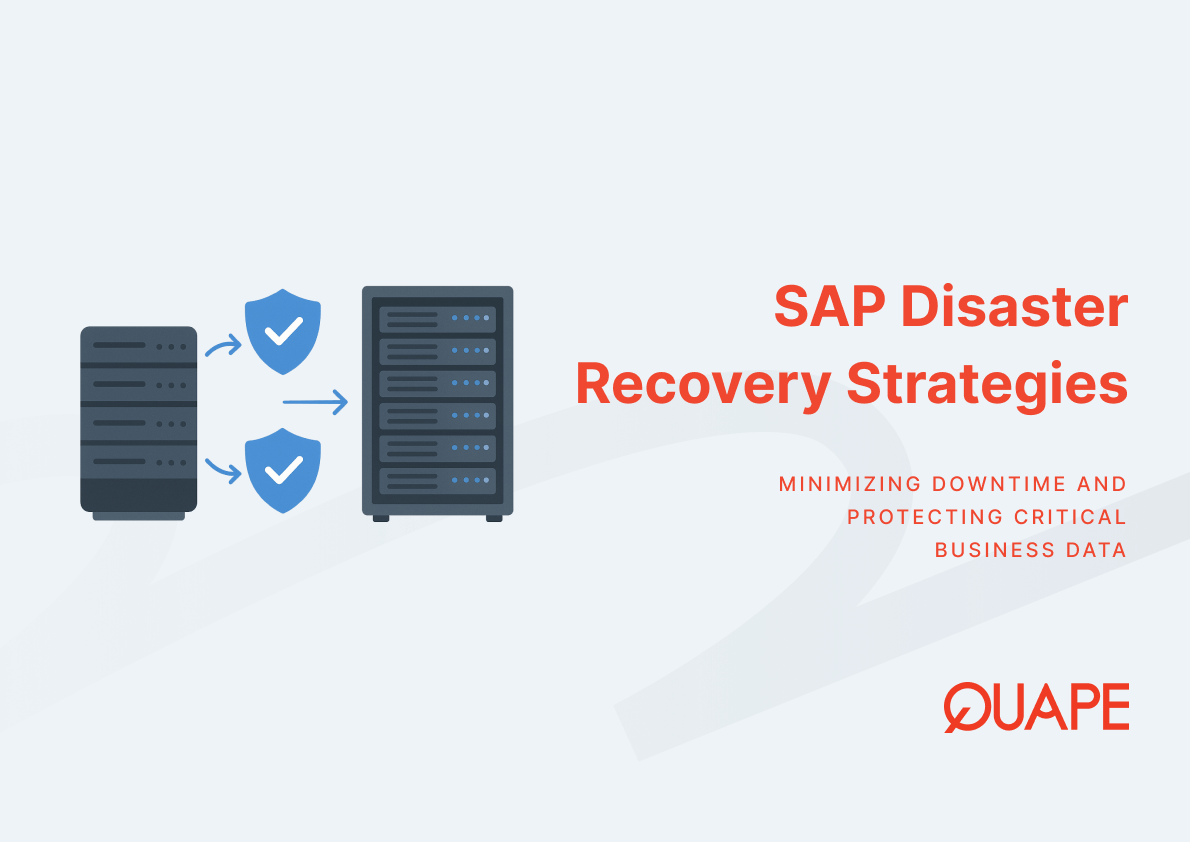
Secondary site replication copies SAP HANA database content from a primary site to a geographically separated secondary site, ensuring that transactional data survives site-level failures. Replication mode selection depends on RPO tolerance and network latency between sites. Synchronous replication writes data to both primary and secondary sites before confirming transaction completion, achieving near-zero RPO at the cost of increased transaction latency and heightened sensitivity to network performance. Asynchronous replication confirms transactions at the primary site before replicating to the secondary, accepting minutes to hours of potential data loss in exchange for lower latency impact.
SAP HANA supports system replication modes optimized for disaster recovery scenarios. Full system replication copies the entire database, including table structures, indexes, and application metadata, enabling secondary sites to assume production workloads with minimal reconfiguration. Organizations must provision sufficient network bandwidth between primary and secondary sites to sustain replication throughput without degrading production performance. Replication lag, the delay between primary site writes and secondary site confirmation, directly translates into RPO exposure and must be monitored continuously.
Geographic separation reduces correlated failure risk by distributing infrastructure across regions with independent power grids, network backbones, and natural disaster exposure. Organizations operating in Singapore benefit from regional data center availability across Southeast Asia, enabling secondary sites in Malaysia, Indonesia, or Thailand to provide geographic diversity while maintaining acceptable latency profiles. However, cross-border replication introduces data residency considerations that must align with regulatory expectations in sectors such as finance and healthcare. Enterprises using SAP multicloud connectivity strategies can leverage multiple cloud providers to distribute disaster recovery infrastructure while maintaining operational flexibility.
Operational and Infrastructure Considerations
Disaster recovery infrastructure requires continuous operational readiness validation. Organizations must conduct regular failover tests that simulate production failure scenarios, ensuring that standby systems can assume workloads without data corruption or performance degradation. Testing exposes under-provisioned secondary sites, configuration drift between primary and secondary environments, and procedural gaps in failover execution. Many enterprises set aggressive RTO and RPO targets on paper but fail disaster recovery tests due to insufficient standby capacity or incomplete replication configurations.
Infrastructure resilience extends beyond database replication to include network connectivity, storage performance, and application-layer dependencies. SAP environments rely on integration layers that connect ERP modules to external systems such as payment gateways, logistics platforms, and business intelligence tools. Disaster recovery plans must account for these dependencies, ensuring that secondary sites maintain connectivity to third-party services and that failover procedures restore integration endpoints alongside core SAP functionality.
Impact of Latency and Geography on SAP DR
Network latency between primary and secondary sites constrains replication mode selection and affects user experience during failover scenarios. Synchronous replication requires round-trip network latency low enough to avoid degrading transaction performance. In Singapore, where dense fiber connectivity supports sub-millisecond latency to regional data centers, synchronous replication remains viable for local disaster recovery architectures. Organizations replicating to more distant secondary sites must accept asynchronous replication and the associated RPO exposure.
User experience during failover depends on the geographic proximity between users and the secondary site. If the primary site serves users in Singapore and the secondary site operates in a distant region, post-failover latency may degrade application responsiveness even after successful recovery. Organizations should evaluate SAP hosting latency profiles when selecting secondary site locations, balancing geographic diversity against user proximity to minimize performance impact during disaster recovery events.
Regional data center selection also influences disaster recovery cost structures. Dense urban regions such as Singapore offer strong connectivity and infrastructure reliability but concentrate risk within shared power and network ecosystems. Multi-site designs that distribute secondary sites across independent infrastructure zones mitigate this risk while increasing operational complexity. Enterprises using Singapore data center SAP hosting can combine local high availability with remote disaster recovery to optimize both performance and resilience.
Security and Compliance in Disaster Recovery Scenarios
Data protection requirements apply equally to primary and secondary sites. Disaster recovery architectures must enforce encryption for data at rest and in transit, ensuring that replicated data remains protected during transmission and storage at secondary locations. Access control mechanisms must authenticate users and services attempting to connect to standby systems, preventing unauthorized access during failover events when security monitoring may be disrupted.
Regulatory compliance frameworks in Singapore mandate specific controls around data residency, audit logging, and incident response. Organizations subject to the Personal Data Protection Act (PDPA) or Monetary Authority of Singapore (MAS) Technology Risk Management guidelines must ensure that disaster recovery configurations align with regulatory expectations. Secondary sites processing Singapore-resident data may face geographic restrictions that limit site placement options, requiring enterprises to balance compliance obligations against disaster recovery objectives. Providers offering SAP hosting security 和 SAP hosting compliance capabilities integrate these requirements into infrastructure design, reducing the burden of manual compliance validation.
Practical Application for SAP Disaster Recovery in Singapore
Singapore’s regulatory environment, infrastructure density, and regional connectivity create specific considerations for SAP disaster recovery planning. Data residency requirements in regulated industries may restrict secondary site placement to in-country data centers or require explicit cross-border data transfer agreements. Organizations must evaluate whether disaster recovery architectures can meet both operational resilience goals and regulatory compliance obligations without creating mutually exclusive constraints.
Local regulations around system availability and business continuity planning vary by sector. Financial institutions face stricter expectations than general commercial enterprises, with regulatory frameworks mandating documented disaster recovery procedures, regular testing, and demonstrated recovery capability within predefined RTO windows. Enterprise IT planning must integrate these regulatory requirements into disaster recovery architecture design, ensuring that standby infrastructure, replication configurations, and failover procedures satisfy both business continuity goals and regulatory scrutiny.
Singapore’s position as a regional business hub supports disaster recovery strategies that leverage cross-border infrastructure while maintaining local operational control. Organizations can establish primary sites in Singapore to serve regional users while positioning secondary sites in neighboring countries to achieve geographic diversity. This approach balances latency optimization with risk distribution, enabling enterprises to maintain low RTO targets while protecting against site-level failures. Businesses exploring SAP hosting Singapore benefits can assess how local infrastructure capabilities align with disaster recovery planning objectives.
How Managed SAP Hosting Supports SAP Disaster Recovery
Managed SAP hosting integrates disaster recovery capabilities into infrastructure design, reducing the operational complexity of standby site provisioning, replication configuration, and failover orchestration. Managed service providers maintain pre-configured secondary environments, establish replication pipelines, and conduct regular failover testing as part of service delivery. This shifts disaster recovery responsibility from internal IT teams to specialized providers with dedicated SAP infrastructure expertise.
SAP infrastructure operations in managed hosting environments include continuous monitoring of replication health, automated alerting for replication lag or synchronization failures, and proactive capacity management to ensure standby systems remain adequately provisioned. Managed services reduce the risk of configuration drift between primary and secondary sites by standardizing infrastructure deployment and maintaining operational parity through centralized management platforms.
Organizations using 托管 SAP 主机 can define RTO and RPO requirements during service design, allowing providers to architect disaster recovery solutions that align with business impact tolerance. Managed environments also simplify compliance validation by incorporating security controls, audit logging, and regulatory alignment into infrastructure templates, reducing the manual effort required to demonstrate disaster recovery readiness during regulatory assessments.
Conclusion & Next Steps for SAP Disaster Recovery Strategy
SAP disaster recovery planning translates business continuity requirements into infrastructure architecture, replication protocols, and operational readiness procedures that protect mission-critical workloads from disruptive failure scenarios. Organizations must balance RTO and RPO targets against infrastructure cost, recognize the operational trade-offs between standby models, and validate disaster recovery capabilities through regular testing. In Singapore, where regulatory expectations and infrastructure density shape planning decisions, aligning disaster recovery strategy with managed services can reduce complexity while maintaining operational resilience.
For organizations planning resilient SAP operations in Singapore, aligning disaster recovery architecture with managed infrastructure can reduce risk and operational complexity. To explore how a managed environment can support SAP disaster recovery and long-term availability, learn more about Managed SAP Hosting at https://www.quape.com/products/managed-sap-hosting/. If you want to assess your current readiness or discuss a tailored strategy, feel free to reach out to us at https://www.quape.com/contact-us/.
常见问题 (FAQ)
What is the difference between high availability and disaster recovery for SAP systems?
High availability reduces the likelihood of outages within a single data center by eliminating single points of failure through redundant hardware and failover clustering. Disaster recovery addresses site-level failures by replicating data and maintaining standby infrastructure at geographically separated locations. Both strategies complement each other in comprehensive resilience architectures.
How do I determine the right RPO and RTO targets for my SAP environment?
Start by quantifying the financial and operational impact of SAP downtime across different business units and transaction types. Map these impacts to acceptable data loss and recovery time windows, then validate targets against infrastructure cost and operational feasibility. Regulatory requirements in your sector may impose minimum targets that override cost considerations.
Can I implement disaster recovery for SAP HANA without duplicating my entire infrastructure?
Yes. Warm standby configurations maintain database replication and partial infrastructure readiness without fully duplicating production environments. You can also tier disaster recovery by applying stricter recovery targets to critical SAP modules while accepting longer recovery windows for lower-priority workloads.
How does network latency affect SAP disaster recovery replication?
Network latency determines whether synchronous or asynchronous replication is viable. Synchronous replication requires low latency to avoid degrading transaction performance, making it suitable for regional disaster recovery within Singapore and nearby countries. Higher latency connections necessitate asynchronous replication, which increases RPO exposure but reduces performance impact.
What role does failover testing play in disaster recovery readiness?
Failover testing validates that standby systems can assume production workloads without data corruption or performance degradation. Regular testing exposes configuration drift, under-provisioned capacity, and procedural gaps before actual disaster events occur. Organizations should conduct tests at least annually, with more frequent testing for systems with aggressive RTO targets.
How do Singapore’s data residency regulations affect disaster recovery planning?
Regulated industries such as finance and healthcare may face restrictions on cross-border data replication that limit secondary site placement options. Organizations must evaluate whether disaster recovery architectures can achieve geographic diversity while satisfying data residency requirements, potentially requiring in-country secondary sites or explicit regulatory approvals for cross-border replication.
Can managed SAP hosting providers handle disaster recovery failover on my behalf?
Yes. Managed service providers can execute failover procedures during disaster events based on predefined escalation protocols and service level agreements. This reduces recovery time by eliminating internal coordination overhead and leverages provider expertise in SAP infrastructure operations. Organizations retain decision authority while delegating technical execution to specialized teams.
What backup strategies should complement SAP disaster recovery architectures?
Disaster recovery replication protects against site-level failures but does not replace traditional backup strategies that protect against data corruption, accidental deletion, or ransomware attacks. Organizations should maintain independent backup repositories with retention policies that support point-in-time recovery for scenarios where replication alone is insufficient.