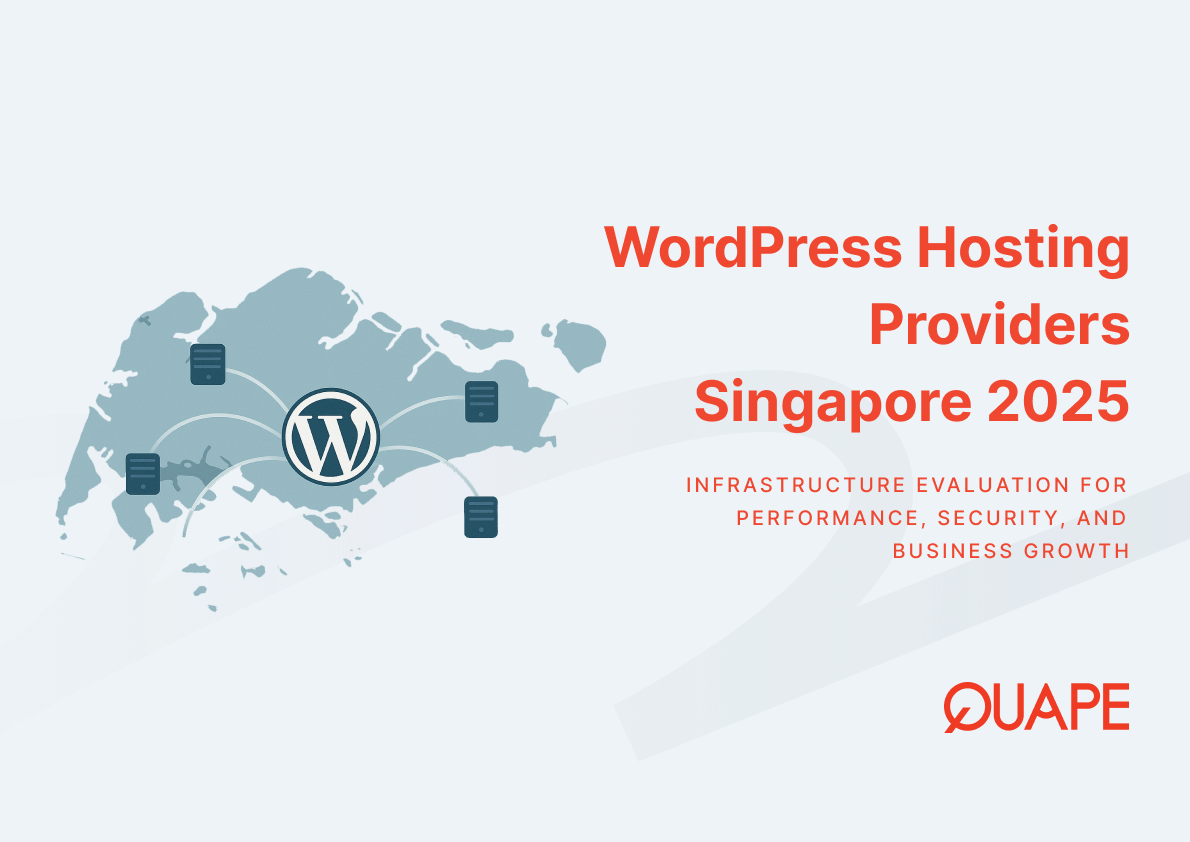
Choosing WordPress hosting in Singapore requires evaluating how local infrastructure constraints, connectivity advantages, and provider capabilities align with business requirements. Singapore’s data center market operates under unique conditions that directly affect hosting performance, pricing, and scalability. With vacancy rates near 2% and utilization approaching 99%, infrastructure scarcity creates upward pressure on costs while the city-state’s 26+ submarine cable connections deliver exceptional regional connectivity for Asia-Pacific operations. IT managers and procurement teams must assess how providers navigate these market dynamics while delivering speed, security, and reliable support for business-critical WordPress sites.
What WordPress Hosting Means in Singapore’s Infrastructure Context
WordPress hosting refers to infrastructure services specifically configured to support WordPress installations with optimized server environments, automated security updates, and performance enhancements. In Singapore, this service operates within a constrained supply environment where live IT capacity reached 1,039 MW by Q4 2024, yet projected growth of 8% CAGR through 2028 may not match demand from SMEs, e-commerce platforms, and AI workloads. Providers must balance performance requirements against infrastructure costs averaging US$0.281 per kWh, significantly higher than regional alternatives.
The relationship between WordPress hosting quality and underlying data center infrastructure determines how effectively sites handle traffic spikes, maintain uptime during regional network fluctuations, and deliver content to distributed user bases across Southeast Asia. Providers leveraging TIA-942 certified facilities with redundant power systems and multiple upstream connections can sustain operations even when individual network paths experience degradation.
Key Takeaways
- Singapore’s 2% data center vacancy rate and 99% utilization levels create supply constraints that influence WordPress hosting pricing and capacity planning
- NVMe storage with high IOPS configurations reduces database query latency, directly improving Core Web Vitals scores and search visibility
- Managed security updates address CVE vulnerabilities before exploitation, reducing incident response costs for SMEs without dedicated security teams
- Local data center presence reduces latency for Singapore and Malaysia traffic by 40-60ms compared to Sydney or Tokyo-based infrastructure
- Multiple upstream provider connections maintain site accessibility during regional network disruptions affecting single-carrier routing paths
- VPS migration pathways support scaling from standard WordPress hosting to isolated resource environments when traffic exceeds shared hosting thresholds
- IMDA’s green data center roadmap requiring PUE ≤ 1.3 may constrain new capacity expansion while improving long-term operational sustainability
Key Components of WordPress Hosting Evaluation Criteria
Performance Factors: Speed, NVMe Storage, and Server Optimization
NVMe disk technology eliminates storage bottlenecks that traditionally slow WordPress database operations during concurrent user sessions. High IOPS configurations enable the database to process multiple queries simultaneously without queuing delays, which becomes critical when WooCommerce transactions or content management operations execute complex joins across product catalogs and customer records. Server optimization for WordPress extends beyond storage to include PHP-FPM process management, OPcache configurations, and query caching strategies that reduce server response time before content reaches the browser.
Core Web Vitals measurement by Google’s ranking algorithm creates direct connections between hosting infrastructure and search visibility. When servers deliver Largest Contentful Paint under 2.5 seconds and minimize Cumulative Layout Shift, sites gain ranking advantages over competitors using slower infrastructure. Organizations can examine how server location influences WordPress SEO performance when evaluating geographic placement options, while implementation tactics for improving WordPress speed through hosting choices address the technical configurations that translate hardware capabilities into measurable page load improvements.
Security and Managed Protection Features
Managed hosting eliminates the operational burden of tracking CVE vulnerabilities across WordPress core, theme files, and plugin dependencies. When security researchers publish exploit code for vulnerabilities like those affecting WooCommerce payment processing or contact form plugins, managed providers apply patches before automated scanning tools used by malicious actors can identify vulnerable installations. This protection timeline matters because the window between public disclosure and mass exploitation often spans just 24-72 hours.
Malware protection extends beyond patching to include file integrity monitoring that detects unauthorized modifications to core WordPress files. When attackers compromise sites through outdated plugins, they frequently inject code into wp-config.php or theme files to maintain persistent access. Managed providers detect these modifications and can restore clean configurations using automated security checklists, preventing the site from being used to distribute malware or participate in botnet operations. The integration of SSL certificates with WordPress hosting further secures data transmission while meeting browser requirements that mark non-HTTPS sites as unsafe.
Reliability: Uptime, Local Support & SLA Guarantees
Uptime monitoring integrates with incident response procedures to minimize disruption when hardware failures, network events, or software misconfigurations affect site availability. TIA-942 data centers implement redundant power distribution paths, N+1 cooling systems, and multiple fiber entry points to eliminate single points of failure. These physical infrastructure investments support SLA guarantees by ensuring that component failures do not cascade into service outages affecting customer-facing WordPress installations.
Support team responsiveness becomes particularly valuable during traffic surges that push sites beyond their provisioned resource allocations. When a marketing campaign drives unexpected visitor volumes or a content piece achieves viral distribution, local engineering teams can rapidly adjust resource limits or implement caching strategies to maintain performance. Singapore-based support teams understand regional business contexts and can coordinate responses during local business hours, as explored in guides covering local support advantages for WordPress hosting. Organizations can also learn strategies to prevent WordPress downtime through proactive monitoring and resource management.
Scalability and Traffic Handling for Business Growth
VPS hosting provides isolated resource environments that prevent neighboring sites from consuming CPU or memory needed for stable operation. This isolation becomes essential when WordPress installations grow beyond the resource limits of shared hosting, typically occurring when monthly visitor counts exceed 50,000 or when WooCommerce processes hundreds of daily transactions. Resource allocation flexibility allows organizations to adjust server specifications without migration downtime, supporting business growth without infrastructure disruptions.
WooCommerce scalability depends on how hosting environments handle database write operations during checkout processes, inventory updates, and order fulfillment workflows. When shared hosting environments experience I/O contention, checkout pages slow or timeout, directly impacting revenue. Organizations evaluating growth trajectories can review approaches for choosing WordPress hosting based on traffic and storage requirements and explore how managed hosting supports WooCommerce scaling through optimized database configurations and dedicated resource pools.
Review of Top WordPress Hosting Providers in Singapore
Quape: Underrated Local Expertise with TIA-942 Infrastructure
Quape operates from TIA-942 certified Singapore data centers with multiple upstream provider connections, delivering infrastructure reliability that remains underappreciated in a market dominated by international brands. The provider’s managed WordPress hosting combines NVMe storage with high IOPS configurations specifically optimized for WordPress database operations, enabling faster query execution during concurrent user sessions. Security updates applied monthly address CVE vulnerabilities before exploit tools reach automated scanning phases, while daily backups with one-click restore protect against data loss from plugin conflicts or user errors.
Migration services eliminate technical barriers for organizations transitioning from existing providers, with technical teams assessing compatibility issues and optimization opportunities before transfers occur. Content update services included in enterprise plans reduce operational burden for marketing teams requiring regular modifications without WordPress expertise. The provider’s Singapore-based support team delivers responses during local business hours with understanding of regional business contexts, particularly valuable during traffic surges or technical incidents requiring rapid intervention.
Pricing structures remain competitive against international providers while delivering local infrastructure advantages in latency and support responsiveness. Organizations can learn more about WordPress hosting solutions spanning single-site deployments to multi-site enterprise installations, with scalability pathways supporting VPS migration when traffic growth exceeds shared hosting thresholds. Comprehensive guidance on WordPress hosting selection appears in resources covering WordPress hosting strategies for Singapore businesses.
Vodien: Local Infrastructure and Enterprise-Grade Reliability
Vodien operates data center facilities in Singapore with direct connectivity to local internet exchanges, reducing latency for traffic originating from Singapore and Malaysia. The provider’s infrastructure supports enterprise hosting requirements through dedicated server options and managed services that include proactive monitoring and incident response. SLA commitments backed by Singapore-based technical teams provide reassurance for organizations requiring contractual uptime guarantees.
The provider’s focus on enterprise segments means pricing structures typically exceed SME budgets, with entry-level plans starting above the price points that small businesses allocate for hosting. Organizations with compliance requirements or governance mandates favoring local data residency may find Vodien’s Singapore infrastructure addresses regulatory constraints that cloud providers with ambiguous data location policies cannot satisfy.
Exabytes: SME-Focused Features and Pricing Considerations
Exabytes positions its WordPress hosting offerings for SMEs through pricing tiers that balance basic performance requirements against cost constraints typical of small business technology budgets. Backup features included in standard plans provide recovery options when sites experience data loss from user error, plugin conflicts, or security incidents. The provider’s regional presence across Southeast Asia enables organizations planning multi-country operations to maintain consistent hosting environments.
Performance characteristics of Exabytes’ shared hosting environments may not satisfy sites experiencing rapid traffic growth or requiring consistently fast response times during peak usage periods. Organizations can explore WordPress hosting cost breakdowns to understand how pricing tiers correlate with performance specifications and support levels across different providers.
Hostinger: Performance Optimization and International Reach
Hostinger combines performance optimization technologies with global hosting infrastructure spanning multiple continents. CDN integration included in higher-tier plans distributes static assets across edge locations, reducing load times for international visitors accessing content from regions distant from origin servers. This international reach supports organizations with distributed customer bases requiring fast content delivery across Asia-Pacific and beyond.
The provider’s infrastructure operates primarily outside Singapore, which introduces latency considerations for traffic originating from Singapore and Malaysia. Organizations must evaluate whether CDN edge caching compensates for origin server distance when assessing local versus global WordPress hosting trade-offs. Implementation of CDN integration with WordPress in Singapore can mitigate some distance-related latency while introducing complexity in cache invalidation and content updates.
SiteGround: Advanced WordPress Toolkit and Developer Features
SiteGround provides WP Toolkit integration that enables developers to manage multiple WordPress installations through unified interfaces supporting plugin updates, security scanning, and staging environment provisioning. Staging environments allow developers to test theme modifications, plugin upgrades, and code changes without affecting production sites. These developer tools reduce deployment risks and support agile development workflows requiring frequent iteration.
Infrastructure location presents similar considerations to Hostinger, with primary data centers operating outside Singapore. Developer teams valuing toolkit sophistication over minimal latency may find SiteGround’s feature set justifies slightly higher response times for Singapore traffic. Organizations can review cPanel and server management approaches for WordPress to understand how control panel interfaces affect operational efficiency.
Practical Evaluation for Singapore Businesses
SMEs evaluating WordPress hosting providers should map their operational requirements against infrastructure realities affecting the Singapore market. IT managers must consider how supply constraints in local data centers translate to pricing premiums, whether those premiums deliver measurable benefits in latency and support responsiveness, and how provider infrastructure aligns with projected traffic growth. Procurement teams should verify that SLA commitments include financial credits for downtime, confirm backup retention policies meet recovery point objectives, and assess whether migration assistance reduces transition risks.
Local data center presence provides quantifiable latency advantages for Singapore traffic, typically reducing first-byte response times by 40-60ms compared to Sydney or Tokyo locations. This latency reduction directly affects Core Web Vitals measurements and user experience metrics like bounce rate and session duration. Organizations can explore how Singapore data centers support WordPress hosting requirements through infrastructure specifications and connectivity arrangements.
Conclusion
WordPress hosting selection in Singapore requires understanding how infrastructure supply constraints, connectivity advantages, and provider capabilities interact to deliver performance, security, and reliability. Organizations balancing cost considerations against operational requirements should evaluate provider infrastructure locations, assess managed security coverage against internal capabilities, and verify that scalability pathways support projected growth without forced migrations. Singapore’s position as a regional connectivity hub with 26+ submarine cables creates compelling advantages for businesses serving Asia-Pacific markets, provided hosting providers leverage local infrastructure effectively. Contact our sales team to discuss how managed WordPress hosting can support your business requirements with performance optimizations, security coverage, and scalability pathways aligned with growth objectives.
Frequently Asked Questions
Why does data center location in Singapore matter for WordPress hosting performance?
Singapore’s position as a regional connectivity hub with 26+ submarine cables reduces latency for traffic across Southeast Asia, typically delivering 40-60ms faster first-byte response times compared to Sydney or Tokyo infrastructure. This latency reduction directly improves Core Web Vitals measurements that influence Google rankings. Local hosting also ensures consistent performance during peak Asia-Pacific business hours when network congestion can slow international connections.
How do NVMe drives specifically improve WordPress site speed compared to traditional SSD storage?
NVMe technology delivers substantially higher IOPS than SATA SSDs, eliminating storage bottlenecks during concurrent database operations. When WordPress processes multiple user sessions, plugin operations, or WooCommerce transactions simultaneously, NVMe drives handle parallel queries without introducing latency from I/O queuing. This translates to faster page generation times, especially on content-heavy sites with complex database queries.
What security risks justify paying for managed WordPress hosting versus self-managed options?
Managed hosting providers monitor CVE databases and apply security patches within 24-72 hours of vulnerability disclosure, the critical window before automated exploit tools begin mass scanning. Self-managed hosting requires internal staff to track vulnerabilities across WordPress core and dozens of plugins, update installations during maintenance windows, and verify compatibility after patches. For SMEs without dedicated security personnel, managed protection reduces breach risk and incident response costs.
When should a business migrate from shared WordPress hosting to VPS environments?
VPS migration becomes necessary when monthly traffic consistently exceeds 50,000 visitors, WooCommerce processes hundreds of daily transactions, or resource limits cause performance degradation during traffic spikes. Shared hosting environments experience CPU and memory contention when neighboring sites consume resources, leading to slow page loads or timeout errors. VPS environments provide isolated resources that scale independently of other customers.
How does Singapore’s data center supply constraint affect WordPress hosting pricing and availability?
With vacancy rates near 2% and utilization at 99%, Singapore’s data center market operates under supply pressure that increases infrastructure costs. Providers must bid competitively for rack space and power allocations, driving hosting prices above regional alternatives in Malaysia or Thailand. Power costs averaging US$0.281 per kWh further increase operational expenses. Organizations must evaluate whether latency and connectivity advantages justify premium pricing.
What backup retention policies should businesses require from WordPress hosting providers?
Daily backups with 30-day retention enable recovery from recent changes that introduce conflicts or data loss. Organizations should verify that backup processes include database dumps, uploaded media files, theme customizations, and plugin configurations. Restoration procedures should complete within 2-4 hours for standard sites, with testing protocols confirming backup integrity. Enterprise requirements may demand longer retention periods and point-in-time recovery capabilities.
How do multiple upstream provider connections improve WordPress site reliability?
When hosting providers maintain connections with three or more internet service providers, site accessibility persists during network events affecting individual carriers. Regional fiber cuts, BGP routing issues, or provider-specific outages impact sites relying on single upstream connections. Multiple providers enable automatic failover through BGP route advertisements, maintaining site availability without manual intervention. This redundancy particularly matters for e-commerce sites where downtime directly impacts revenue.
What performance metrics should businesses track to evaluate WordPress hosting effectiveness?
Core Web Vitals including Largest Contentful Paint, First Input Delay, and Cumulative Layout Shift provide Google-recognized performance measurements affecting search rankings. Time to First Byte indicates server response speed before content delivery begins. Server response time during traffic spikes reveals how hosting environments handle load variations. Organizations should also monitor uptime percentage, error rates, and database query execution times to identify performance bottlenecks requiring infrastructure adjustments.