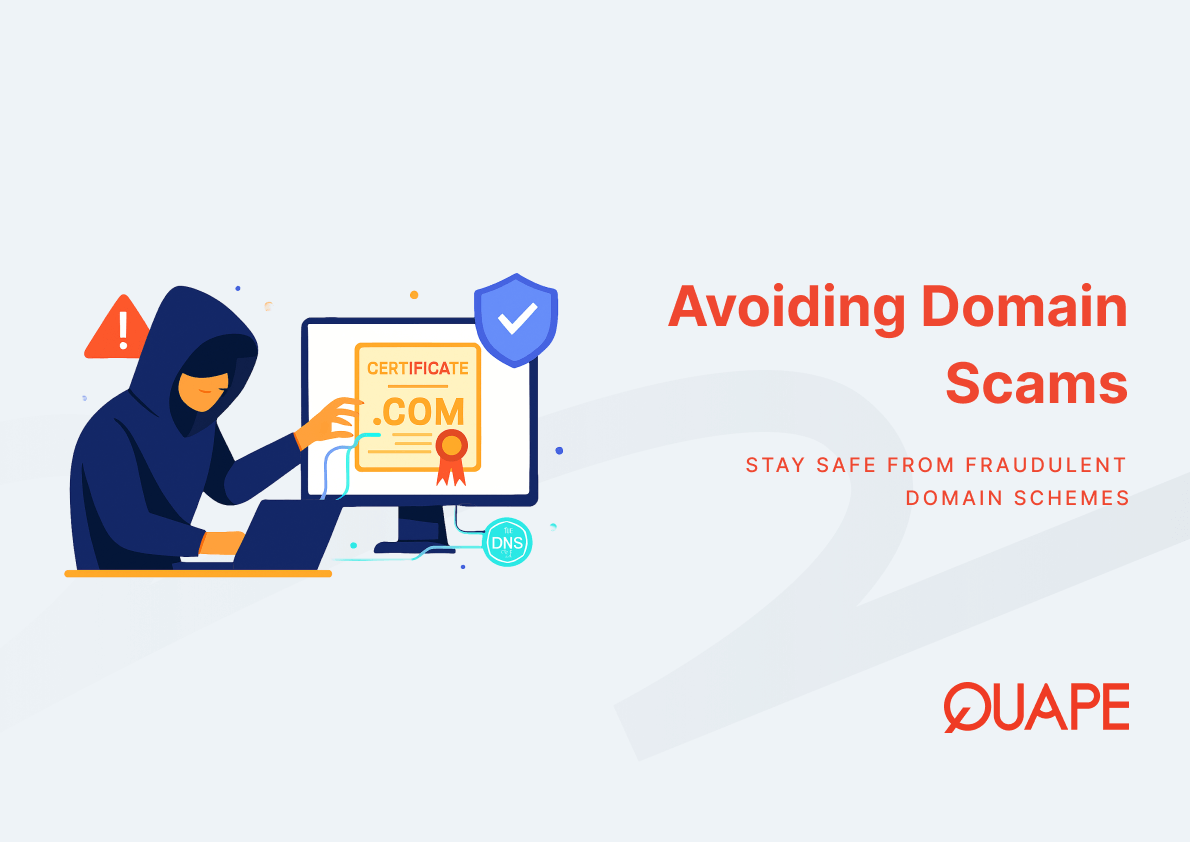
Domain registration scams represent a growing threat to businesses across Singapore and Southeast Asia, exploiting vulnerabilities in how organizations manage digital assets. These scams range from phishing emails that impersonate legitimate registrars to deceptive transfer notices designed to steal domain control. For IT managers and CTOs, understanding how attackers manipulate domain lifecycle processes, WHOIS data, and trust relationships is essential to protecting brand integrity and operational continuity. The financial and reputational damage from successful domain fraud extends beyond immediate costs, affecting customer trust and regulatory compliance. This guide provides a practical framework for identifying, preventing, and responding to domain registration scams.
Domain registration scams encompass fraudulent schemes where attackers deceive domain owners into transferring, renewing, or purchasing domains through falsified communications. These scams exploit the open nature of domain registration systems, where minimal verification enables bad actors to register thousands of domains for malicious purposes. According to ICANN research, approximately 1.54 million domains were reported for phishing over a recent 12-month period, with 77% of these domains maliciously registered rather than compromised after legitimate use. This distinction matters because it shifts defensive strategy from protecting existing assets to scrutinizing registration processes and vendor relationships.
Key Takeaways
- Domain slamming uses fake expiration notices and WHOIS data to trick registrants into unauthorized transfers or inflated renewal payments
- Phishing schemes impersonate registrars and governance bodies like ICANN to harvest credentials and payment information
- Maliciously registered domains account for 77% of phishing activity, indicating organized abuse at the registration stage
- Public WHOIS data provides attackers with contact details needed to craft convincing impersonation attempts
- Domain scams erode administrative control, increase operational costs, and expose organizations to compliance risks
- Centralized domain management with registry locks and privacy shields reduces exposure to transfer fraud
- Singapore-based registrars accredited by SGNIC provide additional accountability layers for .sg and .com.sg domains
- Automated renewal systems eliminate manual payment cycles that scammers exploit through fake urgency tactics
Introduction to Domain Registration Scams
Domain registration scams target the administrative and financial processes that maintain domain ownership. Attackers exploit weaknesses in DNS infrastructure, registrar communication channels, and organizational procurement workflows to gain unauthorized access or extract fraudulent payments. ICANN, the nonprofit coordinating body for domain name systems, does not collect renewal fees directly but serves as a frequent impersonation target because its brand signals authority. When selecting appropriate domain strategies, understanding these threat vectors helps organizations build resilience into their digital asset management.
The DNS ecosystem operates on distributed trust, where registrars manage customer relationships while registries maintain authoritative databases for specific top-level domains. This separation creates communication gaps that scammers exploit by impersonating either party. An attacker might send an email appearing to come from a registry, demanding immediate payment to prevent domain expiration, when in reality renewals occur through the registrar of record. The technical complexity of DNS delegation obscures accountability, making it difficult for non-technical recipients to verify legitimacy.
Public WHOIS databases, which historically provided transparent contact information for domain registrants, supply scammers with the data needed for targeted campaigns. Although privacy protection services now shield many registrant details, legacy domains and certain TLD requirements still expose administrative contacts. When combined with scraped corporate directory information, attackers craft personalized phishing attempts that reference specific domains, renewal dates, and organizational structures. Organizations running VPS infrastructure face elevated risk because domain control directly affects server accessibility and application routing.
Key Components of Domain Registration Scams
Phishing-Based Domain Scams
Phishing schemes use forged emails that mimic legitimate registrar or governance communications to harvest credentials, payment data, or administrative access. These emails often include authentic-looking branding, urgent language about domain expiration, and links to spoofed login pages designed to capture authentication details. The attackers then use stolen credentials to initiate unauthorized transfers, modify DNS records, or access associated hosting accounts. Email security systems struggle to block these attempts when attackers register look-alike domains that pass basic authentication checks.
Credential harvesting becomes particularly damaging when domain management credentials grant access to DNS control panels. An attacker with DNS administrative rights can redirect traffic to malicious servers, intercept email, or deploy man-in-the-middle attacks without actually transferring domain ownership. This stealth approach delays detection because the legitimate owner still sees their domain listed in their registrar account. Organizations discover the compromise only when customers report suspicious behavior or monitoring systems detect abnormal DNS query patterns.
Advanced phishing campaigns target specific roles within IT departments, using reconnaissance data to identify individuals responsible for domain renewals or DNS management. These spear-phishing attempts reference internal projects, recent domain registrations, or pending lifecycle events to establish credibility. When an attacker successfully compromises credentials from a senior IT manager, they inherit trust relationships that enable further lateral movement within infrastructure systems.
Domain Slamming Tactics
Domain slamming involves sending deceptive transfer authorization requests or renewal invoices that appear to come from legitimate registrars but actually redirect payments to fraudulent entities. These communications frequently use WHOIS contact data to personalize messages, referencing specific domains and expiration dates to create false urgency. The notices often include confusing language suggesting the recipient must “confirm” or “update” registration details, when in reality the action initiates an unauthorized transfer to a scammer-controlled registrar.
The mechanics of domain transfers provide structural opportunities for slamming because the process requires minimal verification beyond an authorization code and confirmation email. Scammers send fake renewal notices stating that domains will expire unless the recipient completes immediate payment, knowing that many administrators prioritize continuity over verification. Once payment is submitted through the fraudulent channel, the attacker may either disappear with the funds or complete a partial transfer that leaves the domain in administrative limbo between registrars.
Slamming attacks exploit information asymmetry between technical and financial stakeholders within organizations. When procurement departments receive what appears to be a routine renewal invoice, they may process payment without consulting IT teams who would recognize the irregularity. This workflow gap becomes especially problematic in organizations managing large domain portfolios, where individual domains may not receive close oversight. Organizations comparing VPS versus shared hosting architectures should apply similar security scrutiny to domain management processes.
Domain Renewal Fraud
Renewal fraud centers on manipulating the expiration cycle that governs domain ownership rights. Legitimate registrars send automated renewal reminders at scheduled intervals before expiration, typically 30, 60, and 90 days in advance. Scammers mimic these reminders but direct payments to fraudulent accounts, often using inflated pricing that exploits the recipient’s urgency to maintain domain continuity. The distinction between registry and registrar roles confuses many domain owners, allowing attackers to pose as either entity with plausible-sounding demands.
Automated renewal systems that charge stored payment methods eliminate the manual intervention points that fraudsters exploit. When organizations rely on manual renewal processes, they create windows where fake notices can intercept legitimate payment flows. The timing of scam attempts often coincides with actual expiration dates, suggesting attackers monitor WHOIS data for domains approaching renewal cycles. This coordination makes fraudulent notices appear more credible because they arrive when recipients expect legitimate communications.
Inflated renewal pricing serves a dual purpose in renewal fraud. First, higher fees increase immediate profit for attackers. Second, dramatic price differences between scam notices and actual registrar fees can prompt victims to “shop around,” leading them to question their current registrar’s legitimacy and potentially fall for additional scams during the comparison process. Transparent pricing structures that clearly separate registration, renewal, and premium service costs reduce confusion that attackers exploit.
Registrar Impersonation Scams
Registrar impersonation involves creating fake companies or websites that mimic established domain service providers. These fraudulent registrars display trust signals like SSL certificates, professional website design, and fabricated customer testimonials to appear legitimate. Unsuspecting domain owners transfer their assets to these fake registrars, losing both domain control and any associated services like DNS hosting or email forwarding. The impersonation becomes especially convincing when attackers clone the visual design and user interface of well-known registrar platforms.
SSL certificates on scam websites create a false sense of security because many users associate the padlock icon with trustworthiness. However, certificate authorities issue SSL certificates to any entity controlling a domain, regardless of that entity’s legitimacy or business practices. Attackers register domains with names similar to legitimate registrars, obtain valid SSL certificates, and construct phishing sites that pass superficial security checks. This technique exploits the gap between transport security and entity authentication.
Brand impersonation extends beyond visual design to include customer service channels. Scammers set up phone numbers, live chat systems, and email addresses that mirror legitimate registrar support infrastructure. When victims contact these fake support channels to verify suspicious communications, they receive confirmation from the attackers themselves, closing the loop of deception. Organizations should verify registrar credentials through independent channels, such as checking accreditation databases maintained by ICANN or regional registry operators like SGNIC for Singapore domains.
How Domain Scams Exploit Technical and Organizational Gaps
IT governance structures often separate domain management from broader infrastructure oversight, creating accountability gaps that scammers exploit. When domain registration responsibilities fall between network operations, procurement, and security teams, no single stakeholder maintains comprehensive visibility into the domain portfolio. This fragmentation enables unauthorized changes because no individual monitors domain status, transfer requests, or unusual billing patterns consistently.
Procurement workflows designed for physical goods or standard services poorly accommodate domain-specific requirements like transfer authorization codes and registrar change procedures. Generic purchase order systems treat domain renewals as routine expenses, bypassing technical review that would catch fraudulent notices. When finance teams process domain-related invoices without IT validation, they operate without the context needed to distinguish legitimate registrar communications from sophisticated scams.
DNS management complexity obscures the relationship between domain registration, name server configuration, and application availability. Many organizations maintain domains at one registrar while hosting DNS records elsewhere, complicating the verification of legitimate communications. Attackers exploit this distributed architecture by targeting the weakest link in the chain, whether that’s a poorly secured registrar account, exposed DNS management credentials, or uninformed personnel responding to fake urgency. Organizations designing strategic VPS architectures should integrate domain security into their broader infrastructure security model.
Access control limitations in domain management systems enable single points of failure. When one administrator holds exclusive control over domain accounts, their compromise grants attackers complete authority over organizational digital assets. Multi-factor authentication, role-based access controls, and separation of duties reduce this concentration risk. However, many registrar platforms offer limited support for enterprise access management, forcing organizations to rely on shared credentials or informal coordination among IT staff.
Risk Indicators IT Managers and SMEs Should Watch For
Abnormal billing requests represent a primary indicator of domain scams. Legitimate registrars maintain consistent pricing structures and communicate renewal fees well in advance through established channels. Unexpected invoices with dramatically different amounts, urgent payment deadlines, or unfamiliar payment methods warrant immediate verification. Requests to pay via wire transfer, cryptocurrency, or prepaid cards especially signal fraud because legitimate registrars support standard credit card or electronic payment systems.
Domain lifecycle events create opportunities for scam insertion. Transfer requests, registrar changes, or bulk domain modifications that occur without corresponding internal authorization indicate potential compromise. Organizations should implement change control processes that require multiple approvals for domain administrative actions, similar to production environment changes in software deployment. Automated notifications that alert security teams to domain status changes enable rapid response when unauthorized activities occur.
Social engineering tactics targeting non-technical staff reveal attempts to bypass security controls. When attackers contact finance or administrative personnel directly rather than established IT channels, they exploit knowledge gaps about domain management norms. Requests to “verify” domain information, “confirm” payment details, or “update” registration data through unusual methods indicate phishing attempts. Training programs that educate all staff about domain scam patterns reduce the success rate of these socially engineered attacks.
Suspicious sender addresses, even when superficially resembling legitimate registrar domains, provide detection opportunities. Attackers register domains like “secure-registrar-services.com” to impersonate “registrar-services.com,” counting on recipients to skim rather than carefully examine sender information. Email authentication technologies like SPF, DKIM, and DMARC help identify spoofed messages, but organizations must actively configure these protections and train staff to check authentication headers when suspicious.
Practical Prevention Framework for Singapore Businesses
Singapore-based organizations benefit from SGNIC’s registrar accreditation system, which establishes baseline operational standards for .sg and .com.sg domain providers. Accredited registrars demonstrate compliance with local policies, maintain dispute resolution procedures, and participate in governance structures that provide accountability. When selecting domain service providers, verifying SGNIC accreditation reduces exposure to fly-by-night operators who may facilitate or directly engage in fraudulent practices.
The .sg domain namespace includes additional verification requirements compared to global TLDs like .com or .net. Singapore citizens and permanent residents must provide NRIC or FIN documentation, while businesses need valid UEN registration from ACRA. These verification barriers increase registration friction but also raise the cost of malicious domain registration, making bulk abuse campaigns less economically viable. Organizations prioritizing brand protection should secure .sg and .com.sg variants of critical domains even if primary operations use .com addresses.
Compliance frameworks governing data protection and financial transactions in Singapore extend to domain management practices. The Personal Data Protection Act influences how registrar handle WHOIS information and customer communications, while payment processing regulations affect how legitimate renewal fees are collected. Organizations can leverage these regulatory requirements by verifying that domain service providers maintain appropriate licenses and follow prescribed communication protocols. Deviations from standard compliance practices often indicate scam operations.
Local registrar relationships provide faster incident response compared to international providers operating across multiple time zones. When suspicious domain activity occurs, direct communication channels with Singapore-based technical teams enable rapid investigation and remediation. This operational advantage becomes critical during active attacks where hours of delay can mean the difference between successful domain hijacking and effective defense. Organizations implementing VPS cybersecurity frameworks should extend security partnerships to include domain management providers.
Operational Best Practices to Reduce Domain Scam Exposure
Centralized domain management consolidates administrative control into dedicated platforms that enforce consistent security policies across entire domain portfolios. Rather than managing domains individually through various registrar accounts, organizations should maintain comprehensive inventories that document ownership, expiration dates, associated services, and responsible personnel. This visibility enables proactive monitoring for lifecycle events that might trigger scam attempts.
DNS security extensions like DNSSEC add cryptographic verification to DNS responses, preventing certain types of cache poisoning and man-in-the-middle attacks that compromise domain integrity. While DNSSEC does not directly prevent registration scams, it reduces the impact of successful domain hijacking by making it harder for attackers to redirect traffic after gaining control. Implementation requires coordination between domain registrars and DNS hosting providers to properly sign zone files and maintain key rollover procedures.
Role-based access control limits domain administrative privileges to specific job functions rather than individuals. When multiple team members can perform routine tasks like DNS record updates while only senior administrators can initiate transfers or modify registrar settings, organizations create defense in depth against both external attacks and insider threats. Access logs that record all administrative actions support forensic investigation when suspicious activity occurs.
Registry locks provide an additional transfer prevention mechanism beyond standard authorization codes. When activated, registry locks require out-of-band verification through customer service channels before any transfer can proceed, even if an attacker obtains authorization codes and account credentials. This human-in-the-loop requirement significantly increases the difficulty of automated domain theft campaigns. Organizations managing high-value domains should evaluate registry lock availability as a selection criterion when choosing registrars.
How Secure Domain Registration Supports Scam Prevention
Transparent domain registration pricing eliminates the confusion that renewal fraud exploits. When organizations understand the complete cost structure including initial registration, annual renewals, and premium service fees, they can quickly identify fraudulent invoices that deviate from expected amounts. Registrars that avoid introductory pricing gimmicks maintain consistent fee schedules that establish clear baselines for legitimate charges.
Registrar accountability mechanisms including public ownership information, published security policies, and responsive customer support enable verification when suspicious communications arrive. Organizations should establish authenticated communication channels with their registrars before issues occur, documenting official email addresses, support phone numbers, and secure web portals. This preparation allows rapid verification when fake urgency tactics attempt to bypass normal validation procedures.
Automated renewal systems that charge payment methods on file eliminate manual payment cycles where scam invoices can intercept legitimate transactions. When domains renew automatically 30 days before expiration, organizations remove the urgency window that attackers exploit. Notification systems should still alert administrators about upcoming renewals, but the automatic execution prevents service disruption while maintaining oversight.
Bundled domain and hosting services create operational dependencies that discourage frivolous transfers. When DNS hosting, email services, and domain registration integrate through single provider relationships, transferring domains to fraudulent registrars immediately breaks associated services. This built-in circuit breaker provides early warning of unauthorized changes and increases the complexity required for successful domain hijacking.
Conclusion and Next Steps for Long-Term Domain Protection
Domain registration scams will continue evolving as attackers refine social engineering tactics and exploit new vulnerabilities in registration systems. Organizations protect their digital assets by treating domain management with the same rigor applied to other critical infrastructure components. This includes implementing technical controls like registry locks and DNSSEC, establishing clear governance policies that span IT and finance teams, and maintaining verified relationships with accredited registrars. The accelerating growth in maliciously registered domains indicates that prevention at the registration phase offers better returns than remediation after compromise.
Building infrastructure resilience requires ongoing attention to vendor trust, access management, and lifecycle monitoring. Organizations should conduct regular audits of domain portfolios, verify that all domains use appropriate protective mechanisms, and ensure staff across departments understand how to recognize and report suspicious domain-related communications. By integrating domain security into broader digital asset protection strategies, businesses reduce exposure to scams while improving operational efficiency.
Contact our sales team to discuss how secure domain registration and management can protect your organization from registration scams while supporting your digital infrastructure needs.
Frequently Asked Questions
How can I verify if a domain renewal notice is legitimate?
Check the sender email address against your registrar’s official domain, log into your registrar account directly rather than clicking email links, and compare the invoice amount against your known pricing structure. Legitimate registrars send renewal notices from authenticated domains and never require urgent wire transfers or cryptocurrency payments.
What should I do if I suspect my domain has been compromised?
Immediately contact your registrar through verified support channels to place an administrative hold on the domain. Change all account passwords, enable two-factor authentication if available, and review recent DNS modifications for unauthorized changes. Document the timeline of suspicious activity for potential law enforcement reporting.
Are .sg domains more secure against scams than .com domains?
Singapore .sg domains require identity verification during registration, which increases the barrier to malicious bulk registration compared to .com domains. However, .sg domains still face phishing and slamming attacks targeting existing owners. The verification process provides accountability but does not eliminate scam exposure after initial registration.
How often should organizations audit their domain portfolios?
Conduct comprehensive domain audits quarterly to verify ownership records, confirm appropriate registry locks are enabled, review access permissions, and check that renewal automation functions correctly. High-value domains or those critical to business operations warrant monthly monitoring with automated alerts for any status changes.
Can domain privacy services prevent WHOIS-based scams?
Domain privacy services replace public registrant information with proxy contacts, reducing exposure to WHOIS scraping that feeds targeted scam campaigns. However, privacy services do not prevent scams entirely because attackers also use corporate website information, social engineering, and broad phishing campaigns that do not rely on WHOIS data.
What role does DNS security play in preventing domain scams?
DNS security technologies like DNSSEC and DNS monitoring detect unauthorized changes after domain compromise but do not prevent the initial registration scams. They complement organizational controls by limiting damage from successful attacks, making it harder for attackers to redirect traffic or intercept communications after gaining domain access.
Should domains be managed by IT teams or procurement departments?
Domain management requires collaboration between IT and procurement teams, with IT maintaining technical oversight and procurement handling vendor relationships and payment processing. Split responsibility without clear communication creates the gaps that scammers exploit, so organizations should establish explicit workflows that require both technical and financial validation.
How do registry locks differ from standard registrar locks?
Standard registrar locks prevent transfers through the registrar’s control panel and can typically be disabled by anyone with account access. Registry locks operate at the TLD registry level and require out-of-band verification through customer service before any transfer proceeds, providing protection even if registrar account credentials are compromised.

- Business Email Hosting vs G-Suite / Microsoft 365 - December 29, 2025
- Shared Hosting vs Dedicated Hosting for Email - December 29, 2025
- SMTP vs POP3 vs IMAP: Which Protocol Fits Your Business Workflow - December 28, 2025