Domain renewal pricing operates differently from first-year promotional rates, often catching businesses unprepared when standard fees apply. Understanding how renewal costs are structured, who controls them, and why they increase after the initial registration term helps IT managers and procurement leads forecast digital asset expenses accurately. Registry-level pricing caps exist, but registrar markup and promotional strategies create significant variation in what end customers actually pay. For businesses managing multiple domains or planning long-term digital infrastructure, knowing the mechanics behind renewal cycles, auto-renewal policies, and price-locking options prevents budget surprises and supports better operational planning. The difference between a domain’s lifecycle cost and its advertised first-year price can be substantial, making transparent pricing models essential for cost control.
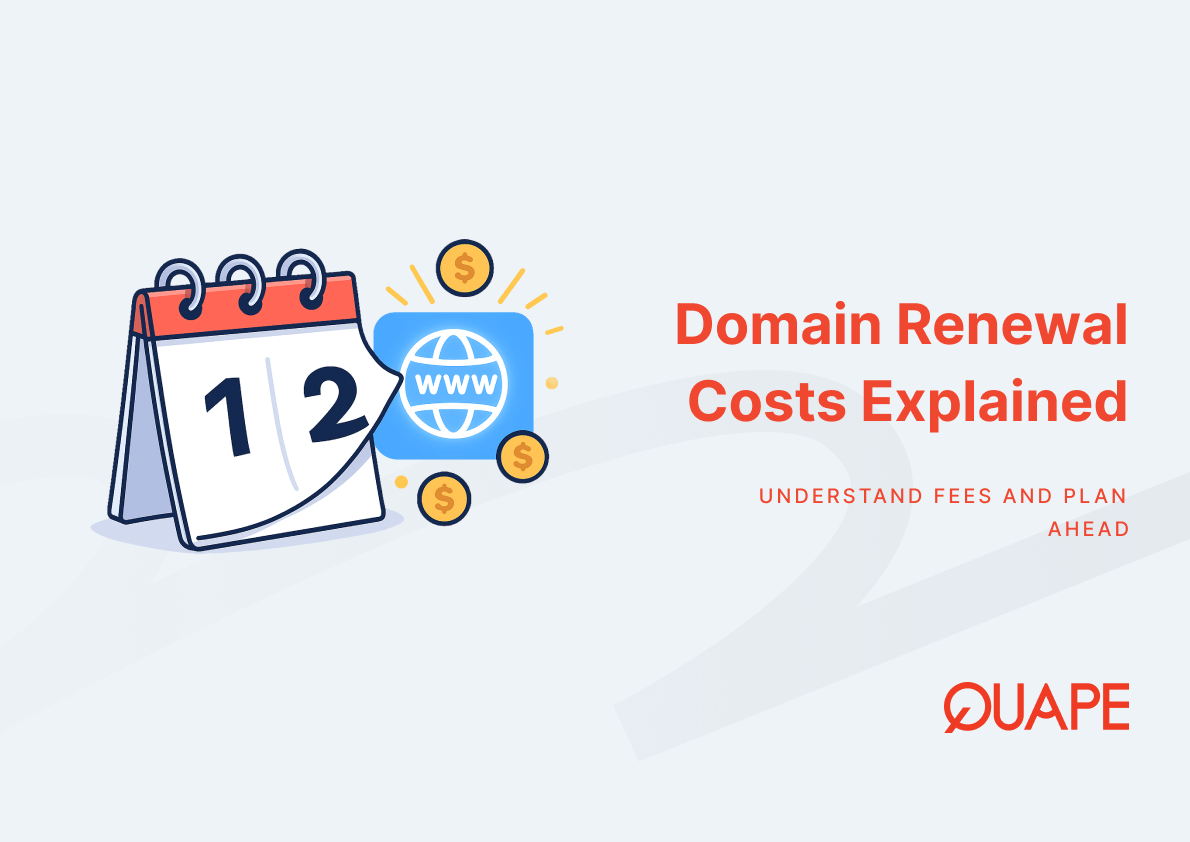
Domain renewal cost represents the fee a domain registrant pays to extend ownership beyond the initial registration term. This cost reflects several components: the registry’s wholesale price for maintaining the domain record, ICANN’s variable fee for gTLDs, and the registrar’s retail markup. Unlike hosting or infrastructure services that scale with usage, domain renewal operates on fixed annual or multi-year cycles, making cost predictability critical for budget planning. The renewal fee structure differs from introductory pricing because registries and registrars use promotional rates to acquire customers, then apply standard pricing to subsequent renewals.
Key Takeaways
- Registry-level renewal fees for .com domains are capped at US $10.26 per domain per year at the wholesale level, but retail prices vary based on registrar markup
- First-year promotional pricing often differs significantly from standard renewal rates, creating a cost uplift when the initial term expires
- Multi-year renewal terms can lock in pricing for up to ten years, reducing exposure to future fee increases
- Auto-renewal policies protect against accidental domain loss but can create unexpected charges if payment methods fail or domains become unnecessary
- Grace periods and redemption periods provide limited recovery windows after expiration, but redemption fees typically add significant costs
- Singapore ccTLDs like .sg and .com.sg follow different pricing governance than global TLDs, with local compliance requirements affecting renewal eligibility
- Transparent domain registration pricing eliminates the gap between promotional and renewal rates, improving long-term cost forecasting
How Domain Renewal Pricing Works After the First Year
Domain pricing separates into two phases: the initial registration term and subsequent renewals. Many registrars advertise heavily discounted first-year rates to attract new customers, then apply higher standard renewal fees when that term ends. This pricing model functions as a customer acquisition strategy where the registrar recovers margin through long-term retention rather than upfront revenue. According to ICANN registry agreement terms, the .com registry renewal fee that VeriSign charges registrars is capped at US $10.26 per year per domain, but registrars add their own markup to reach the retail price customers see.
The relationship between choosing a strong domain name and understanding renewal cost structures matters because long-term brand assets require predictable expense planning. Registry fees form the base cost that registrars must pay to maintain a domain in their portfolio, while retail pricing includes operational overhead, customer support, DNS infrastructure, and profit margin. Because registry-level pricing remains relatively stable with contractual caps, most variation in renewal costs comes from registrar business models and competitive positioning.
Difference Between Introductory Pricing and Renewal Rates
Promotional pricing during the first registration year often represents a loss-leader model where registrars subsidize acquisition costs to build customer base. When renewal time arrives, the standard rate applies, which can be two to five times higher than the promotional price. This renewal uplift is not unique to domain registration services; similar strategies appear across subscription-based technology services. The key difference lies in the switching cost: transferring a domain to another registrar requires administrative effort, domain lock removal, and timing coordination, which creates natural customer retention even when renewal prices increase.
Registrants sometimes perceive this pricing shift as unexpected because promotional materials emphasize the low first-year cost without equally prominent disclosure of standard renewal rates. Industry discussions tracked on platforms like Wikipedia’s overview of domain pricing practices note ongoing debate about transparency standards and whether current disclosure practices adequately inform customers about long-term costs. While not fraudulent, this pricing structure requires customers to actively research renewal rates before committing to a registrar, particularly when managing domain portfolios where annual costs compound across multiple assets.
Registry Fees vs Registrar Markup
The domain pricing chain involves three tiers: the registry operator (like VeriSign for .com), ICANN (for gTLDs), and the registrar who interfaces with end customers. Registry operators set wholesale fees through contracts with ICANN, which include price caps and advance notice requirements for increases. For example, registry agreements generally require uniform pricing for renewal across all registrars at the wholesale level, preventing discriminatory pricing that would favor certain registrars over others.
Registrars purchase domain registrations and renewals at this wholesale rate, then add their own margin to cover operational costs: customer acquisition expenses, support infrastructure, DNS management systems, and profit. Operational overhead varies significantly between registrars based on service model. Budget registrars with minimal support and self-service interfaces can operate on lower margins, while managed service providers who offer integrated DNS, security features, and dedicated support require higher pricing to cover enhanced service delivery. This explains why renewal costs for the same TLD can range from $12 to $40 per year across different registrars, despite identical wholesale registry fees.
Renewal Cycles and Timing Mechanics
Domain lifecycle states control when renewal fees apply and what happens if payment lapses. Understanding these states helps prevent accidental domain loss and the additional costs associated with late recovery. Renewal cycles typically operate on annual intervals, though registrars offer multi-year terms that lock in pricing and reduce administrative overhead.
The standard renewal cycle begins 30 to 60 days before the expiration date, when registrars send renewal reminders to the administrative contact listed in WHOIS records. If the domain registrant takes no action and auto-renewal is disabled, the domain enters a grace period after expiration. During this grace period, which usually lasts 30 to 45 days depending on the registrar’s policy, the domain remains functional but is marked for deletion. Registrants can renew during the grace period at standard renewal rates without additional fees.
If the grace period expires without renewal, the domain moves into redemption status. Redemption periods exist to provide a final recovery window before the registry releases the domain back into general availability. However, redemption fees typically add $100 to $200 on top of standard renewal costs, making this recovery path significantly more expensive than timely renewal. After redemption expires, the domain enters a pending deletion phase before becoming available for new registration.
Annual vs Multi-Year Renewals
Multi-year registration allows domain owners to secure their asset for up to ten years in a single transaction. Pricing provisions in registry contracts enable registrars to offer locked-in renewal prices for the full multi-year term if the customer accepts this pricing at renewal time. This approach provides cost predictability and eliminates the risk of mid-cycle fee increases, particularly relevant for TLDs where registry contracts allow periodic price adjustments.
From an operational budgeting perspective, multi-year renewals reduce administrative frequency and associated transaction costs. IT teams managing portfolios of 50 or more domains can consolidate renewal tasks into a single annual event rather than tracking staggered expiration dates throughout the year. The trade-off involves upfront capital allocation: paying for multiple years of domain ownership in advance ties up budget that could otherwise remain liquid, and organizations must weigh this against the certainty of fixed pricing.
Multi-year renewals also reduce exposure to payment failure risk. Annual renewals require valid payment credentials and sufficient funds each year, creating multiple points where administrative errors or expired credit cards could cause accidental non-renewal. Extending the renewal term to multiple years decreases the frequency of these risk events, though registrars typically still require valid payment methods on file for auto-renewal beyond the pre-paid term.
Grace Periods, Redemption Fees, and Late Renewals
Grace periods provide a buffer against accidental expiration, but they do not extend domain ownership without cost. While the domain continues resolving during the grace period, registrants still owe the standard renewal fee to restore active status. Some registrars apply late fees during the grace period, adding $10 to $30 on top of regular renewal costs, though this practice varies widely.
Redemption represents a more costly recovery path. Once a domain enters redemption status, the registry imposes a redemption fee that the registrar passes to the customer, typically ranging from $100 to $200 depending on the TLD. This fee compensates the registry for the administrative overhead of restoring a domain marked for deletion. Combined with the standard renewal fee, redemption recovery can cost five to ten times more than proactive renewal, making it an expensive solution to administrative oversight.
Domain suspension occurs immediately upon expiration or shortly after when auto-renewal attempts fail. Suspended domains stop resolving to their configured DNS records, causing website downtime and email delivery failures. For businesses dependent on continuous online presence, even short suspension periods during grace or redemption phases create operational disruption and potential revenue impact that exceeds the cost of timely renewal.
Auto-Renewal Policies and Their Cost Implications
Auto-renewal policies automatically charge the payment method on file when a domain approaches its expiration date, preventing accidental loss of critical digital assets. Most registrars enable auto-renewal by default when domains are registered, treating domain continuity as the expected outcome unless customers explicitly opt out. This default configuration protects against common scenarios where administrative contacts miss renewal notices or organizational transitions cause domain management to fall between responsibilities.
The interaction between auto-renewal and payment method validity determines whether renewal completes successfully. Credit card expiration, insufficient funds, or cancelled payment methods cause auto-renewal attempts to fail, triggering the grace period countdown even when the domain owner intended to maintain ownership. Registrars typically send payment failure notifications, but these may go to outdated email addresses if administrative contacts have not been kept current. Billing automation reduces manual tracking overhead but requires organizations to maintain valid payment credentials and monitor renewal confirmation emails.
When Auto-Renew Protects vs When It Creates Cost Surprises
Auto-renewal serves legitimate operational purposes by preventing domain loss, particularly for organizations managing multiple domains where manual renewal tracking becomes complex. For IT procurement teams overseeing portfolios of 20 or more domains, auto-renewal ensures critical assets remain active even during staff transitions or periods of organizational change. The cost of accidentally losing a brand domain through non-renewal, including potential reacquisition fees or brand damage if a competitor registers it, typically far exceeds the cost of maintaining automatic renewal.
However, auto-renewal can create unexpected charges when domain strategy changes without corresponding administrative updates. Common scenarios include domains registered for temporary projects, testing environments, or marketing campaigns that have concluded but were never flagged for cancellation. These “stale domains” continue renewing automatically, accumulating annual fees without providing ongoing value. Finance governance processes that regularly review active domains and reconcile them against current operational needs prevent this cost leakage.
Organizations with strong IT procurement controls implement approval workflows before domain registration and require documented business justification for multi-year retention. This governance layer helps catch domains that should be allowed to expire naturally rather than continuing to renew indefinitely. The balance lies in maintaining protection for critical assets while avoiding unnecessary renewal costs for domains no longer aligned with business strategy.
Price-Locking and Long-Term Cost Predictability
Price-locking refers to the ability to secure current renewal rates for multiple years, protecting against future fee increases during the locked period. The availability and terms of price-locking depend on both registry-level pricing policies and individual registrar offerings. Some registrars guarantee that multi-year renewal terms lock in current pricing, while others reserve the right to adjust fees even within pre-paid terms under specific circumstances outlined in their service agreements.
Registry-controlled pricing affects the degree of stability registrars can offer. For TLDs where registry contracts cap annual fee increases or require advance notice, registrars can more confidently offer price guarantees. Conversely, newer gTLDs or ccTLDs with less restrictive pricing governance create uncertainty that registrars may pass to customers through variable renewal terms. Understanding which entity controls pricing for a given TLD helps assess the reliability of any price-locking promise.
When Price-Locking Exists and When It Doesn’t
Price-locking mechanisms exist most reliably for established gTLDs like .com and .net, where registry agreements include specific pricing caps and change notification requirements. Multi-year registrations for these TLDs typically lock in the renewal rate at the time of purchase, meaning that if a customer registers a .com domain for five years, the per-year cost remains constant throughout that term even if the registry or registrar increases prices for new registrations.
Price-locking becomes less certain for newer gTLDs, specialty TLDs, and some ccTLDs where registry operators retain more pricing flexibility. Registrars may include contractual language allowing fee adjustments during multi-year terms if wholesale costs from the registry change beyond specified thresholds. Customers evaluating multi-year renewal options should review the specific terms of service provisions related to pricing guarantees and understand what conditions, if any, permit mid-term fee changes.
Some registrars offer promotional price locks as a competitive differentiator, guaranteeing that first-year promotional rates extend to subsequent renewals if the customer commits to multi-year terms. These offers provide significant cost savings but typically require upfront payment for the entire multi-year period. Comparing total cost of ownership across different renewal term lengths and price-lock scenarios helps identify the most cost-effective approach for each organization’s budget constraints and risk tolerance.
Budget Forecasting for Domain Portfolios
Domain portfolio management requires treating domains as long-term digital assets with predictable recurring costs. IT procurement strategy benefits from modeling renewal expenses across multiple scenarios: standard annual renewal at current rates, multi-year locked pricing, and projected fee increases based on historical registry pricing trends. Organizations with portfolios exceeding 50 domains should conduct annual reviews that categorize assets by business criticality and align renewal strategies accordingly.
Critical brand domains, primary website domains, and customer-facing assets warrant multi-year renewal with price-locking to ensure continuity and eliminate budget uncertainty. Secondary domains, campaign-specific registrations, and defensive registrations can follow standard annual renewal cycles where cost optimization through registrar comparison provides more flexibility. Test domains and internal-only assets should be evaluated for retirement if they no longer serve active purposes, reducing unnecessary ongoing expenses.
Cost forecasting models should account for the total lifecycle cost of domain ownership, not just initial registration fees. For a domain maintained over ten years, renewal costs typically represent 90% or more of total expenditure when first-year promotional pricing ends. Accurate forecasting requires knowing the standard renewal rate, potential fee increase schedules, and whether price-locking is available and advisable given portfolio composition and organizational budget cycles.
Domain Renewal Costs in Singapore Context
Singapore’s domain market operates under governance structures that differ from global TLDs, affecting both pricing and renewal requirements. The Singapore Network Information Centre (SGNIC) manages .sg ccTLD operations, setting policies for registration eligibility, renewal cycles, and pricing structures. Understanding these distinctions helps businesses operating in Singapore optimize domain strategy while maintaining compliance with local requirements.
Singapore ccTLD pricing follows different models than gTLDs because SGNIC’s mandate prioritizes serving Singapore’s digital infrastructure needs rather than maximizing registry revenue. Renewal fees for .sg domains typically reflect operational cost recovery with modest margin, resulting in more stable long-term pricing compared to some commercial gTLDs. However, .sg domains carry additional renewal considerations related to local presence requirements and documentation validity that do not apply to unrestricted global TLDs.
.SG and .COM.SG Renewal Considerations
Local presence requirements for .sg and .com.sg domains mean that renewal eligibility depends on maintaining valid Singapore registration status. For companies holding .com.sg domains, changes in business registration status with ACRA (Accounting and Corporate Regulatory Authority) can affect renewal approval. If a company’s UEN (Unique Entity Number) becomes invalid or the business is struck off the register, the associated .com.sg domain may not renew even if payment is submitted.
Compliance renewal processes require registrars to verify continued eligibility at renewal time. This verification adds an administrative layer beyond simple payment processing, and businesses should ensure their administrative contact information and ACRA registration details remain current to avoid renewal delays. Documentation validity checks protect the integrity of Singapore ccTLD namespace by ensuring domains remain associated with legitimate local entities, but they also create renewal dependencies beyond the financial transaction.
For individuals holding .sg domains registered under NRIC or FIN, renewal requires that identification remains valid and the individual maintains Singaporean citizenship or residency status. Foreign residents on temporary passes should plan for domain transitions if their residency status changes, as this affects their ability to maintain .sg domain ownership through renewal cycles.
Global TLDs (.com, .net) vs Singapore ccTLDs
Global TLDs like .com and .net operate under ICANN governance with standardized renewal procedures that do not impose local presence requirements. This makes them more portable and simpler to renew, as eligibility depends only on payment rather than documentation verification. However, pricing for global TLDs experiences more volatility because registry operators can propose fee increases subject to ICANN approval, whereas Singapore ccTLD pricing remains more stable under SGNIC governance.
From a brand strategy perspective, businesses operating primarily in Singapore may benefit from holding both Singapore ccTLDs for local trust and global TLDs for broader recognition. This dual approach requires managing two different renewal processes and cost structures, but provides resilience against policy changes in either namespace. Global TLDs offer backup options if Singapore ccTLD eligibility becomes uncertain, while Singapore ccTLDs provide stronger local market positioning and protection against competitors registering similar names under .sg restrictions.
The choice between prioritizing ccTLD or gTLD domains affects renewal cost forecasting because Singapore ccTLDs typically have higher base renewal fees than promotional .com pricing, but more predictable long-term costs. Businesses should factor both direct renewal fees and administrative overhead of compliance verification into total cost comparisons when deciding domain strategy for Singapore market presence.
Common Misconceptions About Domain Renewal Pricing
Domain pricing transparency varies significantly across registrars, leading to misconceptions that can affect long-term cost planning. Understanding how bundled pricing strategies, “free domain” promotions, and advertised rates relate to actual renewal costs helps avoid budget surprises and supports better vendor evaluation.
One widespread misconception assumes that first-year promotional rates represent standard pricing. Customers who register domains during aggressive promotional periods, sometimes seeing .com registrations for $2 to $5, may not realize that standard renewal rates typically range from $12 to $20 or higher depending on the registrar. This expectation gap creates dissatisfaction when renewal invoices arrive at substantially higher amounts than initial registration costs.
Another common misunderstanding involves the relationship between hosting packages and domain renewal costs. Some customers assume that domains bundled with hosting packages automatically renew at promotional rates as long as hosting services continue. In practice, domain renewal fees operate independently of hosting costs, and bundled promotional domain pricing typically applies only to the first year regardless of ongoing hosting subscription.
Why ‘Free’ Domains Often Cost More Over Time
“Free domain” offers appear frequently in hosting promotions where customers receive domain registration at no additional charge when purchasing annual hosting plans. These promotions work through cross-subsidy pricing: the hosting provider pays the wholesale domain registration cost and recovers this expense through hosting plan margins. While customers do receive the domain without separate first-year fees, renewal costs in subsequent years often exceed standard market rates.
Renewal recovery models used by some hosting providers apply higher-than-market domain renewal fees starting in year two to recoup the initial subsidy. A domain that was “free” with hosting in year one might renew at $25 to $35 per year, compared to $12 to $15 at standalone domain registrars offering transparent pricing. Over a five-year period, the total cost of the “free” domain through cumulative renewal fees can exceed the cost of registering the domain separately at standard rates from the beginning.
Customers should calculate total cost of ownership across expected domain lifetime when evaluating free domain offers. If the hosting package meets other requirements and renewal rates remain competitive, bundled domains provide convenience. However, if renewal costs significantly exceed market rates or if hosting needs might change within the first few years, registering the domain separately at a registrar with transparent renewal pricing often proves more cost-effective long-term.
How Transparent Domain Registration Improves Renewal Cost Control
Transparent pricing models eliminate the gap between promotional and renewal rates by charging consistent fees across all registration and renewal cycles. This approach prioritizes customer retention through service quality and fair pricing rather than relying on acquisition subsidies recovered through renewal uplift. When registrars publish clear standard renewal rates alongside initial registration fees, customers can accurately forecast long-term domain costs during initial evaluation.
Services offering domain registration with straightforward renewal pricing help IT procurement teams build reliable budget models without researching renewal rate differences across competitors or tracking promotional expiration dates. Renewal automation works more effectively in transparent pricing environments because customers do not need to evaluate whether auto-renewal will trigger unexpectedly high charges compared to market alternatives.
For organizations managing domain portfolios, transparent renewal pricing reduces administrative overhead associated with regular registrar comparisons and potential transfers. When renewal costs remain predictable and competitive, the operational benefit of maintaining domains with a single registrar for consolidated management outweighs any marginal savings available through constant price shopping. This stability supports better vendor relationships and enables more strategic focus on domain strategy rather than tactical cost management.
Relationship Between Domain Ownership and Hosting Strategy
Domain registration and hosting services operate independently at a technical level, allowing businesses to separate these decisions based on optimal vendor selection for each function. Understanding this separation helps clarify that domain renewal costs are not affected by hosting provider choice, though operational considerations may favor coordinating these services.
DNS delegation enables any domain registered with any registrar to point to hosting infrastructure from any provider. This architectural independence means businesses can select domain registrars based on renewal cost, management interface quality, and registration policy compliance, while separately choosing hosting providers based on performance requirements, infrastructure location, and technical capabilities. The technical connection occurs only at the DNS layer, where the domain’s nameserver records point to the hosting provider’s DNS infrastructure.
Why Hosting Choice Doesn’t Change Domain Renewal Cost
Registrar independence ensures that domain renewal fees remain identical regardless of where the associated website or application is hosted. A .com domain registered with any registrar will renew at that registrar’s standard .com renewal rate whether the site is hosted on shared hosting, VPS infrastructure, dedicated servers, or cloud platforms. The hosting provider has no visibility into or control over domain renewal costs unless the domain is also registered through the same vendor.
This separation provides strategic flexibility: businesses can migrate hosting infrastructure to optimize performance or cost without affecting domain ownership or triggering domain transfer processes. Organizations that initially bundle domain and hosting for convenience can later separate these services if operational requirements change, moving hosting to specialized infrastructure while maintaining domain registration with the original registrar to preserve renewal pricing and administrative continuity.
Conversely, transferring domains between registrars to optimize renewal costs does not require hosting changes. Domain transfers involve updating the authoritative registrar record and potentially changing nameserver assignments, but the hosting infrastructure, website files, databases, and applications remain unchanged during the transfer process. This independence allows cost optimization decisions for each service layer without forcing bundled changes across the entire stack.
When Domain and VPS Decisions Intersect Operationally
While technically independent, domain and hosting decisions intersect when operational efficiency and support consolidation matter. Organizations using managed hosting services may prefer co-locating domain registration with their hosting provider to enable integrated support for DNS configuration, SSL certificate provisioning, and troubleshooting that spans both layers. Managed service providers with access to both domain registration and hosting infrastructure can resolve issues more efficiently than scenarios requiring coordination between separate vendors.
DNS control represents a key operational intersection. Hosting providers that also serve as domain registrars can implement DNS changes immediately within their unified control panel, while split arrangements require DNS updates at the registrar followed by propagation to the hosting environment. For organizations with frequent DNS modifications or complex configurations requiring rapid iteration, operational simplicity may justify accepting slightly higher domain renewal costs in exchange for integrated management capabilities.
Infrastructure scaling decisions can also create domain-hosting dependencies when advanced DNS features are required. Organizations implementing geographic load balancing, failover routing, or traffic management through DNS policies benefit from tight integration between DNS infrastructure and hosting platforms. These scenarios may favor registrars who offer advanced DNS capabilities or hosting providers who include sophisticated DNS management as part of their service stack, even if domain renewal costs are moderately higher than basic registration-only alternatives.
Conclusion: Planning Domain Renewal Costs as a Long-Term Asset
Domain renewal expenses represent predictable long-term obligations that warrant the same strategic planning applied to other recurring infrastructure costs. Organizations that treat domains as digital assets with lifecycle costs, renewal dependencies, and strategic value can implement procurement processes that optimize both immediate registration decisions and multi-year cost trajectories. Understanding the mechanics behind registry pricing caps, registrar markup structures, and the gap between promotional and renewal rates enables more accurate budget forecasting and reduces exposure to unexpected cost increases. For businesses operating in Singapore, coordinating renewal strategies across both global TLDs and local ccTLDs while maintaining compliance with SGNIC requirements adds another planning layer that benefits from transparent registrar relationships and consolidated management approaches. Cost control improves when renewal pricing is predictable, administrative overhead is minimized through automation, and portfolio management processes align domain retention decisions with ongoing business needs rather than allowing passive renewal of unused assets.
Need help planning domain renewal strategy for your organization’s digital assets? Contact our team to discuss transparent domain registration and renewal solutions aligned with your budget and operational requirements.
Frequently Asked Questions
Why do domain renewal fees differ from first-year prices? First-year domain pricing often includes promotional discounts that registrars use to acquire new customers, while standard renewal rates reflect the ongoing costs of maintaining domain registration plus registrar margin. This pricing structure is common across subscription services where acquisition costs are recovered through long-term retention. According to ICANN registry fee schedules, registry-level wholesale fees remain relatively stable, so most variation in renewal costs comes from registrar business models rather than underlying registry fee changes.
Can I lock in current domain renewal rates for multiple years? Yes, most registrars allow multi-year domain registration for up to ten years, which typically locks in the renewal rate at the time of purchase. This protects against future fee increases during the locked period and reduces administrative overhead by consolidating renewal into less frequent transactions. Multi-year pricing works best for critical brand domains where long-term ownership is certain and upfront capital allocation for several years of renewal fees aligns with budget planning.
What happens if I forget to renew my domain before it expires? Domains enter a grace period after expiration, typically lasting 30 to 45 days, during which you can still renew at standard rates though the domain may be suspended. If the grace period expires, the domain moves to redemption status where recovery requires both standard renewal fees plus redemption charges of $100 to $200. After redemption expires, the domain is deleted and becomes available for anyone to register, potentially resulting in permanent loss of the asset.
Do Singapore .sg domains follow different renewal rules than .com domains? Yes, Singapore ccTLDs require maintaining valid local presence documentation for renewal, meaning businesses must keep ACRA registration current and individuals must maintain Singaporean citizenship or residency status. Global TLDs like .com have no geographic restrictions and renew based only on payment. Singapore ccTLD pricing is generally more stable under SGNIC governance, while .com pricing can adjust subject to ICANN-approved registry fee changes.
Should I enable auto-renewal for my domains? Auto-renewal protects against accidental domain loss by automatically processing renewal payments before expiration. This is particularly valuable for organizations managing multiple domains where manual tracking becomes complex. However, auto-renewal requires maintaining valid payment methods and periodically reviewing your domain portfolio to identify assets that should be retired rather than continuing to renew indefinitely. Most domain losses occur due to non-renewal rather than cost concerns, making auto-renewal a reasonable default for critical assets.
How do ‘free domain’ offers with hosting plans affect long-term costs? Free domain offers bundle first-year domain registration costs into hosting plan pricing, but renewal fees starting in year two often exceed standard market rates as providers recover their initial subsidy. Over multiple years, the cumulative renewal costs can exceed what you would pay registering the domain separately at a registrar with transparent pricing. Always compare total cost of ownership across expected domain lifetime when evaluating bundled offers.
Can I transfer my domain to a different registrar to get better renewal pricing? Yes, domain transfers allow you to move registration to a registrar with more favorable renewal rates. The transfer process typically adds one year to your current registration term at the new registrar’s pricing. Transfers require unlocking the domain at your current registrar and obtaining an authorization code, and most registrars implement transfer locks for the first 60 days after registration or previous transfer. Budget at least 5 to 7 days for transfer completion.
Why do registrars charge different prices for the same TLD? Registry operators charge all registrars the same wholesale fee for a given TLD, but registrars add their own margin to cover operational costs, customer support, DNS infrastructure, and profit targets. Budget registrars with minimal support and self-service interfaces can operate on lower margins, while managed service providers offering integrated DNS management, security features, and dedicated support require higher pricing. Service level differences justify price variation even for identical TLDs.

- Business Email Hosting vs G-Suite / Microsoft 365 - December 29, 2025
- Shared Hosting vs Dedicated Hosting for Email - December 29, 2025
- SMTP vs POP3 vs IMAP: Which Protocol Fits Your Business Workflow - December 28, 2025