Server
How Server Location Impacts SEO and Core Web Vitals
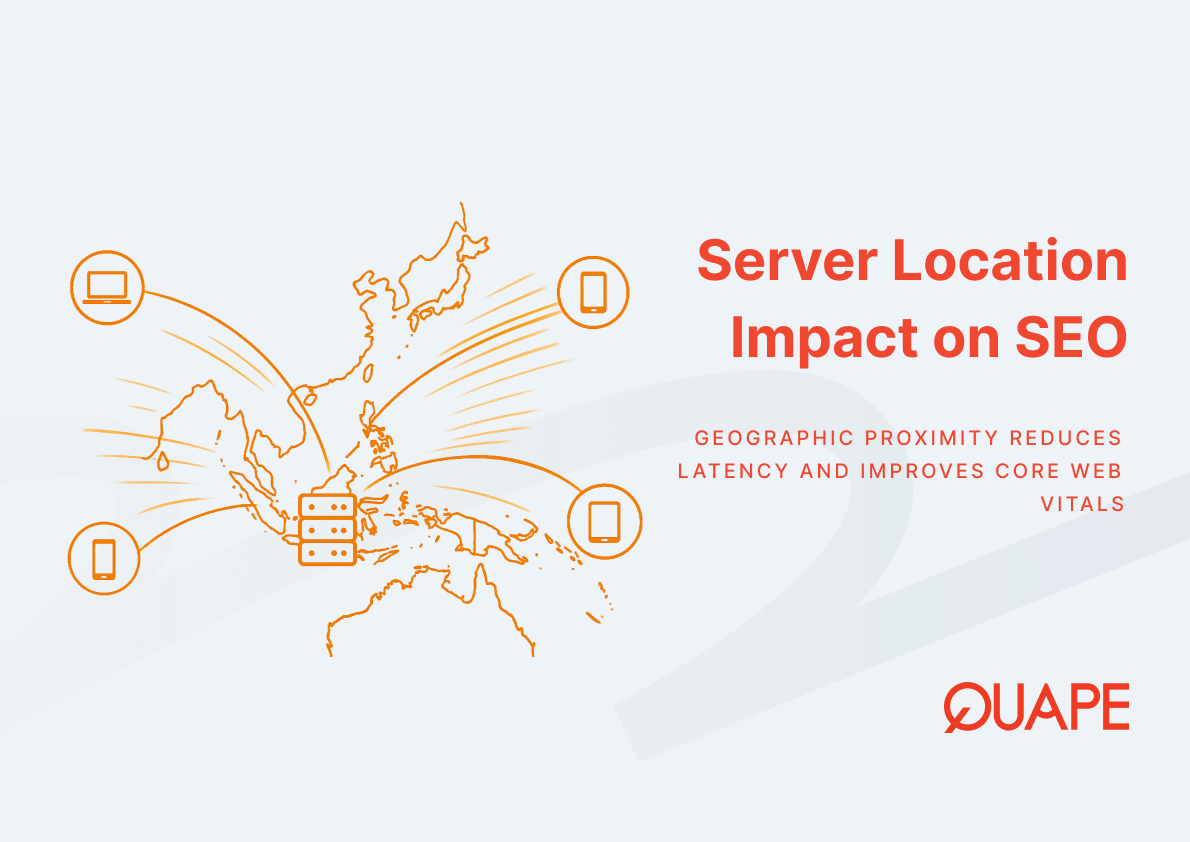
Server location influences how quickly your website delivers content to visitors, which directly affects both user experience and search engine rankings. For businesses targeting Singapore audiences, hosting infrastructure positioned closer to users reduces network latency and improves Google Core Web Vitals scores. This relationship between physical server placement and performance metrics has become increasingly important as Google incorporates page experience signals into its ranking algorithm. IT managers and CTOs evaluating WordPress hosting options should understand that geographic proximity between servers and target audiences creates measurable advantages in Time To First Byte (TTFB) and Largest Contentful Paint (LCP). The technical infrastructure supporting your website determines whether your pages load fast enough to satisfy both users and search engines.
Understanding Server Location in WordPress Hosting Context
Server location refers to the physical geographic placement of data center infrastructure that stores and serves your website files. When someone accesses your WordPress site, their browser sends requests across network infrastructure to reach your server, retrieve data, and render the page. The distance this data travels introduces latency, measured in milliseconds, which accumulates at each network hop between the user’s device and your server. For WordPress sites targeting Singapore visitors, hosting on infrastructure within Singapore or nearby regions minimizes this distance and reduces the total time required for data transmission. This geographic relationship between servers and users creates performance differences that search engines measure when evaluating page experience quality.
Key Takeaways
- Physical distance between servers and users introduces network latency that degrades Time To First Byte and Largest Contentful Paint metrics
- Server response time directly determines how quickly browsers can begin rendering content, making it foundational to Core Web Vitals performance
- Proximity hosting can reduce latency by 50-80% compared to centralized data centers located far from target audiences
- Google incorporates Core Web Vitals into ranking signals, creating a direct connection between server location and SEO performance
- Between 2019 and 2024, median fixed-network latency in OECD countries improved by 23%, yet geographic gaps persist
- Edge computing infrastructure enables distributed hosting that positions servers closer to regional user populations
- WordPress sites with optimized server locations demonstrate faster load times that improve both user engagement and search visibility
Introduction to Server Location and SEO
The relationship between server location and SEO performance operates through a chain of technical dependencies that begin with network infrastructure. When browsers request WordPress pages, servers must retrieve database content, process PHP code, and transmit rendered HTML back to users. This entire process starts with server response time, which increases proportionally with the distance data must travel across network infrastructure. WordPress hosting optimized for performance recognizes that positioning servers geographically close to target audiences reduces the number of network hops and the total latency accumulated during data transmission.
Google Core Web Vitals measure specific aspects of page experience that correlate with user satisfaction. Largest Contentful Paint tracks how quickly the main content element becomes visible, First Input Delay measures interactivity responsiveness, and Cumulative Layout Shift quantifies visual stability. Server response time influences LCP directly because browsers cannot begin rendering content until servers deliver the initial HTML payload. If TTFB extends beyond optimal thresholds due to geographic distance, LCP delays cascade through the entire page load sequence. Search engines recognize this connection and incorporate these performance metrics into ranking algorithms, creating tangible SEO consequences for infrastructure decisions.
Singapore businesses targeting local markets face particular considerations because network routes between regions introduce variable latency. A WordPress site hosted in North America serving Singapore visitors experiences substantially higher TTFB than one hosted within Asia-Pacific infrastructure. This performance gap manifests in Core Web Vitals reports and influences how search engines evaluate page experience quality relative to competitors using geographically optimized hosting.
Key Components of Server Location Impact on SEO
Latency and Its Effect on Website Speed
Latency represents the time delay introduced as data packets traverse network infrastructure between two points. Each millisecond of latency adds to the total time required for browsers to receive server responses and begin rendering content. For WordPress sites, this delay affects every resource request, from the initial HTML document to CSS files, JavaScript bundles, and image assets. Between Q4 2019 and Q4 2024, median fixed-network latency in OECD countries decreased from 16.6 ms to 12.8 ms, demonstrating infrastructure improvements. However, the gap between metropolitan areas and distant regions only narrowed from 5.5 ms to 3.6 ms during the same period, indicating that geographic positioning still creates performance disparities.
Network latency increases proportionally with physical distance because light and electrical signals travel at finite speeds through fiber optic cables and copper wiring. A request from Singapore to a server in London traverses approximately 10,000 kilometers, introducing unavoidable propagation delay. Additional latency accumulates at each routing hop as network equipment processes and forwards packets. Research demonstrates that proximity hosting reduces latency by 50-80% compared to centralized data centers, a reduction that translates directly into improved TTFB. For WordPress performance optimization in Asia, this geographic advantage eliminates hundreds of milliseconds from page load sequences.
Load-balanced network paths can introduce latency imbalance, where packets take different routes with varying delay characteristics. This variation creates unpredictable performance for latency-sensitive workloads, particularly affecting real-time interactions and dynamic content delivery. Academic research on fog and edge architecture load balancing found that distributed models reduced average latency by 67.5% for interactive applications. WordPress sites with heavy JavaScript execution or real-time features benefit substantially from these latency reductions because user interactions depend on rapid server communication.
Proximity to Target Audience and SEO Rankings
Search engines evaluate page experience using real user metrics collected through Chrome browsers and aggregated into Core Web Vitals assessments. When servers physically position themselves closer to target audiences, the resulting latency reduction improves these measured performance metrics across the user population. Google’s ranking algorithm considers Core Web Vitals alongside traditional relevance signals, meaning that two pages with equivalent content quality may rank differently based on page experience scores. WordPress sites targeting Singapore businesses gain competitive advantage when hosted on local infrastructure because their geographic positioning delivers consistently faster experiences to the measured user base.
The connection between proximity and rankings operates through multiple mechanisms. Faster page loads reduce bounce rates because users encounter content quickly rather than abandoning slow-loading pages. Improved interactivity responsiveness increases engagement metrics as users navigate without frustrating delays. Visual stability prevents unexpected layout shifts that damage user confidence. These user behavior signals inform search engine quality assessments, creating indirect ranking benefits beyond the direct Core Web Vitals scoring. Comparing local and global hosting approaches reveals that regional infrastructure consistently outperforms distant servers for geographically concentrated audiences.
Geographic targeting also influences how search engines associate websites with specific regions. Server location provides one signal among many that search engines use to determine local relevance, though it carries less weight than domain extensions, business addresses, and explicit geographic content. However, when combined with performance advantages, proximity hosting supports both technical SEO metrics and regional relevance signals. For businesses serving Singapore markets exclusively, infrastructure positioned within or near Singapore aligns technical optimization with business targeting.
Influence on Google Core Web Vitals Metrics
Time To First Byte directly determines how quickly browsers can begin processing page content. Servers must receive requests, execute database queries, render PHP templates, and transmit responses before browsers can parse HTML and initiate subsequent resource requests. Geographic distance extends TTFB by introducing network latency that delays every step in this sequence. Since Largest Contentful Paint measures when the main content element becomes visible, delayed TTFB pushes back the entire rendering timeline. Research indicates that TTFB serves as a major determinant of LCP performance, meaning that server response optimization forms the foundation for Core Web Vitals improvement.
Edge computing infrastructure reduces latency by positioning servers closer to end users, thereby improving LCP, First Input Delay, and Cumulative Layout Shift metrics. This distributed approach contrasts with centralized data centers that benefit from economies of scale but impose higher latency on geographically distant users. For WordPress speed optimization through hosting infrastructure, edge placement eliminates the latency penalty that centralized models inherently create. The performance improvement cascades through the entire page load sequence because faster TTFB enables earlier resource discovery, parallel loading initiation, and quicker time to interactive states.
Cumulative Layout Shift, while less directly influenced by server location than LCP or TTFB, still benefits from faster overall page loads. When resources load quickly and predictably, layouts stabilize sooner because CSS and image dimensions become available before users begin scrolling. Reduced latency helps WordPress sites deliver complete rendering information rapidly, minimizing the window during which unexpected shifts can occur. This holistic performance improvement across all Core Web Vitals metrics demonstrates why server location represents a foundational infrastructure decision rather than a minor optimization variable.
Practical Application for Singapore Businesses
Organizations targeting Singapore markets should evaluate hosting infrastructure based on physical server placement within the Asia-Pacific region. WordPress hosting providers with data centers in Singapore, such as QUAPE’s TIA-942 certified facilities, eliminate the geographic latency penalty that overseas infrastructure introduces. This regional positioning reduces TTFB from the 200-300 millisecond range typical of distant servers to sub-50 millisecond performance. The improvement becomes particularly significant for competitive industries where multiple businesses target the same keywords, because superior Core Web Vitals scores provide differentiation in otherwise similar content landscapes.
IT managers conducting hosting evaluations should measure actual performance differences using tools like Google PageSpeed Insights or Chrome DevTools. Testing from Singapore-based connections reveals the latency impact of different server locations by comparing TTFB and LCP metrics across hosting options. Singapore data center infrastructure consistently demonstrates lower latency than servers positioned in North America, Europe, or even other Asian regions. These measurable differences translate into the Core Web Vitals assessments that search engines use for ranking calculations.
Regional businesses also benefit from reduced complexity when hosting infrastructure aligns with operational geography. Local hosting simplifies compliance with data residency requirements, reduces currency exchange complications for billing, and enables better support communication during local business hours. For organizations setting up WordPress hosting in Singapore, these operational advantages complement the technical performance benefits. The combination of faster page loads, improved SEO metrics, and simplified operations creates compelling value for proximity hosting approaches.
How QUAPE WordPress Hosting Supports Server Location Optimization
QUAPE positions WordPress hosting infrastructure within Singapore’s TIA-942 certified data centers, providing geographic proximity to businesses targeting Southeast Asian markets. This placement reduces network latency for Singapore visitors by eliminating the transcontinental routing that overseas servers require. The infrastructure utilizes high IOPS NVMe storage that minimizes server processing time, while multiple upstream network providers ensure reliable connectivity across diverse network paths. Together, these technical specifications optimize both the server response component and the network transmission component of page load performance.
The managed WordPress hosting plans include WP Toolkit for simplified plugin management and automated daily backups that protect against data loss. Security updates deploy monthly to address vulnerabilities before they expose sites to exploitation. For IT managers evaluating WordPress hosting solutions, the combination of geographic optimization and comprehensive management reduces both technical complexity and operational risk. The Essential plan starts at SGD 300 annually with 15 GB NVMe storage and daily backups, while Professional and Enterprise tiers scale to multiple sites and include content update services.
Performance optimization extends beyond server location through web server configurations specifically tuned for WordPress workloads. Optimization techniques include PHP opcode caching, database query optimization, and HTTP/2 support that enable parallel resource loading. These software-level enhancements complement the geographic advantages of Singapore hosting to deliver comprehensive Core Web Vitals improvements. The infrastructure supports traffic scaling through VPS upgrade paths when WordPress sites exceed shared hosting capacity, maintaining performance consistency as audiences grow.
Conclusion
Server location creates measurable impacts on SEO performance through its direct influence on network latency, Time To First Byte, and Google Core Web Vitals metrics. For Singapore businesses targeting local audiences, hosting infrastructure positioned within the region eliminates geographic performance penalties and provides competitive advantages in search rankings. The technical relationship between proximity and page experience operates through reduced latency that cascades into faster content rendering, better user engagement, and improved quality signals that search engines measure. As edge computing infrastructure continues expanding, geographic optimization will likely intensify as a differentiation factor for WordPress hosting services. Organizations should evaluate server location as a foundational infrastructure decision that influences both immediate performance and long-term SEO outcomes. If your business requires WordPress hosting optimized for Singapore audiences, contact our sales team to discuss infrastructure options that align technical performance with your market targeting requirements.
Frequently Asked Questions
How does server location affect WordPress SEO rankings? Server location influences SEO through its impact on Core Web Vitals metrics that Google incorporates into ranking algorithms. Servers positioned closer to target audiences reduce network latency, which improves Time To First Byte and Largest Contentful Paint scores. These performance improvements create better user experiences that search engines reward with higher rankings.
What is the relationship between TTFB and server distance? Time To First Byte increases proportionally with physical distance between users and servers because data must traverse longer network paths. Each additional kilometer introduces propagation delay, and each routing hop adds processing latency. Research shows proximity hosting can reduce latency by 50-80% compared to distant centralized servers.
Should Singapore businesses always choose Singapore hosting? Businesses primarily serving Singapore audiences benefit significantly from local hosting because it minimizes latency for their core user base. However, organizations with global audiences may need content delivery networks or distributed infrastructure rather than single-location hosting. The decision depends on where the majority of traffic originates and business priorities.
How do Core Web Vitals connect to server location? Core Web Vitals measure page experience through metrics like Largest Contentful Paint, First Input Delay, and Cumulative Layout Shift. Server location affects these metrics by influencing how quickly servers respond to requests and deliver content. Faster server response times enable earlier content rendering and better overall performance scores.
Can content delivery networks replace proximity hosting? Content delivery networks cache static resources across distributed locations, reducing latency for images, CSS, and JavaScript files. However, dynamic WordPress content still originates from the primary server, meaning that origin server location remains important for TTFB and initial page loads. CDNs complement but do not fully replace geographic server optimization.
What latency improvement should businesses expect from local hosting? Academic research indicates proximity data centers reduce latency by 50-80% compared to centralized distant servers. For Singapore businesses moving from overseas hosting to local infrastructure, TTFB reductions from 200-300 milliseconds to under 50 milliseconds are typical. The actual improvement depends on network quality and specific geographic routes.
Do search engines directly use server location as a ranking factor? Search engines primarily use server location as an indirect signal for regional relevance, giving more weight to explicit geographic indicators like domain extensions and business addresses. The main SEO impact comes through Core Web Vitals performance rather than geographic association. However, faster performance from proximity hosting still creates tangible ranking benefits through improved user experience metrics.
How does edge computing infrastructure improve WordPress performance? Edge computing distributes servers across multiple geographic locations, positioning infrastructure closer to regional user populations. This distributed approach reduces network latency for all users regardless of location, improving Core Web Vitals consistently across diverse audiences. For WordPress sites, edge infrastructure enables faster global performance compared to single-location hosting models.