Hosting
Network Latency Considerations for Singapore-Based Companies
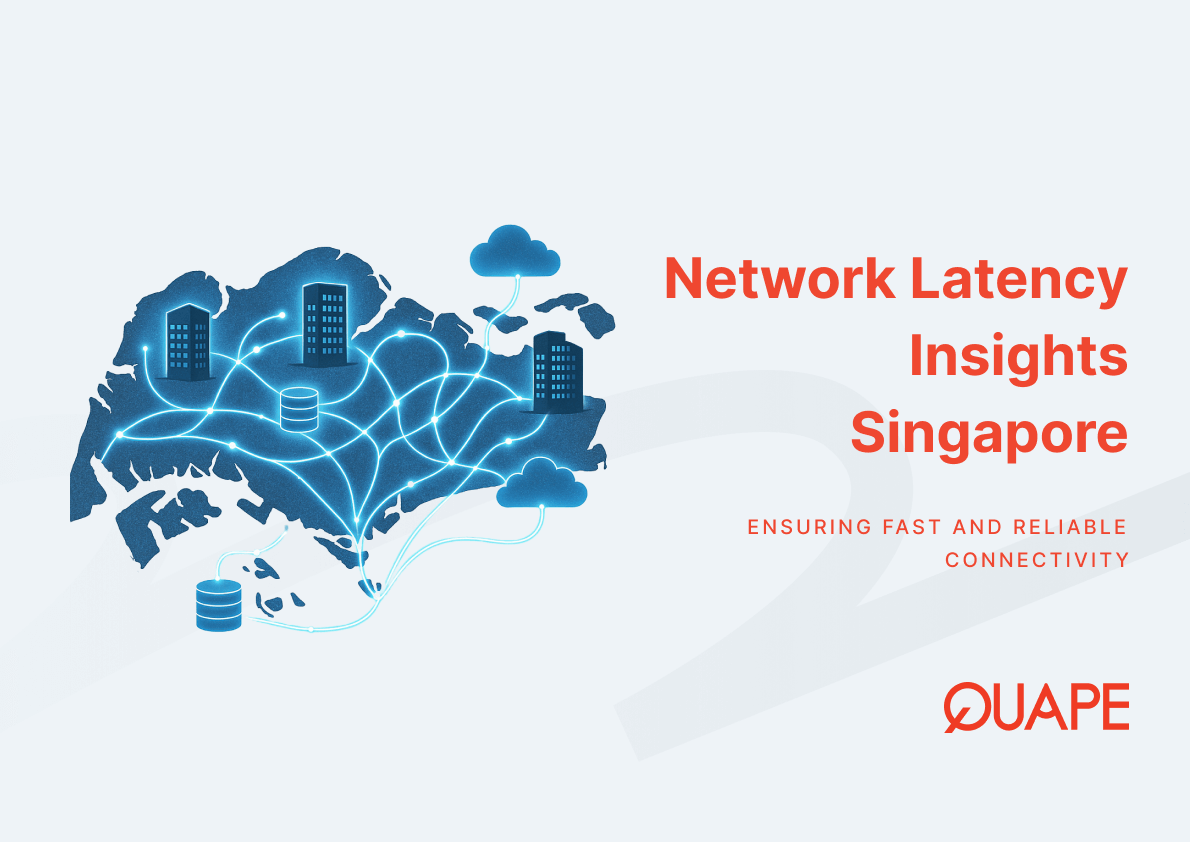
Network latency affects how quickly data travels between systems, directly influencing application responsiveness, user experience, and operational efficiency. For Singapore-based companies, understanding latency dynamics is essential because modern business operations depend on real-time communication, cloud applications, and collaborative platforms that require consistent, fast connectivity. Singapore’s mature internet infrastructure positions it favorably for low-latency services, but strategic decisions about hosting placement, provider selection, and network architecture still determine actual performance outcomes. Companies that align their infrastructure choices with Singapore’s routing topology and peering ecosystem can achieve measurable improvements in application delivery and customer satisfaction.
Network latency refers to the time required for data packets to travel from source to destination and return. It is measured in milliseconds and reflects delays introduced by physical distance, routing complexity, network congestion, and processing overhead at intermediate nodes. Lower latency improves the responsiveness of interactive applications, while higher latency degrades performance in latency-sensitive workflows such as video conferencing, financial transactions, and real-time collaboration.
Key Takeaways
- Singapore ranks first in Southeast Asia for internet infrastructure quality, with fixed networks delivering sub-10 millisecond latency on many benchmarks according to Speedtest Global Index
- Ten active Internet Exchange Points in Singapore enable local traffic exchange, reducing reliance on distant transit routes and minimizing hop count
- Approximately 69% of the top 1,000 visited websites are reachable via servers or caches located in Singapore, lowering international routing dependencies
- Hosting services within Singapore data centers reduces physical distance to regional users, decreasing propagation delay and improving packet arrival consistency
- Multi-homed connectivity and diverse peering relationships enhance routing resilience, providing alternative paths when primary routes experience congestion or failure
- Last-mile ISP performance and contention ratios introduce variability that can offset the benefits of optimized upstream infrastructure
- Strategic placement of email hosting and web applications in Singapore-based facilities aligns with local routing patterns and supports predictable latency profiles
Introduction to Network Latency in Singapore
Singapore’s internet infrastructure supports enterprise networking requirements through high-capacity fiber networks, extensive submarine cable connectivity, and mature peering relationships that facilitate efficient packet exchange. The Internet Society Pulse Infrastructure Score confirms Singapore’s leading position in Southeast Asia, reflecting investments in redundant transmission paths, diverse carrier options, and localized content delivery mechanisms. These attributes combine to create an environment where internet latency remains consistently low for domestic and regional traffic, enabling businesses to deploy latency-sensitive applications with confidence.
Network latency in Singapore benefits from geographic centralization within ASEAN markets, reducing physical distances to major user populations in Malaysia, Indonesia, Thailand, and the Philippines. This proximity shortens propagation delays and supports faster response times compared with hosting configurations that route traffic through distant data centers in Europe or North America. Companies operating in Singapore gain access to submarine cable landing stations that connect the region to global internet backbones, ensuring both local optimization and international reach.
Key Components Influencing Network Latency in Singapore
Several infrastructure elements interact to determine actual latency performance for Singapore-based systems. Submarine cable systems provide the physical transmission capacity that connects Singapore to regional and global networks, while Internet Exchange Points enable efficient local traffic exchange. ISP peering relationships dictate routing paths, and data center proximity influences the physical distance packets must travel. Each component contributes to the overall latency profile experienced by end users.
Geographic Proximity and Data Center Location
Singapore data centers provide physical infrastructure for hosting applications close to end users, reducing the propagation delay inherent in long-distance transmission. When servers reside within Singapore, requests from local users traverse fewer intermediate networks and cover shorter physical distances, resulting in faster round-trip times. TIA-942 data center facilities in Singapore offer controlled environments with redundant power, cooling, and network connectivity that support consistent performance.
Server locality affects both latency and routing efficiency. Applications hosted in regional facilities outside Singapore may require packets to traverse multiple submarine cables and international peering points, introducing additional hops and increasing the likelihood of congestion-related delays. Local hosting eliminates these dependencies for domestic traffic and improves predictability. The concentration of enterprise connectivity infrastructure in Singapore creates opportunities for businesses to leverage proximity advantages without compromising access to global networks.
Internet Exchange Points and Regional Peering
Internet Exchange Points such as SGIX enable networks to exchange traffic locally rather than routing it through distant upstream transit providers. The IXP Tracker identifies ten active exchanges in Singapore, with SGIX handling multi-terabit traffic volumes and supporting hundreds of peering members. These exchanges create a dense mesh of local interconnections that reduce dependency on indirect routing paths.
Peering relationships formed at Internet Exchange Points decrease the number of autonomous systems packets must traverse, lowering latency and improving packet delivery consistency. When two networks peer directly at an exchange point, traffic bypasses upstream transit providers and follows shorter paths. This optimization benefits businesses whose applications depend on fast access to services hosted by other local networks, including content delivery networks, cloud platforms, and SaaS providers. Local traffic exchange also reduces exposure to international routing failures and congestion events that affect longer paths.
Routing Paths and Local Routing Optimization
Local routing optimization minimizes the number of network hops required to reach destination systems, directly influencing latency outcomes. BGP routing protocols determine how packets traverse the internet by selecting paths based on policy configurations, path length metrics, and reachability information exchanged between autonomous systems. Efficient routing uses shorter paths with fewer intermediate nodes, reducing both propagation delay and processing overhead.
Traffic paths between Singapore networks benefit from mature peering ecosystems and diverse connectivity options that enable intelligent path selection. Providers with multiple upstream connections can route traffic through the most efficient available path, avoiding congested links and failed routes. Companies evaluating network architecture for latency-sensitive applications should assess provider routing policies and verify that peering relationships support direct local exchange rather than forcing traffic through distant transit points.
Last-Mile Connectivity and ISP Performance
Broadband ISPs in Singapore deliver connectivity to end users through fiber, cable, or wireless access technologies. Last-mile performance introduces variability based on contention ratios, which determine how many subscribers share available bandwidth on a given access segment. Higher contention increases the likelihood of congestion during peak usage periods, adding latency even when upstream infrastructure performs optimally.
Enterprise connectivity solutions typically offer lower contention ratios and service level agreements that guarantee minimum performance thresholds. Businesses deploying latency-sensitive applications should evaluate ISP performance characteristics beyond advertised speeds, considering factors such as latency under load, packet loss rates, and routing efficiency to upstream networks. Last-mile connectivity quality affects how end users experience hosted applications, making ISP selection a critical component of overall latency management.
Practical Network Latency Implications for Singapore Businesses
Application performance depends on network latency because interactive systems require frequent exchanges between client devices and remote servers. Real-time communication platforms, including voice and video conferencing, degrade noticeably when latency exceeds 100 milliseconds, introducing delays that disrupt conversation flow. SaaS access performance affects productivity when users interact with cloud-based applications for document editing, project management, or customer relationship management. Email delivery latency influences business communication responsiveness, particularly for time-sensitive messages.
User experience expectations have risen as internet infrastructure has improved, creating lower tolerance for slow-loading pages or unresponsive interfaces. Customers abandon transactions when checkout processes take too long, directly affecting revenue. Employees experience frustration when collaboration tools lag during interactions, reducing efficiency. Businesses operating in Singapore can leverage low-latency infrastructure to meet these expectations, but must still address routing configuration, provider selection, and hosting placement to achieve optimal outcomes.
Impact on Email and Collaboration Systems
Email latency affects message delivery times and the responsiveness of email clients when retrieving messages via IMAP or POP3 protocols. SMTP response times determine how quickly outbound messages transfer to recipient mail servers, influencing delivery speed for urgent communications. Collaboration systems that integrate email with calendaring, contact management, and file sharing depend on consistent low-latency access to maintain smooth user experiences.
Hosting email infrastructure in Singapore data centers reduces latency for local users by eliminating international routing delays. When mail servers reside close to end users, IMAP synchronization completes faster, outbound SMTP connections establish quickly, and webmail interfaces load without delay. Businesses using managed email hosting solutions benefit from infrastructure placement that aligns with user distribution, supporting responsive access regardless of client location within the region.
Effects on Web Applications and Customer-Facing Services
Website load time directly correlates with conversion rates and customer satisfaction metrics. Studies consistently demonstrate that users abandon slow-loading pages, making latency optimization a revenue consideration. Transactional latency affects e-commerce checkout flows, payment processing, and order confirmation systems that require real-time interaction with backend databases and third-party APIs.
SLA expectations for web applications increasingly include latency targets alongside uptime commitments. Businesses serving Singapore and regional markets must consider how hosting location affects actual delivery performance. Applications hosted in distant data centers introduce unavoidable propagation delays that degrade user experience even when server processing times remain optimal. Strategic infrastructure placement in Singapore positions applications closer to users, reducing baseline latency and creating margin for acceptable performance during peak traffic periods.
Strategic Approaches to Managing Network Latency in Singapore
Network architecture planning requires evaluating trade-offs between cost, performance, and redundancy. Infrastructure placement decisions affect latency profiles, with local hosting generally outperforming remote configurations for Singapore-based users. Redundancy strategies must balance the need for failover capacity against complexity and cost considerations. Performance monitoring provides visibility into actual latency metrics, enabling evidence-based optimization.
Companies developing latency management strategies should map application requirements to infrastructure capabilities. Real-time applications with strict latency requirements benefit most from local hosting and optimized routing, while less time-sensitive workloads may tolerate higher latencies. Understanding these requirements prevents over-provisioning while ensuring critical applications receive adequate infrastructure support.
Choosing Localized Infrastructure Over Remote Hosting
Local hosting in Singapore reduces latency for regional users by decreasing physical transmission distances and minimizing routing complexity. Servers located within Singapore data centers typically deliver 10 to 50 milliseconds better latency to Singapore users compared with hosting in distant markets such as the United States or Europe. This improvement becomes more pronounced for interactive applications that require frequent client-server exchanges.
Latency trade-offs between local and overseas hosting extend beyond raw milliseconds to include routing stability and predictability. Local hosting reduces exposure to submarine cable failures, international peering disputes, and congestion on intercontinental links. While global hosting configurations may offer advantages for serving distributed international audiences, Singapore-based companies primarily serving regional markets achieve better performance through localized infrastructure that aligns with actual user distribution.
Evaluating Providers Based on Network Topology, Not Just Price
Network topology determines how traffic flows between a hosting provider’s infrastructure and end users. Providers with diverse upstream connections and participation in local Internet Exchange Points can route traffic more efficiently than those relying on limited transit arrangements. Multi-homed connectivity offers redundancy and path diversity, enabling automatic failover when primary routes experience issues.
Companies evaluating hosting providers should request information about upstream provider relationships, peering policies, and routing configurations. Providers advertising low prices may achieve cost savings by using inferior network topologies with fewer peering relationships and longer routing paths. Understanding how a provider’s network topology integrates with Singapore’s internet ecosystem reveals whether infrastructure placement will deliver expected latency benefits. Businesses should verify that providers maintain direct peering relationships with major Singapore networks and participate actively in local Internet Exchange Points.
How Business Email Hosting Infrastructure Influences Network Latency
Email hosting infrastructure affects latency through server location, network connectivity quality, and routing efficiency to end users. Singapore-based email hosting provides lower latency for local users by reducing physical distance and routing hops. Server location determines baseline propagation delays, while network redundancy ensures consistent performance during link failures or congestion events. Managed hosting services that optimize infrastructure placement and network configuration deliver predictable latency profiles that support reliable business communication.
Email applications generate frequent small transactions as clients check for new messages, synchronize folders, and send outbound mail. These interactions amplify the impact of per-transaction latency, making infrastructure optimization particularly valuable for email systems. Companies using email extensively benefit from hosting configurations that minimize round-trip times and maintain consistent performance under load.
Role of Singapore-Based TIA-942 Data Centers
TIA-942 DC facilities in Singapore provide infrastructure designed for high uptime through redundant power distribution, cooling systems, and network connectivity. These facilities support low-latency access by maintaining optimal operating conditions and preventing temperature-related performance degradation. Uptime commitments ensure that hosted systems remain accessible during maintenance activities and equipment failures, avoiding latency spikes caused by service interruptions.
Data center location within Singapore affects proximity to major internet exchange points and submarine cable landing stations. Facilities situated near these interconnection points can establish shorter physical paths to upstream networks, reducing latency for traffic exiting the data center. Companies evaluating hosting options should consider not only data center tier ratings but also geographic positioning relative to Singapore’s internet infrastructure concentration points.
Multi-Homed Bandwidth and Routing Resilience
Multi-homed bandwidth provides connections to multiple upstream networks, enabling failover routing when primary paths become unavailable or congested. This redundancy improves network reliability by ensuring that traffic can reach destinations even when individual links fail. Routing resilience reduces latency variability by automatically selecting optimal paths based on current network conditions.
Providers implementing multi-homed connectivity monitor path performance and adjust routing dynamically to avoid congested or failing links. This approach maintains consistent latency profiles even during network disruptions that would otherwise force traffic through suboptimal paths. Businesses hosting latency-sensitive applications should verify that providers implement active failover mechanisms rather than relying on manual intervention to restore connectivity during outages.
Conclusion
Network latency optimization for Singapore-based companies requires strategic alignment between infrastructure placement, provider selection, and application requirements. Singapore’s mature internet ecosystem provides a strong foundation through extensive peering relationships, local Internet Exchange Points, and proximity to regional markets. Companies that leverage these advantages through localized hosting and provider relationships emphasizing network topology over cost alone achieve measurable performance improvements. Managing latency effectively supports responsive application delivery, enhanced user experiences, and operational efficiency across email systems, web applications, and real-time communication platforms.
Contact our sales team to discuss how Singapore-based hosting infrastructure can optimize your network latency profile and support your business communication requirements.
Frequently Asked Questions
What is considered acceptable network latency for business applications in Singapore?
Acceptable latency varies by application type. Interactive applications such as video conferencing and VoIP perform best with latency below 50 milliseconds, while web browsing remains acceptable up to 100 milliseconds. Email systems tolerate higher latency but benefit from sub-50 millisecond response times for improved user experience. Real-time financial trading platforms may require single-digit millisecond latency.
How does hosting location affect email delivery speed?
Hosting location determines physical distance between mail servers and end users, directly affecting SMTP connection times and IMAP synchronization speed. Singapore-based email hosting reduces latency for local recipients by eliminating international routing delays. Outbound messages to overseas recipients still traverse submarine cables regardless of sending server location, but inbound delivery and client access benefit significantly from local hosting.
Can Internet Exchange Points reduce latency for all types of traffic?
Internet Exchange Points reduce latency primarily for traffic between networks that maintain direct peering relationships at the exchange. Traffic destined for networks not present at the exchange must still traverse upstream transit providers. The effectiveness of IXP-based optimization depends on whether both source and destination networks participate in the exchange and have configured peering sessions.
What role does last-mile connectivity play in overall latency?
Last-mile connectivity affects the final segment between ISP infrastructure and end-user devices. Even when upstream networks perform optimally, congested or poorly-maintained last-mile connections introduce delays that degrade overall performance. Enterprise connectivity solutions with lower contention ratios and dedicated capacity provide more consistent last-mile performance than residential broadband services.
How do submarine cable failures affect Singapore’s network latency?
Submarine cable failures force traffic to reroute through alternative paths, potentially increasing latency and reducing available capacity. Singapore’s multiple cable landings and diverse routing options limit the impact of individual cable failures. Well-connected providers with diverse upstream relationships can quickly failover to alternative routes, maintaining acceptable latency during disruptions.
Should companies prioritize local hosting over cloud providers for latency-sensitive applications?
Companies should evaluate whether cloud provider edge locations exist in Singapore and how their network topologies integrate with local peering ecosystems. Major cloud platforms maintain Singapore presence with low-latency access comparable to local hosting. Smaller cloud providers without regional infrastructure may introduce higher latency than local hosting alternatives. The decision depends on specific provider capabilities rather than cloud versus local hosting as a general principle.
How can businesses measure actual latency to evaluate hosting providers?
Businesses can use network diagnostic tools to measure round-trip times from their office locations to potential hosting providers. Ping tests, traceroute analysis, and sustained throughput measurements reveal actual latency and routing paths. Providers should offer test IP addresses for evaluation purposes. Measurements should occur during different times of day to capture variation under different load conditions.
Does multi-homed connectivity guarantee lower latency?
Multi-homed connectivity provides redundancy and routing diversity but does not automatically reduce latency. The effectiveness depends on how providers implement routing policies and path selection. Well-configured multi-homed setups can reduce latency by avoiding congested paths, while poorly-optimized configurations may actually increase latency by selecting longer paths based on arbitrary policy preferences. Businesses should verify that providers actively monitor and optimize routing decisions.