Hosting
Local Market Comparison: Business Hosting Providers in Singapore
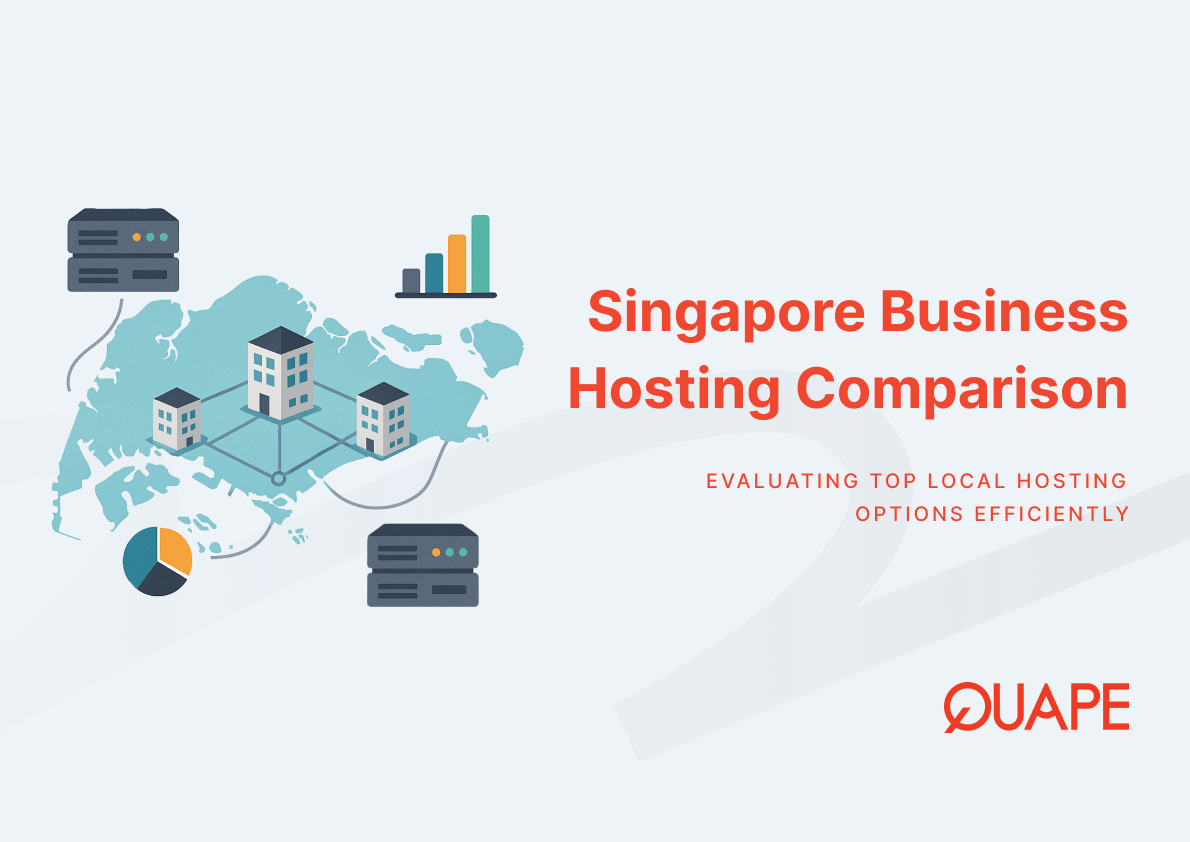
Selecting an email hosting provider in Singapore requires understanding how local infrastructure, service architecture, and competitive positioning intersect with operational needs. Singapore’s data center ecosystem supports over 70 operational facilities connected by extensive submarine cable networks, creating a foundation for low-latency, high-availability email services that business operations depend on. The market differentiates itself through infrastructure standards, protocol support, security implementations, and resource allocation models that directly affect email reliability. For IT managers and procurement teams, comparing providers means evaluating how these technical attributes align with business continuity requirements, compliance expectations, and cost predictability across shared hosting environments.
Singapore email hosting comparison examines how business hosting providers structure their services within a mature digital infrastructure environment. This comparison focuses on the technical and commercial attributes that influence email delivery reliability, security posture, and operational performance for local businesses. Understanding these distinctions enables informed decision-making when reliability and local presence matter for communication infrastructure.
Key Takeaways:
- Singapore’s infrastructure density, supported by robust submarine cable connectivity, reduces latency for email workloads and improves service responsiveness for local users.
- Data center tier ratings, particularly TIA-942 standards, directly influence uptime guarantees through redundant power, cooling, and network path designs.
- Email protocol support (POP3, IMAP) determines how mailbox access integrates with diverse client environments and mobility requirements.
- Shared hosting user caps per server affect resource contention and performance consistency, making provider resource allocation policies a critical comparison point.
- Security implementations including WAF, spam filtering, and brute force prevention create layered defense that protects business communication channels from common threat vectors.
- Pricing transparency and billing structure (monthly versus annual) influence budget predictability and long-term cost management for SMEs.
- Local data center hosting supports data residency preferences and reduces dependency on overseas infrastructure for business-critical email services.
Introduction to Singapore Email Hosting Comparison
Comparing business hosting providers in Singapore involves analyzing how infrastructure location, service capabilities, and operational models support email reliability within a highly connected digital economy. Singapore’s digital economy represented 18.6% of GDP in 2024, reflecting accelerated digitalization that increases reliance on stable communication tools. This economic context creates demand for email hosting services that integrate predictably with business operations while maintaining security and availability standards.
The competitive landscape among local hosting providers differentiates through infrastructure choices, technical implementation details, and support models rather than just pricing. Business hosting providers operate within shared hosting architectures, where resource allocation policies determine performance consistency. Understanding these distinctions helps IT managers identify which provider attributes align with specific operational requirements, from mailbox scalability to security protocol implementation.
For organizations evaluating business email hosting services in Singapore, the comparison extends beyond feature lists to examine how provider infrastructure decisions affect email delivery, uptime, and incident response. Local versus regional hosting considerations influence latency, data sovereignty alignment, and support accessibility, all of which impact daily email operations.
Key Components of Singapore Email Hosting Comparison
Infrastructure Location and Data Center Standards
Infrastructure location determines latency profiles and availability characteristics for email services. Singapore data centers operate within a jurisdiction offering political stability, regulatory predictability, and advanced network interconnection infrastructure like the Singapore Internet Exchange, which facilitates efficient traffic routing across regional networks. These attributes combine to create an environment where email hosting benefits from reduced network hops and improved response times for local users.
TIA-942 data center standards introduce redundant power distribution paths, cooling systems, and network connections that enable concurrent maintenance without service interruption. For email hosting, this translates to higher uptime reliability because infrastructure maintenance can proceed without taking email services offline. Latency-sensitive email workloads, particularly those involving real-time collaboration tools or mobile synchronization, perform better when hosted in facilities designed with redundancy at multiple infrastructure layers.
Uptime and redundancy provisions directly influence business continuity planning. Providers operating from certified TIA-942 facilities can offer stronger availability commitments because the underlying infrastructure design supports fault tolerance. This becomes particularly relevant for businesses where email downtime disrupts customer communication, internal coordination, or compliance documentation workflows.
Email Protocol Support and Mailbox Capabilities
Email protocol support defines how users access mailboxes across different devices and client applications. POP3 enables simple mail retrieval where messages download to a single device, suitable for users with predictable access patterns. IMAP provides synchronized mailbox access across multiple devices, maintaining consistent message states between desktop clients, mobile applications, and webmail interfaces. Business email accounts increasingly require IMAP support to accommodate workforce mobility and multi-device usage patterns.
Mailbox scalability affects how email hosting adapts to organizational growth. Providers offering unlimited email accounts within shared hosting tiers remove arbitrary constraints on user addition, allowing businesses to scale communication infrastructure without tier upgrades. However, actual performance depends on how providers manage resource allocation across shared environments, making stated limits only one component of scalability assessment.
Protocol implementation quality influences reliability. Providers must maintain stable IMAP session handling, efficient mailbox indexing, and consistent protocol response times to ensure smooth user experience across diverse email clients. These technical details rarely appear in marketing materials but significantly affect day-to-day email usability.
Security, Compliance, and Risk Mitigation
Email security implementations create defense layers against unauthorized access, message interception, and spam delivery. Spam filtering reduces inbox clutter and mitigates phishing exposure by identifying and quarantining suspicious messages before delivery. Brute force protection monitors authentication attempts and blocks repeated login failures, defending mailbox access credentials from automated password attacks.
Web Application Firewall (WAF) deployment at the infrastructure level protects email management interfaces and webmail portals from common web-based exploits. This becomes relevant when businesses access email administration panels or web-based mailbox interfaces, where WAF filtering can block malicious requests before they reach application layers. Data protection expectations in Singapore include alignment with Personal Data Protection Act requirements, which influence how providers handle email content storage, backup retention, and access logging.
Risk mitigation extends to operational practices. Providers that implement regular security assessments, maintain updated server software, and enforce strong password policies create environments where email services remain resilient against evolving threat landscapes. These practices complement technical security implementations to establish comprehensive protection for business communication channels.
Pricing Models and Resource Allocation in Shared Hosting
Shared business hosting operates by distributing multiple customer accounts across common server infrastructure, creating cost efficiency through resource pooling. Pricing models reflect this architecture, with monthly and annual billing options that balance flexibility against cost savings. Annual commitments typically offer discounted rates, trading payment flexibility for reduced total cost, which suits businesses with stable hosting requirements and predictable budgets.
User caps per server directly affect performance consistency in shared environments. Providers that limit maximum accounts per physical or virtual server reduce resource contention, ensuring individual accounts receive more consistent CPU, memory, and disk I/O access. Without such caps, server performance can degrade as account density increases, affecting email delivery speed and mailbox responsiveness during peak usage periods.
Cost predictability for SMEs requires transparent pricing structures without hidden overage charges or unexpected resource limit fees. Providers offering unmetered bandwidth and unlimited mailboxes within defined storage limits create predictable monthly costs, simplifying budget management. However, the practical value depends on whether resource allocation models actually support stated limits without performance degradation.
Practical Application for Singapore-Based Businesses
SMEs in Singapore face specific email hosting requirements shaped by high digitalization rates, mobile workforce patterns, and customer communication expectations. IT managers and CTOs evaluating hosting providers must balance technical capabilities against budget constraints, vendor support quality, and operational simplicity. Email reliability for business operations affects customer responsiveness, internal productivity, and regulatory compliance, making provider selection a strategic infrastructure decision rather than a commodity purchase.
Procurement decision-making benefits from comparing how providers implement infrastructure redundancy, security controls, and support accessibility. For businesses without dedicated IT teams, managed email hosting that handles server maintenance, security updates, and spam filtering reduces operational burden while maintaining service reliability. Understanding provider SLA commitments, incident response processes, and escalation paths helps set realistic expectations for email availability and issue resolution.
Local market alignment matters when business operations concentrate in Singapore and email communication primarily involves local contacts. Hosting email infrastructure locally reduces latency for message delivery and retrieval, improves synchronization speed for mobile devices, and simplifies data residency compliance. These advantages become tangible when workforce productivity depends on responsive email access across multiple devices and locations.
How QUAPE Business Hosting Supports Local Email Hosting Requirements
QUAPE business hosting implements email services within Singapore-based infrastructure, utilizing TIA-942 data center facilities designed for concurrent maintainability and fault tolerance. This infrastructure choice directly supports uptime requirements for businesses where email availability affects daily operations. Managed email hosting handles security updates, spam filtering implementation, and mailbox administration, reducing IT overhead for organizations without dedicated email administrators.
Server resource allocation at QUAPE caps maximum users per server at 20 accounts, limiting resource contention in shared hosting environments. This approach creates more consistent performance compared to unlimited density models, where excessive account consolidation can degrade email responsiveness during concurrent usage periods. Storage allocations scale across business hosting tiers (15GB to 75GB SSD), accommodating different mailbox retention requirements and attachment storage patterns.
Security implementation includes Web Application Firewall protection, brute force prevention on email authentication, and spam filtering integration. These layered controls protect business email accounts from common attack vectors while maintaining usability for legitimate access patterns. Free SSL certificates encrypt email client connections, protecting credential transmission and message content during retrieval across public networks.
Business continuity considerations benefit from local infrastructure presence. Singapore data center hosting reduces dependency on international network paths, minimizing latency and improving email service responsiveness for local users. For businesses evaluating hosting providers, understanding how infrastructure decisions, resource allocation policies, and security implementations combine to support operational email requirements enables more informed vendor selection aligned with specific business needs.
Conclusion
Evaluating business hosting providers in Singapore requires examining how infrastructure standards, protocol support, security implementations, and resource allocation models interact to create reliable email services. Providers differentiate through data center tier ratings, user density policies, security layering, and support accessibility rather than through features alone. For businesses where email reliability directly affects operations, selecting providers that transparently communicate infrastructure commitments and implement meaningful resource caps creates more predictable service experiences. Local hosting presence offers latency benefits and data residency alignment for organizations prioritizing Singapore-based infrastructure for business-critical communication services.
Ready to implement business email hosting backed by Singapore TIA-942 infrastructure? Contact our sales team to discuss how QUAPE’s managed hosting supports your email reliability requirements.
Frequently Asked Questions
What infrastructure attributes most directly affect email hosting reliability in Singapore?
Data center tier ratings, particularly TIA-942 standards, introduce redundant power and network paths that enable maintenance without service interruption. Infrastructure location within Singapore reduces latency for local users and simplifies data residency compliance. Network interconnection quality, including multi-homed bandwidth and exchange point connectivity, affects email delivery speed and resilience against individual network path failures.
How do user caps per server influence shared hosting performance?
User density limits control resource contention by restricting how many accounts share physical server resources like CPU, memory, and disk I/O. Providers capping users at 20 per server create more consistent performance compared to unlimited density models where excessive consolidation degrades responsiveness. Lower density environments maintain faster email delivery, quicker mailbox synchronization, and more stable webmail access during concurrent usage periods.
Why does email protocol support (POP3 versus IMAP) matter for business users?
IMAP maintains synchronized mailbox state across multiple devices, essential for mobile workforces accessing email from desktops, laptops, and smartphones. POP3 downloads messages to single devices, suitable for simple access patterns but problematic when users need consistent message visibility across locations. Business environments increasingly require IMAP to support flexible work arrangements and multi-device productivity patterns.
What security implementations should businesses expect from email hosting providers?
Layered security includes spam filtering to reduce phishing exposure, brute force protection to defend against automated password attacks, and WAF deployment to protect webmail and administration interfaces. SSL certificate provisioning encrypts client connections, protecting credential transmission. Regular security assessments and prompt software updates maintain defenses against evolving threats beyond initial security feature deployment.
How does local versus regional hosting affect email service characteristics?
Local Singapore hosting reduces network latency for message retrieval and delivery, particularly noticeable for IMAP synchronization and webmail responsiveness. Local infrastructure simplifies data residency compliance and reduces dependency on international network paths that may experience variable performance. Regional hosting may offer cost advantages but introduces additional network hops that can affect latency-sensitive email operations.
What pricing structure best supports budget predictability for SME email hosting?
Transparent pricing with unmetered bandwidth and clearly defined storage limits eliminates surprise overage charges. Annual billing typically offers cost savings over monthly plans, trading payment flexibility for reduced total expense. Unlimited mailbox allowances within storage constraints prevent per-user scaling costs, making organizational growth more predictable from an email infrastructure budget perspective.
When should businesses consider managed email hosting versus self-managed solutions?
Managed hosting benefits organizations without dedicated email administrators by handling security updates, spam filter tuning, and mailbox troubleshooting. Businesses experiencing frequent email-related issues, security incidents, or lacking in-house expertise gain operational reliability from provider-managed security and maintenance. Self-managed solutions suit teams with specific customization requirements and existing email administration capabilities.
What support accessibility attributes indicate responsive provider assistance?
Clear escalation paths for critical email issues, documented SLA commitments for response and resolution times, and accessible technical support during business hours indicate serious support infrastructure. Providers offering migration assistance, particularly for WordPress sites and email accounts, demonstrate practical understanding of business transition challenges. Transparent communication about infrastructure limitations and maintenance windows builds realistic service expectations.