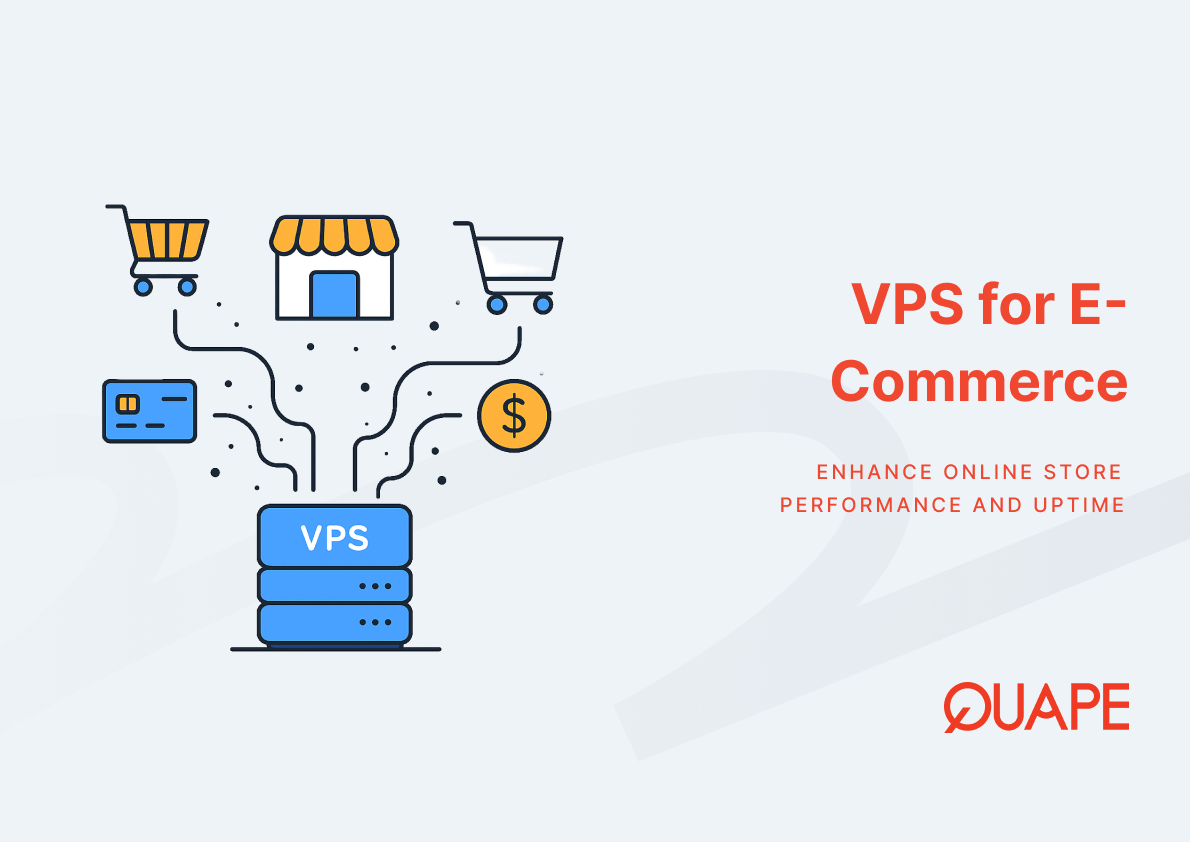
E-commerce operations depend on infrastructure that can deliver consistent performance under variable traffic loads while maintaining security and availability. As online stores scale beyond entry-level shared hosting, the resource contention and performance unpredictability of multi-tenant environments create friction at every layer: catalog browsing slows, checkout processes stall, and conversion rates deteriorate. VPS hosting addresses these challenges by allocating isolated compute resources that support the layered demands of modern online retail, from payment processing to global content delivery. For businesses managing transactional workloads across Singapore and the broader ASEAN region, understanding how VPS hosting intersects with e-commerce infrastructure requirements is a strategic operational decision, not merely a technical upgrade.
What VPS Hosting Means for E-Commerce Platforms
VPS hosting provides a virtualized server environment where dedicated CPU, RAM, and storage resources operate independently from other tenants on the same physical hardware. Unlike shared hosting, where multiple websites compete for pooled resources, a VPS isolates workloads within defined boundaries. This isolation supports the reliability requirements of e-commerce platforms, where downtime or performance degradation directly impacts revenue. For online stores processing hundreds or thousands of transactions daily, the predictability of resource allocation becomes a foundational layer that enables everything from fast product searches to smooth checkout experiences.
Key Takeaways
- VPS hosting eliminates resource contention by allocating isolated CPU, RAM, and storage, improving performance consistency for e-commerce workloads
- Payment security depends on infrastructure that supports SSL/TLS encryption and compliance frameworks like PCI-DSS
- Catalog indexing and database query performance benefit from dedicated I/O resources and low-latency NVMe storage
- CDN integration reduces geographic latency by caching static assets closer to end users across distributed markets
- Root access enables custom application stacks and security configurations tailored to specific e-commerce platform requirements
- Vertical and horizontal scaling options provide flexibility as transaction volumes and traffic patterns evolve
- Singapore-based VPS infrastructure offers low-latency access to ASEAN markets while supporting data sovereignty considerations
Why E-Commerce Platforms Outgrow Shared Hosting
Shared hosting environments pool server resources across dozens or hundreds of websites, creating inherent performance variability. When one site experiences a traffic surge or runs resource-intensive processes, neighboring sites suffer reduced CPU availability and slower response times. This “noisy neighbor” effect is particularly damaging for e-commerce platforms, where even small delays correlate with measurable conversion losses. A one-second increase in page load time can reduce conversion rates by approximately 7%, translating directly into lost revenue during high-traffic periods like promotional campaigns or seasonal peaks.
Beyond performance, shared hosting restricts administrative control. E-commerce platforms often require custom security configurations, specific software versions, or integration with third-party services that shared environments cannot accommodate. As product catalogs grow and customer bases expand, the inflexibility of shared hosting becomes a bottleneck that constrains both technical capabilities and business growth.
Core Infrastructure Requirements for Modern E-Commerce
E-commerce operations impose layered demands on hosting infrastructure. Availability must approach or exceed 99.9% uptime to prevent revenue loss during outages. Latency affects every user interaction, from initial page loads to API calls during checkout. Transaction reliability depends on consistent database performance and network stability, while data integrity requires secure storage and regular backup procedures.
These requirements intersect in ways that amplify risk. A poorly configured web server might delay product image delivery, increasing bounce rates. Database query inefficiencies can slow catalog searches, frustrating users before they reach checkout. Network congestion can interrupt payment gateway communication, abandoning transactions midstream. Infrastructure choices ripple through the entire customer journey, making hosting architecture a strategic variable rather than a background concern.
Key Components of VPS Hosting for E-Commerce Platforms
Isolated Compute Resources for Checkout Workloads
Checkout processes generate compute-intensive operations: real-time inventory checks, tax calculations, shipping cost queries, and payment gateway authentication. These workloads require predictable CPU and RAM allocation to maintain responsiveness under peak traffic. VPS hosting dedicates specific compute resources to a single tenant, preventing other workloads from consuming capacity during critical moments.
Isolation also improves fault tolerance. If a neighboring VPS experiences a failure or security incident, the physical separation of resources prevents cascading effects. This architectural boundary supports the reliability standards that e-commerce platforms require, particularly during high-stakes periods like flash sales or product launches when traffic can multiply within minutes.
Payment Security & Transaction Integrity
Payment processing introduces strict security and compliance requirements. PCI-DSS standards mandate specific controls around data encryption, access management, and network segmentation. VPS hosting supports these requirements by providing isolated environments where security configurations can be customized without interference from shared hosting neighbors. SSL/TLS encryption protects data in transit between customer browsers and the server, while dedicated IP addresses and firewall rules can be tailored to specific threat models.
The relationship between infrastructure and security extends beyond compliance. Consumers evaluate trust signals like HTTPS indicators and site performance when making purchase decisions. Secure hosting environments that demonstrate attention to data protection strengthen brand credibility, particularly in markets where online payment adoption is still maturing.
Catalog Indexing & Database Performance
Product catalogs generate continuous database activity: search queries, filter operations, inventory updates, and recommendation engine calculations. NVMe storage reduces I/O latency for these operations, improving query response times and enabling faster indexing. When a customer searches for products or applies filters, database performance directly impacts perceived site speed.
Large catalogs with thousands of SKUs create additional complexity. Index maintenance, cache invalidation, and inventory synchronization all compete for database resources. VPS hosting allocates dedicated RAM for database caching and ensures that storage I/O does not contend with other tenants’ workloads, supporting the responsiveness that modern e-commerce platforms require.
CDN Acceleration & Global Content Delivery
Product images, stylesheets, and JavaScript files constitute the majority of page weight for e-commerce sites. CDN integration caches these static assets at edge locations closer to end users, reducing geographic latency by 50% to 70% in many cases. For e-commerce platforms serving customers across multiple countries, CDN acceleration improves load times regardless of physical distance from the origin server.
Singapore’s position as a regional internet hub makes it an effective location for VPS hosting that integrates with CDN providers serving ASEAN markets. Static assets cached in nearby edge locations deliver faster to customers in Jakarta, Manila, or Bangkok than serving files directly from a single data center. This performance improvement compounds across multiple page views, creating a smoother shopping experience that supports higher engagement and conversion rates.
Root Access & Stack Customization for Developers
E-commerce platforms often require specific software versions, custom modules, or third-party integrations that shared hosting cannot support. Root access enables developers to install and configure application stacks precisely, whether deploying PHP frameworks, Node.js applications, or containerized microservices. This flexibility supports both off-the-shelf platforms like WooCommerce or Magento and custom-built solutions tailored to unique business requirements.
Customization extends to security hardening. Developers can disable unnecessary services, configure firewall rules at the OS level, and implement intrusion detection systems that match specific threat profiles. For businesses with in-house development teams or technical partners, this control becomes a strategic advantage that enables continuous optimization and rapid response to emerging requirements.
Virtualization as the Foundation of E-Commerce VPS Hosting
Virtualization technology abstracts physical hardware into isolated virtual machines, each with dedicated resources and independent operating systems. Hypervisors like KVM manage this abstraction layer, enforcing resource boundaries that prevent cross-tenant interference. For e-commerce platforms, virtualization provides both the isolation needed for security and the flexibility required for scaling.
Fault isolation is a critical benefit. If hardware fails, hypervisors can migrate virtual machines to healthy physical servers with minimal downtime. This capability supports the high availability requirements of e-commerce operations, where even brief outages during peak hours can result in significant revenue loss. Backup and recovery processes also benefit from virtualization, as entire VM snapshots can be captured and restored faster than traditional bare-metal configurations.
Scaling E-Commerce Operations on VPS Infrastructure
Traffic patterns for e-commerce platforms are rarely static. Promotional campaigns, seasonal events, and organic growth all drive increases in concurrent users and transaction volumes. Vertical scaling adds CPU, RAM, or storage to existing VPS instances, accommodating growth without architectural changes. Horizontal scaling distributes workloads across multiple VPS instances, improving redundancy and load distribution.
Cost predictability is an important consideration. Unlike public cloud platforms where usage-based billing can create budget uncertainty, VPS hosting typically operates on fixed monthly pricing with defined resource allocations. This predictability simplifies financial planning, particularly for businesses managing tight margins or projecting infrastructure costs across multi-year growth trajectories.
Backup, Recovery & Business Continuity for Online Stores
E-commerce platforms store valuable data: customer information, order history, inventory records, and transaction logs. Backup strategies must address both data protection and recovery time objectives. Daily automated backups provide point-in-time snapshots that enable restoration after data corruption, accidental deletion, or security incidents. Recovery time objective (RTO) defines how quickly operations can resume after a failure, a metric that directly impacts revenue loss during outages.
VPS environments support faster recovery than traditional dedicated servers. VM-based architectures enable rapid restoration from snapshots, often completing in 5 to 10 minutes compared to hours required for hardware replacement and OS reinstallation. For e-commerce businesses, this difference translates into minimized downtime and reduced impact on customer experience during infrastructure failures.
Practical Considerations for E-Commerce Businesses in Singapore
Singapore’s data center infrastructure and connectivity position it as a strategic VPS hosting hub for businesses serving ASEAN markets. Low-latency connections to major population centers across the region improve page load times for customers in neighboring countries. For businesses operating under regional data protection regulations, Singapore’s data sovereignty framework provides clarity around cross-border data flows and compliance requirements.
Regional considerations also affect CDN effectiveness. VPS hosting in Singapore enables efficient distribution of static content to edge locations across Southeast Asia, reducing the latency penalties that would occur when serving from more distant regions. This geographic advantage complements technical infrastructure choices, creating compound performance benefits for e-commerce platforms with distributed customer bases.
Managed vs Self-Managed VPS for E-Commerce Teams
Managed VPS services transfer operational responsibilities like OS updates, security patches, and monitoring to the hosting provider. This model suits e-commerce teams without dedicated DevOps resources or those preferring to focus internal capacity on business development rather than infrastructure maintenance. Self-managed VPS provides full control but requires in-house expertise to handle server administration, security hardening, and incident response.
Operational overhead varies significantly between models. Managed services reduce the burden of routine maintenance but may limit customization options or response times for non-standard configurations. Self-managed VPS offers maximum flexibility but requires ongoing investment in technical skills and monitoring tools. The choice depends on internal capabilities, budget constraints, and the strategic importance of infrastructure control versus operational efficiency.
How Quape VPS Hosting Supports E-Commerce Platforms
Quape VPS hosting delivers performance and reliability through cloud architecture designed for high availability and consistent resource allocation. NVMe storage reduces database latency, supporting fast catalog searches and checkout processing. Network infrastructure provides up to 1 Gbps bandwidth with generous monthly transfer quotas, accommodating traffic spikes without throttling. KVM virtualization ensures strict resource isolation, preventing noisy neighbor effects that compromise e-commerce performance.
Plans scale from entry-level configurations suitable for growing stores to flagship options supporting compute-heavy applications and large product catalogs. Daily backups, security monitoring, and flexible OS choices provide operational flexibility without requiring extensive in-house infrastructure management. For e-commerce businesses prioritizing performance consistency and regional connectivity, these capabilities address the technical requirements that enable reliable online retail operations.
Strategic Infrastructure for E-Commerce Growth
VPS hosting establishes a performance foundation that supports e-commerce operations as they scale from early growth through high-traffic maturity. Isolated resources eliminate shared hosting constraints, while customization options enable security configurations and application stacks tailored to specific business requirements. As global e-commerce revenue continues expanding, infrastructure choices become strategic levers that differentiate customer experience and operational efficiency. Ready to build reliable hosting infrastructure for your e-commerce platform? Contact Sales to discuss VPS configurations that match your performance and scaling requirements.
Frequently Asked Questions
What makes VPS hosting more suitable for e-commerce than shared hosting?
VPS hosting allocates dedicated CPU, RAM, and storage resources that eliminate the performance variability inherent in shared hosting environments. This isolation prevents other tenants from consuming resources during traffic spikes, supporting the consistent response times that e-commerce platforms require. Shared hosting cannot provide the same level of performance predictability or administrative control needed for payment processing and security compliance.
How does VPS hosting support PCI-DSS compliance for online stores?
VPS environments enable isolated security configurations including custom firewall rules, SSL/TLS encryption, and network segmentation required by PCI-DSS standards. Root access allows implementation of specific security controls that shared hosting cannot accommodate. While VPS hosting provides the technical foundation, full compliance requires proper configuration and ongoing security practices aligned with PCI-DSS requirements.
Can VPS hosting handle sudden traffic spikes during promotional campaigns?
VPS hosting improves traffic handling through dedicated resource allocation and vertical scaling options. Unlike shared hosting where spikes from neighboring sites reduce available capacity, VPS instances maintain performance consistency even when other tenants experience load increases. For planned campaigns, resources can be scaled temporarily to accommodate expected traffic surges, then adjusted back to normal levels afterward.
What role does CDN integration play in e-commerce VPS performance?
CDN integration caches static assets like product images and stylesheets at edge locations closer to end users, reducing latency by 50% to 70% for geographically distributed customers. This performance improvement compounds across multiple page views, decreasing bounce rates and supporting higher conversion rates. VPS hosting serves dynamic content and database queries while CDN handles the bulk of page weight distribution.
How quickly can data be restored after a VPS failure?
VM-based VPS architectures typically enable restoration from backups in 5 to 10 minutes, significantly faster than the hours required for hardware replacement in dedicated server environments. Daily automated backups provide point-in-time snapshots that minimize data loss. Recovery speed depends on backup size and storage performance, but VPS infrastructure generally supports rapid business continuity restoration.
Do e-commerce platforms need root access on VPS hosting?
Root access enables custom application stack configurations, security hardening, and third-party integrations that many e-commerce platforms require. While not mandatory for all stores, businesses using custom code, specific PHP versions, or advanced security tools benefit from the flexibility root access provides. Managed VPS services can handle many administrative tasks without requiring root access for the business owner.
What VPS resources does a typical e-commerce store require?
Resource requirements scale with catalog size, traffic volume, and platform complexity. Small to medium stores often operate effectively with 4 to 8 GB RAM and 4 to 6 vCPUs, while high-traffic platforms may require 16 GB or more RAM and 8+ vCPUs. Storage needs depend on product image quantities and backup retention. Starting with moderate resources and scaling based on actual performance data provides a cost-effective approach.
How does Singapore VPS hosting benefit ASEAN e-commerce businesses?
Singapore’s geographic position and network connectivity reduce latency for customers across Southeast Asia compared to hosting in more distant regions. Low-latency connections improve page load times and checkout responsiveness for users in Indonesia, Malaysia, Philippines, and Thailand. Singapore’s data sovereignty framework also provides regulatory clarity for businesses managing customer data across multiple ASEAN markets.

- Business Email Hosting vs G-Suite / Microsoft 365 - December 29, 2025
- Shared Hosting vs Dedicated Hosting for Email - December 29, 2025
- SMTP vs POP3 vs IMAP: Which Protocol Fits Your Business Workflow - December 28, 2025