WordPress
Choosing the Best CMS for Corporate Websites
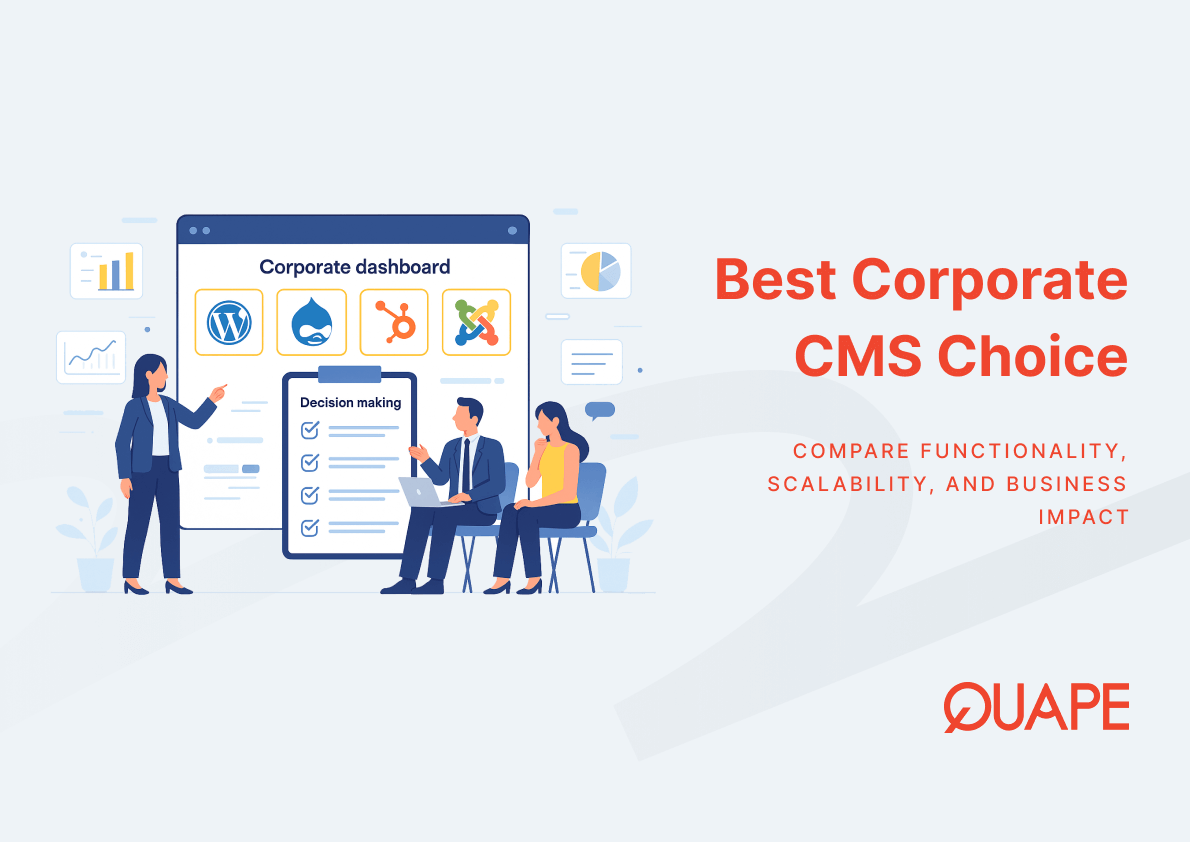
Corporate websites have evolved from static marketing pages into operational infrastructure that supports client onboarding, documentation, service delivery, and digital engagement. For IT managers, CTOs, and procurement leads in Singapore, selecting a Content Management System is no longer a departmental decision made by marketing alone. It requires evaluating platform architecture, integration capabilities, governance controls, and long-term scalability against the organization’s digital strategy. The wrong CMS creates compounding technical debt: fragmented workflows, poor integration with enterprise systems, and security vulnerabilities that expose customer-facing infrastructure. The right platform, by contrast, reduces operational friction and supports consistent content delivery across every digital channel the business operates.
Introduction to Best CMS for Corporate Websites
A Content Management System enables organizations to create, manage, and publish website content without requiring advanced programming knowledge for every routine update. At the enterprise level, however, a CMS is far more than an editing interface. It functions as the backbone of the organization’s digital presence, connecting editorial workflows, customer data systems, compliance controls, and front-end delivery into a unified content operations layer.
Corporate websites increasingly serve as digital infrastructure rather than marketing collateral. They manage product documentation, regulatory disclosures, customer portals, and multilingual regional content. This operational scope means CMS selection now belongs alongside ERP and CRM in the IT procurement conversation. Understanding how corporate website architecture shapes CMS requirements is the starting point for making a well-reasoned platform decision.
Key Takeaways
- Enterprise CMS platforms must support scalability, role-based access control, API integration, and security compliance as foundational requirements.
- WordPress holds a dominant global market share and remains viable for corporate websites when properly configured and maintained.
- Enterprise platforms such as Sitecore and Adobe Experience Manager deliver advanced personalization and governance but require significantly higher investment and specialized development resources.
- Headless CMS architecture separates content management from front-end delivery, enabling organizations to publish across websites, mobile apps, and other digital channels through APIs.
- CMS implementation costs for enterprise environments can range from SGD 70,000 to over SGD 650,000 depending on customization, integrations, and data migration complexity.
- Singapore businesses must align CMS selection with PDPA compliance requirements, multilingual content workflows, and regional digital distribution needs.
- CMS evaluation should prioritize total cost of ownership, vendor ecosystem depth, and alignment with existing enterprise IT architecture.
Core Capabilities a Corporate CMS Must Provide
Enterprise organizations manage content across multiple digital touchpoints simultaneously. A CMS that serves only a single website with a small editorial team is architecturally insufficient for corporate requirements. The platform must coordinate workflows, enforce governance policies, integrate with adjacent enterprise systems, and maintain consistent performance under variable traffic loads.
Scalability and Performance for Enterprise Websites
Enterprise websites regularly experience traffic spikes driven by product launches, media coverage, or regional campaigns. A CMS built for corporate use must support horizontal scaling, allowing infrastructure to expand in response to demand without service degradation. Cloud infrastructure integration enables dynamic resource allocation, while a content delivery network (CDN) reduces latency for users accessing content from geographically distributed locations.
The relationship between CMS architecture and performance is direct: platforms that separate content storage from delivery logic can scale each component independently, improving both reliability and cost efficiency. Organizations evaluating CMS options should assess whether the platform supports containerized deployment, CDN integration, and corporate website speed optimization as part of its native architecture. Poor performance on a corporate website affects search visibility, user engagement, and ultimately the credibility of the brand.
Content Governance and Role-Based Access Control
Multi-author environments require structured permission systems to maintain content quality and prevent unauthorized publishing. Content governance in a corporate CMS defines which users can create, edit, approve, and publish content at each stage of the workflow. Role-based access control (RBAC) ensures that junior editors cannot bypass approval stages, while compliance teams retain visibility into what content is live and when it was published.
Editorial workflows also support accountability. In regulated industries such as finance, healthcare, or legal services, content published on a corporate website may carry compliance obligations. A CMS that enforces staged approval, maintains an audit trail, and supports version control reduces the risk of non-compliant content reaching public channels. Governance architecture should be a primary evaluation criterion rather than an optional feature.
API Integrations and Headless CMS Architecture
Large organizations rely on multiple enterprise systems: CRM platforms, ERP software, marketing automation tools, analytics dashboards, and customer data platforms. A CMS that cannot communicate with these systems through REST or GraphQL APIs creates data silos and forces manual content operations that reduce efficiency and introduce errors.
Headless CMS architecture addresses this by separating content management from front-end presentation. Content is stored and managed in a single repository and delivered to any digital surface, including websites, mobile applications, digital signage, or IoT interfaces, through API calls. According to aggregated industry forecasts reported by Zipdo, approximately 70% of organizations planned to adopt headless CMS architectures by 2025 to support flexible, API-based content delivery across multiple digital channels. This trend reflects the reality that corporate digital infrastructure now spans far more than a single website.
Security and Compliance Considerations
CMS platforms manage public-facing websites and the workflows that produce them, creating a significant security surface. Vulnerabilities in plugins, third-party integrations, or inadequate access controls can expose corporate websites to unauthorized access, data breaches, or content tampering. Enterprise security standards require regular vulnerability assessments, patching schedules, and access control policies that limit exposure at both the user and system level.
Data protection obligations further shape CMS security requirements. Corporate websites that collect customer information must store and process that data in accordance with applicable regulations. A CMS that supports encrypted data storage, secure authentication, and configurable data retention policies reduces compliance risk. Organizations building or upgrading corporate websites should evaluate corporate website security architecture as an integral part of CMS selection, not a post-deployment concern.
Comparing Popular CMS Platforms for Corporate Websites
The CMS market spans a wide range of platforms, from open-source systems designed for broad accessibility to purpose-built enterprise digital experience platforms (DXPs). Each platform represents a different set of trade-offs involving cost, capability, flexibility, and operational complexity. Understanding how these platforms differ helps IT teams and procurement leads match platform characteristics to organizational requirements.
WordPress for Corporate Websites
WordPress is the most widely used CMS globally. According to data from W3Techs via aggregated industry statistics, WordPress powers approximately 64.3% of all CMS-based websites worldwide. This market penetration reflects the platform’s accessibility, its extensive plugin ecosystem, and its low barrier to entry for editorial teams without technical backgrounds.
For corporate websites, WordPress delivers genuine advantages when the implementation is properly architected. The plugin ecosystem supports Yoast SEO for search visibility management, e-commerce functionality through WooCommerce, membership and booking systems, and AI-driven customer engagement tools. An open-source CMS model reduces licensing costs and allows organizations to avoid vendor lock-in. However, WordPress requires disciplined governance to manage plugin dependencies, security patching, and performance optimization at enterprise scale. When supported by an experienced development team, WordPress can serve as a viable and cost-efficient foundation for many corporate websites in Singapore, particularly for organizations that want editorial simplicity combined with modular website functionality.
Sitecore for Enterprise Digital Experiences
Sitecore positions itself as a digital experience platform (DXP) rather than a pure content management system. It combines a CMS with a built-in personalization engine, enterprise marketing automation tools, and customer data management capabilities. Built on .NET architecture, Sitecore is typically selected by large enterprises that require sophisticated content targeting, multichannel campaign management, and deep integration with Microsoft ecosystem tools.
The platform’s personalization capabilities allow organizations to deliver different content experiences to different user segments based on behavioral data, geography, or CRM attributes. This makes Sitecore particularly relevant for corporate websites that support complex buyer journeys or regional customer segmentation. The trade-off is implementation complexity and cost. Sitecore deployments require specialized development resources, and initial setup costs often exceed those associated with open-source alternatives. Organizations evaluating Sitecore should assess whether the personalization and governance capabilities justify the investment relative to their specific digital requirements.
Adobe Experience Manager for Large Enterprises
Adobe Experience Manager (AEM) integrates content management with a comprehensive digital asset management (DAM) system, enabling large enterprises to manage creative assets, web content, and digital publications from a unified platform. As part of the Adobe Experience Cloud ecosystem, AEM connects with Adobe Analytics, Adobe Target, and Adobe Campaign, giving marketing and IT teams a tightly integrated data and content operations environment.
AEM is designed for organizations that manage high volumes of digital assets across multiple brands, geographies, and digital channels simultaneously. Its enterprise content platform architecture supports complex multi-site management, granular permission structures, and advanced localization workflows. The platform demands significant investment in both licensing and specialized development expertise. For organizations already operating within the Adobe ecosystem and managing enterprise-scale content operations, AEM offers a level of integration depth that purpose-built open-source platforms cannot easily replicate.
How to Select the Right CMS Based on Business Requirements
CMS selection should begin with a structured evaluation framework that maps organizational requirements to platform capabilities. Total cost of ownership (TCO) is the primary financial lens: it incorporates not only licensing or hosting costs but also development effort, integration complexity, ongoing maintenance, training, and vendor support expenses. Enterprise CMS implementation projects can involve initial costs ranging from USD 50,000 to USD 500,000 depending on customization requirements and migration scope.
Beyond cost, vendor ecosystem depth matters. A platform with an active developer community, a reliable support network, and regular security updates reduces long-term operational risk. Enterprise IT procurement teams should also evaluate whether the CMS integrates with existing systems, supports the organization’s preferred deployment model (cloud, on-premises, or hybrid), and aligns with internal technical competencies. The best CMS for a corporate website is the one that the organization can operate, govern, and scale effectively over a multi-year digital horizon.
CMS Selection Considerations for Businesses in Singapore
Singapore’s digital economy creates specific requirements for corporate websites that go beyond general enterprise CMS criteria. Organizations operating in Singapore must navigate data protection legislation, serve multilingual regional markets, and align digital infrastructure with the country’s enterprise IT procurement environment. These factors influence both platform selection and implementation approach.
Data Protection and PDPA Compliance
The Personal Data Protection Act (PDPA) governs how organizations in Singapore collect, use, and store personal data. Corporate websites that capture customer information through contact forms, account registrations, or service inquiries must handle that data in accordance with PDPA obligations. CMS platforms that support configurable data collection, consent management, and data retention controls help organizations meet these requirements at the infrastructure level.
A CMS that integrates data governance policies directly into its publishing and collection workflows reduces the risk of non-compliant data handling practices occurring at the operational level. Organizations building or upgrading corporate websites with customer-facing functionality should evaluate PDPA-compliant website architecture as a core requirement of the CMS selection process.
Multilingual Content Management for Regional Markets
Singapore-based corporate websites frequently serve audiences across Southeast Asia, requiring content in multiple languages and adapted to regional market contexts. A CMS that supports multilingual content management allows organizations to maintain language variants of each content piece within a single repository, enforce translation workflows, and manage regional publishing schedules from a centralized interface.
Localization extends beyond translation. Regional markets in Southeast Asia differ in regulatory environment, consumer expectations, and preferred digital formats. CMS platforms that support multilingual corporate website architecture allow organizations to configure region-specific content rules, apply market-appropriate metadata, and manage localized digital assets without duplicating site infrastructure.
Aligning CMS Selection with Corporate Website Strategy
CMS selection does not occur in isolation from broader website strategy. The platform must support the organization’s content publishing model, integrate with its enterprise systems, and remain aligned with its long-term digital goals. Organizations that select a CMS without reference to a defined corporate website content strategy frequently encounter mismatches between platform capabilities and editorial requirements after deployment.
Strategic alignment means evaluating the CMS against the organization’s anticipated growth trajectory, not just its current content volume. A platform that supports the current website well but cannot accommodate future integrations, traffic growth, or regional expansion will require costly migration at precisely the point when digital operations are most demanding.
How Corporate Web Design Supports CMS Implementation
A CMS platform delivers its value through the website architecture it powers. Poorly structured information architecture, inconsistent template design, and unplanned content hierarchies undermine even the most capable CMS. Effective corporate web design addresses these dependencies by aligning site structure, content types, and navigation logic with the CMS’s publishing model before development begins.
Enterprise web development that incorporates CMS architecture planning reduces post-launch friction. When content types are defined in advance, templates are built to support editorial workflows, and integration points are mapped against the enterprise system landscape, the CMS functions as intended. Organizations that approach web design and CMS deployment as a unified technical project, rather than sequential stages, achieve more consistent outcomes and lower post-launch maintenance costs.
Singapore businesses working with an experienced development partner can also leverage CMS capabilities such as Yoast SEO integration, AI-driven customer engagement tools, booking and membership systems, and structured product catalogue management as functional components of a corporate website rather than afterthoughts added during a later phase.
Conclusion
Selecting the best CMS for a corporate website requires evaluating platform capabilities against the full scope of organizational requirements: scalability under enterprise traffic conditions, content governance and workflow controls, API integration with adjacent systems, security posture, and compliance with applicable data protection regulations. For organizations in Singapore, PDPA compliance, multilingual content management, and regional digital distribution add further dimensions to the evaluation framework.
No single platform suits every corporate context. WordPress offers accessibility, flexibility, and cost efficiency when implemented with professional oversight. Sitecore and Adobe Experience Manager deliver advanced personalization and integration depth for large enterprises with the resources to support them. Headless CMS architecture enables omnichannel content delivery for organizations operating complex digital ecosystems. The most defensible selection process is one that aligns platform capabilities with total cost of ownership, internal technical capacity, and a clearly defined long-term digital strategy.
If you are planning to build or upgrade a corporate website and want guidance on how CMS architecture, web design, and enterprise integration can be structured to meet your organization’s requirements, you can contact our team here.
Frequently Asked Questions
What is the best CMS for a corporate website in Singapore?
There is no single best CMS for all corporate websites. The right platform depends on the organization’s size, integration requirements, content governance needs, and budget. WordPress suits many Singapore businesses with its flexibility and cost efficiency, while larger enterprises may require platforms such as Sitecore or Adobe Experience Manager for advanced personalization and governance capabilities.
Is WordPress suitable for enterprise-level corporate websites?
Yes, WordPress can support enterprise corporate websites when it is properly architected, secured, and maintained by an experienced development team. Its plugin ecosystem supports a wide range of enterprise functions including SEO management, e-commerce, membership systems, and CRM integration. Governance and security require deliberate configuration rather than relying on default settings.
What is a headless CMS and why does it matter for corporate websites?
A headless CMS separates content management from front-end presentation, delivering content through APIs to any digital surface including websites, mobile applications, and digital kiosks. This architecture supports omnichannel content delivery and is particularly valuable for organizations managing multiple digital channels from a single content repository.
How much does enterprise CMS implementation cost?
Enterprise CMS implementation costs vary significantly based on customization, data migration complexity, and integration requirements. Industry estimates place initial setup costs between USD 50,000 and USD 500,000 for enterprise-scale deployments. Organizations should evaluate total cost of ownership rather than licensing costs alone when comparing platforms.
How does PDPA affect CMS selection for Singapore businesses?
Singapore’s Personal Data Protection Act requires organizations to manage customer data in accordance with defined collection, use, and retention obligations. CMS platforms that support consent management, configurable data collection controls, and data governance policies help organizations meet PDPA requirements at the infrastructure level, reducing compliance risk in customer-facing website operations.
What CMS capabilities should IT managers prioritize?
Industry survey data indicates that enterprise organizations prioritize security, scalability for high traffic, integration with existing systems, and advanced workflow management as their top CMS requirements. IT managers should evaluate platforms against these criteria in addition to total cost of ownership and vendor ecosystem depth.
Can a CMS support multilingual corporate websites for Southeast Asian markets?
Yes, several CMS platforms including WordPress with appropriate plugins, Sitecore, and Adobe Experience Manager support multilingual content management. This includes maintaining language variants within a single repository, managing translation workflows, and applying region-specific metadata and publishing rules for different Southeast Asian markets.
How does web design affect CMS performance?
Website architecture directly influences how effectively a CMS operates. Poorly structured content hierarchies, inconsistent templates, and unplanned integration points create editorial friction and increase maintenance costs. Aligning web design with CMS architecture during the planning phase produces more efficient workflows and reduces the risk of post-launch technical issues.