WordPress
Understanding cPanel and Server Management Basics
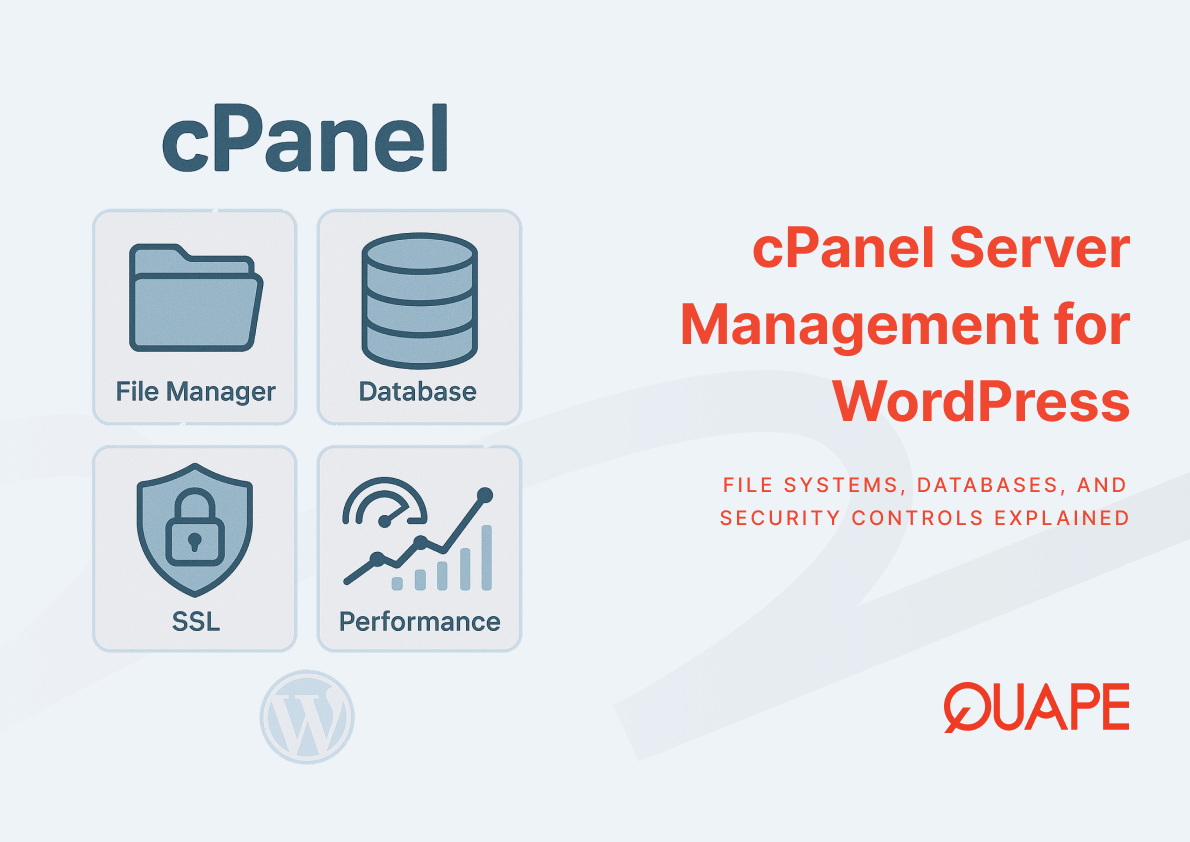
For IT managers and technical teams responsible for WordPress operations, cPanel remains one of the most widely deployed control panels for managing server resources, databases, and file systems. While approximately 91.5% of websites do not use monitored web panels, among those that do, cPanel provides centralized access to critical hosting functions that directly affect site availability, security posture, and recovery capability. Understanding how to navigate cPanel’s file management, database tools, and security controls is essential for maintaining business-critical WordPress installations, particularly in markets like Singapore where local hosting infrastructure and regulatory compliance requirements shape operational decisions.
WordPress powers roughly 43% of all websites, and the majority of these installations rely on hosting control panels to manage routine maintenance, backups, and security updates. For Singapore-based businesses, choosing hosting providers with robust cPanel implementations and local data center capacity reduces latency and supports compliance with regional data protection standards. However, centralized control panels also introduce concentrated privilege risks: if panel credentials are compromised, attackers gain access to file systems, databases, and mail services simultaneously. This article explains how cPanel’s core components work, how they interact with WordPress hosting infrastructure, and how managed hosting services reduce operational overhead while strengthening security.
What cPanel Server Management Means for WordPress Hosting
cPanel is a web-based hosting control panel that consolidates server management tasks into a single interface. It enables users to manage file systems, configure databases, install SSL certificates, monitor resource usage, and execute backups without requiring command-line access. For WordPress hosting, cPanel serves as the operational layer between the underlying Linux server and the site owner, providing tools like File Manager for direct file editing, phpMyAdmin for database queries, and automated installers for rapid WordPress deployment.
The control panel’s design prioritizes accessibility over granular permission models, which creates trade-offs. IT managers gain the ability to delegate routine tasks to less technical staff, but this also means that a single compromised cPanel account can expose multiple subsystems. Secure cPanel configurations require multi-factor authentication, IP whitelisting for administrative access, and regular audits of user permissions to mitigate the risks associated with centralized privilege.
Key Takeaways
- cPanel consolidates file management, database administration, SSL installation, and resource monitoring into a single web-based interface, reducing the need for command-line server access.
- WordPress powers roughly 43% of all websites, and cPanel’s automated installers and file editing tools accelerate WordPress deployment but also expand the attack surface if server-side validation is weak.
- File Manager provides direct access to WordPress core files, plugins, and themes, but unrestricted or improperly validated file uploads are an established vector for server-side compromise, including web shells and remote command execution.
- phpMyAdmin within cPanel enables database backups, table optimization, and credential resets, but database access must be protected with strong passwords and limited to necessary IP ranges.
- Robust backup and contingency planning is a standard requirement for resilient server operations, and cPanel’s backup tools should be configured to produce both filesystem and database snapshots with off-site retention.
- Managed WordPress hosting services integrate WP Toolkit and automated security updates directly into cPanel, reducing manual maintenance overhead and improving security posture for IT teams managing multiple sites.
- Singapore-based businesses benefit from hosting providers with local data center capacity, as this reduces latency and supports compliance with regional data protection frameworks.
Introduction to cPanel Server Management for WordPress
Server management for WordPress sites requires coordination across multiple subsystems: the web server that handles HTTP requests, the database that stores content and settings, the file system that holds themes and plugins, and the security layer that enforces access controls and encryption. cPanel abstracts these subsystems into manageable interfaces, allowing IT managers to perform tasks like installing SSL certificates, creating MySQL databases, and editing configuration files without directly interacting with Apache or Nginx configuration files.
For organizations evaluating managed WordPress hosting solutions, understanding cPanel’s role is essential. The control panel does not replace proper server hardening or security monitoring, but it does reduce the operational complexity of routine tasks like plugin updates, database backups, and DNS record management. Hosting providers that integrate WP Toolkit into cPanel enable administrators to update all WordPress plugins from a single dashboard, reducing the window of exposure when security patches are released.
The WordPress hosting landscape is shaped by the platform’s dominance and the infrastructure required to support it. Web servers optimized for WordPress, such as those using LiteSpeed or Nginx with FastCGI caching, improve page load times and reduce server resource consumption. cPanel’s resource monitoring tools provide visibility into CPU usage, disk I/O, and bandwidth consumption, which helps IT teams identify performance bottlenecks and plan capacity upgrades before sites experience downtime.
Key Components and Concepts of cPanel Server Management
Navigating the Hosting Dashboard
The cPanel dashboard organizes server management functions into logical categories: Files, Databases, Domains, Email, Metrics, Security, and Software. The interface uses iconography and search functionality to help users locate specific tools quickly, but the underlying architecture connects each tool to core server processes. For example, the File Manager tool interacts directly with the Linux file system, while the MySQL Databases section generates database credentials and assigns user permissions through MariaDB or MySQL.
For IT managers responsible for multiple WordPress installations, the dashboard’s organization reduces context switching. Creating a new database, uploading theme files, and configuring email accounts can all be accomplished within the same session, but this convenience requires disciplined access control. User accounts with full cPanel access can modify DNS records, delete databases, and overwrite critical files, so role-based permissions should be configured to limit access based on job function.
The dashboard also surfaces server health indicators such as disk usage, bandwidth consumption, and email quota status. These metrics inform capacity planning decisions and help identify abnormal resource consumption patterns that may indicate malware infections or traffic spikes. Hosting providers that deploy cPanel on high-IOPS NVMe storage improve responsiveness for file uploads and database queries, which directly affects the user experience when managing large media libraries or running database-intensive plugins.
Using cPanel File Manager for Website Operations
File Manager provides a web-based file browser that allows users to upload, edit, rename, and delete files on the server without FTP clients. For WordPress administrators, this tool enables direct editing of wp-config.php for database credentials, uploading custom plugins via ZIP archives, and modifying .htaccess rules for permalink structures. The interface includes a code editor with syntax highlighting, making it possible to troubleshoot PHP errors or apply security patches without additional software.
However, unrestricted or improperly validated file uploads are an established vector for server-side compromise, and File Manager’s accessibility increases this risk. If an attacker gains access to a cPanel account, they can upload malicious PHP scripts to the wp-content/uploads directory, where WordPress typically allows file writes. These scripts can function as web shells, granting remote command execution and enabling data exfiltration or lateral movement within the hosting environment. Secure handling of file uploads requires server-side validation, file type whitelisting, storage isolation, and business-logic checks.
IT teams should configure File Manager in conjunction with backup strategies that include both filesystem and database snapshots, as this provides rollback capability when configuration changes break functionality. Automated daily backups that retain multiple restore points reduce recovery time after accidental deletions or plugin conflicts. For business-critical WordPress sites, backups should be stored off-site or in immutable storage to protect against ransomware that targets production servers and their backup files.
File permissions within cPanel should follow the principle of least privilege. WordPress core files typically require 644 permissions for files and 755 for directories, while wp-config.php should be set to 440 or 400 to prevent unauthorized reads. File Manager displays current permission levels and allows bulk changes, but incorrect permissions can either expose sensitive configuration data or prevent WordPress from writing cache files and uploading media.
Managing WordPress Databases in cPanel
WordPress stores all content, user data, settings, and plugin configurations in MySQL or MariaDB databases. cPanel’s MySQL Databases tool allows administrators to create databases, assign users with specific privileges, and generate strong passwords. phpMyAdmin, accessible through cPanel, provides a graphical interface for executing SQL queries, optimizing tables, and exporting database backups in formats compatible with migration tools.
Database management directly affects how PHP and MySQL power WordPress websites, as inefficient queries or bloated tables degrade page load times. phpMyAdmin includes table optimization functions that reclaim unused space and rebuild indexes, improving query performance. For high-traffic sites, database performance profiling identifies slow queries that should be cached or refactored, and these insights inform decisions about whether to upgrade hosting plans or implement object caching layers like Redis.
Database credentials stored in wp-config.php control WordPress’s ability to read and write data. If these credentials are exposed, attackers can exfiltrate user information, inject malicious content into posts, or escalate privileges by modifying the wp_users table. Secure database practices include using unique database names, limiting MySQL user privileges to only the required operations, and restricting database access to localhost unless remote connections are explicitly required for development workflows.
Routine database backups are essential for disaster recovery. cPanel’s backup wizard can generate full cPanel account backups that include databases, files, and email configurations, or partial backups targeting only the MySQL databases. Restoration testing should be performed periodically to verify that backups are complete and that restoration procedures function as expected, as untested backups often fail when needed most.
Security Tools in cPanel
cPanel includes native tools for SSL certificate installation, directory privacy enforcement, IP address blocking, and SSH key management. SSL certificate installation is streamlined through AutoSSL or Let’s Encrypt integration, which automatically provisions and renews certificates for domains configured within the account. SSL certificates protect WordPress websites by encrypting data in transit between browsers and servers, preventing credential theft and session hijacking attacks.
Directory privacy allows administrators to password-protect specific directories using HTTP authentication, which is useful for staging environments or administrative interfaces that should not be publicly accessible. This feature complements WordPress’s native user authentication and adds an additional layer of access control that operates at the web server level before PHP execution begins.
IT managers deploying WordPress should integrate cPanel’s security features with comprehensive security checklists that address application-layer vulnerabilities such as weak passwords, outdated plugins, and insufficient file upload validation. cPanel’s malware scanning tools can detect suspicious files, but they do not replace proactive security measures like limiting login attempts, disabling file editing from the WordPress admin panel, and implementing web application firewalls that filter malicious requests before they reach PHP.
Firewall rules and IP whitelisting reduce exposure to brute force attacks and automated scanning tools. cPanel accounts with SSH access should enforce key-based authentication rather than password authentication, and administrative access should be restricted to known IP ranges whenever possible. Multi-factor authentication for cPanel logins further reduces the risk of credential compromise.
Resource Monitoring and Performance Optimization
cPanel’s Metrics section provides real-time visibility into bandwidth usage, CPU consumption, disk I/O, and memory allocation. For WordPress sites, understanding resource consumption patterns helps IT teams identify performance bottlenecks and plan capacity upgrades. High CPU usage may indicate inefficient plugins, excessive bot traffic, or insufficient caching, while disk I/O spikes often correlate with database queries or file system operations triggered by poorly optimized themes.
Bandwidth monitoring reveals traffic trends and helps detect anomalies such as DDoS attacks or hotlinking abuse. Hosting providers that enforce bandwidth limits based on monthly quotas may suspend sites that exceed their allocation, so monitoring tools should include alerting thresholds that notify administrators before limits are reached.
Server location impacts SEO and Core Web Vitals, as network latency between the hosting server and end users affects Time to First Byte and Largest Contentful Paint metrics. cPanel’s resource monitoring tools do not directly measure Core Web Vitals, but they provide the server-side data needed to correlate resource consumption with front-end performance. For Singapore-based businesses targeting local audiences, hosting on servers located in Singapore data centers reduces round-trip time and improves perceived site speed.
Performance optimization requires coordination between cPanel configuration, web server tuning, and WordPress-specific caching strategies. Optimizing WordPress hosting for speed and uptime involves enabling OPcache for PHP, configuring object caching with Redis or Memcached, and implementing CDN integration for static assets. cPanel’s software installation tools support one-click deployment of caching plugins and performance monitoring extensions that simplify these configurations.
Practical Application for Singapore-Based Businesses
Singapore’s digital infrastructure and demand for data centers have been rising rapidly, with major M&A and capacity expansion activity in 2024–2025 reflecting strong enterprise demand for local compute and low-latency hosting. For businesses operating in Singapore, choosing hosting providers with local data center presence reduces latency for regional users and supports compliance with data protection regulations that may require data residency within specific jurisdictions.
Choosing a Singapore data center improves website speed by reducing the physical distance between servers and end users. This is particularly important for e-commerce sites and SaaS platforms where milliseconds of latency affect conversion rates and user satisfaction. cPanel-based hosting solutions deployed in Singapore facilities enable IT teams to manage server resources with familiar tools while benefiting from low-latency network connectivity and direct exchange peering with regional internet service providers.
The trade-off between local and global hosting depends on target audience geography and regulatory requirements. Global content delivery networks distribute static assets across multiple regions, but dynamic content generation still depends on the origin server’s location. For WordPress sites with geographically concentrated audiences, local hosting paired with regional CDN nodes provides optimal performance without the operational complexity of multi-region server management.
Singapore’s data center market is characterized by institutional investment and capacity expansion. Data center capacity and buildout in Singapore are part of a multi-billion dollar regional market with high projected CAGR, which ensures continued investment in infrastructure quality, network redundancy, and enterprise-grade service level agreements. IT managers evaluating hosting providers should assess data center certifications, network uptime guarantees, and support responsiveness as part of vendor selection criteria.
How WordPress Hosting Helps Improve cPanel Server Management
Managed WordPress hosting services integrate specialized tools into cPanel that reduce manual maintenance and improve security posture. WP Toolkit, available in many managed hosting environments, consolidates plugin updates, theme installations, security hardening, and backup management into a single interface. This reduces the time required to maintain multiple WordPress sites and ensures that security patches are applied promptly after release.
Automated daily backups with one-click restoration capabilities address the operational challenges of disaster recovery. Robust backup and contingency planning is a standard requirement for resilient server operations, and managed hosting providers that implement automated backup retention, off-site storage, and tested recovery procedures reduce business risk from plugin failures, database corruption, or malware infections. For IT managers responsible for business-critical WordPress installations, the assurance of rapid recovery outweighs the incremental cost of managed services.
Performance optimization features integrated into managed WordPress hosting include server-level caching, database query optimization, and image compression. These optimizations operate transparently within cPanel and do not require manual configuration, which reduces the technical expertise required to maintain high-performing WordPress sites. Hosting providers that deploy high-IOPS NVMe storage further improve disk read/write speeds, which directly benefits WordPress operations that involve frequent file system access or database queries.
The distinction between managed and shared WordPress hosting centers on the level of automation and support provided. Shared hosting environments require site owners to manage updates, security hardening, and performance tuning independently, while managed hosting includes these services as part of the hosting package. For organizations evaluating scaling WooCommerce stores with managed hosting, the ability to delegate routine maintenance to hosting providers frees internal IT resources for strategic projects while maintaining site availability and security.
Security updates applied through managed hosting services reduce the attack surface by ensuring that WordPress core, plugins, and themes remain current with published security patches. The challenge of coordinating updates across multiple sites is simplified when hosting providers automate update testing and rollback procedures. IT managers can define update policies that balance the need for timely security patches with the risk of compatibility issues, and managed hosting platforms typically include staging environments for testing updates before production deployment.
Conclusion
Effective cPanel server management for WordPress requires understanding how file systems, databases, security controls, and resource monitoring interact to support site availability and performance. For Singapore-based businesses, choosing hosting providers with local data center capacity and integrated WP Toolkit functionality reduces latency, supports compliance requirements, and simplifies routine maintenance tasks. The centralized nature of cPanel provides operational efficiency but also requires disciplined access control, regular backups, and proactive security hardening to mitigate the risks associated with consolidated privilege. IT managers who combine cPanel’s management capabilities with managed hosting services gain the infrastructure needed to support business-critical WordPress operations while reducing manual overhead.
For WordPress hosting that integrates cPanel management with Singapore-based infrastructure, automated backups, and security updates, contact our team to discuss how managed services reduce operational complexity while maintaining performance and security standards.
Frequently Asked Questions
What is the main advantage of using cPanel for WordPress hosting?
cPanel consolidates file management, database administration, SSL installation, and resource monitoring into a single web-based interface, reducing the need for command-line server access. This makes routine maintenance tasks accessible to less technical staff while providing IT managers with centralized visibility into server health and resource consumption. The trade-off is that a compromised cPanel account grants access to multiple subsystems simultaneously, requiring strong authentication controls.
How does File Manager in cPanel affect WordPress security?
File Manager provides direct access to all WordPress files, including plugins, themes, and configuration files. While this enables rapid troubleshooting and manual edits, it also creates security risks if file upload validation is weak. Attackers who gain cPanel access can upload malicious PHP files that function as web shells, enabling remote command execution. Secure configurations require server-side file type validation, directory permissions following least privilege, and regular malware scanning.
Why are database backups important for WordPress sites?
WordPress stores all content, user data, and settings in MySQL databases. Without regular backups, database corruption, plugin conflicts, or malware infections can result in permanent data loss. cPanel’s backup tools should be configured to produce both filesystem and database snapshots with off-site retention. Routine restoration testing verifies that backups are complete and that recovery procedures function correctly under failure scenarios.
How does server location in Singapore benefit local businesses?
Hosting WordPress sites on servers located in Singapore data centers reduces network latency for regional users, improving page load times and Core Web Vitals metrics. This is particularly important for e-commerce platforms and SaaS applications where milliseconds of latency affect conversion rates. Local hosting also supports compliance with data protection regulations that require data residency within specific jurisdictions and provides better connectivity to regional internet service providers.
What is the difference between managed and shared WordPress hosting?
Shared WordPress hosting requires site owners to manage updates, security patches, and performance optimization independently, while managed hosting includes automated maintenance, security updates, and backup management as part of the service. Managed hosting environments typically integrate WP Toolkit into cPanel, enabling one-click plugin updates and staging environment deployment. The trade-off is higher cost in exchange for reduced operational overhead and improved security posture.
How often should WordPress security updates be applied?
Security updates should be applied as soon as they are released, particularly for vulnerabilities affecting WordPress core or widely used plugins. Managed hosting providers automate this process by testing updates in staging environments before production deployment, reducing compatibility risks. For self-managed hosting, IT teams should subscribe to security advisories and implement update testing workflows that balance the need for timely patches with the risk of site breakage.
What resource metrics should IT managers monitor in cPanel?
IT managers should monitor CPU usage, disk I/O, bandwidth consumption, and memory allocation to identify performance bottlenecks and capacity constraints. High CPU usage may indicate inefficient plugins or bot traffic, while disk I/O spikes often correlate with database queries or file system operations. Bandwidth monitoring detects traffic anomalies and prevents sites from exceeding hosting quotas. These metrics inform decisions about when to upgrade hosting plans or optimize site configurations.
Can cPanel tools prevent all WordPress security threats?
No, cPanel provides foundational security tools like SSL certificate installation, directory privacy, and IP blocking, but these do not prevent application-layer vulnerabilities such as weak passwords, outdated plugins, or insufficient input validation. Comprehensive WordPress security requires combining cPanel’s server-level controls with application-specific measures like web application firewalls, login attempt limiting, and regular malware scanning. Security is a layered approach rather than a single tool or configuration.