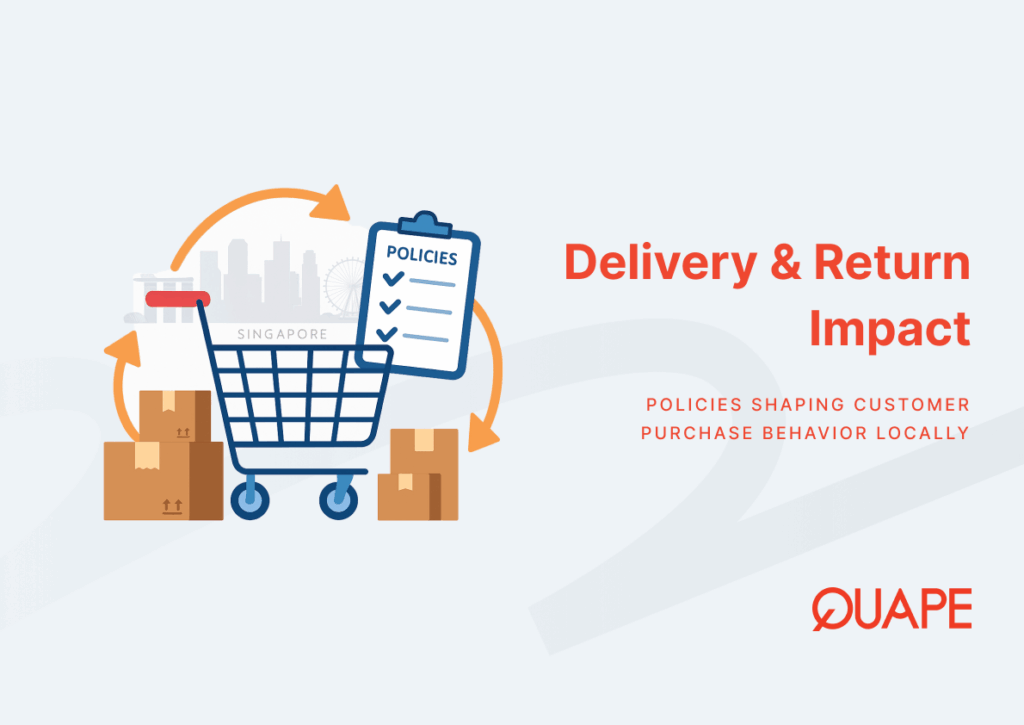
Delivery and return policies are no longer optional elements in e-commerce. They function as critical trust signals that directly influence purchase decisions, cart abandonment rates, and customer lifetime value. For businesses targeting Singapore’s competitive online retail market, these policies shape buyer psychology at every stage of the purchasing journey. Understanding how delivery speed expectations, return friction, and refund transparency interact with consumer behavior enables technical teams to design systems that convert hesitant browsers into confident buyers.
What Are Delivery & Return Policies in E-Commerce?
Delivery and return policies define the terms under which online retailers fulfill orders and handle product returns. A delivery policy outlines shipping methods, transit times, tracking capabilities, and costs. A return policy specifies conditions for refunds, exchanges, restocking fees, and the procedural steps customers must follow. Together, these policies establish the operational framework that governs post-purchase experiences and directly impacts how shoppers perceive risk when buying online.
In Singapore’s urban market, where same-day delivery and transparent fulfillment processes have become baseline expectations, these policies serve dual functions. They reduce perceived risk cost by clarifying what happens if a purchase doesn’t meet expectations, and they signal operational competence through delivery speed commitments and tracking infrastructure.
Key Takeaways
- According to DHL Insights, 79% of global online shoppers abandon their cart if their preferred returns option isn’t offered.
- Perceived risk cost decreases when return policies provide clear refund timelines, no-questions-asked terms, and visible processing steps.
- Delivery speed expectations in Singapore align with last-mile logistics capabilities, where delays trigger abandonment and negative reviews.
- Free returns function as a conversion lever by lowering the psychological barrier to purchase, particularly for high-involvement product categories.
- End-to-end tracking reduces post-purchase anxiety and supports repeat purchase behavior by establishing delivery predictability.
- Policy transparency in e-commerce web design improves discoverability and reduces customer service inquiries about fulfillment terms.
- Operational cost versus customer experience balance requires technical infrastructure that automates policy communication without manual intervention.
Key Components of Delivery & Return Policies That Shape Buyer Decisions
Perceived Risk Cost and Post-Purchase Anxiety
Perceived risk cost represents the uncertainty and anticipated negative outcomes a shopper associates with an online transaction. This psychological friction increases when return policies lack clarity about eligibility windows, restocking fees, or refund processing times. Shoppers mentally calculate the worst-case scenario before completing checkout. If that calculation produces excessive friction, abandonment follows.
Return transparency reduces this friction by making consequences explicit. A policy stating “14-day returns, full refund, no restocking fee” eliminates ambiguity. One that requires original packaging, inspection approval, and store credit creates multiple points of uncertainty. Each condition adds to perceived risk cost, which directly correlates with cart abandonment rates.
Post-purchase anxiety persists until the product arrives and meets expectations. Refund transparency during this period determines whether a customer trusts the retailer enough to complete future transactions. Clear communication about how returns work, what documentation is required, and when refunds appear supports purchase confidence. Businesses that integrate return instructions into order confirmation emails and tracking pages reduce the cognitive load associated with potential product dissatisfaction. This approach also strengthens e-commerce trust signals by demonstrating operational readiness to handle issues.
Delivery Speed Expectations in Singapore’s Urban Market
Singapore’s geographic density and advanced logistics infrastructure create delivery speed expectations that exceed global averages. Same-day delivery has shifted from premium service to competitive baseline for certain product categories. Last-mile logistics capabilities determine whether a retailer can meet these expectations without eroding margins through unsustainable fulfillment costs.
Delivery speed expectations interact with buyer psychology in measurable ways. Longer delivery windows increase the likelihood that a customer will comparison shop, discover alternative vendors, or reconsider the purchase entirely. Faster delivery compresses this decision-making window and reduces abandonment risk. For time-sensitive purchases like gifts, event supplies, or urgent replacements, delivery speed becomes the primary decision factor.
Technical infrastructure supports these expectations through warehouse proximity, carrier partnerships, and inventory synchronization. An e-commerce platform that displays real-time delivery estimates based on the customer’s postal code and current stock levels provides accuracy that generic “ships in 3-5 days” messaging cannot match. This precision reduces the gap between expectation and reality, which directly influences satisfaction scores and repeat purchase behavior.
Free Returns as a Conversion Lever
Free returns eliminate a specific type of purchase friction: the financial penalty for making a wrong choice. When a shopper knows they can return a product at no cost, the perceived downside of purchasing decreases. This psychological shift converts hesitant browsers into buyers, particularly for products where fit, quality, or appearance cannot be fully assessed through product images and descriptions.
Research from DHL indicates that 55% of global consumers prefer to buy from retailers that offer free returns, while 43% of Asia Pacific shoppers will only shop with free return options. These figures demonstrate that free returns function not just as a convenience feature but as a conversion rate optimization tool. Cart abandonment triggers often include unexpected shipping costs and unclear return policies. Free returns neutralize one of these triggers entirely.
The operational cost of free returns must be balanced against the revenue generated by increased conversions. Businesses targeting high-consideration purchases, premium price points, or categories with sizing uncertainty benefit disproportionately from this policy. The return rate increase from offering free returns is typically offset by higher average order values and improved customer lifetime value, provided the business has systems in place to process returns efficiently and restock inventory without excessive handling costs. Addressing checkout UX and cart abandonment requires understanding how return policies influence the final decision moment before payment submission.
Behavioral Impact of Delivery & Return Policies on Conversion and Retention
Purchase confidence increases when shoppers believe they can reverse a transaction without penalty or complexity. This confidence directly correlates with conversion rates across product categories. When delivery and return policies reduce uncertainty, shoppers spend less time deliberating and more time completing purchases. The presence of end-to-end tracking, clear refund timelines, and accessible return instructions creates a psychological safety net that lowers the barrier to buying.
Repeat purchase behavior depends on whether the first transaction met or exceeded expectations. Delivery speed, package condition, and the ease of initiating a return if needed all contribute to this evaluation. A customer who experiences seamless delivery and receives a prompt refund after a return becomes more likely to make future purchases. Conversely, hidden fees, delayed refunds, or complex return processes erode trust and eliminate repeat business.
E-commerce analytics track these behaviors through metrics like return rate by product category, refund processing time, and customer lifetime value segmented by delivery speed tier. Businesses that analyze these relationships can identify which policy adjustments yield the highest impact on retention. For example, reducing refund processing time from 10 business days to 3 may produce measurable improvements in repeat purchase rates within 60 days. Tools that support e-commerce analytics and A/B testing enable teams to validate these hypotheses with empirical data rather than assumptions.
Practical Application for the Singapore Market
SMEs in Singapore face unique constraints when designing delivery and return policies. Limited warehouse space, smaller order volumes, and tighter margins make it difficult to compete with larger retailers on same-day delivery or unconditional free returns. However, these businesses can still reduce perceived risk cost through clear communication, transparent timelines, and reliable execution of promises made at checkout.
Procurement decision-making within Singapore’s B2B and B2C e-commerce sectors increasingly prioritizes vendors who demonstrate operational competence through their fulfillment policies. A business that offers 48-hour delivery with real-time tracking and a straightforward 14-day return policy positions itself as more reliable than competitors with vague “processing times vary” messaging. This reliability signals professionalism that influences purchasing decisions, particularly for repeat orders or high-value transactions.
The operational cost versus customer experience balance requires technical infrastructure that automates policy communication without manual intervention. Systems that integrate delivery estimates into product pages, send tracking updates via SMS or email, and provide self-service return initiation portals reduce the labor cost associated with customer inquiries. These automations also improve the customer experience by providing information proactively rather than requiring shoppers to contact support. Understanding e-commerce platform costs in Singapore helps businesses evaluate which technical investments yield the highest return through reduced support overhead and increased conversion rates.
How E-Commerce Web Design Supports Delivery & Return Policy Transparency
E-commerce web design determines how easily shoppers can discover and understand delivery and return policies before making purchase decisions. Policy discoverability depends on visual hierarchy, navigation structure, and contextual placement within the user journey. A return policy buried in footer links creates friction. One displayed on product pages, in the cart summary, and during checkout reduces uncertainty at decision-critical moments.
UX clarity involves presenting policy information in scannable formats that communicate key details without requiring extensive reading. Bullet points, icons indicating free returns or fast shipping, and FAQ sections that address common concerns all contribute to transparency. When designing e-commerce systems, technical teams should treat policy communication as a conversion optimization element rather than legal boilerplate.
Delivery and return policy information should integrate with product data to provide context-specific details. For example, a product page could display “Free returns within 30 days” alongside “Ships in 24 hours” rather than forcing shoppers to navigate to a separate policy page. This contextual approach reduces cognitive load and keeps shoppers focused on the purchase decision rather than information gathering. Businesses that implement these design patterns typically see measurable improvements in conversion rates and reductions in pre-purchase support inquiries about shipping and returns.
Conclusion
Delivery and return policies influence Singaporean shoppers by shaping perceived risk, establishing operational credibility, and providing the psychological assurance needed to complete online transactions. Technical teams building e-commerce systems must treat these policies as functional requirements that integrate with UX design, analytics infrastructure, and fulfillment operations. Businesses that optimize policy transparency, automate communication, and align delivery capabilities with market expectations convert more browsers into buyers and retain more customers over time.
If your e-commerce platform needs design systems that improve policy discoverability and support conversion optimization, contact our sales team to discuss implementation strategies tailored to Singapore’s market requirements.
Frequently Asked Questions
How do delivery policies affect cart abandonment in Singapore?
Delivery policies impact cart abandonment when costs, timelines, or available options fail to meet shopper expectations. Unexpected shipping fees revealed at checkout trigger immediate abandonment, as do delivery windows that exceed acceptable wait times for time-sensitive purchases. Providing delivery estimates and costs on product pages reduces this friction.
What makes a return policy effective for online retailers?
An effective return policy balances customer convenience with operational feasibility. Clear eligibility windows, transparent refund timelines, minimal restocking fees, and simple initiation processes reduce perceived risk. Policies that require excessive documentation or impose hidden costs create friction that decreases conversion and damages long-term trust.
Why do Singapore shoppers prioritize same-day delivery?
Singapore’s urban density and mature logistics infrastructure make same-day delivery technically feasible for many retailers. This availability has shifted shopper expectations, making next-day or two-day delivery feel slow by comparison. For competitive product categories, same-day delivery functions as a differentiation factor that influences purchase decisions.
How do free returns impact profit margins?
Free returns increase return rates but typically improve overall profitability through higher conversion rates and customer lifetime value. The key is designing return processes that minimize handling costs through automation, efficient restocking procedures, and quality control that reduces defective shipments requiring returns in the first place.
What role does tracking play in delivery satisfaction?
End-to-end tracking reduces post-purchase anxiety by providing visibility into order status. Shoppers who can monitor their package location experience lower stress about delivery failures and feel more confident about the transaction. This transparency also reduces customer service inquiries about order status.
Should all e-commerce businesses offer free returns?
Not necessarily. Free returns make the most sense for businesses selling high-consideration products, items with sizing uncertainty, or premium goods where conversion benefits outweigh return costs. Businesses with very low margins or high return rates due to product quality issues may need alternative strategies focused on improving product descriptions and reducing defects.
How does policy transparency influence repeat purchases?
Shoppers who experience transparent policies during their first purchase develop trust in the retailer’s operational competence. This trust reduces hesitation on subsequent purchases because the customer already knows what to expect regarding delivery times, return procedures, and refund processing. Repeat customers also have lower acquisition costs than new ones.
What technical infrastructure supports delivery policy automation?
Delivery policy automation requires integration between inventory management systems, carrier APIs, and front-end display logic. Real-time stock levels combined with carrier transit time data enable accurate delivery estimates. Return portals connected to customer order histories and payment systems automate refund processing without manual intervention, reducing operational costs while improving customer experience.