Server
Firewall, IDS & IPS in Dedicated Server Environments
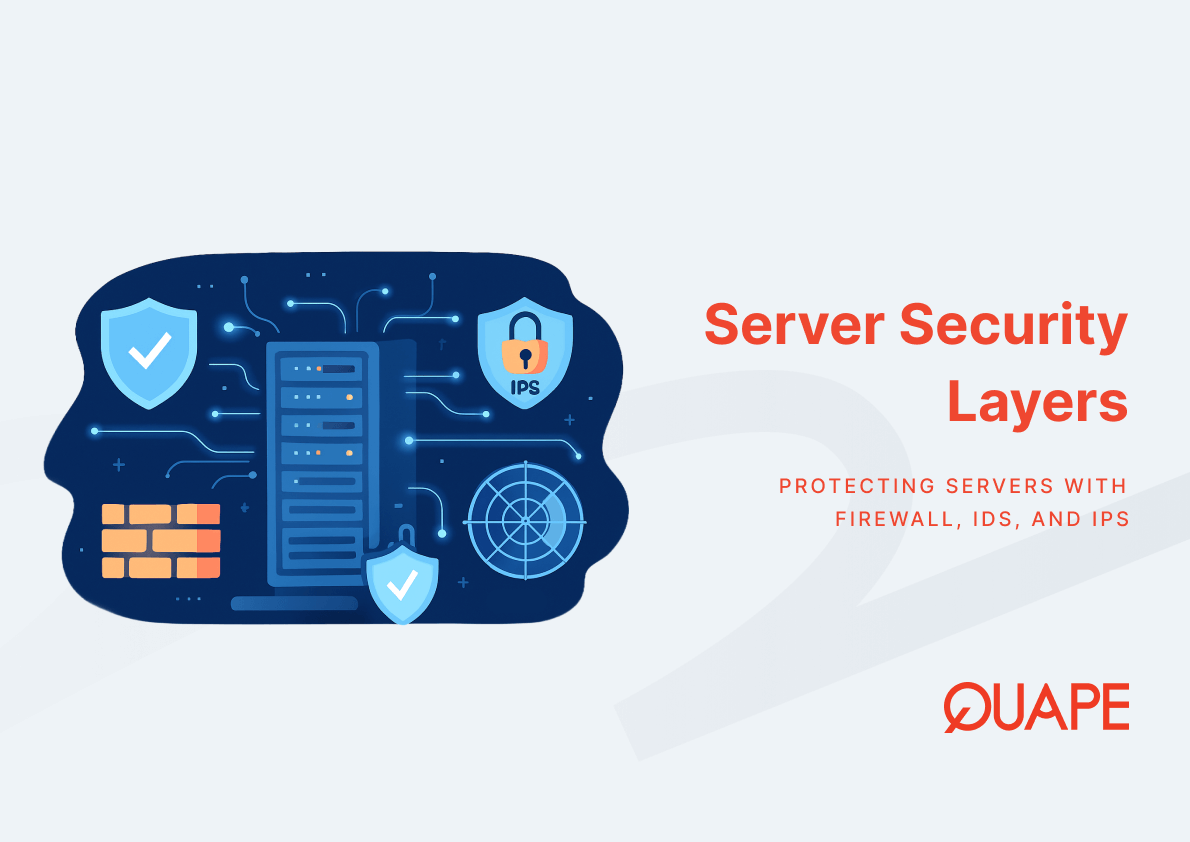
Modern enterprises face a security landscape where unpatched vulnerabilities surge by nearly 180% year-over-year, while 68% of data breaches involve some form of human error or misconfiguration. For organizations deploying mission-critical workloads on dedicated infrastructure, the combination of firewall policies, intrusion detection systems (IDS), and intrusion prevention systems (IPS) forms the foundational layer of network defense. Singapore-based businesses, particularly those subject to MAS Technology Risk Management guidelines or PDPA compliance requirements, must implement robust monitoring, incident response, and secure system design across their hosting environments. This article examines how firewall, IDS, and IPS technologies integrate within dedicated server architectures to enable detection, prevention, and rapid response against evolving threats.
A secure dedicated server is a physical hosting environment where all compute, storage, and network resources are allocated exclusively to a single tenant, enabling full administrative control over security configurations, monitoring telemetry, and incident response workflows. Unlike shared hosting models where security boundaries are managed by the provider, dedicated servers place operational responsibility directly with the customer or their managed service partner, which creates both opportunity and obligation. The opportunity lies in deploying custom firewall rulesets, installing network-based intrusion sensors at strategic chokepoints, and integrating endpoint telemetry with centralized log analysis platforms. The obligation requires maintaining patch discipline, correlating security alerts, and responding to incidents without relying on a multi-tenant provider’s one-size-fits-all security posture.
This control-responsibility trade-off becomes critical when evaluating hosting procurement decisions. Singapore dedicated servers deliver hardware isolation and the freedom to implement strict network segmentation, zero-trust access policies, and continuous monitoring, but these capabilities remain dormant unless backed by clear security architecture and skilled operations.
Key Takeaways
- Firewall policies, network isolation, and security groups establish perimeter controls and traffic segmentation, reducing lateral movement opportunities after initial compromise.
- Intrusion detection systems (IDS) monitor network traffic for known attack signatures and behavioral anomalies, generating alerts for security operations teams to investigate.
- Intrusion prevention systems (IPS) actively block or drop malicious traffic in real time, functioning as automated enforcement layers when signature or heuristic thresholds are met.
- Zero-trust frameworks validate user identity and device posture continuously, treating internal network zones as untrusted by default and requiring verification at each access attempt.
- Log monitoring and SIEM integration enable correlation of firewall denials, IDS alerts, and endpoint events, transforming isolated telemetry into actionable threat intelligence.
- Dedicated servers provide the administrative access and hardware isolation necessary to deploy custom IDS/IPS sensors, enforce strict firewall policies, and integrate security telemetry without multi-tenant constraints.
- Singapore regulatory frameworks, including MAS TRM guidelines for financial institutions, mandate demonstrable monitoring, incident management, and secure network design, making firewall, IDS, and IPS controls essential compliance components.
- Effective security posture depends on orchestrating these technologies together, as firewalls alone cannot detect novel exploits and IDS alone cannot stop attacks without automated prevention or rapid human response.
Introduction to Secure Dedicated Server Security Architecture
Security architecture for dedicated servers begins with understanding how network-level controls, detection systems, and endpoint protections interact to reduce attack surface and limit blast radius. Firewall policies act as the first gate, permitting or denying traffic based on IP addresses, ports, protocols, and application-layer inspection. When configured with a default-deny stance and explicit allow rules for necessary services, firewalls reduce exposure to opportunistic scans and automated exploit attempts that target common service ports. However, firewalls operate on known rules and cannot identify zero-day exploits, polymorphic malware, or command-and-control traffic disguised within permitted protocols.
Intrusion detection systems fill this gap by analyzing packet payloads, connection patterns, and protocol behavior against signature databases and statistical baselines. An IDS deployed at the network perimeter or within internal VLANs can flag suspicious sequences, such as SQL injection attempts, buffer overflow patterns, or anomalous data exfiltration volumes, even when the traffic passes firewall inspection. Intrusion prevention systems extend detection capabilities with automated enforcement, dropping packets or terminating sessions when malicious indicators exceed configured thresholds. The decision to deploy IDS versus IPS depends on tolerance for false positives: IDS generates alerts for human review, while IPS blocks traffic automatically, trading speed for the risk of legitimate service disruption if tuning is inadequate.
Singapore-based organizations operating in regulated sectors face heightened expectations. The Monetary Authority of Singapore’s Technology Risk Management guidelines require financial institutions to adopt robust technology-risk governance, including secure network and system design, continuous monitoring, and incident management capabilities. While MAS TRM applies specifically to banks, insurers, and payment providers, its principles influence hosting security expectations across industries, particularly for businesses handling customer data subject to PDPA. Deploying dedicated servers within Singapore data centers that maintain TIA-942 certifications, multi-homed connectivity, and carrier-neutral infrastructure supports compliance objectives by reducing latency for centralized monitoring, ensuring power redundancy, and enabling PDPA compliance through dedicated server configurations that isolate sensitive workloads from shared environments.
Key Components and Concepts of Firewall, IDS & IPS Integration
Role of Firewall Policies in Network Isolation and Traffic Control
Firewall policies define which packets traverse network boundaries based on source and destination addresses, transport protocols, application signatures, and connection states. Modern stateful firewalls track the lifecycle of TCP sessions and UDP flows, permitting return traffic only for connections initiated from trusted zones and blocking unsolicited inbound requests. Security groups extend firewall logic by tagging resources with policy labels, allowing administrators to define rules such as “web tier can receive HTTP/HTTPS from internet, but application tier accepts connections only from web tier” without enumerating individual IP addresses. This abstraction simplifies management as infrastructure scales and supports zero-trust principles by enforcing least-privilege access at every network hop.
Network isolation segments infrastructure into distinct broadcast domains or VLANs, ensuring that compromise of one zone does not automatically grant access to others. For example, separating production databases, application servers, and administrative jump hosts into isolated subnets with firewall enforcement between them limits lateral movement. If an attacker exploits a vulnerability in a public-facing web service, firewall policies can prevent direct access to backend databases or storage systems, containing the incident and reducing data exfiltration risk. Effective isolation requires aligning firewall rules with application architecture: overly permissive rules undermine segmentation, while overly restrictive rules disrupt legitimate service flows and create operational friction.
Zero-trust security frameworks treat network location as irrelevant to trust decisions, requiring continuous validation of user identity, device health, and request context regardless of whether traffic originates inside or outside the network perimeter. In a zero-trust model, firewall policies shift from perimeter defense to micro-segmentation, enforcing authentication and authorization checks at each application boundary. Gartner research indicates that 63% of organizations have fully or partially implemented zero-trust strategies, though for most deployments coverage remains limited to specific applications or network segments. Dedicated servers support zero-trust implementation by enabling administrators to install software-defined firewalls, configure per-application access controls, and integrate identity providers for dynamic policy enforcement without relying on shared hosting infrastructure that abstracts networking decisions away from tenants.
Intrusion Detection vs Intrusion Prevention: Monitoring vs Active Defense
Intrusion detection systems operate in passive mode, analyzing copies of network traffic (via SPAN ports or network taps) or host-based telemetry (via agents on endpoints) to identify indicators of compromise. Signature-based detection matches packet contents against known exploit patterns, such as specific byte sequences in buffer overflow attempts or protocol violations in malformed HTTP requests. Anomaly detection establishes behavioral baselines for normal traffic volumes, protocol distributions, and connection patterns, then flags deviations that may indicate reconnaissance, data exfiltration, or denial-of-service activity. The primary output of IDS is alerts delivered to security operations centers or SIEM platforms, where analysts investigate context, determine severity, and initiate response actions.
Intrusion prevention systems deploy inline, meaning all traffic passes through the IPS before reaching its destination. When the IPS detects malicious signatures or anomaly thresholds, it can drop packets, reset TCP connections, or block source addresses automatically. This real-time enforcement reduces the window between detection and containment, which is critical for fast-moving threats like automated ransomware propagation or exploit kits scanning for vulnerable endpoints. However, inline deployment introduces latency and creates single points of failure, requiring high-availability IPS clusters and careful tuning to avoid false positives that disrupt business services. Organizations deploying DDoS protection for dedicated servers often integrate IPS capabilities to block volumetric attacks and application-layer exploits simultaneously, combining rate limiting, signature-based filtering, and behavioral anomaly detection.
Malware detection within IDS/IPS frameworks analyzes file hashes, executable behavior, and command-and-control communication patterns. Advanced systems employ sandboxing to detonate suspicious files in isolated environments, observing behavior such as registry modifications, network callbacks, or encryption routines that indicate ransomware. Threat signatures receive continuous updates from vendor intelligence feeds, which aggregate indicators of compromise from global telemetry and threat research. The global intrusion detection and prevention market reached approximately USD 6.25 billion in 2024, with projected growth to USD 12.14 billion by 2030, reflecting enterprise investment in automated detection and response capabilities as attack volumes and sophistication increase.
Zero Trust Security Framework and Dedicated Servers
Zero-trust architecture eliminates implicit trust based on network location, device ownership, or user credentials alone. Instead, every access request undergoes verification of user identity (via multi-factor authentication), device posture (patch level, endpoint agent status), and request context (time of day, geolocation, data sensitivity). Segmentation enforces boundaries between workloads, even within the same data center or cloud region, requiring explicit policy approval for inter-service communication. Endpoint security agents provide continuous telemetry on running processes, file integrity, and network connections, feeding signals to centralized policy engines that grant or deny access in real time.
Dedicated servers enable zero-trust implementation at both network and host layers. Network segmentation can be achieved via private network VLANs for dedicated servers, isolating sensitive workloads from internet-facing services and enforcing firewall policies between segments. Host-based controls include mandatory access controls (SELinux, AppArmor), application whitelisting, and file integrity monitoring that detect unauthorized changes to system binaries or configuration files. Access verification extends to administrative sessions: jump hosts with session recording, privileged access management (PAM) systems that rotate credentials, and time-bound access grants reduce the risk of credential theft or insider misuse.
The operational challenge in zero-trust adoption is balancing security rigor with user experience and development velocity. Overly strict policies can block legitimate workflows, prompting users to request exemptions that erode the security model. Effective implementations phase in controls iteratively, beginning with high-value assets or regulated workloads, establishing baseline telemetry, and refining policies based on observed behavior. Dedicated server environments provide the flexibility to test zero-trust controls on staging infrastructure before enforcing them in production, reducing the risk of service disruption during rollout.
Log Monitoring and Alert Correlation for Threat Intelligence
Log monitoring aggregates event data from firewalls, IDS/IPS sensors, endpoint agents, application logs, and authentication systems into centralized platforms, typically Security Information and Event Management (SIEM) or Security Orchestration, Automation, and Response (SOAR) tools. Raw logs capture discrete events such as firewall denials, failed login attempts, or process executions, but individual events lack context for determining whether they represent normal operations or malicious activity. Alert correlation applies rules, statistical models, or machine learning to identify patterns across multiple log sources: for example, a sequence of failed SSH logins from a foreign IP, followed by successful authentication and immediate database query activity, may indicate credential stuffing followed by data exfiltration.
Behavioral analytics establish baselines for typical user and system activity, then flag deviations that warrant investigation. A user account accessing file shares at 3 AM, a server initiating outbound SMTP connections when it normally runs only database queries, or a sudden spike in DNS lookups to newly registered domains can all signal compromise. The volume of security telemetry being ingested by organizations continues to expand, with more data sources per organization and higher event rates from distributed infrastructure, increasing the importance of SIEM platforms for filtering noise and prioritizing alerts. Industry estimates place the SIEM market at approximately USD 10.78 billion in 2025, with projected growth near 12% annually, reflecting demand for centralized visibility and automated response.
Threat hunting uses log data and threat intelligence feeds to proactively search for indicators of compromise that automated rules may miss. Analysts query SIEM databases for known-bad IP addresses, file hashes, or domain names associated with recent campaigns, then pivot to related events to determine if attackers gained footholds. Effective threat hunting requires high-quality telemetry: incomplete logs, disabled endpoint agents, or firewall policies that permit encrypted traffic without inspection create blind spots where attackers can operate undetected. Dedicated servers with full administrative access enable comprehensive logging configurations, including kernel-level auditing, application debug logs, and network packet captures, which are often restricted or unavailable in shared hosting environments where logging overhead impacts multi-tenant performance.