Development
Calendly Alternative: Fully Integrated Corporate Booking Tools via PWA
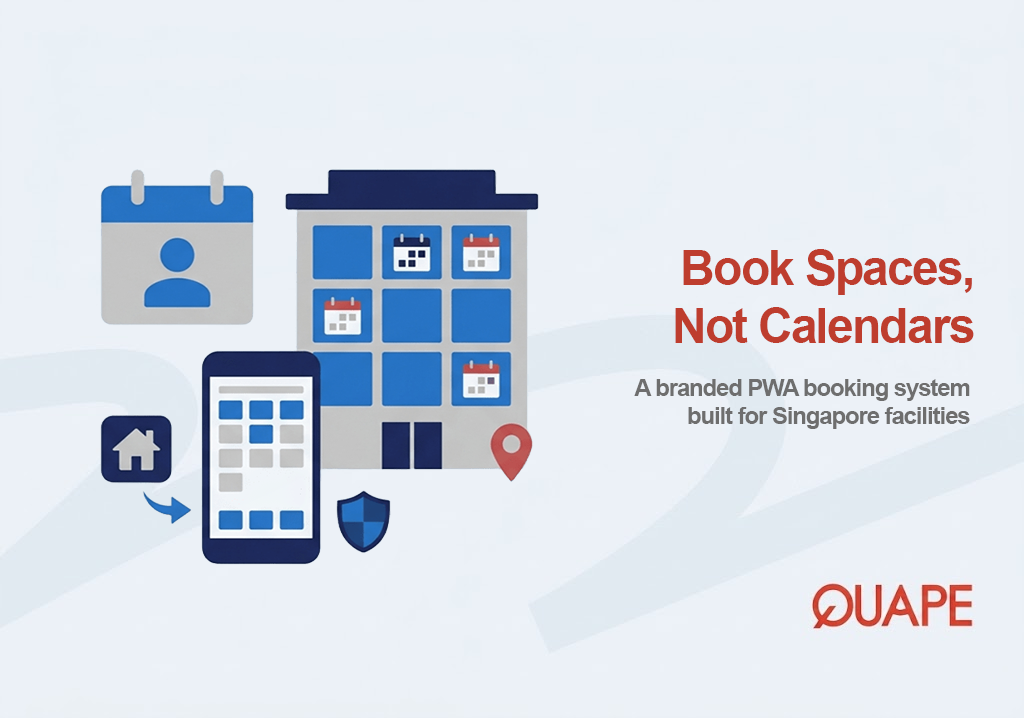
If your organization schedules badminton courts, function halls, condominium facilities, or coworking meeting rooms rather than sales calls, the question of whether Calendly fits your operations deserves a careful answer. Calendly is a outstanding meeting scheduler, but facility booking is a different operational problem, and the gap shows up quickly once you move from scheduling people to scheduling physical spaces that carry payment, maintenance, and capacity rules. For operations managers and facility administrators across Singapore and Southeast Asia, the practical decision is not which tool has more features, but which tool was built for the object you actually reserve. This comparison frames that distinction clearly and shows where a purpose-built, branded booking platform delivered as a Progressive Web App becomes the stronger choice for property managers, sports associations, schools, and event venues operating under PDPA obligations.
Calendly earns its reputation honestly. It removes the email back-and-forth that drains hours from sales teams and recruiters, it synchronizes with personal calendars to prevent double-booked meetings, it connects to Stripe for paid appointments, and its team routing distributes inbound demand across multiple reps. For one-on-one calls, discovery sessions, and interview coordination, few tools do the job more smoothly. Where the model begins to strain is in facility operations, because the unit being booked is a court or a hall rather than a person’s availability, and because the public-facing experience needs to carry your organization’s own brand rather than a generic scheduling link. Quape approaches this from the opposite direction. Instead of renting access to a fixed scheduling product, Quape builds a fully customized facility booking platform around your exact workflow, then delivers it as an installable web app, with fixed SGD pricing and Singapore-based infrastructure underpinning the whole arrangement.
Key Takeaways
- Calendly is built to schedule people and their calendars, while facility booking platforms are built to schedule physical spaces and shared resources that carry payment, capacity, and maintenance rules.
- Calendly’s pricing is per seat, roughly ten to twenty US dollars per user each month and reaching fifteen thousand US dollars annually at the enterprise tier, which scales with every administrator added rather than with bookings handled.
- Quape works on fixed SGD pricing, decoupling cost from the number of staff who manage the system.
- A purpose-built system provides real-time slot management that holds and locks time slots, preventing the double bookings that plague manual and meeting-oriented tools.
- Quape’s administrator dashboard supports manual reservations, refunds, blackout dates, and reporting, controls that go beyond self-service scheduling.
- Delivery as a Progressive Web App gives members a home-screen, app-like experience with offline access, without app store distribution.
- For Singapore organizations, PDPA accountability, TIA-942 certified infrastructure, Cloudflare CDN, managed DevOps, and SEA-timezone support address operational realities a generic overseas subscription does not cover by default.
Why Many Singapore Organizations Outgrow Calendly for Facility Booking
The moment an organization starts renting out shared spaces on a schedule, its requirements diverge from what a meeting scheduler was designed to handle. A condominium managing function rooms, a sports association allocating courts, a community centre coordinating halls, or a coworking operator releasing meeting rooms is not managing one person’s calendar. It is managing a pool of physical resources whose availability depends on maintenance windows, blackout periods, capacity limits, payment status, and concurrent demand from many users at once. Resource scheduling and appointment scheduling solve different problems, and conflating them is where operational friction begins.
This distinction matters even more in the Singapore and Southeast Asian context, where organizations across property management, education, recreation, and hospitality collect personal data at the point of booking and remain accountable for it under the Personal Data Protection Act. The reservation system is not a peripheral tool in these settings. It is the operational backbone that members, residents, and visitors interact with directly, which raises the stakes for branding, reliability, and data handling well above what a generic scheduling link can carry.
What Calendly Does Exceptionally Well
Fast Scheduling for Meetings and Individual Appointments
Calendly’s core strength is collapsing the coordination cost of booking time with a person. It connects to your calendar, reads your availability, and lets an invitee pick a slot without a single email exchange. For sales teams chasing discovery calls and recruiters coordinating interview panels, this is genuinely valuable. The paid tiers layer on calendar synchronization across multiple calendars, Stripe-backed payment collection for paid consultations, and team routing that distributes inbound requests across representatives. These capabilities are well-engineered and reliable, and they explain why Calendly has become a default tool for client-facing professionals.
Organizations That Should Continue Using Calendly
If your scheduling object is a person, Calendly is very likely the right tool, and switching would be a step backward. Sales organizations booking demos, consultants arranging client sessions, recruitment agencies coordinating candidate interviews, and professional services firms managing appointment flow all fit Calendly’s design intent precisely. The honest framing is not that Calendly is weaker software. It is that Calendly is purpose-built for a different job than facility booking.
Where Calendly Starts Breaking Down for Shared Space Management
Booking a Person Is Different from Booking a Facility
A meeting scheduler manages a person’s calendar. A facility booking platform manages shared physical assets whose availability is governed by rules a calendar does not natively express. A badminton court may need to be closed for resurfacing. A function hall may have a hard capacity limit. A meeting room may require a deposit before the slot is confirmed. These conditions, namely maintenance windows, blackout periods, capacity ceilings, and payment-gated confirmation, are the everyday reality of resource scheduling, and they sit outside what an appointment tool was built to model. This is a design difference rather than a flaw, but it determines which tool fits which operation.
Per-Seat Pricing Can Become Expensive for Operational Teams
Calendly’s pricing follows users. Each administrator who manages availability needs a paid seat, and the cost climbs from roughly ten to twenty US dollars per user each month up to fifteen thousand US dollars annually at the enterprise tier. For a sales team where each rep schedules their own meetings, per-seat pricing is logical. For an operations department where several administrators jointly manage one pool of facilities, the cost scales with headcount rather than with the booking volume the system actually processes. The scaling cost in facility operations is often not the bookings. It is the administrator seats.
Why Generic Scheduling Links Create Branding Limitations
When residents, members, or visitors book a facility, the booking portal is part of your organization’s public face. A generic scheduling link carrying another company’s branding undercuts that experience. A white-label booking portal that reflects your own logos, colors, terms, and workflow keeps the interaction consistent with your brand identity and signals that the facility is professionally managed, which matters for member-based organizations and premium venues alike.
What a Purpose-Built Facility Booking Platform Looks Like
Real-Time Slot Management That Prevents Double Bookings
The defining requirement of resource scheduling is that two users cannot reserve the same asset at the same time. Quape’s system addresses this with real-time slot management that temporarily holds a time slot the moment a booking begins, then locks it permanently once payment succeeds. This prevents the overlapping reservations that manual systems and people-oriented schedulers struggle to avoid. Administrators can also set blackout dates and restrict certain hours, so the availability calendar reflects not just who has booked, but when the facility is genuinely usable. Organizations evaluating a system designed around this logic can review how the facility booking platform handles slot management and conflict prevention before committing to a workflow.
Administrator Controls Beyond Self-Service Scheduling
Self-service booking covers the user side, but facility operations live and die on the administrative side. A secure backend dashboard lets administrators create or modify reservations on behalf of users, cancel bookings, issue refunds, generate reports, and block out dates for maintenance. This blend of automated user booking and manual administrator override is exactly what a meeting scheduler, designed for individuals managing their own calendars, does not prioritize. It is the operational layer that turns a booking form into a managed system.
Integrated Online Payments Without Separate Booking Workflows
Payment and reservation belong in the same flow for facility booking. Quape integrates Stripe directly, so organizations collect booking fees, deposits, or full payments at the moment of reservation, with PCI DSS-compliant card processing handling the sensitive financial data. Confirmation and payment happen as one continuous action rather than as a reservation followed by a separate invoice chase, which reduces no-shows and tightens cash flow for the venue.
Why Delivering the Booking System as a Progressive Web App Changes the User Experience
Native App Experience Without App Store Distribution
A Progressive Web App gives members an installable, app-like experience accessed straight from the browser, with no app store download required. The World Wide Web Consortium identifies PWAs as delivering native-like capabilities through installability, offline operation, and push notifications, all built on open web standards. This matters because adoption of the underlying technology has moved firmly into the mainstream. According to the 2025 Web Almanac analysis of PWA adoption, roughly a quarter of websites now implement at least one major PWA technology, a sign that installable web applications have become a standard delivery model rather than an experiment. For a booking platform, this means members add the system to their home screen with a single tap and reach it as easily as a native app, without the development and distribution overhead that native apps demand. The technical foundation for this delivery model is covered in Quape’s approach to building installable web applications.
Faster Access for Members, Residents and Visitors
Service Workers, the technology underpinning PWAs, allow the booking application to function under poor network conditions and to load instantly through caching. For a resident checking court availability on a phone, a visitor reserving a hall on the move, or a member booking a room between meetings, this responsiveness removes friction at exactly the moment a booking decision is made. The result is a mobile booking experience that feels immediate and reliable, which directly supports completion rates.
What Matters Most for Singapore and Southeast Asian Organizations
Data Accountability and PDPA Considerations
Booking systems collect personal data, names, contact details, and payment information, which places them squarely within PDPA scope. Singapore’s Personal Data Protection Commission advises organizations collecting personal data through websites to consider where the site is hosted, the security measures in place, and the platform’s resilience as part of compliance planning, as set out in the PDPC guidance on building websites responsibly. Importantly, accountability is broader than server location alone. An organization remains responsible for the personal data it collects regardless of outsourcing arrangements, so the question is not simply where data sits, but whether the infrastructure and contractual safeguards around it are sound. Quape’s PDPA data residency accountability and Singapore-based hosting give organizations a clearer footing on this than a generic overseas subscription provides by default.
Infrastructure and Operational Support for Local Organizations
The reliability of a booking platform depends on the infrastructure beneath it. Quape runs on Singapore TIA-942 certified infrastructure with Cloudflare CDN inclusion and managed DevOps support provided as standard, backed by support that operates in the SEA timezone. Recognised infrastructure certifications do not by themselves make an application PDPA-compliant, but they provide independent evidence that the underlying operations follow established security and resilience practices. For a facility whose bookings and payments must remain available throughout operating hours, that operational foundation, combined with local-timezone support, is a practical advantage over a vendor whose support clock runs on another continent.
Calendly vs Quape: Which Platform Fits Your Operational Model?
| Decision factor | Calendly | Quape Facility Booking System |
|---|---|---|
| Primary scheduling object | People and their calendars | Physical spaces and shared resources |
| Public booking experience | Generic scheduling link | Fully branded, white-label portal |
| Branding flexibility | Limited, removable branding on paid tiers | Custom logos, colors, terms, and workflow |
| Double-booking prevention | Calendar-based | Real-time slot hold and lock |
| Manual administrator controls | Minimal | Full dashboard: reservations, refunds, blackout dates, reports |
| Payment workflow | Stripe for paid appointments | Stripe at point of booking, deposits and packages |
| Mobile experience | Web and mobile app | Installable PWA with offline access |
| Pricing model | Per seat, scales with users | Fixed SGD pricing |
| Scalability for multiple facilities | Built around individual calendars | Built around resource pools |
| Singapore operational considerations | Overseas SaaS, general | PDPA accountability, TIA-942 local infrastructure, SEA support |
Which Organizations Benefit Most from Each Option
Choose Calendly If
Your scheduling object is a person. Sales organizations booking demos, independent consultants arranging client sessions, recruitment agencies coordinating interviews, and professional services teams managing appointment flow will find Calendly faster to deploy and perfectly matched to the job. If you simply need people to book time on a calendar, Calendly is the sensible choice.
Choose Quape If
You schedule physical spaces and shared resources. Condominiums managing function rooms, sports associations allocating courts, schools and universities coordinating facilities, community clubs handling halls, coworking operators releasing meeting rooms, and hospitality and event venues managing capacity all fit Quape’s design intent. If you need a branded booking portal, real-time slot management, administrator controls, integrated payments, fixed pricing, and Singapore-based infrastructure delivered as an installable web app, a purpose-built system serves you better than a meeting scheduler stretched beyond its purpose.
Final Recommendation for Organizations Managing Shared Facilities
The clearest way to settle the comparison is to name the scheduling object. Calendly remains an excellent platform for booking people, and organizations whose work revolves around meetings should keep using it. The case for Quape applies specifically when the object being reserved is a physical space or shared resource, where customized workflows, a branded booking experience, fixed SGD pricing, PWA delivery, real-time slot management, administrator controls, and PDPA-aware Singapore infrastructure combine to address operational realities a meeting scheduler was never built for. For Singapore SMEs and mid-market organizations across Southeast Asia in property management, hospitality, education, recreation, and member-based facilities, that alignment is the deciding factor. If your operations center on spaces rather than calendars, it is worth taking the time to discuss your facility booking requirements with Quape and map a system around how your facilities actually run.
Frequently Asked Questions
Is Calendly a facility booking system?
Not really. Calendly is a meeting scheduling tool designed to book time on a person’s calendar. It can collect payments and sync calendars, but it does not natively model facility-specific rules like capacity limits, maintenance blackouts, or resource pools, which are central to managing shared spaces.
When is Calendly actually the better choice over Quape?
When your scheduling object is a person rather than a place. If you run a sales team booking demos, a recruitment function coordinating interviews, or a consultancy arranging client calls, Calendly is faster to set up and precisely matched to that job. Quape’s advantage applies specifically to scheduling physical spaces and shared resources.
How does Quape prevent double bookings for shared facilities?
Quape uses real-time slot management that temporarily holds a time slot the moment a booking begins and locks it once payment is confirmed. Administrators can also set blackout dates and restrict hours, so the availability calendar reflects genuine usability, not just existing reservations.
Why does delivery as a Progressive Web App matter for booking?
A PWA lets members install the booking system to their home screen and use it like a native app, including offline access, without an app store download. This reduces friction at the moment of booking and avoids the overhead of building and distributing separate native apps.
Does using an overseas tool like Calendly create PDPA concerns?
PDPA accountability rests with your organization regardless of which vendor you use, so the responsibility for protecting personal data does not transfer to a SaaS provider. Singapore’s PDPC advises considering hosting location, security measures, and platform resilience, which is where Quape’s local infrastructure and data residency accountability offer a clearer footing.
How does Quape’s pricing differ from Calendly’s per-seat model?
Calendly charges per user, so cost rises with each administrator added. Quape works on fixed SGD pricing, which decouples cost from the number of staff managing the system, an arrangement that often suits operational teams jointly managing a shared pool of facilities.
Can Quape’s booking system be customized to our specific workflow?
Yes. Quape builds the system around your requirements, including booking durations, pricing models such as hourly, daily, or package-based, user access levels, terms and conditions, and branding elements. The platform can also accommodate multilingual support and unique business logic.