Hosting
Data Center Ecosystem in Singapore for SAP Hosting
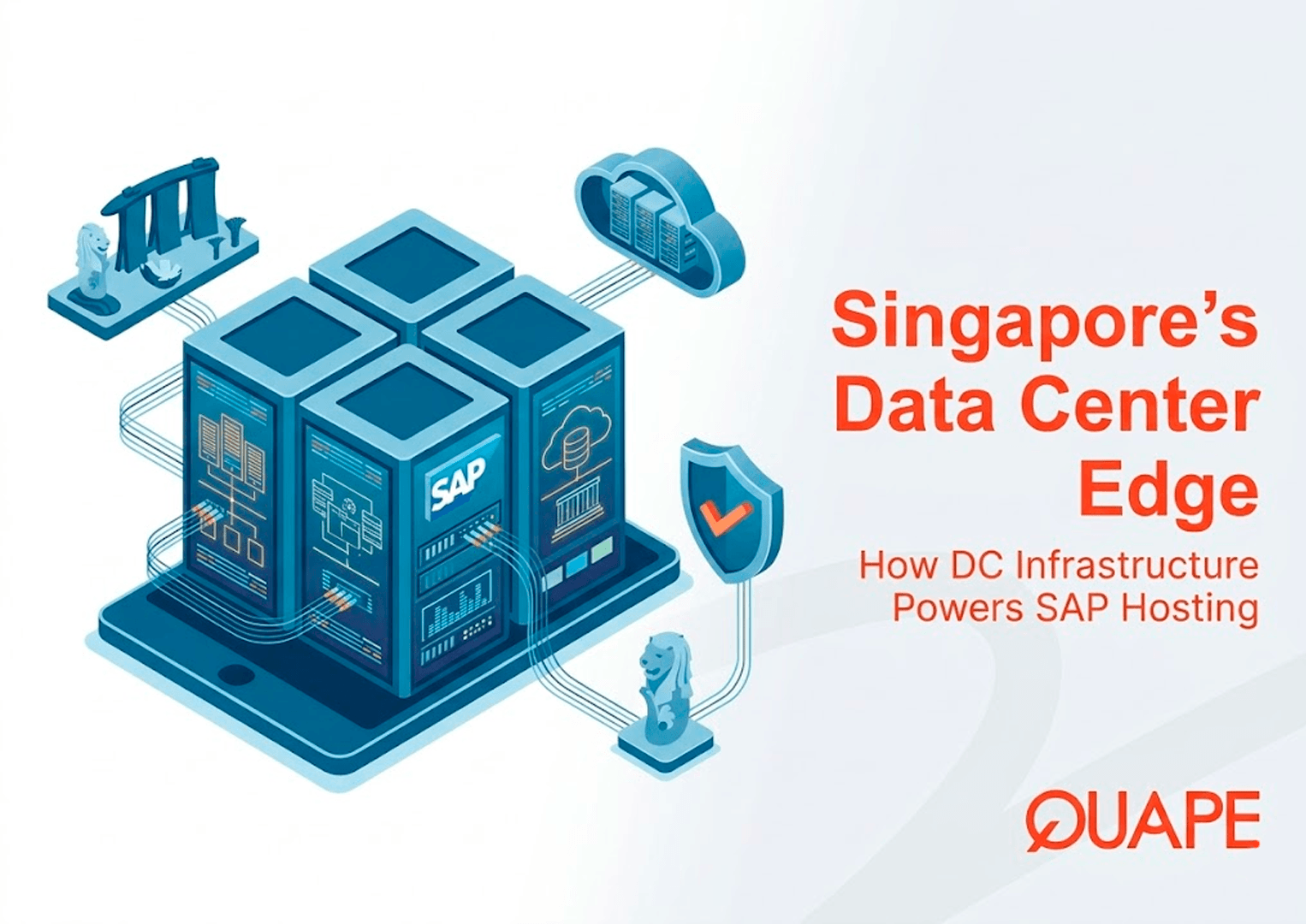
Singapore’s position as a digital infrastructure hub in Southeast Asia directly shapes how enterprises deploy and operate SAP workloads in the region. The density of interconnected networks, the maturity of colocation providers, and the regulatory environment for energy efficiency all influence the performance characteristics of SAP HANA systems hosted here. For IT managers and CTOs evaluating infrastructure decisions, understanding how these elements interact provides a clearer basis for long-term ERP planning. This is not a theoretical exercise: the physical and policy architecture of Singapore’s data centers has measurable consequences for latency, uptime, and compliance outcomes.
Singapore functions as one of the most concentrated data center markets in Asia-Pacific, with over 70 operational facilities according to Statista. This density is not incidental. It reflects decades of investment in subsea cable landing stations, carrier-grade interconnection infrastructure, and government-backed digital economy initiatives. For businesses running SAP Business One or SAP HANA, this ecosystem provides a foundation that offshore or less interconnected markets simply cannot replicate at the same performance tier.
The core entity here is the Singapore data center SAP relationship: a layered infrastructure environment in which data center operators, network carriers, dark fiber providers, and green energy regulators collectively determine the conditions under which enterprise SAP workloads operate. Each component influences the others. Operator-level uptime commitments depend on network interconnection quality. Network quality depends on physical fiber infrastructure. And the long-term viability of all of it depends on how operators respond to Singapore’s evolving energy policies.
This ecosystem does not operate in isolation from SAP-specific requirements. SAP HANA is a memory-intensive, latency-sensitive database platform. Its performance depends on low-latency storage I/O, high-throughput network connectivity, and deterministic failover behavior. The infrastructure components explored below are relevant precisely because they either support or constrain those requirements.
Key Takeaways
- Singapore hosts over 70 data centers, creating one of the highest interconnection densities in Asia-Pacific, which directly benefits SAP HANA latency requirements.
- Carrier hotels and internet exchange points enable direct network peering, reducing the number of hops SAP traffic must traverse before reaching end users.
- Dark fiber mesh infrastructure supports private, high-capacity connectivity between data centers, critical for SAP system replication and failover.
- Singapore’s government imposed a data center moratorium from 2019 to 2022 to manage energy constraints, which accelerated adoption of stricter efficiency standards.
- Green data center policies now require operators to meet Power Usage Effectiveness targets, raising baseline infrastructure quality across the market.
- Latency for Southeast Asia-based users can be reduced by up to 30 to 50% when hosting is localized in Singapore compared to offshore alternatives.
- SMEs and enterprise IT teams must balance regional data sovereignty considerations with the centralized performance benefits of Singapore-based SAP hosting.
- Managed SAP hosting providers operating within this ecosystem absorb infrastructure complexity, allowing businesses to focus on ERP operations rather than facility management.
Introduction to the Singapore Data Center SAP Ecosystem
Singapore’s role in Asia-Pacific enterprise IT infrastructure is well-documented. The International Telecommunication Union recognizes it as a primary hub due to its proximity to global subsea cable networks, which physically anchor its connectivity advantages. For SAP deployments, this matters because SAP HANA relies on high-throughput, low-latency network paths to deliver real-time analytics and transactional processing. An infrastructure environment with superior interconnection density reduces the variables that degrade those performance characteristics.
Businesses evaluating where to anchor their ERP infrastructure benefit from understanding the full context of this ecosystem. The SAP hosting infrastructure guide for Singapore covers the broader infrastructure decision framework, including how managed services interact with the data center layer. Within that context, the components described below define the physical and policy environment in which any SAP deployment in Singapore will operate, regardless of whether the hosting model is colocation, managed private cloud, or hyperscale public cloud.
Key Components of the Singapore Data Center Ecosystem
Role of Data Center Operators in SAP Workloads
Data center operators provide the physical and logical environment in which SAP infrastructure runs. In Singapore, operators range from global hyperscale providers to regional enterprise colocation facilities. What differentiates them for SAP workloads is not just physical space but the degree to which their facilities are built to support memory-intensive, high-IOPS applications.
SAP-certified infrastructure requires specific hardware configurations: certified server platforms, validated storage arrays, and network architectures that meet SAP’s own performance benchmarks. Not all Singapore data centers offer operator-managed environments that align with these requirements. Enterprises working with SAP infrastructure support providers that operate from certified facilities gain an advantage because the underlying environment is already validated against SAP’s technical requirements, reducing deployment risk and simplifying compliance documentation.
Hyperscale operators bring global scale but introduce shared resource models that may conflict with the deterministic performance SAP HANA requires under peak load. Enterprise colocation facilities, by contrast, allow more granular resource allocation. The choice between these operator types depends on whether the SAP workload prioritizes cost elasticity or performance predictability.
Carrier Hotels and Network Interconnection Density
Carrier hotels are specialized data center facilities that host multiple telecommunications providers, internet service providers, and enterprise network operators under one roof. Singapore hosts several prominent carrier hotels that function as interconnection hubs for the region. The practical consequence for SAP workloads is that traffic between an SAP system and its end users can be routed across directly peered networks rather than traversing multiple autonomous systems on the public internet.
Each additional network hop introduces latency and introduces a potential point of failure. Internet exchange points within Singapore’s carrier hotel ecosystem allow participating networks to exchange traffic directly, removing intermediary transit providers from the path. For SAP HANA, which serves real-time queries and time-sensitive business transactions, this reduction in hop count improves response consistency as well as raw throughput.
Enterprises that require SAP multicloud connectivity across hybrid environments benefit significantly from this infrastructure layer. When SAP systems need to communicate with cloud-native services, SaaS platforms, or regional branch offices, the carrier hotel ecosystem provides the interconnection density to do so with lower latency than less-connected markets in the region.
Dark Fiber Mesh and Low-Latency Architecture
Dark fiber refers to installed but unlit fiber optic cables that enterprises or providers can lease and operate independently of public telecommunications networks. Singapore’s dark fiber mesh connects major data centers across the island, enabling point-to-point private network paths between facilities. For SAP deployments, this capability supports several critical use cases.
System replication between a primary SAP HANA node and a secondary node requires high-bandwidth, low-latency connectivity to maintain synchronization. If this replication traffic traverses public internet paths, it introduces variability in both latency and throughput that can degrade replication consistency. Dark fiber eliminates this variability by providing a dedicated path with no shared-medium contention.
According to APNIC research on latency and internet performance in Asia, localized hosting in Singapore can reduce response times for Southeast Asia-based users by 30 to 50% compared to offshore hosting. Dark fiber infrastructure compounds this advantage by ensuring that intra-datacenter communication, such as SAP application server to database server traffic, does not compete with public internet routing. Businesses assessing SAP hosting latency optimization should treat dark fiber access as a structural factor in provider evaluation, not just a marketing differentiator.
Green Data Center Policies and Sustainability Compliance
Singapore’s government imposed a moratorium on new data center developments from 2019 to 2022, responding to concerns about energy consumption. Data centers account for approximately 7% of Singapore’s total electricity consumption, as reported by Reuters. This constraint accelerated the adoption of energy efficiency standards across existing and new facilities when the moratorium was lifted in 2022 under stricter green requirements.
The Infocomm Media Development Authority now requires data center operators to meet Power Usage Effectiveness targets, with energy-efficient facilities achieving PUE ratios at or below 1.3 under optimized conditions, compared to a global average above 1.5. For enterprises, this matters beyond corporate sustainability reporting. Higher efficiency facilities generally invest more in infrastructure quality overall, because the operational discipline required to achieve low PUE ratios correlates with rigorous standards in cooling, power distribution, and monitoring.
Businesses with SAP hosting compliance requirements tied to environmental or operational audits should verify operator PUE performance as part of due diligence. Green certification is not uniform across Singapore’s 70-plus facilities, and compliance status varies by operator and by facility vintage.
High Availability and Disaster Recovery Infrastructure
SAP HANA’s architecture supports system replication, high availability clustering, and automated failover, but these capabilities depend on the underlying infrastructure providing the connectivity and redundancy to make them functional. In Singapore, the physical proximity of data centers and the availability of dark fiber between them allows enterprises to implement geographically distributed failover without the latency penalties that would apply to cross-border disaster recovery configurations.
SAP high availability configurations that use synchronous system replication require round-trip latency between primary and secondary nodes to remain within specific thresholds. Singapore’s intra-island infrastructure generally supports this requirement. For broader SAP disaster recovery scenarios involving failover to a secondary region, the island’s subsea cable connectivity to Malaysia, Indonesia, and the broader ASEAN region provides feasible low-latency paths that support near-synchronous replication at regional scale.
Uptime SLA commitments from Singapore colocation and managed hosting providers are generally among the highest in Southeast Asia, reflecting the maturity of the local power grid, the redundancy of network paths, and the density of skilled infrastructure operations talent.
Practical Application for the Singapore Market
For SMEs and enterprise IT teams operating in Singapore, the data center ecosystem represents both an opportunity and a complexity. The opportunity is access to infrastructure quality that matches or exceeds what is available in most ASEAN markets, with latency characteristics that benefit regional operations across Malaysia, Indonesia, Thailand, and the Philippines. The complexity lies in navigating operator selection, network path validation, and data sovereignty requirements across those same markets.
SAP hosting benefits specific to Singapore include the ability to serve a distributed regional workforce from a single, well-connected data center environment without sacrificing performance. Businesses with subsidiaries or partners across ASEAN can anchor their SAP system in Singapore and rely on the carrier hotel and IXP infrastructure to deliver consistent performance across borders. However, this centralized model must be evaluated against data residency regulations in individual ASEAN countries, some of which require certain categories of data to remain within national boundaries.
Hybrid SAP hosting models that combine a Singapore-based primary environment with in-country secondary nodes address this tension. In this architecture, transactional data can be processed locally while the core SAP application layer runs in Singapore. The dark fiber and IXP infrastructure described earlier enables this model to function with acceptable latency between the primary and secondary environments.
Procurement leads evaluating total cost of ownership should account for the premium that Singapore’s infrastructure quality commands relative to other ASEAN options. Stricter green regulations may increase infrastructure costs for operators over time, with downstream effects on hosted SAP pricing. This is not a reason to avoid Singapore-based hosting, but it is a factor in multi-year cost modeling.
How Managed SAP Hosting Supports the Singapore Data Center Ecosystem
Managed SAP hosting providers operating within Singapore’s data center ecosystem function as the integration layer between physical infrastructure and business-ready ERP delivery. Rather than requiring enterprises to independently negotiate colocation agreements, configure dark fiber connections, validate carrier hotel peering arrangements, and manage green compliance reporting, a managed provider absorbs these responsibilities and delivers the consolidated outcome as a service.
From a SAP hosting security perspective, managed providers that operate within Singapore’s carrier hotel and dark fiber ecosystem can implement private networking between application and database tiers without relying on public internet paths. This directly reduces attack surface and simplifies compliance with frameworks such as ISO 27001. VPN access controls, role-based authentication, and encrypted data paths become operational defaults rather than custom configurations.
SAP hosting cost optimization is another area where managed hosting within Singapore’s infrastructure ecosystem creates structural advantages. Providers with existing colocation agreements and dark fiber access negotiate infrastructure costs at scale, spreading fixed costs across multiple clients. Individual enterprises attempting to replicate the same network architecture independently would face significantly higher unit costs for equivalent connectivity and redundancy.
SAP hosting SLA evaluation should include infrastructure-level commitments beyond simple uptime percentages. Meaningful SLAs for SAP environments specify recovery time objectives, recovery point objectives, replication lag thresholds, and escalation response times. Providers embedded in Singapore’s interconnected data center ecosystem are better positioned to meet these commitments because the underlying infrastructure supports the redundancy and failover mechanisms required.
Conclusion
Singapore’s data center ecosystem provides a structural advantage for SAP workloads that goes beyond geographic convenience. The combination of carrier hotel interconnection density, dark fiber private connectivity, green policy enforcement, and mature operator infrastructure creates an environment where SAP HANA’s latency, availability, and compliance requirements can be met without the compromises that less-developed markets impose. Enterprises that understand how these components interact are better equipped to evaluate hosting providers, negotiate infrastructure SLAs, and plan SAP deployments that remain viable as both their business and Singapore’s regulatory environment evolve.
For businesses ready to align their SAP infrastructure with this ecosystem, Quape’s Managed SAP Hosting delivers a fully managed ERP environment built for Singapore’s interconnected data center landscape. To discuss your architecture requirements and hosting options, contact the Quape sales team.
Frequently Asked Questions
What makes Singapore’s data center ecosystem suitable for SAP HANA hosting?
Singapore offers one of the highest interconnection densities in Asia-Pacific, with carrier hotels, internet exchange points, and dark fiber infrastructure enabling low-latency, high-throughput network paths. SAP HANA’s real-time processing requirements benefit directly from this environment because it reduces network variability between application and database layers.
How do green data center regulations in Singapore affect SAP hosting?
Singapore’s Infocomm Media Development Authority requires data center operators to meet Power Usage Effectiveness targets following the lifting of the 2019 to 2022 moratorium on new developments. Operators that meet these standards generally maintain higher infrastructure quality overall, which benefits the reliability and consistency of hosted SAP environments.
What is dark fiber and why does it matter for SAP workloads?
Dark fiber refers to private, dedicated optical fiber connections that bypass public internet routing. For SAP deployments, dark fiber supports synchronous system replication between primary and secondary nodes with consistent latency, which is a technical requirement for high availability configurations using SAP HANA System Replication.
Can Singapore-based SAP hosting serve users across ASEAN markets?
Yes. Singapore’s subsea cable connectivity and carrier hotel peering infrastructure provide low-latency paths to Malaysia, Indonesia, Thailand, the Philippines, and other ASEAN markets. Response times for regional users can be significantly lower compared to hosting anchored outside the region.
What is the difference between colocation and managed SAP hosting in Singapore?
Colocation provides physical space, power, and connectivity, with the enterprise responsible for its own hardware and software management. Managed SAP hosting includes infrastructure provisioning, system configuration, monitoring, patching, backups, and support. For businesses without dedicated SAP infrastructure teams, managed hosting reduces operational risk and total cost of ownership.
How does Singapore’s data center moratorium affect current hosting availability?
The moratorium, which ran from 2019 to 2022, restricted new data center construction during that period. It was lifted in 2022 under stricter green energy requirements. Existing facilities and new compliant developments are operational, and the moratorium’s legacy is a higher baseline efficiency standard across the market rather than a reduction in available hosting capacity.
What data sovereignty considerations apply to SAP workloads hosted in Singapore?
Singapore’s own regulatory environment is stable and enterprise-friendly, but businesses operating across ASEAN must account for individual country data residency laws that may require certain data categories to remain within national borders. Hybrid hosting models that combine a Singapore primary environment with in-country secondary nodes can address these requirements without sacrificing performance.
How should IT managers evaluate SLAs for managed SAP hosting in Singapore?
Beyond uptime percentages, SLAs for SAP environments should specify recovery time objectives, recovery point objectives, replication lag limits, and incident response times. Providers operating within Singapore’s interconnected infrastructure ecosystem are better positioned to meet these commitments because the underlying redundancy and failover capabilities are built into the data center layer itself.