Server
Hybrid Hosting for SAP: Best of Cloud & On-Prem
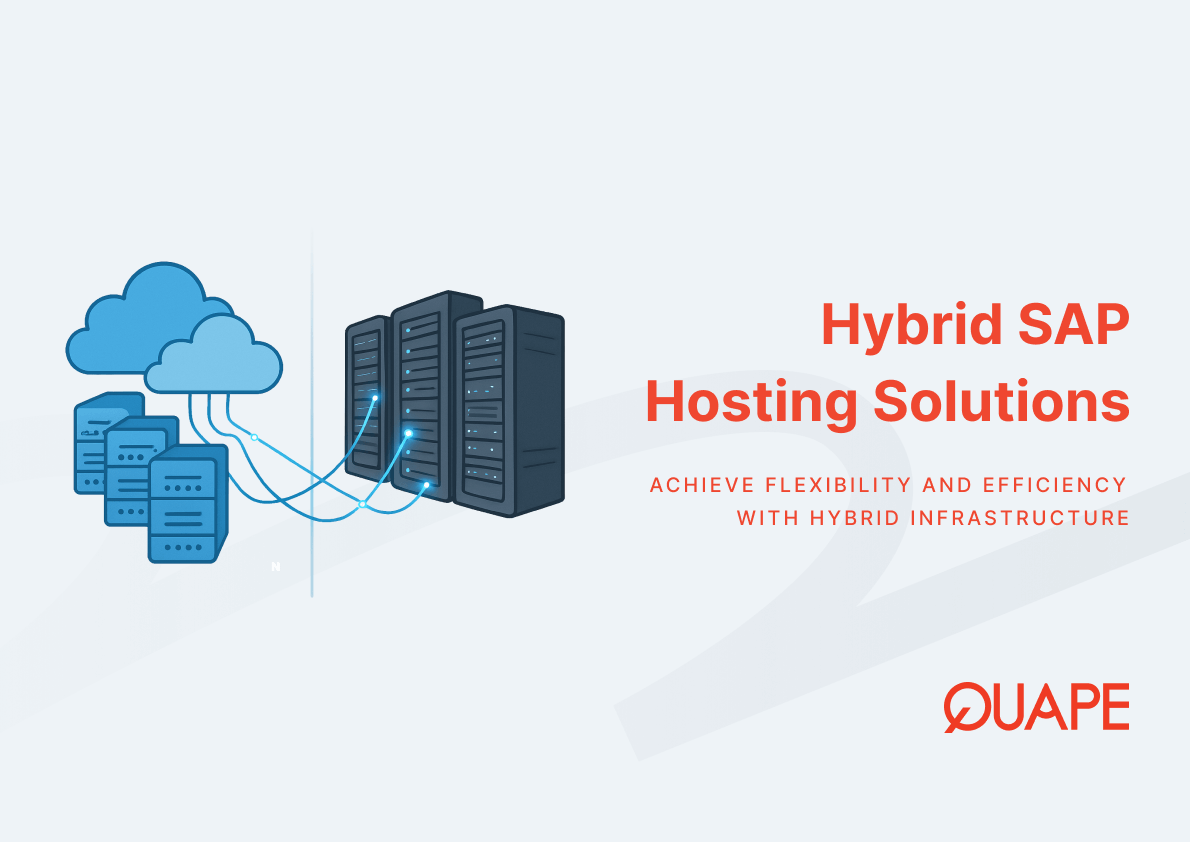
Enterprise SAP environments rarely fit neatly into a single infrastructure model. On-premise systems offer control and predictability, while cloud platforms provide elasticity and reduced capital expenditure, but neither alone satisfies the full range of demands that modern ERP operations place on IT infrastructure. Hybrid SAP hosting addresses this tension directly by allowing organizations to distribute workloads across both environments based on performance requirements, data sensitivity, and cost constraints. For IT managers and CTOs operating in Singapore, where regulatory expectations and latency requirements add complexity to infrastructure decisions, this model has moved from optional to strategic. Understanding how hybrid SAP hosting works, and when it applies, is increasingly central to responsible enterprise planning.
Hybrid SAP hosting refers to an infrastructure arrangement in which SAP workloads run across a combination of on-premise servers and external cloud environments, connected through secure networking to behave as a unified system. It is not a halfway measure between two extremes. It is a deliberate architectural choice that allows organizations to assign each workload to the environment best suited to its performance profile, compliance requirements, and data dependencies.
This approach differs from a simple multi-cloud strategy because it retains on-premise infrastructure as an active, permanent component rather than a legacy system being phased out. The on-premise layer handles workloads that require low latency, local data residency, or consistent resource allocation, while the cloud layer absorbs variable demand, supports development environments, and enables geographic redundancy.
Key Takeaways
- Hybrid SAP hosting combines on-premise and cloud infrastructure to serve different workload categories from a single coordinated architecture.
- Workload segmentation determines which SAP processes run where, based on latency sensitivity, memory intensity, and data gravity.
- Data gravity, the tendency of large datasets to attract dependent applications, significantly influences where SAP workloads should be placed.
- Cloud bursting extends on-premise capacity temporarily during peak demand without permanently provisioning additional hardware.
- According to a joint SAP user group survey, 78% of respondents operate hybrid on-premises and cloud SAP landscapes, confirming this model as the enterprise norm rather than the exception.
- Security in hybrid environments depends on consistent identity management, encrypted communication, and network segmentation across both layers.
- Compliance obligations around data residency and audit logging apply equally across hybrid environments and must be enforced at the architecture level.
- Managed SAP hosting providers reduce the operational burden of maintaining hybrid environments by handling infrastructure management, monitoring, and lifecycle support.
Introduction to Hybrid SAP Hosting
SAP systems generate and process large volumes of business-critical data across finance, supply chain, procurement, and operations. The infrastructure that supports these systems must balance two competing demands: consistent, low-latency performance for transactional workloads, and the ability to scale capacity during peaks without permanently over-provisioning hardware.
Hybrid SAP hosting resolves this by treating on-premise and cloud infrastructure as complementary resources rather than competing alternatives. Organizations covered in the SAP hosting infrastructure guide for Singapore consistently face this challenge, particularly as SAP landscapes grow more complex through module expansion, integrations, and migration planning. Hybrid hosting provides the structural flexibility to accommodate that complexity without forcing a binary infrastructure commitment.
Why Hybrid SAP Hosting Exists
The architecture of traditional SAP environments was built around on-premise infrastructure because ERP systems required proximity to databases, low-latency network access, and dedicated hardware resources. That model worked well when workloads were predictable, but enterprise SAP environments have grown more variable. Seasonal demand spikes, analytics-heavy reporting periods, and integration with external platforms create load patterns that dedicated hardware alone handles inefficiently.
At the same time, a wholesale migration to public cloud does not resolve the problem for organizations with existing on-premise investments, regulatory constraints tied to on-prem versus cloud deployment, or latency-sensitive processes that depend on proximity to local data stores. Legacy SAP systems often carry years of customization, data history, and integration dependencies that make rapid cloud migration impractical. Hybrid hosting exists because most enterprise SAP environments require both stability and elasticity, and no single infrastructure model delivers both without compromise.
Key Components of Hybrid SAP Hosting Architecture
Workload Segmentation in SAP Landscapes
Workload segmentation is the process of categorizing SAP processes by their resource consumption patterns, latency tolerance, and data dependencies, then assigning each category to the infrastructure tier best suited to its needs. Transactional workloads such as order processing, financial posting, and inventory management require consistent, low-latency access to SAP HANA in-memory data and are typically placed on dedicated on-premise or private cloud infrastructure.
Analytical workloads, including reporting, batch processing, and business intelligence queries, consume large amounts of compute temporarily and can tolerate slightly higher latency. These are strong candidates for cloud placement, where resources scale with demand rather than sitting idle during off-peak periods. SAP HANA memory-intensive processing introduces additional segmentation decisions because in-memory operations are sensitive to both hardware configuration and network throughput, making placement decisions consequential rather than arbitrary.
Data Gravity and Its Impact on SAP Performance
Data gravity describes how large datasets attract applications and services toward their physical or logical location. As enterprise datasets grow, the cost and latency of moving data across network boundaries increases, making it more practical to bring compute to the data than to move the data to compute. In SAP environments, this effect is significant because core ERP data, including financial records, material master data, and transactional history, accumulates over years and becomes increasingly expensive to relocate.
Latency-sensitive SAP applications are particularly affected by data gravity. If core ERP data resides on-premise but application logic runs in a remote cloud environment, the resulting network latency degrades transaction response times and can affect user experience and system throughput. Hybrid hosting accounts for data gravity by keeping workloads and their primary data sources in the same infrastructure tier, reducing the performance penalties that arise from cross-environment data movement.
Cloud Bursting for SAP Peak Demand Scenarios
Cloud bursting allows an SAP environment to extend beyond its on-premise capacity limits by temporarily routing excess demand to cloud resources when local infrastructure reaches its ceiling. According to HPE, cloud bursting enables systems to offload excess workload to external environments when on-premise capacity is exceeded, which makes it a practical tool for handling demand spikes without permanent over-provisioning.
Seasonal business loads, such as year-end financial closing, tax reporting periods, or high-volume order processing during sales campaigns, create predictable but temporary demand surges. Rather than sizing on-premise hardware to accommodate peak demand that occurs only weeks per year, organizations using elastic compute resources for SAP burst scenarios can maintain leaner on-premise configurations while retaining access to cloud capacity when required. It is worth noting that academic research indicates cloud bursting benefits vary by workload type, and IT teams should evaluate burst performance for their specific SAP processes rather than assuming universal gains.
Security, Availability, and Compliance in Hybrid SAP Hosting
Hybrid Security Models for SAP Systems
Security in hybrid SAP environments cannot be enforced at a single boundary. Because data and application logic move across on-premise and cloud infrastructure, security controls must apply consistently at every layer, including the network connections that link them. Network segmentation separates SAP traffic from general enterprise traffic, reducing the blast radius of a potential breach by containing lateral movement between systems.
Identity and access management controls who can interact with SAP systems regardless of where those systems run. In a hybrid environment, this means applying unified authentication policies across both on-premise and cloud-hosted SAP components, rather than maintaining separate identity stores for each tier. Encrypted SAP traffic protects data in transit between environment layers, while remote access security controls govern how administrators and end users connect to SAP systems from outside the corporate network.
High Availability and Disaster Recovery in Hybrid Environments
Hybrid SAP environments support high availability through failover architectures that distribute SAP system components across infrastructure tiers, so that a failure in one layer does not bring down the entire landscape. SAP system replication maintains synchronized copies of critical data across primary and secondary nodes, enabling rapid failover without data loss when a primary environment becomes unavailable.
Business continuity planning in hybrid environments must account for the recovery sequence across both on-premise and cloud components, ensuring that failover restores SAP functionality in the correct order and within acceptable recovery time objectives. Failover architecture design for SAP and disaster recovery planning specific to hybrid deployments are both disciplines that influence infrastructure decisions before an incident occurs, not responses to one after the fact.
Compliance Considerations for Hybrid SAP Deployments
Compliance obligations for SAP environments in Singapore include requirements around data residency, audit logging, and access governance that apply regardless of whether data is stored on-premise or in a cloud environment. Data residency requirements specify where certain categories of data must be stored and processed, which directly affects how hybrid environments are architected. Organizations in regulated industries such as finance and healthcare face additional restrictions that limit which workloads can move to external cloud environments without additional controls.
Audit requirements for hybrid SAP deployments demand that logging and monitoring capture activity across both infrastructure layers in a unified format, making it possible to reconstruct events and demonstrate compliance to auditors. Industry compliance standards such as ISO 27001 provide a framework for managing these obligations systematically, but implementation must reflect the specific data flows and access patterns of the hybrid SAP architecture in question.
Practical Application of Hybrid SAP Hosting in Singapore
Singapore’s position as a regional business hub means that SAP environments hosted here often serve operations across Southeast Asia, creating requirements for both geographic connectivity and local data control. Regional data sovereignty regulations require that certain categories of business data remain within Singapore or within specific jurisdictions, which constrains how SAP workloads can be distributed across global cloud infrastructure.
Enterprise connectivity between on-premise environments and cloud platforms depends on network infrastructure that supports consistent throughput and low latency. Singapore data centers supporting SAP deployments provide the physical foundation for hybrid environments, offering carrier-neutral connectivity and proximity to regional cloud availability zones. The specific benefits of SAP hosting within Singapore’s infrastructure ecosystem extend beyond latency, encompassing regulatory alignment, support for regional operations, and access to managed services that understand local compliance requirements.
Hybrid SAP Hosting as a Foundation for Migration and Transformation
Organizations planning a migration to SAP S/4HANA or moving existing SAP workloads to cloud environments often use hybrid hosting as the operational foundation during transition. Rather than executing a single large migration event, hybrid hosting allows teams to move workloads incrementally, validating performance and stability in the new environment before decommissioning legacy infrastructure.
SAP cloud migration planning benefits from a hybrid foundation because it maintains business continuity during the migration period while enabling parallel testing of new environments. SAP S/4HANA readiness assessments often reveal that existing on-premise infrastructure requires upgrades before S/4HANA can run effectively, and hybrid hosting provides the flexibility to introduce new infrastructure incrementally. Digital transformation roadmaps that include SAP increasingly treat hybrid hosting not as a temporary state but as a long-term architecture that supports continuous evolution of the SAP landscape.
How Managed SAP Hosting Enables Hybrid SAP Hosting
Operating a hybrid SAP environment introduces management complexity that scales with the number of infrastructure layers, security boundaries, and integration points involved. Managed SAP hosting reduces this complexity by placing operational responsibility for infrastructure management, monitoring, patching, and performance optimization with a dedicated provider, freeing internal IT teams to focus on SAP application management and business outcomes.
The operational responsibility model in a managed hosting arrangement defines which tasks the provider handles and which remain with the customer. For hybrid SAP environments, this typically means the provider manages the physical and virtual infrastructure layers, ensures connectivity between environment tiers, and maintains the security controls that protect SAP data in transit and at rest. SAP lifecycle management, including hardware refresh cycles, operating system updates, and capacity planning, is handled proactively rather than reactively, reducing the risk of performance degradation or unplanned downtime.
QUAPE’s Managed SAP Hosting supports this model with SAP-certified infrastructure, 24/7 monitoring, daily backups, and dedicated account management, providing a managed foundation that organizations can rely on as their hybrid SAP environments evolve.
Conclusion and Strategic Next Steps
Hybrid SAP hosting is not a compromise between two imperfect options. It is an architecture that reflects the actual structure of enterprise SAP workloads, which vary in latency sensitivity, data gravity, compliance requirements, and demand patterns in ways that no single infrastructure model accommodates efficiently. When designed with workload segmentation, data gravity, and security consistency as first principles, a hybrid SAP environment becomes a durable architecture that supports both current operations and future transformation. Organizations in Singapore that plan hybrid SAP infrastructure with regional compliance and connectivity requirements in mind position themselves to scale their SAP landscapes without repeated infrastructure overhauls.
If your organization is evaluating hybrid SAP hosting options or planning a migration that requires a reliable managed infrastructure foundation, contact the QUAPE sales team to discuss how Managed SAP Hosting can support your environment.
Frequently Asked Questions
What makes hybrid SAP hosting different from a standard multi-cloud deployment?
Hybrid SAP hosting retains on-premise infrastructure as a permanent, active component of the architecture rather than a legacy layer being phased out. The on-premise tier handles workloads that require consistent low latency, local data residency, or dedicated hardware, while cloud resources handle variable or scalable demand.
How does data gravity affect decisions about which SAP workloads to keep on-premise?
Data gravity describes the tendency of large datasets to attract dependent applications toward their location. In SAP environments, core ERP data that has accumulated over years becomes costly and slow to move, which makes it practical to keep latency-sensitive workloads close to their primary data source rather than routing traffic across environment boundaries.
When does cloud bursting apply to SAP, and what are its limitations?
Cloud bursting routes excess SAP workload to cloud resources when on-premise capacity is exceeded, making it useful for seasonal peaks such as year-end closing or high-volume order processing periods. However, its performance benefit varies by workload type, and IT teams should test burst scenarios for their specific SAP processes before relying on bursting as a primary capacity strategy.
What security controls are essential in a hybrid SAP environment?
Network segmentation, encrypted data transmission between infrastructure layers, and unified identity and access management are foundational. Because security boundaries exist at multiple points in a hybrid environment, controls must apply consistently across both on-premise and cloud components rather than being managed separately for each.
How does hybrid SAP hosting support compliance with Singapore data residency requirements?
Hybrid hosting allows organizations to keep regulated data on local on-premise or Singapore-based cloud infrastructure while using external cloud resources for workloads that are not subject to residency restrictions. This architectural separation satisfies data residency obligations without requiring that all SAP workloads remain on-premise.
Can hybrid hosting serve as the infrastructure model during an SAP S/4HANA migration?
Yes. Hybrid hosting allows organizations to introduce new S/4HANA-ready infrastructure alongside existing SAP environments, enabling incremental migration and parallel testing without disrupting live operations. It supports a phased approach that reduces migration risk compared to a single cutover event.
What role does a managed hosting provider play in a hybrid SAP environment?
A managed hosting provider takes responsibility for infrastructure operations including monitoring, patching, backup management, and capacity planning across the infrastructure layers they manage. This reduces the operational burden on internal IT teams and ensures that the hybrid environment is maintained proactively rather than reactively.
How do organizations determine the right workload split between on-premise and cloud in a hybrid SAP setup?
Workload segmentation decisions are guided by factors including latency tolerance, data gravity, compliance requirements, and cost models. Transactional, latency-sensitive workloads and those tied to large on-premise datasets typically remain on dedicated infrastructure, while analytical, development, and variable-demand workloads are stronger candidates for cloud placement.