Hosting
Managed SAP Hosting vs Traditional On-Premise Deployment
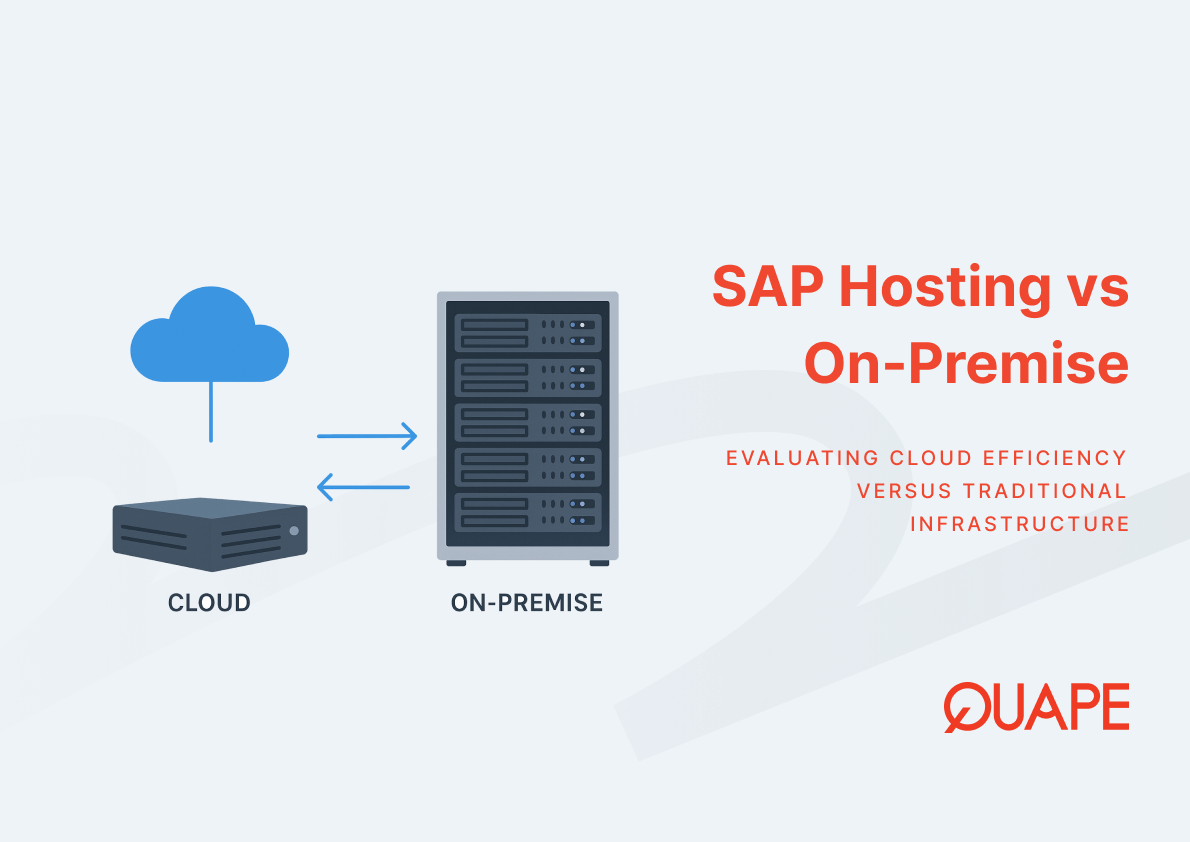
Enterprise IT teams face a fundamental decision when planning SAP infrastructure: should they maintain full operational control through on-premise deployment, or shift responsibility to a managed hosting provider? This choice affects financial planning, operational focus, and long-term system maintainability. Traditional on-premise SAP systems place the entire lifecycle burden on internal teams, from hardware procurement to security hardening. Managed SAP hosting redistributes these responsibilities, allowing organizations to redirect resources toward business process optimization rather than infrastructure maintenance. Understanding how these models differ in cost structure, scalability mechanisms, and operational accountability helps IT managers, CTOs, and procurement leads make decisions aligned with their organization’s technical capabilities and strategic priorities.
SAP hosting vs on-premise refers to the deployment model comparison between maintaining SAP systems on internally owned infrastructure versus utilizing external provider-managed infrastructure and platform services. The distinction centers on where operational responsibility resides, how capital is allocated, and which entity controls system lifecycle decisions.
Key Takeaways
- Operational responsibility shifts from internal IT teams to service providers in managed hosting models, reducing in-house maintenance burden while increasing vendor dependency
- On-premise deployments require cyclical capital expenditure for hardware refresh every 3-5 years, while managed hosting converts infrastructure spending into predictable operating expenses
- Organizations adopting managed infrastructure report 15-30% lower total cost of ownership over five years compared to fully on-premise deployments, primarily due to reduced maintenance and downtime costs
- Traditional on-premise environments require advance capacity provisioning, often leading to over-provisioning, while managed hosting supports elastic scaling aligned with actual demand
- Lifecycle maintenance on-premise introduces upgrade delays and technical debt risks, whereas outsourced management improves system currency but creates dependency on provider SLAs
- Unplanned downtime accountability shifts from internal failure to contractual and SLA issues when moving to managed hosting environments
- More than 60% of enterprises globally now prefer OPEX-based IT consumption models for new workloads rather than CAPEX-heavy infrastructure investments
Introduction to SAP Hosting vs On-Premise Models
Enterprise IT architecture for SAP systems follows two distinct paths: internal deployment on company-owned hardware or external deployment through provider-managed infrastructure. On-premise deployment requires organizations to procure, install, configure, and maintain all hardware, operating systems, databases, and application layers within their own facilities or colocation spaces. This model grants complete physical control over infrastructure assets but demands comprehensive internal expertise across storage, networking, compute, and SAP-specific administration.
SAP hosting transfers infrastructure and platform responsibilities to specialized providers who operate dedicated or multi-tenant environments optimized for SAP workloads. These providers manage hardware lifecycle, operating system patching, database tuning, and backup infrastructure, allowing customer IT teams to focus on SAP application configuration and business process management. The hosting provider assumes operational accountability for infrastructure availability, performance baselines, and disaster recovery mechanisms.
The choice between these models affects how organizations allocate technical talent, manage financial commitments, and respond to changing workload demands. On-premise environments suit organizations with deep internal SAP infrastructure expertise, predictable capacity requirements, and strong preferences for direct asset control. Managed hosting appeals to organizations seeking to minimize infrastructure overhead, access specialized operational expertise, or maintain flexibility in resource consumption patterns.
Operational Responsibility and Ownership Models
The responsibility model defines which entity manages each layer of the SAP technology stack, from physical hardware through application support. Traditional on-premise deployment places full lifecycle management on internal IT operations teams. According to Gartner research, enterprise IT responsibility shifts significantly from internal teams to external service providers when moving from on-premise systems to managed or hosted models, reducing in-house operational burden but increasing vendor dependency. Internal teams must handle server procurement, rack installation, network configuration, storage provisioning, hypervisor deployment, OS hardening, database installation, SAP application setup, and ongoing maintenance across all these layers.
Vendor-managed services in SAP infrastructure support environments redistribute these responsibilities through clearly defined service boundaries. The provider assumes accountability for hardware reliability, environmental controls, network connectivity, storage performance, and platform-level security controls. Customer teams retain responsibility for SAP application configuration, user management, business process customization, and integration development. This separation allows internal resources to concentrate on activities that directly support business operations rather than infrastructure troubleshooting.
Risk ownership changes substantially between models. On-premise failures require internal teams to diagnose root causes, source replacement components, and restore services without external escalation paths. Managed hosting converts infrastructure failures into contractual service level agreement violations, shifting immediate remediation responsibility to the provider while giving customers recourse through financial credits or penalty clauses. This transfer of operational risk appeals to organizations lacking deep infrastructure expertise but introduces dependency on provider responsiveness and technical capability.
Cost Structure Comparison: CAPEX vs OPEX
Capital expenditure models require organizations to invest significant upfront funds in server hardware, storage arrays, network equipment, and facility infrastructure before deploying SAP systems. Enterprises using on-premise infrastructure typically refresh core server hardware every 3-5 years according to industry benchmarks, creating cyclical spikes in IT capital budgets. These investments appear as assets on balance sheets but reduce financial flexibility, particularly when business conditions change or workload requirements shift unexpectedly. Depreciation schedules spread costs over multiple years, but organizations must fund full infrastructure replacement periodically regardless of actual utilization rates.
Operating expenditure models in SAP hosting cost optimization frameworks convert infrastructure spending into monthly or annual service fees based on consumed resources. This approach eliminates large capital outlays, improves cash flow predictability, and aligns IT spending more closely with business activity levels. Organizations can increase or decrease hosting capacity without disposing of owned assets or managing hardware resale. Budget planning becomes more straightforward when infrastructure costs appear as recurring operational expenses rather than irregular capital projects requiring board approval and multi-year depreciation tracking.
IT cost allocation under OPEX models offers strategic advantages during economic uncertainty. Organizations can adjust hosting commitments more rapidly than they can liquidate owned infrastructure assets, providing flexibility to scale spending in response to revenue changes. However, long-term total expenditure may exceed on-premise costs if workloads remain stable and predictable over extended periods. The economic trade-off depends on workload volatility, organizational growth trajectory, and the opportunity cost of capital tied up in infrastructure assets versus alternative business investments.
Scalability and Workload Elasticity Differences
Capacity planning for on-premise SAP deployments requires organizations to forecast peak resource requirements months or years in advance, then provision infrastructure to meet projected maximum demand. This approach frequently results in over-provisioning, where organizations maintain 30-50% excess capacity to accommodate growth headroom or unexpected workload spikes. Underutilized infrastructure represents sunk capital costs and ongoing power, cooling, and maintenance expenses that do not contribute to productive workload processing. Conversely, underestimating capacity leads to performance degradation, requiring emergency procurement and extended deployment timelines that disrupt business operations.
Workload elasticity in hybrid SAP hosting environments enables organizations to scale compute, memory, and storage resources in response to actual demand patterns. Providers maintain resource pools that customer workloads can draw from during peak periods, then release during lower utilization windows. This dynamic allocation reduces the gap between provisioned capacity and actual consumption, improving resource efficiency. Organizations pay for utilized resources rather than maintaining permanent overhead capacity, although they may face premium pricing for rapid scaling or guaranteed resource availability during demand spikes.
Performance scaling mechanisms differ fundamentally between models. On-premise environments require physical hardware installation, network reconfiguration, and extended testing before new capacity becomes available. This process spans weeks or months, limiting responsiveness to unexpected workload growth. Managed hosting providers can allocate additional virtual or physical resources within hours or days, assuming capacity exists within the provider’s infrastructure pool. However, SAP hosting latency considerations remain critical when applications depend on consistent sub-millisecond response times that may be affected by shared infrastructure or network positioning.
Lifecycle Maintenance and System Upgrades
SAP lifecycle management on-premise infrastructure places full accountability for kernel upgrades, support package application, database patching, and operating system maintenance on internal teams. Organizations must coordinate these activities across development, testing, and production environments while maintaining business continuity. Postponing maintenance activities creates technical debt as systems fall behind vendor support schedules, increasing security exposure and limiting access to new functionality. However, upgrade timing remains entirely under organizational control, allowing teams to align changes with business calendars and resource availability.
Patch management in managed hosting environments operates according to provider maintenance windows and update policies. Providers typically enforce mandatory security patching within defined timeframes to maintain infrastructure security posture across all customer environments. This externally driven schedule can conflict with customer business cycles or create forced upgrades before internal teams complete testing. However, S/4HANA infrastructure readiness improves when providers maintain current platform versions, reducing technical barriers to application-layer upgrades that require modern operating systems, database versions, or hypervisor capabilities.
System maintenance coordination becomes simpler when providers manage underlying infrastructure layers, but introduces dependency on provider processes and communication effectiveness. Organizations lose direct control over maintenance timing but gain access to specialized expertise in SAP infrastructure optimization. The trade-off between stability from controlled internal processes and agility from provider-managed currency depends on internal team capabilities, risk tolerance, and the strategic importance of maintaining cutting-edge SAP platform versions.
Security, Availability, and Risk Management Considerations
SAP security implementation on-premise infrastructure requires organizations to establish and maintain controls across physical access, network segmentation, operating system hardening, database encryption, and application-layer authentication. Internal teams must stay current with emerging threat vectors, patch vulnerabilities within acceptable timeframes, and implement monitoring systems that detect anomalous behavior. This comprehensive security posture demands specialized expertise and continuous investment in tools, training, and process refinement.
High availability architecture design differs significantly between deployment models. On-premise implementations require organizations to procure redundant hardware, configure failover mechanisms, and test recovery procedures independently. Managed hosting providers typically offer standardized high availability configurations as service tiers, incorporating redundant network paths, clustered database servers, and automated failover orchestration. These pre-built architectures reduce implementation complexity but may not accommodate unique organizational requirements or specialized compliance mandates.
Disaster recovery planning on-premise demands secondary site infrastructure, replication technologies, and documented procedures for business continuity scenarios. Organizations must fund duplicate infrastructure at geographically separated locations, maintain synchronization between primary and secondary systems, and periodically validate recovery capabilities through testing exercises. Managed hosting providers can offer disaster recovery services leveraging existing multi-site infrastructure, reducing customer capital requirements while introducing dependency on provider recovery processes and SLA commitments for recovery time and recovery point objectives.
Compliance and Data Residency in Singapore
Data residency requirements in Singapore mandate that certain categories of business information remain within national borders or specific geographic regions. On-premise deployment guarantees physical data location when organizations operate facilities in Singapore, providing absolute control over where SAP system data resides at rest and during processing. This control simplifies compliance with regulations requiring data localization, such as financial services mandates or government procurement requirements specifying domestic infrastructure.
Regulatory compliance for Singapore datacenter SAP deployments requires verification that hosting providers operate facilities within Singapore jurisdiction and maintain certifications relevant to customer industries. Organizations must validate provider compliance through audits, certifications, and contractual guarantees specifying data handling practices. Managed hosting introduces complexity when providers operate multi-region infrastructure, requiring explicit configuration to ensure SAP workloads and data do not migrate outside permitted geographic boundaries during routine operations or disaster recovery scenarios.
Compliance verification processes differ between models. On-premise organizations demonstrate compliance through direct evidence of internal controls, infrastructure location, and data handling procedures. Managed hosting customers rely on provider attestations, third-party audits, and contractual commitments to satisfy regulatory requirements. This indirect compliance posture may not satisfy all regulatory frameworks or organizational risk policies, particularly in highly regulated industries where direct infrastructure control represents a mandatory requirement rather than an optional preference.
Practical Implications for IT Managers, CTOs, and SMEs in Singapore
IT decision-making for SAP infrastructure in Singapore balances multiple competing priorities: capital availability, internal technical capabilities, regulatory requirements, and operational risk tolerance. CTOs evaluating these models must assess whether their organizations possess the specialized expertise required to maintain SAP infrastructure reliably, or whether SAP hosting Singapore benefits from provider expertise outweigh the loss of direct control. Small and medium enterprises often lack the scale to justify dedicated SAP infrastructure teams, making managed hosting economically attractive despite higher per-unit costs compared to large-scale on-premise deployments.
SME digital infrastructure decisions increasingly favor operational expense models that preserve capital for business growth rather than infrastructure investment. Procurement strategy in this context prioritizes flexibility, predictability, and risk transfer over absolute cost minimization. Organizations with limited IT staff benefit from provider-managed maintenance windows, security patching, and capacity planning, even when total costs exceed fully amortized on-premise alternatives. The opportunity cost of internal resources managing infrastructure versus developing business applications represents a critical but often undervalued factor in deployment model selection.
Talent availability represents a growing constraint for on-premise SAP infrastructure management. Specialized skills in SAP Basis administration, HANA database optimization, and infrastructure automation continue to become scarcer and more expensive in competitive labor markets. Organizations unable to attract and retain these capabilities face operational risks when key personnel depart, carrying institutional knowledge of custom configurations and undocumented processes. Managed hosting providers distribute this expertise across customer bases, reducing organizational dependency on individual employees while standardizing infrastructure practices that simplify knowledge transfer and reduce operational fragility.
How Managed SAP Hosting Simplifies the Transition from On-Premise
Managed SAP Hosting services reduce migration complexity by providing infrastructure environments pre-configured for SAP workloads, eliminating the need for customer teams to architect storage layouts, network topologies, or backup systems from scratch. Fully managed ERP solutions include infrastructure management, platform maintenance, and operational support within service agreements, allowing organizations to transition from on-premise models without building equivalent internal capabilities. This approach particularly benefits organizations seeking to modernize SAP environments without expanding infrastructure teams.
SAP HANA hosting platforms support memory-intensive workloads through hardware configurations optimized for in-memory database performance requirements. Providers maintain server specifications aligned with SAP hardware certification requirements, ensuring compatibility with current and future SAP releases. Organizations avoid the research, procurement, and validation processes required to select appropriate hardware for HANA deployments, instead relying on provider expertise to deliver infrastructure meeting SAP performance and support requirements.
SAP migration cloud pathways offered by managed hosting providers include planning, data transfer, system validation, and post-migration support services that reduce customer project risk. Migration expertise from providers who handle multiple customer transitions reduces project timelines and improves outcome predictability compared to internal teams executing infrequent migrations with limited prior experience. However, organizations must carefully evaluate provider migration methodologies, downtime windows, and rollback procedures to ensure business continuity throughout transition periods.
Conclusion
Choosing between managed SAP hosting and traditional on-premise deployment requires careful evaluation of operational capabilities, financial priorities, and strategic technology direction. Organizations with deep SAP infrastructure expertise, predictable workloads, and strong asset ownership preferences may find on-premise models align with their capabilities. Conversely, organizations seeking to minimize infrastructure overhead, improve financial flexibility, or access specialized operational expertise increasingly favor managed hosting approaches that convert capital commitments into operational expenses while transferring infrastructure responsibility to specialized providers.
Ready to explore how managed SAP hosting can optimize your infrastructure strategy? Contact our sales team to discuss your specific requirements and evaluate whether managed hosting aligns with your operational goals.
Frequently Asked Questions
What are the main operational differences between managed SAP hosting and on-premise deployment?
On-premise deployment requires internal teams to manage the complete infrastructure stack including hardware, networking, operating systems, databases, and applications. Managed SAP hosting transfers infrastructure and platform responsibilities to external providers, allowing internal teams to focus on SAP application configuration and business processes. This reduces operational burden but introduces dependency on provider capabilities and SLA performance.
How does the cost structure differ between CAPEX-heavy on-premise and OPEX-based managed hosting?
On-premise infrastructure requires significant upfront capital investment in hardware, facilities, and equipment with cyclical refresh costs every 3-5 years. Managed hosting converts these capital expenditures into predictable monthly or annual operating expenses based on consumed resources. OPEX models improve cash flow flexibility and align costs with business activity, though long-term total expenditure may vary depending on workload stability and pricing structures.
Can managed SAP hosting provide the same level of control as on-premise infrastructure?
Managed hosting reduces direct control over infrastructure layers including hardware selection, network architecture, and maintenance timing, as these responsibilities transfer to the provider. However, organizations retain control over SAP application configuration, user management, and business process customization. The trade-off involves accepting standardized infrastructure in exchange for reduced operational complexity and access to provider expertise.
How does scalability work differently in managed hosting versus on-premise environments?
On-premise scalability requires advance capacity planning, hardware procurement, and physical installation, often resulting in over-provisioned infrastructure to accommodate growth. Managed hosting enables more elastic scaling where resources can be increased or decreased based on actual demand patterns, with changes implemented in hours or days rather than weeks or months. This flexibility reduces the gap between provisioned capacity and actual utilization.
What security considerations should organizations evaluate when comparing these models?
On-premise deployment provides complete control over physical security, network segmentation, and access controls but requires internal expertise to implement and maintain comprehensive security postures. Managed hosting providers implement standardized security controls across infrastructure layers, offering specialized expertise and continuous monitoring. Organizations must evaluate provider security certifications, data handling practices, and contractual guarantees to ensure alignment with internal security requirements.
How do compliance and data residency requirements affect the choice between hosting models?
On-premise deployment guarantees data remains on infrastructure under direct organizational control, simplifying compliance with regulations requiring specific geographic data location. Managed hosting requires verification that provider facilities operate within required jurisdictions and maintain relevant certifications. Organizations in highly regulated industries must carefully evaluate whether provider attestations and contractual commitments satisfy their specific compliance obligations.
What happens to existing on-premise SAP systems when transitioning to managed hosting?
Migration from on-premise to managed hosting typically involves planning, data transfer, system validation, and cutover processes coordinated between internal teams and hosting providers. Providers often offer migration services including project management, technical execution, and post-migration support to reduce customer risk and downtime. Organizations should evaluate migration methodologies, expected timelines, rollback procedures, and business continuity plans before committing to transitions.
Who should consider managed SAP hosting versus maintaining on-premise infrastructure?
Organizations with limited internal SAP infrastructure expertise, unpredictable workload growth, or preferences for operational expense models benefit most from managed hosting. Conversely, organizations with established infrastructure teams, stable and predictable capacity requirements, strong asset ownership preferences, or unique compliance mandates requiring direct infrastructure control may find on-premise deployment more suitable. The decision depends on balancing operational capabilities, financial priorities, and strategic technology direction.