Server
Shared, Virtual, or Dedicated: Which Hosting Type Fits Your Workload Requirements?
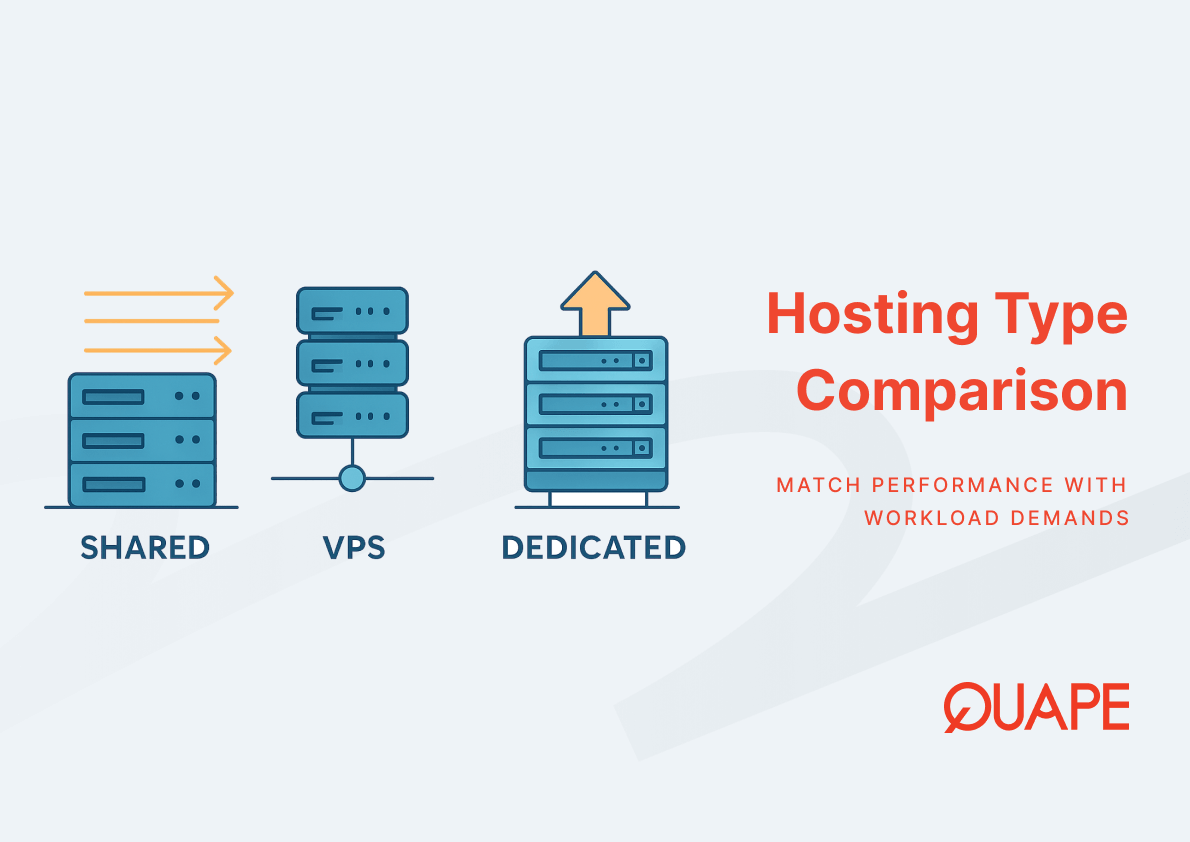
Workload requirements dictate infrastructure boundaries. When your application demands predictable CPU cycles, consistent memory bandwidth, and stable I/O throughput, multi-tenant environments introduce unpredictable performance variance that no amount of tuning can eliminate. The distinction between shared, virtual, and dedicated hosting models hinges on how resources are allocated, how tenants are isolated, and whether workload interference degrades performance under load. For organisations operating in Singapore’s regulated, latency-sensitive market, choosing between pooled virtualization and exclusive hardware access determines whether your infrastructure supports compliance obligations, performance benchmarks, and operational control requirements.
What Shared vs Dedicated Server Means in Infrastructure Design
The shared vs dedicated server comparison describes two opposing approaches to resource provisioning. Shared hosting allocates fractional slices of pooled hardware to multiple tenants, distributing CPU, RAM, and storage bandwidth dynamically across competing workloads. Dedicated servers assign entire physical machines to a single tenant, providing exclusive access to processors, memory controllers, storage arrays, and network interfaces without contention from co-tenants. This architectural difference determines whether your workload experiences resource contention, how you implement tenant isolation, and what degree of control you maintain over the entire software stack from BIOS to application layer.
Multi-tenancy relies on virtualization or containerization to subdivide physical infrastructure. Cloud and elastic hosting models deploy pooled, dynamically assigned physical and virtual resources where multiple tenants share underlying hardware. This model optimizes capital efficiency and enables rapid provisioning, but introduces shared fate: one tenant’s resource spike impacts neighbors. Dedicated infrastructure eliminates that shared fate by physically isolating hardware, making it the default choice when workload stability and deterministic performance outweigh cost optimization.
Key Takeaways
- Multi-tenant hosting models share physical resources across multiple customers, introducing potential resource contention and performance variability under unpredictable neighbor workloads.
- The noisy neighbor effect occurs when one tenant’s resource consumption degrades co-tenant performance through shared CPU cycles, memory bandwidth, or I/O queues.
- Dedicated servers provide exclusive hardware access, eliminating cross-tenant interference and enabling root-level OS control for custom kernel tuning and direct hardware management.
- Tenant isolation strategies vary in strength: disk I/O partitioning, memory affinity, CPU pinning, and network shaping each introduce tradeoffs in cost, density, and manageability.
- RAM allocation and ECC memory matter for memory-sensitive workloads; dedicated hardware simplifies benchmarking and reduces tail-latency variance caused by hypervisor scheduling.
- Singapore’s PDPA compliance obligations do not mandate dedicated servers, but physical localization and demonstrable data controls often align with regulatory strategies for data sovereignty.
- The dedicated server market shows robust growth projections, with industry forecasts estimating 18.9% CAGR through 2032, signaling sustained demand for workload-specific infrastructure.
Resource Allocation Models: Shared, Virtual, Elastic, Dedicated
Resource allocation defines how CPU cores, RAM, storage IOPS, and network bandwidth are distributed. Shared hosting provisions fractional resources from pooled hardware, assigning each tenant a quota but allowing the hypervisor to overcommit physical capacity. This enables dense packing and low per-tenant cost, but creates resource contention when aggregate demand exceeds physical capacity. Virtual private servers add a thin isolation layer through virtualization, allocating defined CPU and RAM slices, yet still share underlying physical resources with co-tenants.
Elastic hosting extends virtualization with auto-scaling and dynamic resource reallocation. Cloud platforms use this model to deliver rapid capacity changes, scaling workloads horizontally across pooled infrastructure. Elasticity improves capital utilization but requires sophisticated tenant isolation and monitoring to prevent one workload’s burst from degrading another’s baseline. When comparing VPS, dedicated, and cloud infrastructure, elasticity and isolation strength determine which model suits a given workload profile.
Dedicated servers allocate entire physical machines. All CPU cores, RAM banks, storage controllers, and NICs serve a single tenant. This exclusive assignment eliminates contention at the hardware level, making performance deterministic and simplifying capacity planning. RAM allocation becomes a static configuration rather than a hypervisor policy, and CPU architecture choices directly map to application requirements without abstraction layers. Dedicated models trade density and capital efficiency for workload stability and deep control.
Tenant Isolation, Noisy Neighbor Effect, and Workload Stability
Tenant isolation refers to the mechanisms that prevent one tenant’s resource use from impacting another’s. In multi-tenant environments, isolation techniques include memory partitioning, CPU affinity scheduling, disk I/O rate limiting, and network bandwidth shaping. Each degree of isolation improves performance predictability but reduces hardware density and increases orchestration complexity. Weak isolation allows noisy neighbors to monopolize shared resources; strong isolation approaches the cost and complexity profile of dedicated infrastructure.
The noisy neighbor effect describes measurable performance degradation when co-tenant workloads compete for shared resources. Academic studies quantify this: one tenant’s CPU-intensive batch job or disk-heavy backup operation can reduce co-tenant IOPS by 30% or more, introduce memory pressure that triggers swapping, or saturate shared NICs. Detection thresholds and mitigation strategies exist, such as rate limiting and affinity rules, but these reactive measures cannot eliminate the root cause. Dedicated servers remove noisy neighbors entirely by providing exclusive hardware, making workload interference impossible at the physical layer.
Workload stability depends on whether resource availability remains constant under varying neighbor activity. In virtualized environments, hypervisor scheduling introduces latency variance. A root server (a dedicated physical machine with root OS access) eliminates that hypervisor layer, giving the tenant direct control over kernel tuning, interrupt handling, and resource scheduling. This matters for latency-sensitive applications like trading platforms, real-time analytics, or multiplayer game servers, where tail-latency spikes translate to user-visible degradation.
Security, Customization, and Control Panel Options
Security posture diverges sharply between shared and dedicated models. Shared hosting limits tenant access to application-layer controls, restricting kernel modifications, firewall rules, and system-level logging. Multi-tenancy introduces additional attack surface: vulnerabilities in the hypervisor or container runtime can expose co-tenant data. Dedicated servers isolate security boundaries at the hardware level. With root access, tenants configure iptables, SELinux policies, and intrusion detection without depending on shared platform security.
Customization requirements often drive dedicated server adoption. Organizations needing custom SSL certificate chains, non-standard database tuning, or specialized networking configurations cannot operate effectively within shared hosting constraints. Control panels like cPanel simplify administration for standardized environments, but deeper customization demands root access to edit system configurations, recompile software, or install kernel modules. Managed services bridge this gap by providing dedicated hardware with vendor-supplied administration, combining isolation with operational support.
Root server access enables configuration freedom that shared environments prohibit. Installing custom monitoring agents, modifying TCP stack parameters, or running privileged containers requires superuser control. For compliance-sensitive workloads, this control extends to data residency, encryption key management, and audit logging. Organizations subject to Singapore’s PDPA leverage dedicated infrastructure to implement data controls that satisfy regulatory expectations without relying on shared platform policies.
Performance Factors: Storage, RAM, and Processing Architecture
Storage architecture determines I/O throughput and latency characteristics. NVMe drives deliver sub-millisecond access times and high queue depths, making them essential for database workloads and transaction processing. NVMe’s performance advantage over SATA SSDs becomes visible under concurrent read-write workloads, where NVMe’s parallelism sustains higher IOPS. RAID configurations add redundancy but introduce write penalties; RAID 1 mirrors data for reliability, while RAID 10 balances speed and protection.
RAM allocation and memory architecture impact application performance more than most operators recognize. ECC RAM detects and corrects single-bit errors, preventing data corruption in memory-intensive workloads like caching layers, in-memory databases, or machine learning inference. Memory allocation schemes in virtualized environments introduce scheduling overhead; dedicated servers eliminate that overhead, providing direct memory access without hypervisor mediation. For workloads sensitive to memory bandwidth, such as video encoding or large dataset processing, exclusive RAM access reduces contention and improves throughput consistency.
CPU architecture shapes compute performance. Intel Xeon and AMD EPYC processors differ in core count, clock speed, cache hierarchy, and memory channels. Xeon Silver and Gold series provide balanced performance for general workloads, while EPYC’s high core density suits massively parallel applications. Dedicated servers allow precise CPU selection matched to workload profiles. Virtualized environments abstract CPU differences, preventing workload-specific optimization and introducing hypervisor scheduling latency that dedicated hardware avoids.
When Application Hosting Requires Dedicated Infrastructure
Application hosting needs vary by workload characteristics. High I/O workloads like database clusters require sustained IOPS and consistent latency that shared environments cannot guarantee. When random read-write patterns stress storage subsystems, noisy neighbor activity in multi-tenant infrastructure introduces unpredictable latency spikes. Dedicated NVMe arrays with exclusive controller access deliver stable performance under load.
Compute-intensive applications such as video transcoding, scientific computing, or AI model training benefit from dedicated CPU resources. These workloads utilize all available cores for extended periods. In shared environments, hypervisor CPU scheduling distributes cycles across multiple tenants, fragmenting compute availability. Dedicated servers provide uninterrupted CPU time, allowing compute-bound processes to complete faster and more predictably.
Compliance-sensitive workloads demand physical isolation and operational transparency. Financial services, healthcare systems, and government entities often require demonstrable data controls that extend beyond logical isolation. Dedicated infrastructure supports compliance by providing physical separation, enabling detailed audit trails, and simplifying regulatory reporting. Singapore’s PDPA framework does not mandate specific hosting models, but organisations use dedicated servers in Singapore data centers to align physical infrastructure with data residency and protection obligations.
Practical Application for Singapore-Based Workloads
Singapore’s data center market operates under capacity and energy constraints. The city-state’s limited land area and power availability restrict rapid data center expansion. Industry analysis projects Singapore’s data center capacity growing at approximately 8% CAGR through 2028, slower than many Asia-Pacific markets. This constrained supply impacts hosting availability and pricing. Organizations planning infrastructure in Singapore must account for lead times, capacity reservations, and energy efficiency requirements that influence hosting procurement decisions.
Latency-sensitive applications benefit from Singapore’s network position as a regional internet hub. Multi-homed network connectivity in TIA-942 Singapore facilities provides redundant paths to regional and international exchanges. For applications serving Southeast Asian users, hosting in Singapore reduces round-trip latency compared to distant cloud regions. Dedicated servers in Singapore data centers combine physical proximity to end users with carrier-neutral connectivity, enabling direct peering arrangements that optimize network paths.
Compliance considerations drive Singapore-based hosting decisions. The PDPA establishes data protection obligations for organizations handling personal data. While the regulation does not prescribe specific hosting architectures, many organizations interpret data sovereignty requirements through physical infrastructure controls. Dedicated servers located in Singapore facilities provide demonstrable evidence of data residency, access controls, and monitoring that align with PDPC guidance on ICT systems and cross-border data flows.
How Dedicated Servers Support Workload Isolation and Performance Optimization
Workload isolation reaches its maximum degree with dedicated hardware. Unlike virtualization-based isolation that relies on hypervisor enforcement, dedicated infrastructure eliminates shared fate at the physical layer. Each workload operates on exclusive CPUs, RAM, and storage, preventing resource contention regardless of external activity. This physical isolation simplifies troubleshooting: performance issues trace to the application or its configuration, not unpredictable neighbor behavior.
Performance optimization becomes more straightforward with dedicated servers. Benchmarking produces repeatable results because hardware resources remain constant. Tuning database query plans, adjusting cache sizes, or profiling application hotspots yields consistent data when the underlying infrastructure delivers deterministic performance. In virtualized environments, hypervisor scheduling and noisy neighbors introduce measurement variance that complicates optimization efforts.
Managed services extend dedicated server value by combining hardware isolation with operational expertise. Vendors provide OS patching, security updates, monitoring, and incident response while maintaining exclusive hardware assignment. This model suits organizations requiring dedicated performance without dedicating internal IT resources to server administration. Customization remains possible within managed frameworks; root access or elevated privileges enable application-specific configurations while the vendor handles infrastructure maintenance.
Organizations building hybrid architectures often position dedicated servers as the stable foundation for core workloads while using elastic cloud resources for variable or bursty demand. This model keeps latency-sensitive, compliance-critical, or performance-predictable workloads on dedicated infrastructure while leveraging cloud economics for less sensitive services. The blend optimizes cost, performance, and operational flexibility across a heterogeneous workload portfolio.
Strategic Infrastructure Decisions
Workload requirements determine optimal hosting models. When resource contention, noisy neighbor effects, or isolation weaknesses threaten performance stability or compliance posture, dedicated servers provide exclusive hardware that eliminates multi-tenant risks. Singapore’s market combines regional network advantages, compliance infrastructure, and TIA-942 facilities, making dedicated hosting viable for organisations prioritizing control, performance, and data residency. Evaluate workload sensitivity, growth trajectory, and operational capability when mapping requirements to shared, virtual, or dedicated infrastructure options.
Contact QUAPE’s sales team to discuss how dedicated server configurations align with your workload isolation, performance benchmarking, and compliance objectives: https://www.quape.com/contact-us/
Frequently Asked Questions
What is the main difference between shared hosting and dedicated servers?
Shared hosting allocates fractional resources from pooled hardware to multiple tenants, creating potential resource contention and performance variability. Dedicated servers assign entire physical machines to a single tenant, providing exclusive CPU, RAM, storage, and network access without co-tenant interference. This difference determines workload stability, customization depth, and operational control.
Can the noisy neighbor effect be completely eliminated in virtualized environments?
No isolation technique in multi-tenant environments fully eliminates noisy neighbor potential without approaching dedicated hardware cost and complexity. Memory partitioning, CPU affinity, and I/O rate limiting reduce cross-tenant interference but cannot prevent all resource competition. Dedicated servers physically isolate workloads, making noisy neighbor effects impossible at the hardware layer.
Do I need dedicated servers for PDPA compliance in Singapore?
PDPA regulations do not mandate dedicated servers specifically. The law requires demonstrable data protection controls, which organizations implement through various technical and organizational measures. Many Singapore entities use dedicated servers as part of broader compliance strategies because physical isolation simplifies data residency demonstration, access control implementation, and audit trail clarity.
How much performance improvement can I expect moving from shared to dedicated hosting?
Performance gains depend on workload characteristics and the degree of resource contention in the previous environment. I/O-intensive workloads may see 3-5x throughput improvements when moving from shared storage to dedicated NVMe arrays. Memory-bound applications benefit from exclusive RAM bandwidth and reduced latency variance. CPU-intensive processes gain from uninterrupted core access, eliminating hypervisor scheduling overhead.
What types of workloads justify dedicated server costs?
High-traffic websites, database clusters, real-time analytics, video streaming, gaming servers, and compliance-sensitive applications typically justify dedicated infrastructure. Any workload requiring deterministic performance, sustained high resource utilization, or deep OS-level control benefits from dedicated hardware. Cost justification increases when workload revenue impact or regulatory risk exceeds the premium over shared hosting.
Can I start with shared hosting and migrate to dedicated servers later?
Yes, migration paths exist but involve infrastructure changes. Moving from shared to dedicated requires data transfer, DNS updates, application reconfiguration, and potential architecture adjustments to leverage exclusive resources. Planning for growth helps: organizations anticipating rapid scaling or performance requirements often start with dedicated infrastructure to avoid disruptive mid-lifecycle migrations.
How does RAM allocation differ between virtualized and dedicated environments?
Virtualized platforms use dynamic memory allocation where the hypervisor manages physical RAM distribution across virtual machines, sometimes overcommitting capacity. Dedicated servers provide static, exclusive RAM assignment where the operating system directly manages physical memory without hypervisor mediation. This eliminates memory scheduling overhead and ensures predictable bandwidth for memory-intensive workloads.
What role does Singapore’s data center capacity constraint play in hosting decisions?
Singapore’s projected 8% capacity CAGR, lower than regional averages due to land and energy limitations, affects hosting availability and planning timelines. Organizations requiring guaranteed capacity should secure commitments early, particularly for dedicated hardware. The constraint also influences hybrid architecture decisions: keeping compliance-critical workloads local while using regional cloud capacity for elastic demand balances Singapore’s network advantages against capacity limits.